
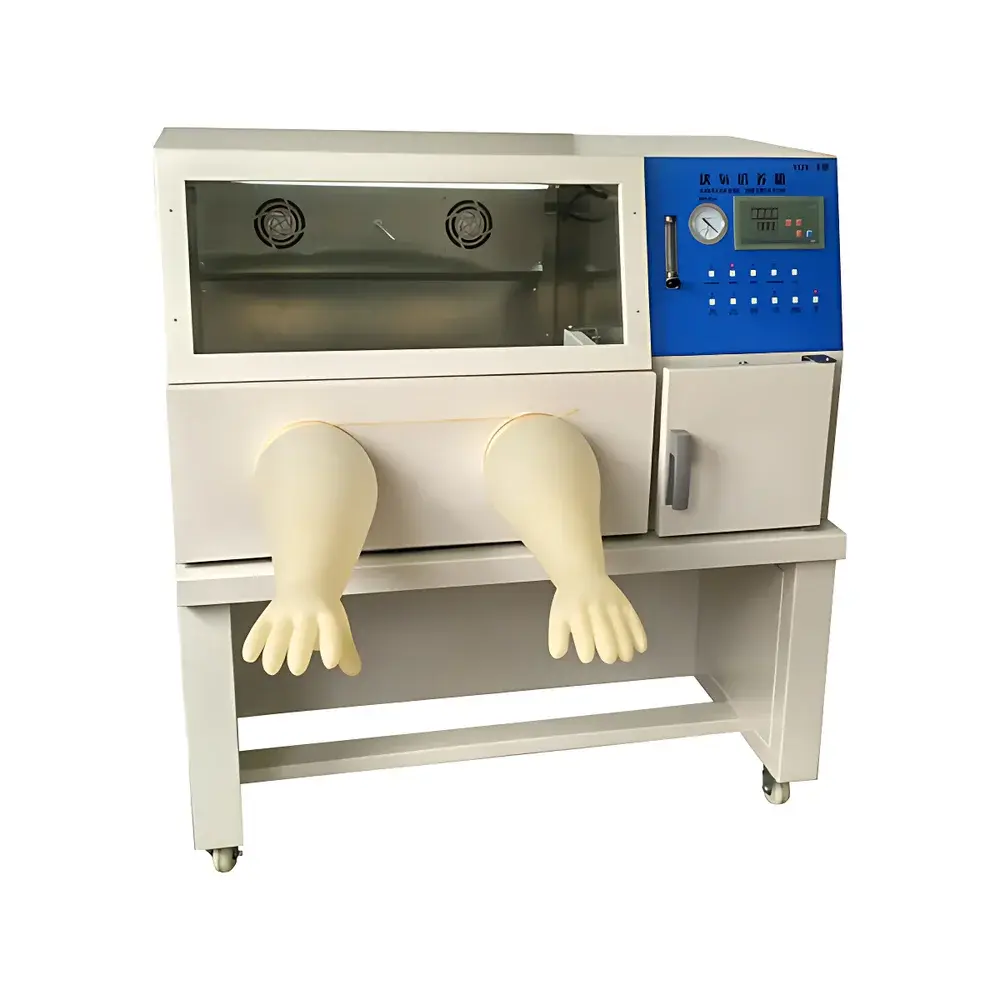
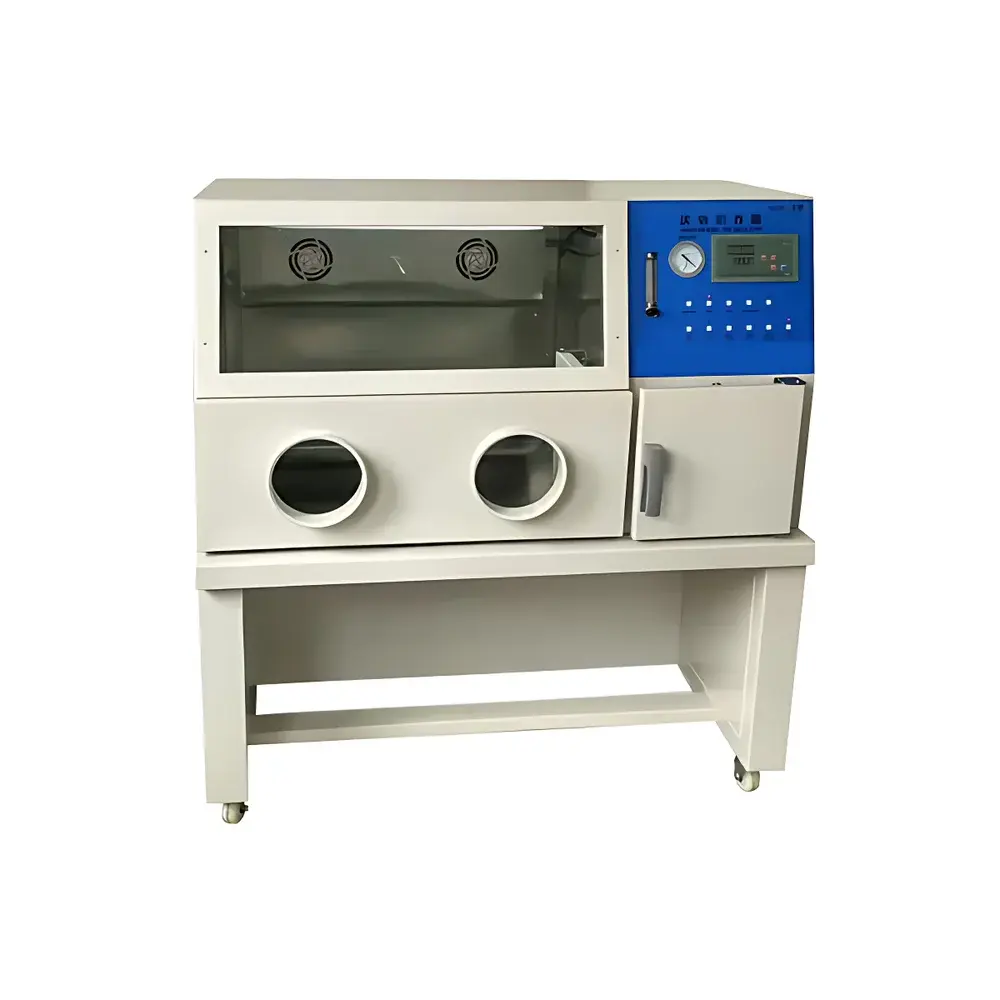
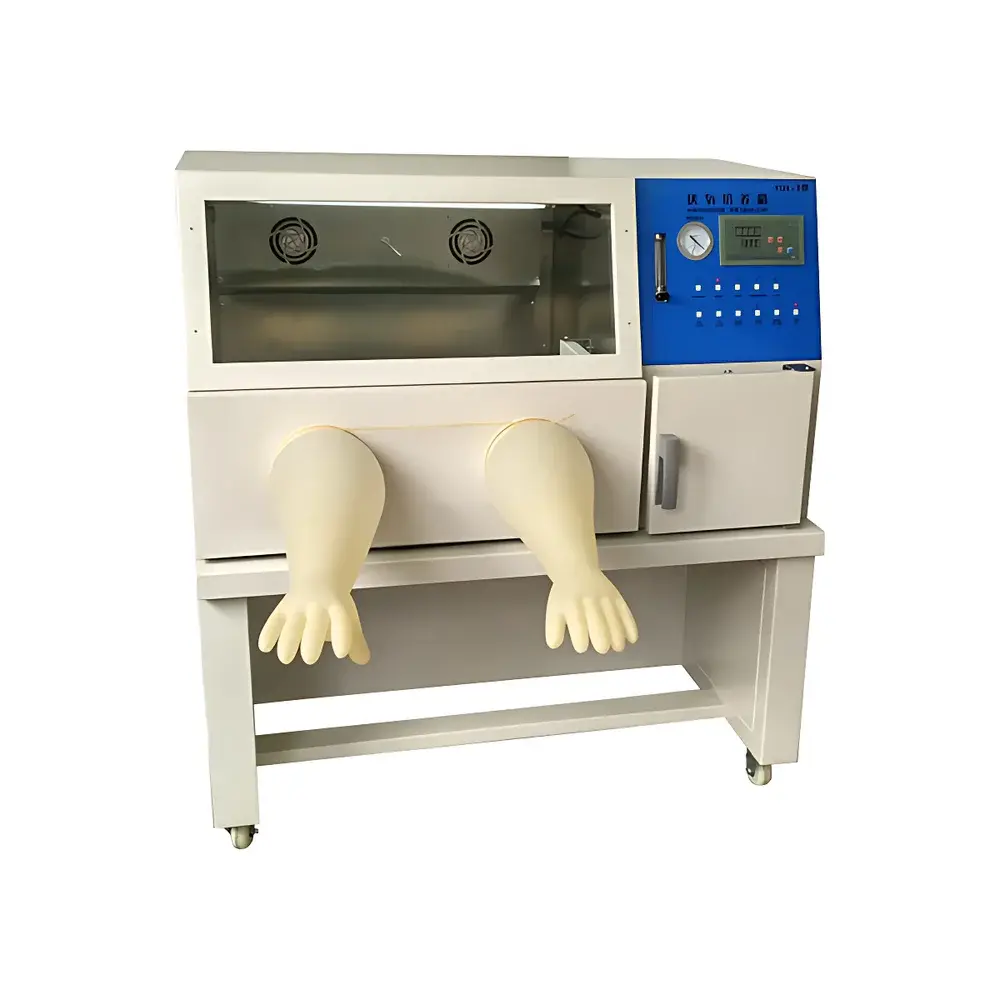
Chuanna YQX-II Single-Station Anaerobic Incubation Workstation
| Brand | Chuanna Instrument |
|---|---|
| Origin | Zhejiang, China |
| Manufacturer Type | Authorized Distributor |
| Country of Origin | China |
| Model | YQX-II |
| Instrument Type | Manual Anaerobic Incubator |
| Oxygen Concentration | <0.1% O₂ (maintained via catalytic deoxygenation and gas replacement) |
| Temperature Control Range | RT+3°C to 50°C |
| Temperature Uniformity | ±1.0°C |
| Temperature Stability | ±0.5°C |
| Gas Supply | Pre-mixed anaerobic gas (85% N₂ / 10% H₂ / 5% CO₂ |
| Cultivation Chamber Dimensions (W×D×H) | 200 × 190 × 260 mm |
| Operation Chamber Dimensions (W×D×H) | 760 × 630 × 620 mm |
| External Dimensions (W×D×H) | 1200 × 730 × 1330 mm |
| Power Supply / Rated Power | 220 V, 50 Hz / 600 W |
| Anaerobic Establishment Time (Operation Chamber) | <60 min |
| Anaerobic Maintenance Duration (without gas replenishment) | ≥12 h |
| Vacuum Sampling Chamber Deoxygenation Time | <5 min |
Overview
The Chuanna YQX-II Single-Station Anaerobic Incubation Workstation is a manually operated, compact laboratory system engineered for the reliable cultivation and manipulation of strict and facultative anaerobes under precisely controlled atmospheric and thermal conditions. It operates on the principle of sequential gas displacement—first with high-purity nitrogen, followed by catalytic removal of residual oxygen using palladium-based catalysts—and final stabilization with a certified anaerobic gas mixture (85% N₂ / 10% H₂ / 5% CO₂). The hydrogen component enables continuous oxygen scavenging via catalytic recombination at ambient temperature, while CO₂ supports optimal pH buffering for microbial growth. Designed for academic microbiology labs, clinical diagnostics units, and pharmaceutical R&D facilities, the YQX-II provides a physically isolated, contamination-resistant environment compliant with standard anaerobic culture protocols defined in CLSI M48-A and ISO 11133:2014.
Key Features
- Integrated dual-chamber architecture: a dedicated vacuum-assisted sampling chamber (de-oxygenation time <5 min) and a spacious main operation chamber (760 × 630 × 620 mm) with overhead hanging-mount design—enabling flexible integration of ancillary equipment such as orbital shakers or small-scale bioreactors.
- Digital PID temperature controller with real-time display, adjustable setpoint range (RT+3°C to 50°C), ±0.5°C stability, and ±1.0°C uniformity across the 200 × 190 × 260 mm cultivation zone.
- Stainless-steel construction (304 grade) for all internal chambers, gas pathways, and structural frames—ensuring corrosion resistance, cleanability, and long-term integrity under repeated sterilization cycles.
- UV-C germicidal lamp (254 nm) mounted inside the operation chamber for routine surface decontamination; combined with HEPA-filtered gas inlet to minimize airborne microbial ingress.
- Adjustable mass-flow gas regulation system with calibrated flowmeter (range: 0–50 mL/min), enabling precise delivery of mixed anaerobic gas at ~10 mL/min during conditioning and maintenance phases.
- Mechanically interlocked acrylic observation window with silicone-sealed glove ports and torque-limited clamping mechanism—preserving gas integrity while permitting tactile manipulation without breach risk.
Sample Compatibility & Compliance
The YQX-II accommodates standard Petri dishes (up to 150 mm), test tubes, microtiter plates, and small-volume liquid cultures. Its sealed chamber design meets basic biosafety requirements for BSL-1 and BSL-2-level anaerobic work. While not certified to ISO 14644-1 Class 5, its laminar airflow-equivalent gas exchange protocol and UV/HEPA dual protection align with GLP-compliant microbiological practice. The system supports traceable environmental logging when paired with external data loggers (e.g., compliant with FDA 21 CFR Part 11 when validated). All materials in contact with samples or atmosphere comply with USP <661.1> for plastic components and ASTM F838-20 for bacterial retention testing of filters.
Software & Data Management
The YQX-II is a hardware-only platform with no embedded firmware or proprietary software. Temperature setpoints, UV exposure duration, and gas flow rates are configured manually via front-panel controls. For audit-ready documentation, users are advised to integrate third-party calibrated sensors (e.g., thermistors with NIST-traceable calibration certificates) and record operational parameters—including chamber O₂ concentration (measured externally via handheld electrochemical O₂ analyzers), temperature profiles, and gas consumption—within laboratory notebooks or ELN systems compliant with ALCOA+ principles. Optional RS-485 interface modules can be added for analog signal output to SCADA or LIMS platforms.
Applications
- Cultivation of obligate anaerobes including Clostridium difficile, Bacteroides fragilis, and Fusobacterium nucleatum for clinical isolate recovery and antimicrobial susceptibility testing (AST).
- Preparation of anaerobic blood cultures and stool specimen processing in diagnostic microbiology workflows.
- Controlled fermentation studies involving lactic acid bacteria, methanogens, or sulfate-reducing species under defined redox potential conditions.
- Development and validation of anaerobic media formulations per ISO 11133:2014 Annex D guidelines.
- Training laboratories requiring cost-effective, low-footprint infrastructure for teaching fundamental anaerobic techniques without reliance on expensive glovebox systems.
FAQ
What is the minimum detectable oxygen level achievable in the operation chamber?
The system achieves and maintains <0.1% (1000 ppm) O₂ when operated per protocol, verified by methylene blue indicator strips or external O₂ analyzers.
Can the YQX-II support CO₂-independent anaerobic cultures?
Yes—the 5% CO₂ in the supplied gas mix is optional; users may substitute 90% N₂ / 10% H₂ for CO₂-free applications, provided appropriate buffering agents (e.g., sodium bicarbonate) are included in the growth medium.
Is catalytic deoxygenation reversible or serviceable?
The palladium catalyst cartridge is replaceable after ~12 months of continuous use or following exposure to sulfur-containing compounds; replacement kits are available from Chuanna Instrument with batch-specific activity certification.
Does the unit include validation documentation for GxP environments?
No—qualification documents (IQ/OQ/PQ templates), calibration records, and risk assessments must be developed internally per user’s quality system; however, mechanical design and material specifications are fully disclosed to support protocol development.
What maintenance intervals are recommended for vacuum pump and gas regulators?
Vacuum pump oil should be changed every 500 operating hours; stainless-steel gas regulators require annual leak-testing with helium mass spectrometry and recalibration against NIST-traceable pressure standards.
Related Products




