
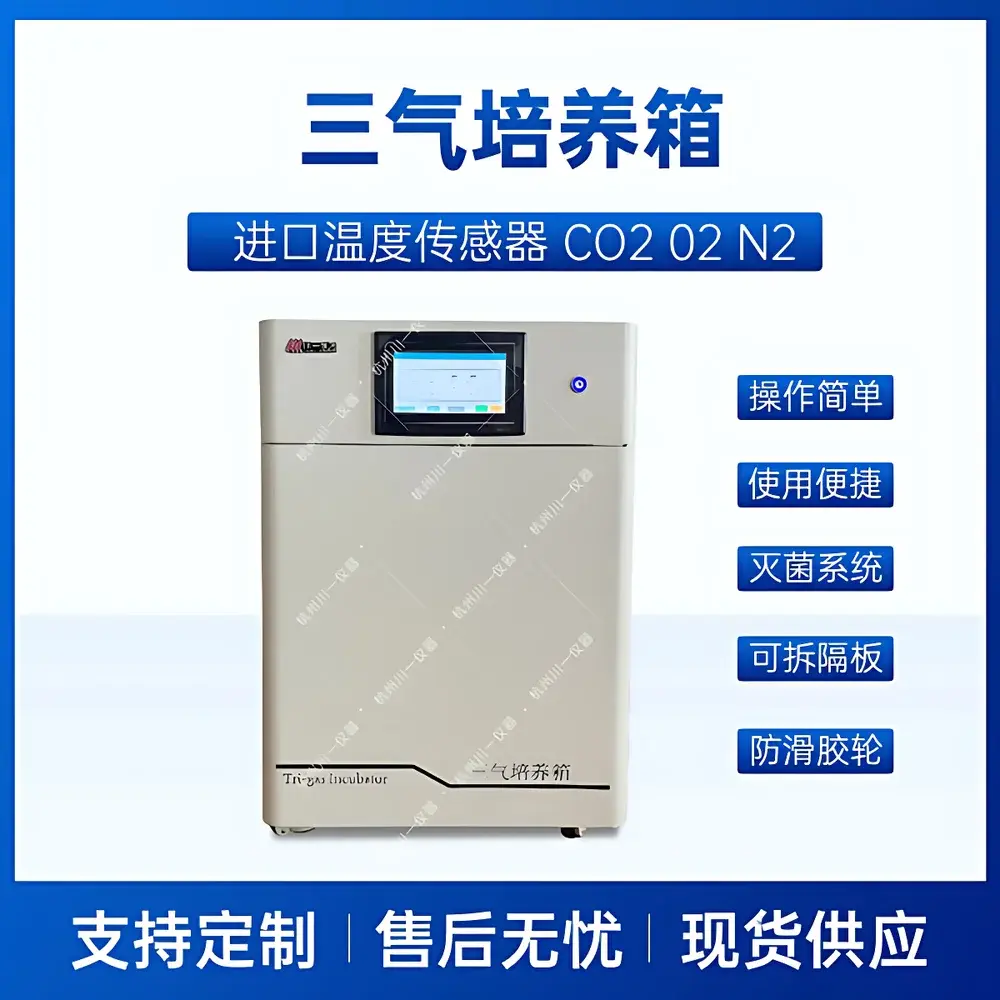
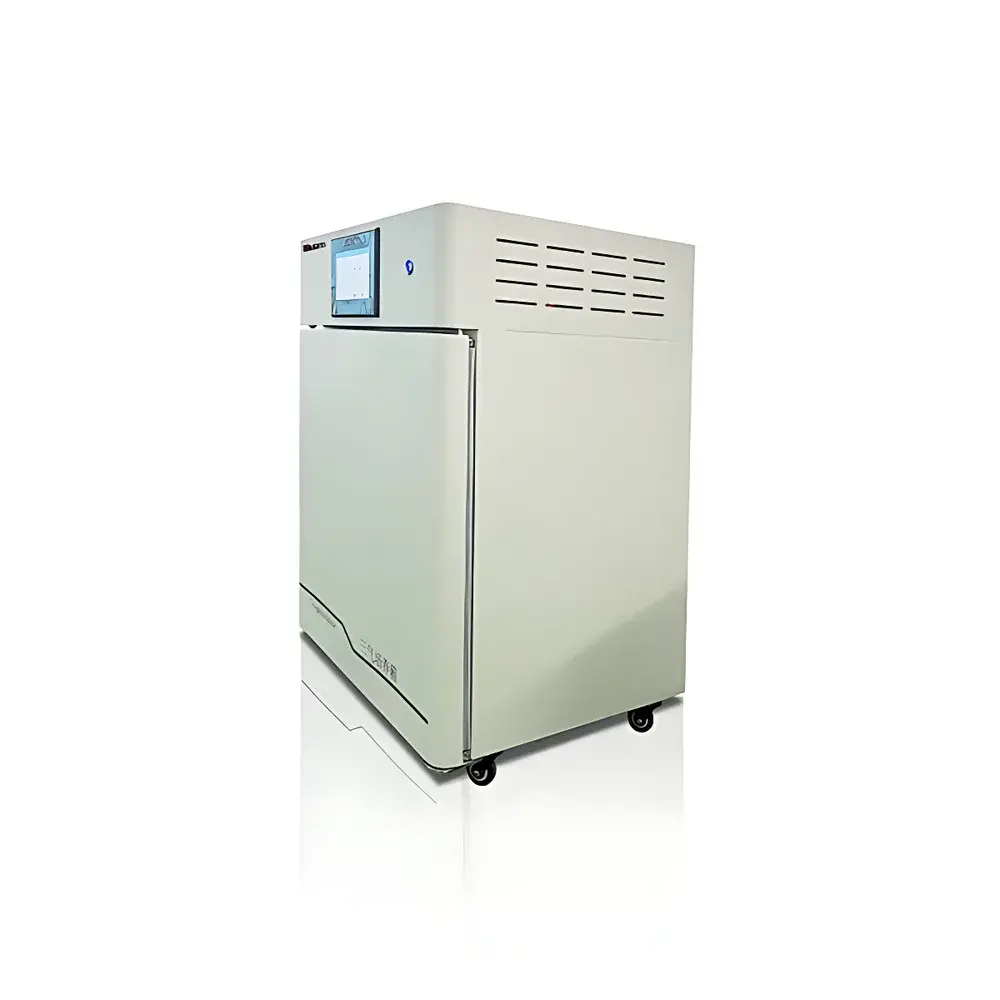
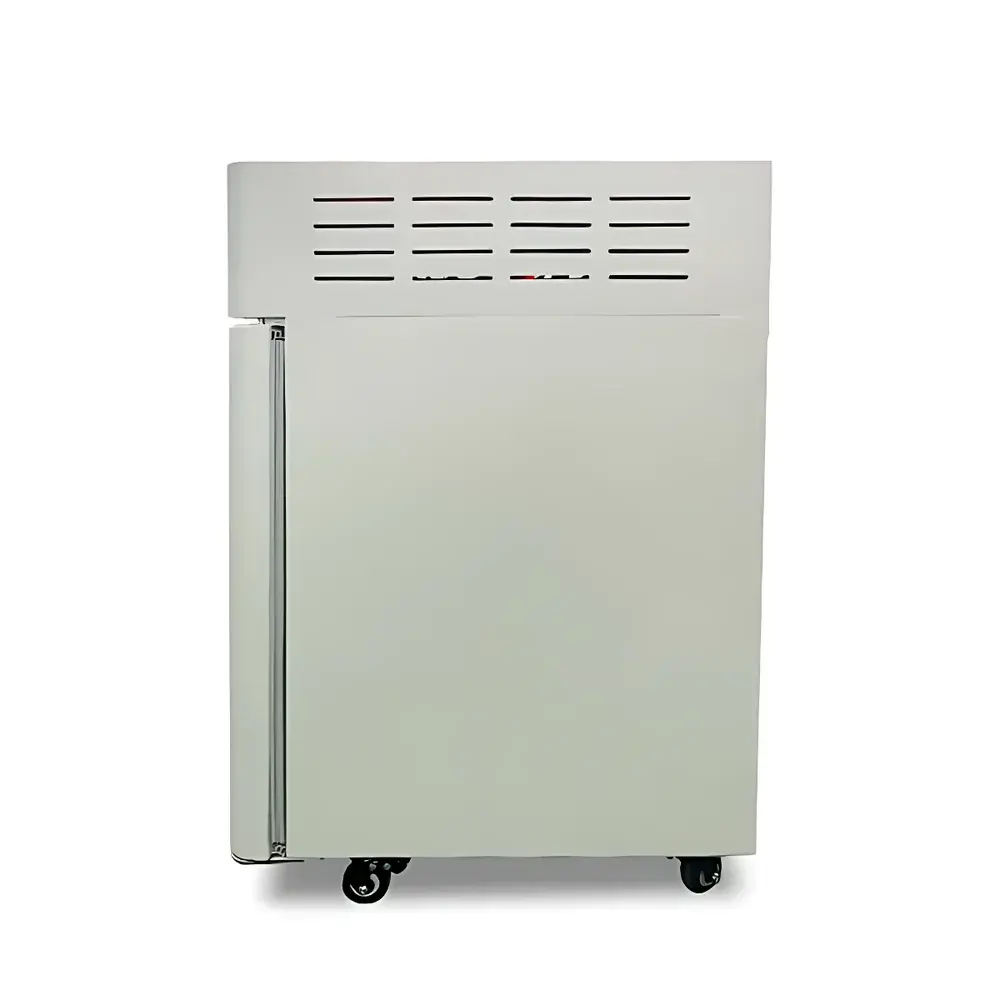
Chuanyi CYSQ-50-III Tri-Gas Incubator with Independent O₂/CO₂/N₂ Control for Hypoxic and Hyperoxic Cell Culture
| Brand | Chuanyi Instruments (Hangzhou Chuanyi Electronic Co., Ltd.) |
|---|---|
| Origin | Zhejiang, China |
| Manufacturer Type | OEM/ODM Manufacturer |
| Instrument Type | Air-Jacketed Tri-Gas Incubator |
| O₂ Range | 1–95% (v/v), programmable in 0.1% increments |
| CO₂ Range | 0–20% (v/v), ±0.1% accuracy |
| Temperature Range | RT+3°C to 60°C, ±0.1°C setpoint stability |
| Temperature Uniformity | ±0.3°C at 37°C |
| Humidity | ≥90% RH (passive humidity maintenance via integrated water pan |
| Chamber Volume | 50 L |
| External Dimensions (W×D×H) | 430 × 460 × 650 mm |
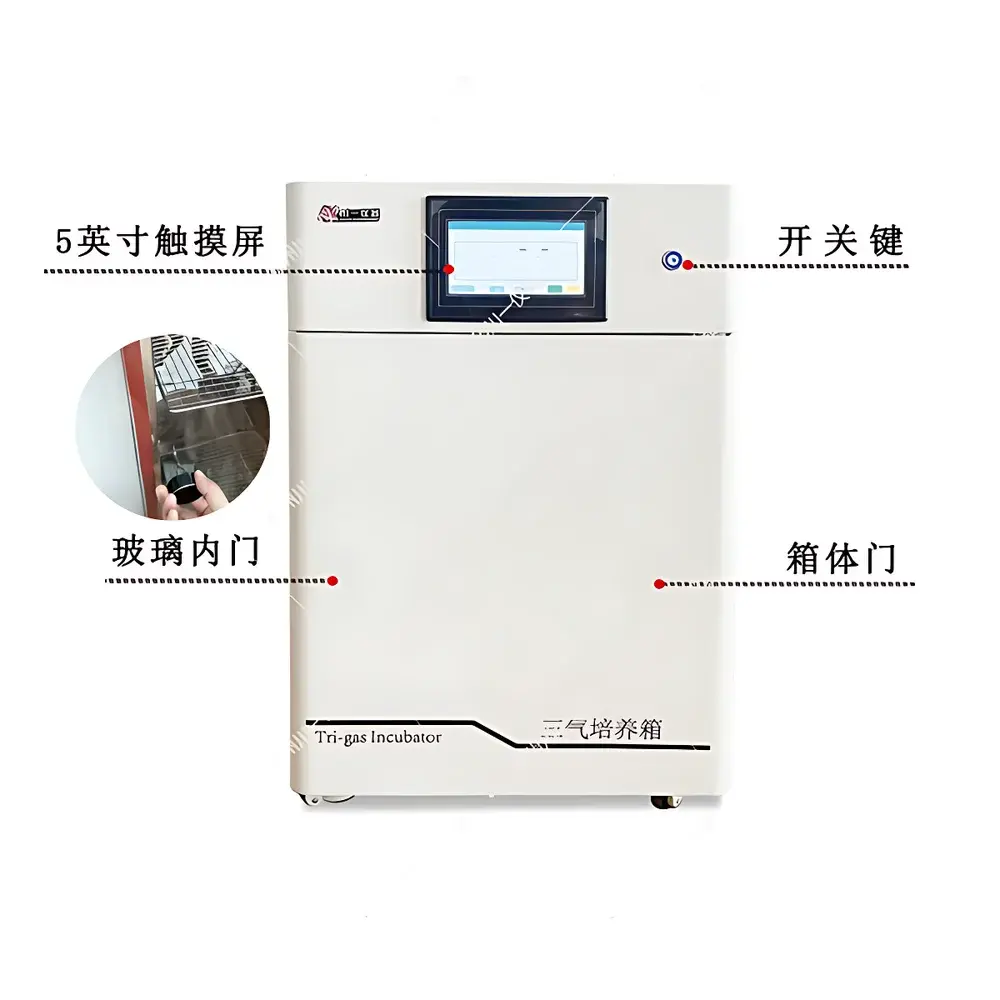
| Display & Interface | 7-inch capacitive TFT touchscreen with multi-language UI (English default) |
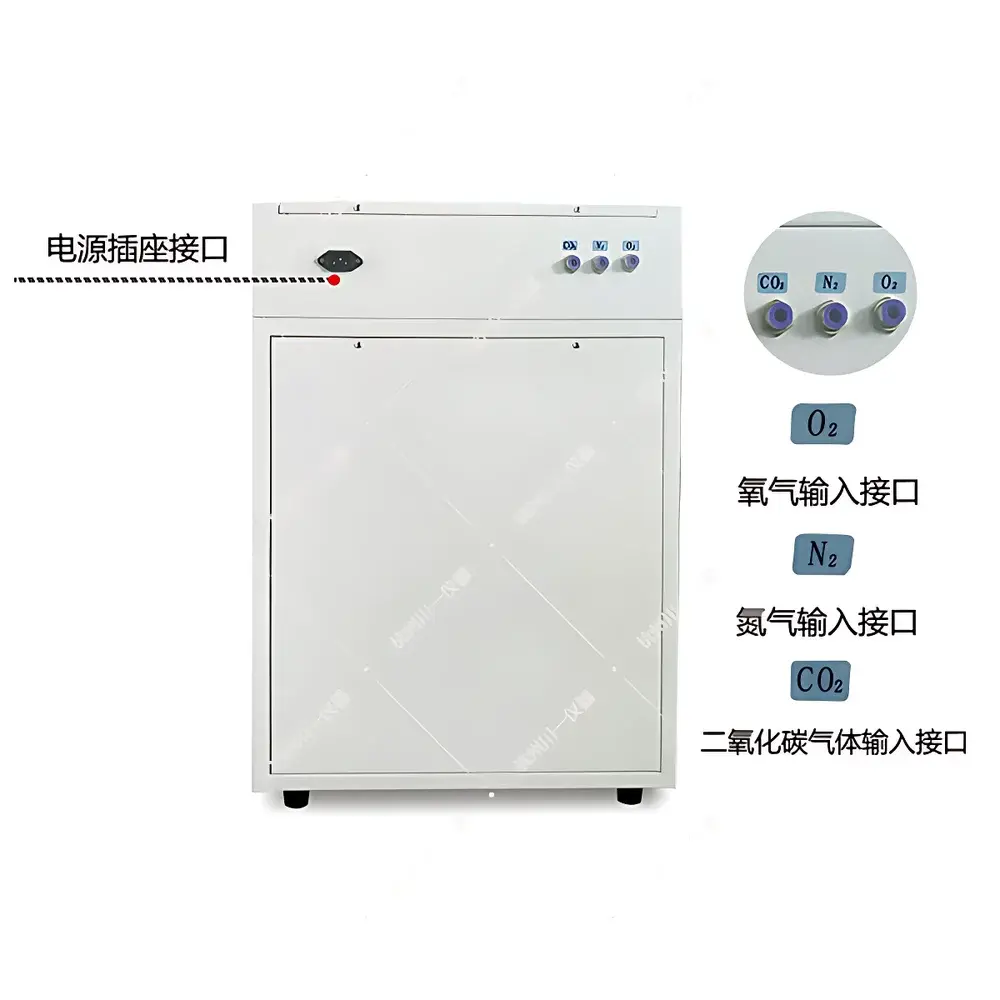
| Gas Delivery | Triple independent mass flow controllers (MFCs) for O₂, CO₂, and N₂ |
| Certifications | CE-marked per IEC 61010-1 |
Overview
The Chuanyi CYSQ-50-III Tri-Gas Incubator is an air-jacketed, microprocessor-controlled environmental chamber engineered for precise, reproducible simulation of physiologically relevant gas atmospheres in mammalian cell culture, stem cell expansion, tumor spheroid modeling, and microbiological studies requiring controlled hypoxia (1–5% O₂), normoxia (21% O₂), or hyperoxia (up to 95% O₂). Unlike standard CO₂ incubators, this system integrates three independently regulated gas channels—O₂, CO₂, and N₂—enabling dynamic, real-time modulation of partial pressures without cross-gas interference. The chamber employs a dual-sensor feedback loop: electrochemical O₂ sensors (with automatic zero-point calibration) and infrared CO₂ sensors (NDIR type), both traceable to NIST standards. Temperature regulation utilizes PID-controlled heating elements embedded in the air jacket, minimizing thermal overshoot and ensuring rapid recovery after door openings. The absence of active humidity control is compensated by a large-capacity stainless-steel water reservoir and optimized internal airflow design, sustaining ≥90% RH under steady-state conditions at 37°C and 5% CO₂—critical for preventing medium evaporation during long-term culture.
Key Features
- Air-jacketed thermal architecture with triple-layer insulated chamber walls and low-thermal-mass heating elements for ±0.3°C uniformity at 37°C and <15-minute temperature recovery post-door opening
- Three independent mass flow controllers (MFCs) with digital proportional valves, supporting simultaneous O₂ (1–95%), CO₂ (0–20%), and N₂ (balance gas) regulation with ≤±0.1% setpoint deviation
- 7-inch high-resolution capacitive touchscreen interface with intuitive menu navigation, user-defined protocol storage (up to 20 profiles), and real-time graphical display of all environmental parameters
- Passive humidity maintenance system featuring a 3.5 L corrosion-resistant water pan, optimized chamber geometry, and laminar airflow distribution to sustain ≥90% RH without condensation or localized dry zones
- Integrated safety architecture including over-temperature cut-off (mechanical backup), door-open alarm with audible/visual notification, gas leak detection (pressure decay test on startup), and sensor failure diagnostics
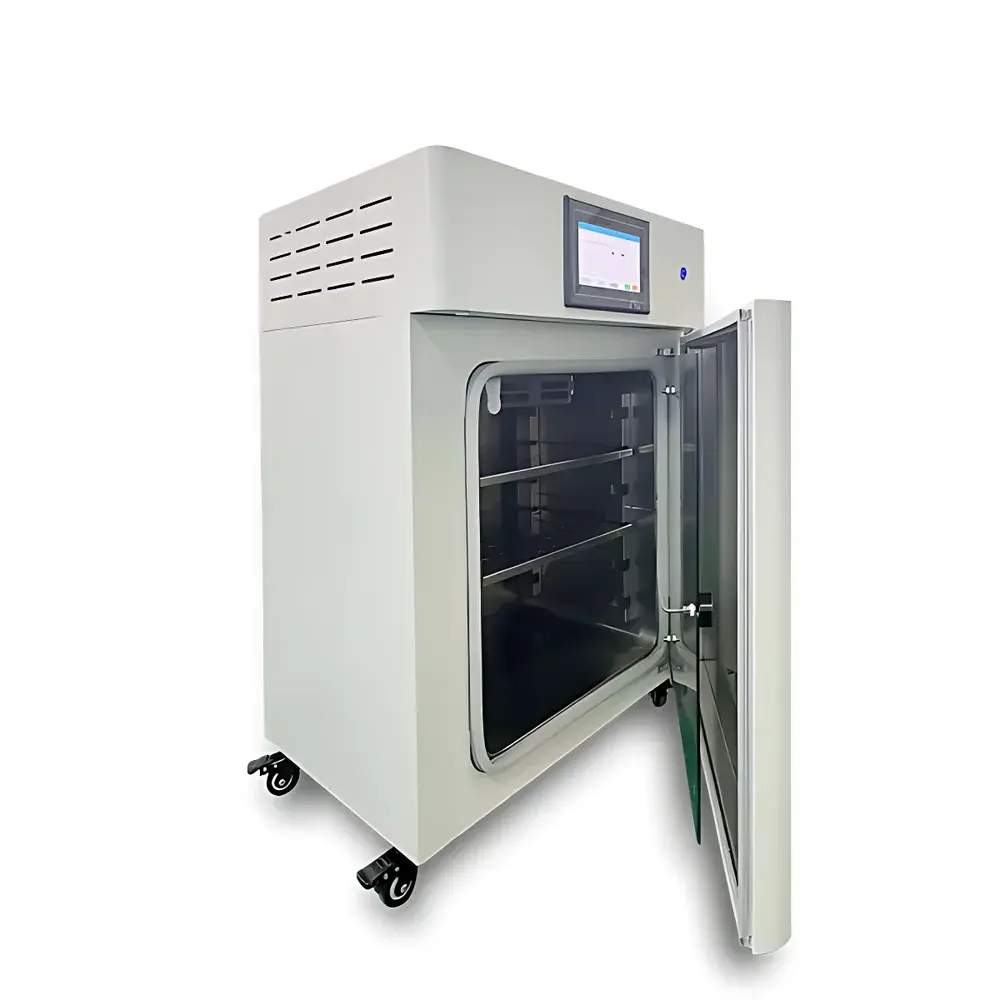
- Stainless-steel interior (304 grade) with seamless welds and rounded corners for ease of sterilization; removable, autoclavable stainless-steel shelves (2 standard, 1 optional)
Sample Compatibility & Compliance
The CYSQ-50-III accommodates standard tissue culture formats including T-25/T-75 flasks, 6-/12-/96-well plates, Petri dishes, and roller bottles up to 500 mL. Its gas-tight chamber seal (silicone gasket + dual-latch mechanism) ensures stable atmosphere retention during extended experiments (>72 h). The system meets essential laboratory safety and performance benchmarks: CE marking per IEC 61010-1 (electrical safety) and EN 61326-1 (EMC); design documentation aligns with ISO 13485 principles for medical device-associated research instrumentation. While not FDA-cleared as a medical device, its operational parameters satisfy common requirements for GLP-compliant cell banking, USP <1043> ancillary materials qualification, and ISO 55552-1 (cell therapy process validation). All gas sensors are factory-calibrated and support user-initiated verification using certified reference gases (e.g., 5% CO₂ in air, 1% O₂ in N₂).
Software & Data Management
The incubator operates natively via its embedded firmware with no external PC dependency. Environmental data—including O₂, CO₂, temperature, and door status—is logged internally at 1-minute intervals for up to 30 days (circular buffer). USB-C export enables CSV-formatted data retrieval for integration into LIMS or statistical analysis platforms (e.g., JMP, GraphPad Prism). Optional RS-485 Modbus RTU interface allows centralized monitoring within facility-wide building management systems (BMS). Audit trails record all parameter changes, user logins, and alarm events with timestamps—supporting basic 21 CFR Part 11 readiness when paired with institutional electronic signature policies. Firmware updates are performed via secure USB drive with SHA-256 checksum verification.
Applications
- Hypoxia research: Modeling ischemic injury, HIF-1α pathway activation, and cancer cell metabolic reprogramming under 0.5–5% O₂
- Stem cell differentiation: Maintaining pluripotency in human embryonic stem cells (hESCs) at 5% O₂ or directing neural lineage commitment under graded O₂ tension
- Microaerophilic microbiology: Culturing Helicobacter pylori, Campylobacter jejuni, and oral anaerobes requiring precise O₂ gradients
- 3D organoid culture: Sustaining vascularized intestinal or hepatic organoids with physiological O₂ stratification (e.g., 2–8% basolateral vs. 15–21% apical)
- Bioprocess development: Screening optimal gas conditions for monoclonal antibody production in CHO cells under varying O₂/CO₂ ratios
FAQ
Does this incubator actively control relative humidity?
No. The CYSQ-50-III maintains ≥90% RH passively via a large-capacity water reservoir and optimized internal convection. Active humidification is omitted to reduce contamination risk and simplify maintenance.
What type of CO₂ sensor is used, and how often does it require recalibration?
A non-dispersive infrared (NDIR) CO₂ sensor is employed, offering long-term stability and immunity to humidity drift. Factory calibration is valid for 12 months; annual verification with certified 5% CO₂ in air gas is recommended.
Can the incubator operate with pure oxygen or pure nitrogen atmospheres?
Yes. The triple-MFC architecture supports 1–95% O₂ and full N₂ balance, enabling true anoxic (0% O₂) or hyperoxic (≥90% O₂) environments when configured with appropriate gas supply lines and pressure regulators.
Is the touchscreen interface compatible with glovebox integration?
The front-panel interface is fully functional behind standard acrylic glovebox viewports. For full integration, the RS-485 port supports remote command execution (e.g., start/stop, setpoint change) from external PLCs or SCADA systems.
What maintenance is required to ensure long-term sensor accuracy?
Monthly visual inspection of the water pan level and quarterly cleaning of the O₂ sensor protective membrane with 70% ethanol are sufficient. Annual sensor verification using traceable gas standards is advised for GxP-aligned workflows.






