
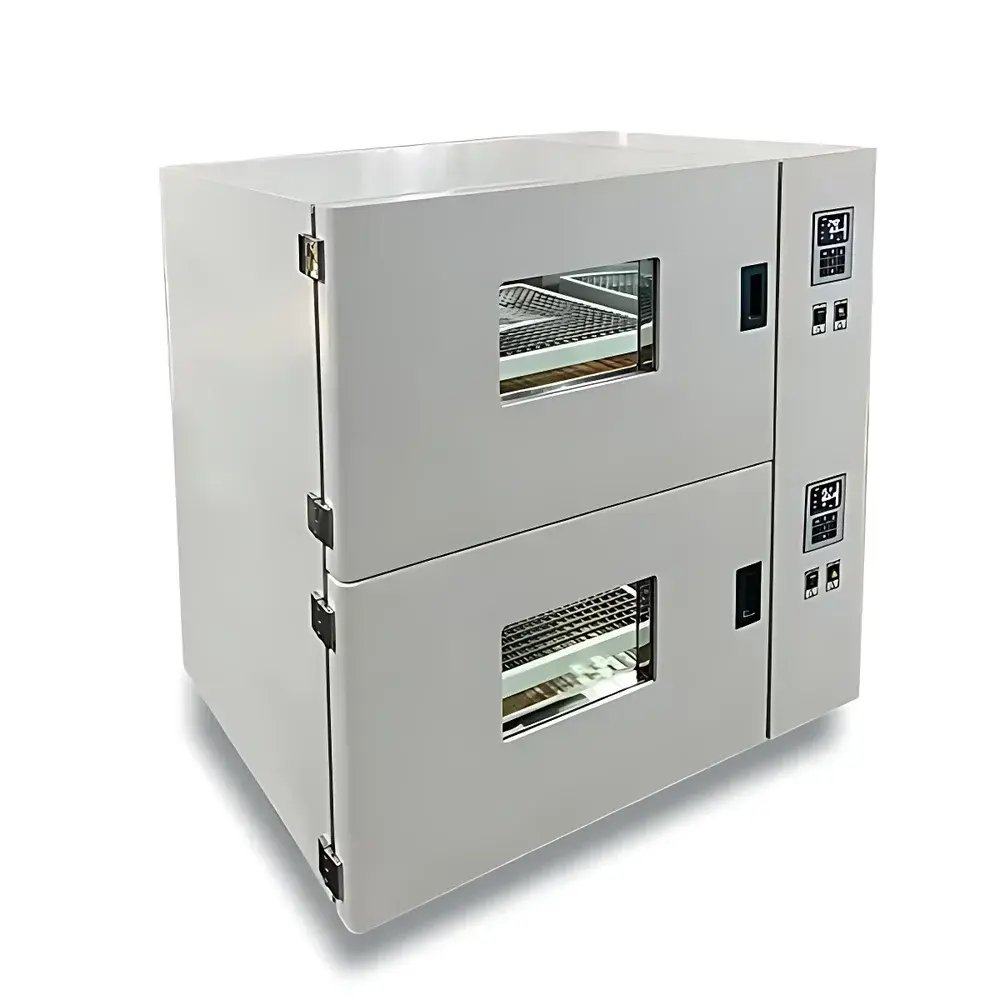
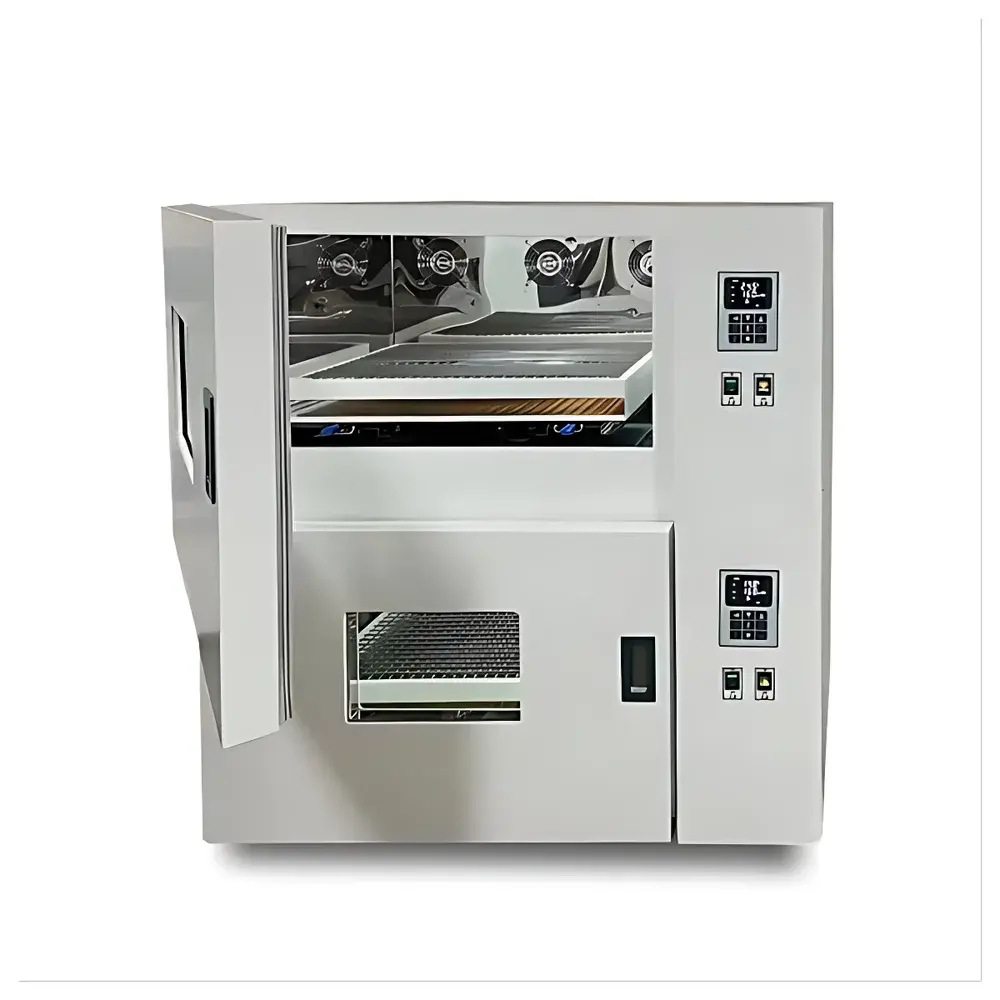
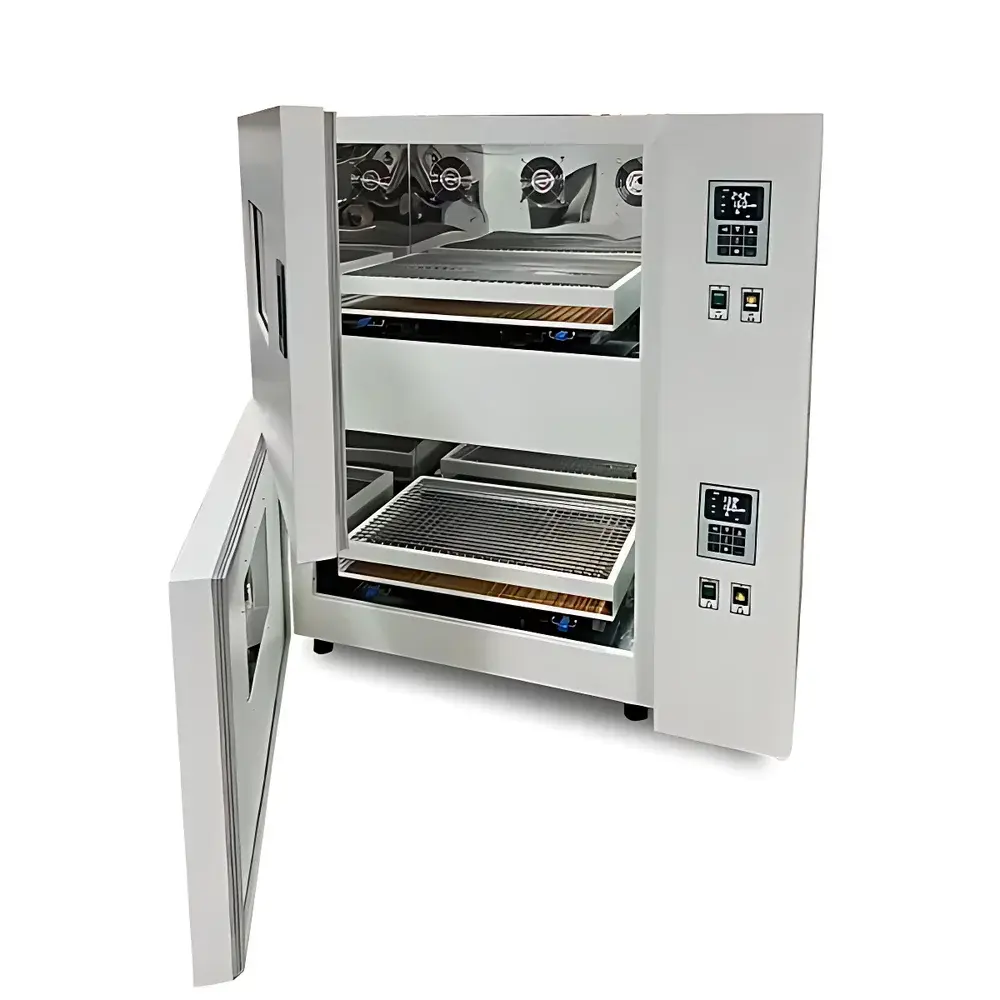
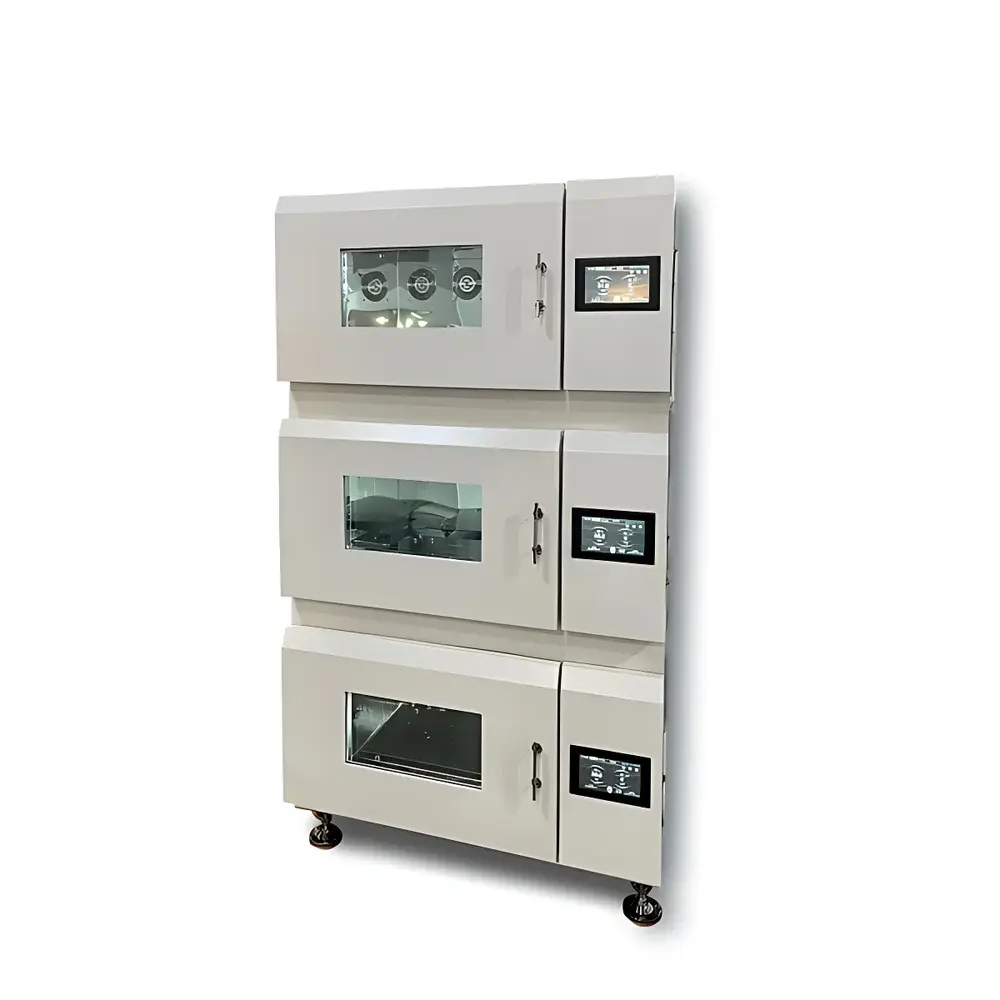
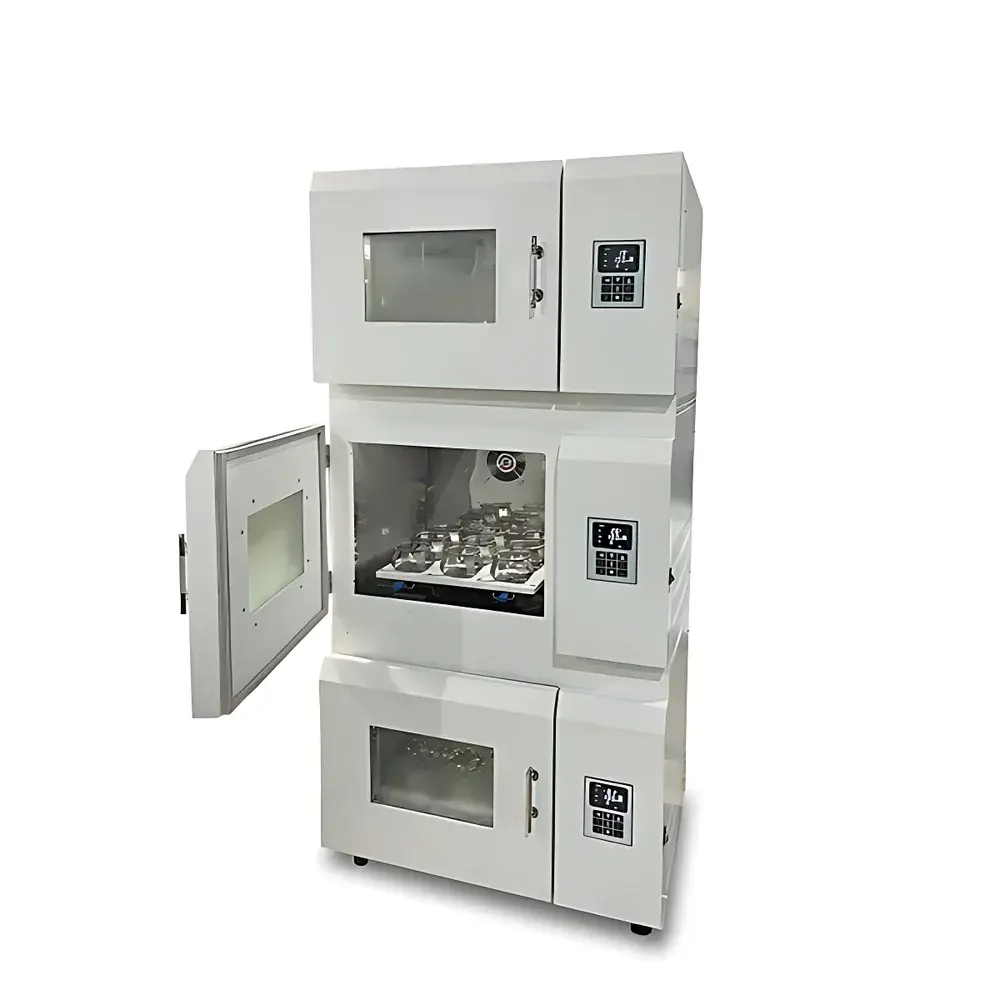
Chuanyu Instruments CHDJ-II Dual-Layer Stackable Incubator Shaker with Independent Temperature Control
| Brand | Chuanyu Instruments (Shanghai Chuanyu Instrument Co., Ltd.) |
|---|---|
| Origin | Shanghai, China |
| Manufacturer Type | Authorized Distributor |
| Product Category | Domestic |
| Model | CHDJ-II (2-Layer) |
| Instrument Type | Stackable Constant-Temperature Shaker |
| Timer Range | 0–120 min (standard) |
| optional extended timer | 0–9999 min |
| Oscillation Frequency | 0–280 rpm |
| Oscillation Amplitude | 26 mm (Φ) |
| Temperature Range | 4–60 °C |
| Temperature Accuracy | ≤ ±0.5 °C (typical) |
| Temperature Uniformity | ≤ ±0.5 °C across chamber |
| Number of Shaking Platforms | 2 |
| Platform Dimensions | 440 × 350 mm |
| Inner Chamber Dimensions (per layer) | 540 × 450 × 450 mm |
| Overall Dimensions (2-layer) | 640 × 700 × 1400 mm |
| Power Supply | 220 V, 50 Hz |
| Drive System | Brushless DC motor with eccentric cam mechanism |
| Display | 5-inch color LCD touchscreen |
| Control Logic | PID auto-tuning temperature controller with PT100 sensor |
| Security | Three-level password management |
| Defrost Mode | Five-stage automatic defrost |
| Power Recovery Modes | Resume, Hold, or Restart |
| Door Access | Side-opening design, tool-free operation |
| Optional Features | UV germicidal lamp, internal LED illumination, 10-segment programmable schedule (temp + speed), data logging with USB export (CSV), RS-485 interface (optional) |
Overview
The Chuanyu Instruments CHDJ-II Dual-Layer Stackable Incubator Shaker is an engineered platform for simultaneous temperature-controlled incubation and orbital shaking—designed to meet the stringent operational requirements of microbiological culture, enzymatic assays, cell suspension maintenance, fermentation optimization, and hybridization protocols. Its dual-layer architecture enables independent thermal regulation per deck, eliminating cross-layer thermal interference and supporting parallel experiments under divergent temperature conditions (e.g., 37 °C mammalian cell culture on the upper layer and 25 °C fungal growth on the lower). The system operates on the principle of controlled orbital motion (26 mm diameter circular trajectory) driven by a brushless DC motor and precision-machined eccentric cam assembly—ensuring low-vibration, high-reproducibility agitation without mechanical wear or speed drift over extended duty cycles. Temperature control employs a high-stability PT100 platinum resistance thermometer coupled with a microprocessor-based PID algorithm that dynamically adjusts heating power to maintain setpoint fidelity within ±0.1 °C under steady-state conditions—a critical capability for sensitive kinetic studies and long-term bioprocess monitoring.
Key Features
- Independent dual-zone temperature control: Each of the two stacked decks features dedicated heating elements, PT100 sensing, and PID logic—enabling concurrent operation at different setpoints (e.g., 4–60 °C range per layer) with no thermal crosstalk.
- 5-inch full-color LCD touchscreen interface: Displays real-time temperature, RPM, elapsed time, and alarm status simultaneously; supports multi-parameter configuration, user-defined profiles, and intuitive navigation.
- High-fidelity motion control: Brushless DC motor delivers smooth, low-noise oscillation from 0 to 280 rpm with digital feedback and ±1 rpm resolution; forward/reverse direction selection enhances mixing uniformity for viscous or sediment-prone samples.
- Robust thermal architecture: Five-stage adaptive defrost cycle prevents ice accumulation during prolonged low-temperature operation (down to 4 °C); eliminates condensation-induced instability and ensures uninterrupted performance in humid environments.
- Comprehensive data governance: Built-in logging captures timestamped temperature, speed, and operational state; data export via USB (CSV format) supports traceability for GLP-compliant workflows; optional RS-485 enables integration into centralized lab automation systems.
- Operational safety & integrity: Three-tier password protection restricts access to calibration, program editing, and system reset functions; configurable power recovery modes (resume/hold/restart) preserve experimental continuity after grid interruption.
Sample Compatibility & Compliance
The CHDJ-II accommodates standard laboratory vessels—including Erlenmeyer flasks (up to 5 L), test tubes, deep-well plates, and custom bioreactor bottles—secured via stainless-steel universal spring clamps (included) or optional fixed-position fixtures. Its 440 × 350 mm platform size and 450 mm internal height per layer support scalable culture volumes while maintaining uniform heat transfer and agitation kinetics. The unit complies with IEC 61010-1:2010 for electrical safety in laboratory equipment and meets EN 60335-1 requirements for temperature-controlled appliances. While not certified for ISO 13485 or FDA 21 CFR Part 11 out-of-the-box, its audit-trail-capable logging system (with user ID tagging and immutable timestamps) provides foundational infrastructure for validation under GMP/GLP frameworks when deployed with documented SOPs and periodic performance qualification (PQ).
Software & Data Management
The embedded firmware implements a deterministic real-time control loop for both thermal and mechanical subsystems. All operational parameters—including temperature setpoints, ramp rates, oscillation profiles, and defrost schedules—are stored in non-volatile memory with write-protection against accidental overwrite. The onboard data logger records values at user-configurable intervals (1 s to 60 min), retaining up to 30 days of continuous history. Exported CSV files contain columns for datetime (ISO 8601), layer ID, measured temperature (°C), setpoint temperature (°C), actual RPM, target RPM, and system status flags (e.g., “HEATING”, “DEFROSTING”, “ALARM”). For regulated environments, the optional RS-485 interface supports Modbus RTU protocol, enabling bidirectional communication with LIMS or SCADA platforms for automated data ingestion, remote diagnostics, and electronic signature-enabled batch record generation.
Applications
- Mammalian and insect cell suspension culture requiring precise oxygen transfer and thermal stability (e.g., CHO, HEK293, Sf9 lines).
- Microbial fermentation studies across temperature gradients—such as E. coli expression at 37 °C versus psychrophilic strain cultivation at 15 °C—conducted in parallel on separate decks.
- Enzyme kinetics assays where reaction rate is highly sensitive to both temperature deviation and mixing homogeneity (e.g., lipase activity in emulsified substrates).
- DNA hybridization and probe labeling protocols demanding consistent agitation and narrow thermal windows (e.g., Southern/Northern blot pre-hybridization steps).
- Environmental microbiology applications including BOD testing, biodegradation screening, and activated sludge acclimation under controlled thermal stress.
- Pharmaceutical QC workflows involving dissolution profile verification, microbial limit testing media preparation, and stability-indicating assay development.
FAQ
Does the CHDJ-II support GLP-compliant data integrity?
Yes—when configured with USB logging enabled and timestamped exports, it satisfies ALCOA+ principles (Attributable, Legible, Contemporaneous, Original, Accurate) for raw data capture. Full 21 CFR Part 11 compliance requires supplemental controls (e.g., electronic signatures, audit trail review procedures), which can be implemented via site-specific validation.
Can I operate only one layer while keeping the other idle?
Yes—the dual-layer control system allows independent activation/deactivation of heating and shaking per deck, enabling energy-efficient single-layer use without compromising thermal isolation.
What is the maximum flask volume supported per platform?
With standard spring clamps, the platform safely accommodates up to four 2 L Erlenmeyer flasks or eight 1 L flasks balanced symmetrically around the rotation center; load distribution must adhere to ISO 22810:2020 center-of-mass guidelines to prevent resonance-induced instability.
Is UV sterilization integrated or optional?
UV germicidal irradiation (254 nm) is an optional factory-installed module—not standard—and requires separate validation for microbial reduction efficacy per ISO 15714:2019.
How does the five-stage defrost function prevent cold-room condensation issues?
By intelligently sequencing heater activation, fan modulation, and drain valve timing, the system evacuates condensed moisture before ice nucleation occurs—ensuring uninterrupted operation below 10 °C for >72 hours without observable frost accumulation on evaporator coils or chamber walls.




