
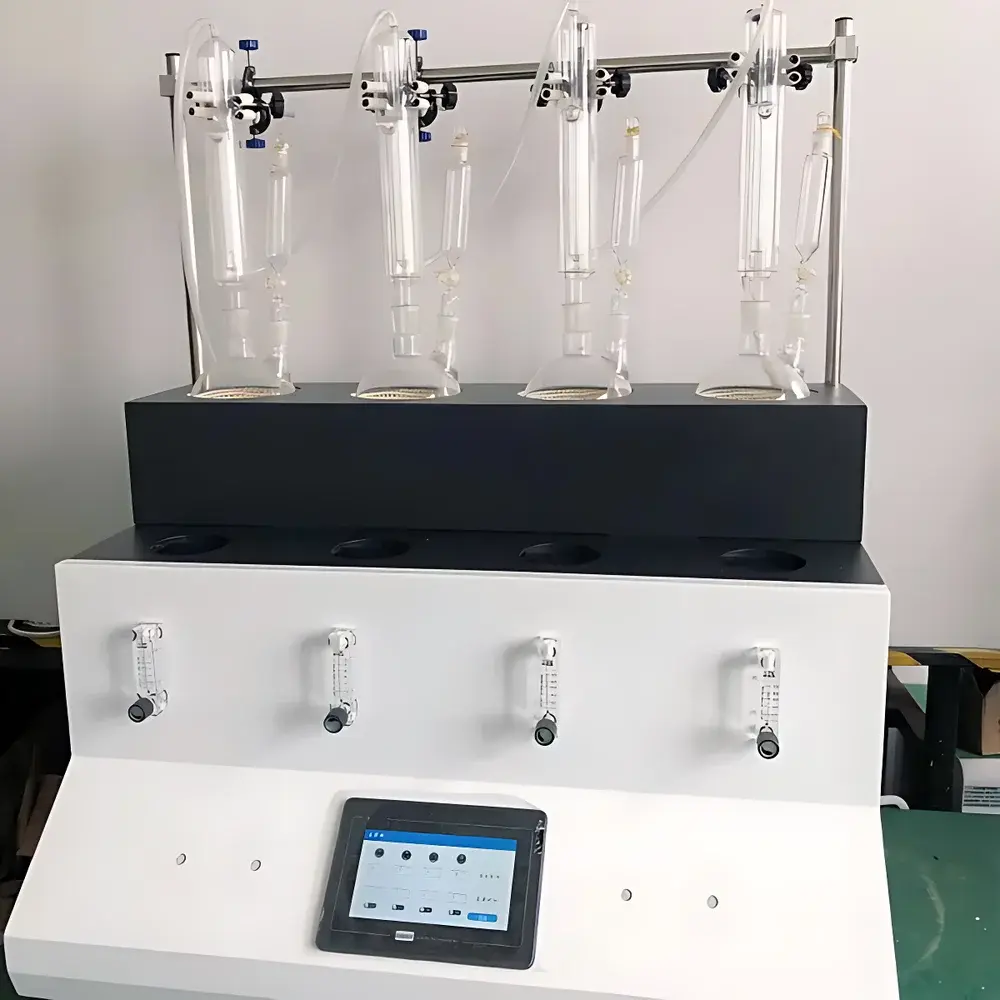
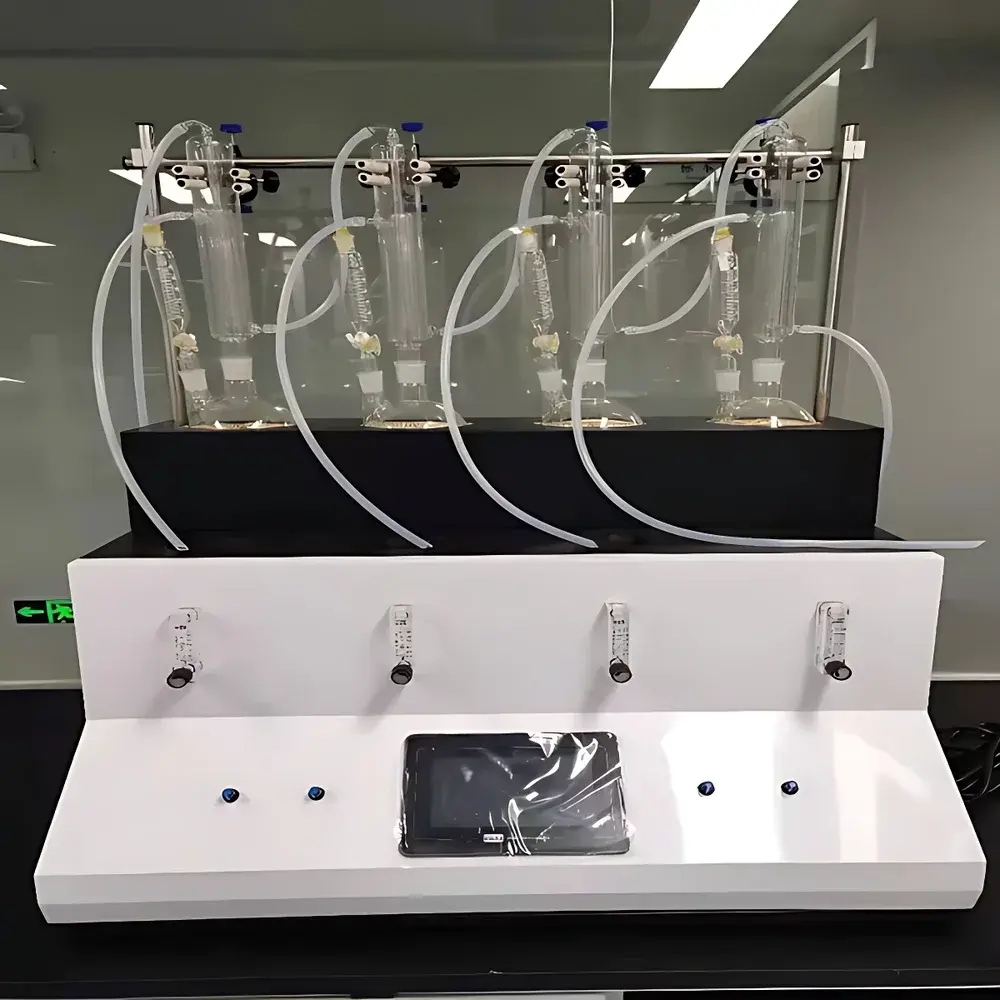
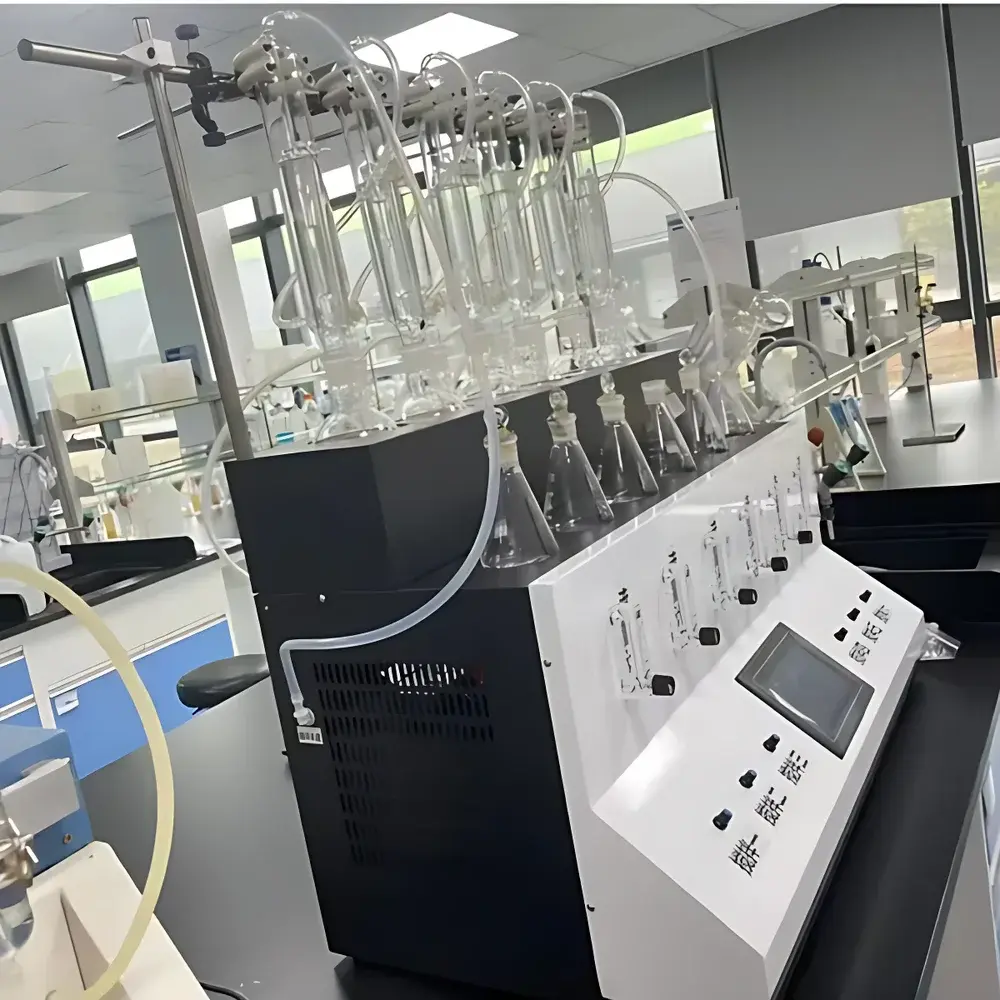
Chuanyu Instruments CHSO2-4 Sulfur Dioxide Residue Distillation Analyzer for Food, Traditional Chinese Medicine, and Beverage Industries
| Brand | Chuanyu Instruments (chuanyuyiqi) |
|---|---|
| Origin | Shanghai, China |
| Manufacturer Type | Authorized Distributor |
| Regional Classification | Domestic (China-manufactured) |
| Model | CHSO2-4 |
| Instrument Category | Standard Quartz Glass Distillation Apparatus |
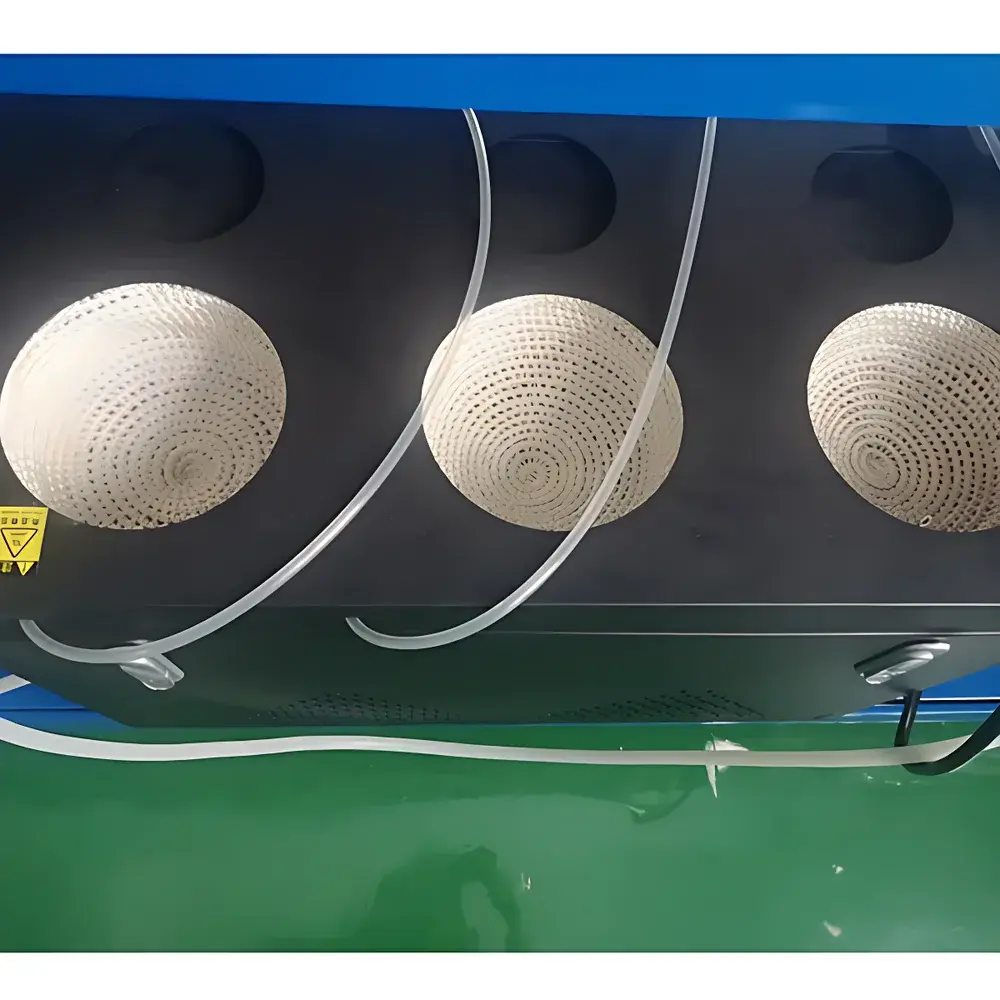
| Heating Method | Enclosed Infrared Ceramic Heating Mantles |
| Cooling Method | External Tap Water or Integrated Recirculating Chiller (Optional) |
| Distillation Rate | 15 mL/min |
| Heating Ramp Time | 8–15 min |
| Endpoint Control | Programmable Timer |
| Heating Stations | 4-position |
Overview
The Chuanyu Instruments CHSO2-4 Sulfur Dioxide Residue Distillation Analyzer is a dedicated benchtop distillation system engineered for accurate, reproducible quantification of free and bound sulfur dioxide (SO₂) in complex matrices—primarily herbal medicinal materials, fermented beverages (e.g., wine, rice wine), and processed food products. It operates on the principle of acid displacement distillation under controlled inert gas purging, as specified in pharmacopoeial methods including the Chinese Pharmacopoeia (ChP) 2020 Edition Vol. IV, General Chapter 2331, and aligned with AOAC Official Method 990.28 and ISO 5775-1 for sulfite analysis. Unlike conventional open-flame or water-bath glass distillation setups, the CHSO2-4 integrates sealed infrared ceramic heating mantles, individual station temperature regulation, and programmable nitrogen-assisted gas-phase transfer—addressing two critical limitations of legacy systems: low SO₂ recovery (typically 30–50%) and extended distillation duration (>90 min). By optimizing vapor-phase dynamics—leveraging SO₂’s higher molecular weight (64 g/mol) and density relative to air—the system achieves ≥70% recovery within ≤6 minutes per sample, significantly improving throughput and analytical robustness in QC/QA laboratories.
Key Features
- Four independent distillation stations with individually controllable infrared ceramic heating mantles—each equipped with real-time temperature feedback and adjustable power output (up to 400 °C setpoint).
- Integrated micro-boiling control algorithm to maintain gentle, consistent reflux without bumping or frothing—critical for preserving volatile SO₂ integrity during acid displacement (HCl-mediated hydrolysis).
- Full-touch LCD interface with intuitive workflow navigation, preloaded method templates (ChP, USP <233>, AOAC), and audit-trail-capable event logging (start time, heating duration, endpoint trigger).
- Dedicated nitrogen manifold with four precision flow meters (0–1 L/min range, ±5% FS), enabling synchronized inert gas sweep across all stations to drive SO₂ vapor upward into the condenser—compensating for its gravitational settling tendency.
- Flexible cooling architecture: compatible with external tap water supply or optional integrated recirculating chiller (model CH-COOL-1000), eliminating dependency on municipal water pressure or temperature fluctuations.
- Safety-engineered design includes dry-run protection, ground-fault circuit interruption (GFCI), and magnetic stirring integration in each 1000 mL quartz digestion flask to ensure homogeneous reaction kinetics and prevent localized overheating.
Sample Compatibility & Compliance
The CHSO2-4 accommodates solid, semi-solid, and liquid samples compliant with pharmacopoeial preparation protocols—including powdered herbs (e.g., Paeonia lactiflora, Glycyrrhiza uralensis), fruit wines, dried fruits, preserved vegetables, and sulfited seafood. All wetted components—including digestion flasks, condensers, and receiving vessels—are fabricated from high-purity fused quartz to resist HCl corrosion and minimize adsorptive SO₂ loss. The system supports GLP/GMP-aligned operation through traceable parameter locking, user-level access control (admin/operator modes), and exportable CSV logs meeting FDA 21 CFR Part 11 requirements when paired with validated LIMS integration. It conforms to electrical safety standards IEC 61010-1 and electromagnetic compatibility per EN 61326-1.
Software & Data Management
The embedded firmware provides method-driven automation: users select matrix type (herb/wine/food), input sample weight and dilution factor, then launch a validated sequence that governs heating ramp profile, nitrogen purge timing, distillation duration, and audible endpoint alert. Raw data—including actual temperature curves, flow rates, and timer stamps—is stored locally with timestamped backups exportable via USB. Optional PC-based software (DistilSoft v3.2, sold separately) enables multi-instrument fleet monitoring, statistical process control (SPC) charting, and automated report generation compliant with ISO/IEC 17025 documentation requirements.
Applications
- Quantitative SO₂ residue testing in TCM decoction pieces prior to release per ChP 2020 limits (e.g., ≤150 mg/kg for processed Polygonum multiflorum).
- Routine sulfite verification in wineries to meet EU Regulation (EC) No 606/2009 and U.S. TTB labeling thresholds (≥10 ppm must be declared).
- Stability-indicating analysis of SO₂ migration in packaged foods during shelf-life studies (e.g., dried apricots, shrimp paste).
- Method validation support for ISO 5775-1:2022 interlaboratory trials requiring ≥65% recovery and RSD <5% (n=6).
- Training platform for regulatory auditors and laboratory technicians on pharmacopoeial distillation mechanics and gas-phase transport phenomena.
FAQ
How does the CHSO2-4 improve SO₂ recovery compared to traditional glass distillation apparatuses?
It employs synchronized nitrogen purging and optimized condenser vacuum dynamics to overcome SO₂’s high density (2.927 g/L at 25 °C), which causes gravitational settling in static systems—thereby increasing effective vapor-phase residence time and transfer efficiency.
Is the system compatible with existing lab infrastructure such as centralized nitrogen lines?
Yes—the rear-mounted nitrogen inlet accepts standard 6 mm OD tubing and operates within 0.2–0.6 MPa supply pressure; flow is independently metered per station.
Can the CHSO2-4 be used for other volatile analytes beyond SO₂?
While validated exclusively for sulfur dioxide per pharmacopoeial protocols, its modular thermal and gas-handling architecture permits adaptation to hydrogen cyanide (HCN) or formaldehyde distillation upon method revalidation and condenser retrofitting.
What maintenance is required to sustain accuracy over long-term operation?
Quarterly calibration of temperature sensors (traceable to NIST standards) and annual verification of nitrogen flow meters using a primary rotameter are recommended; quartz components require only detergent-free rinsing after use.
Does the instrument support 21 CFR Part 11 compliance out of the box?
Electronic records meet core ALCOA+ principles; full Part 11 compliance requires deployment with validated third-party LIMS or DistilSoft v3.2 with digital signature and audit trail modules enabled.



