
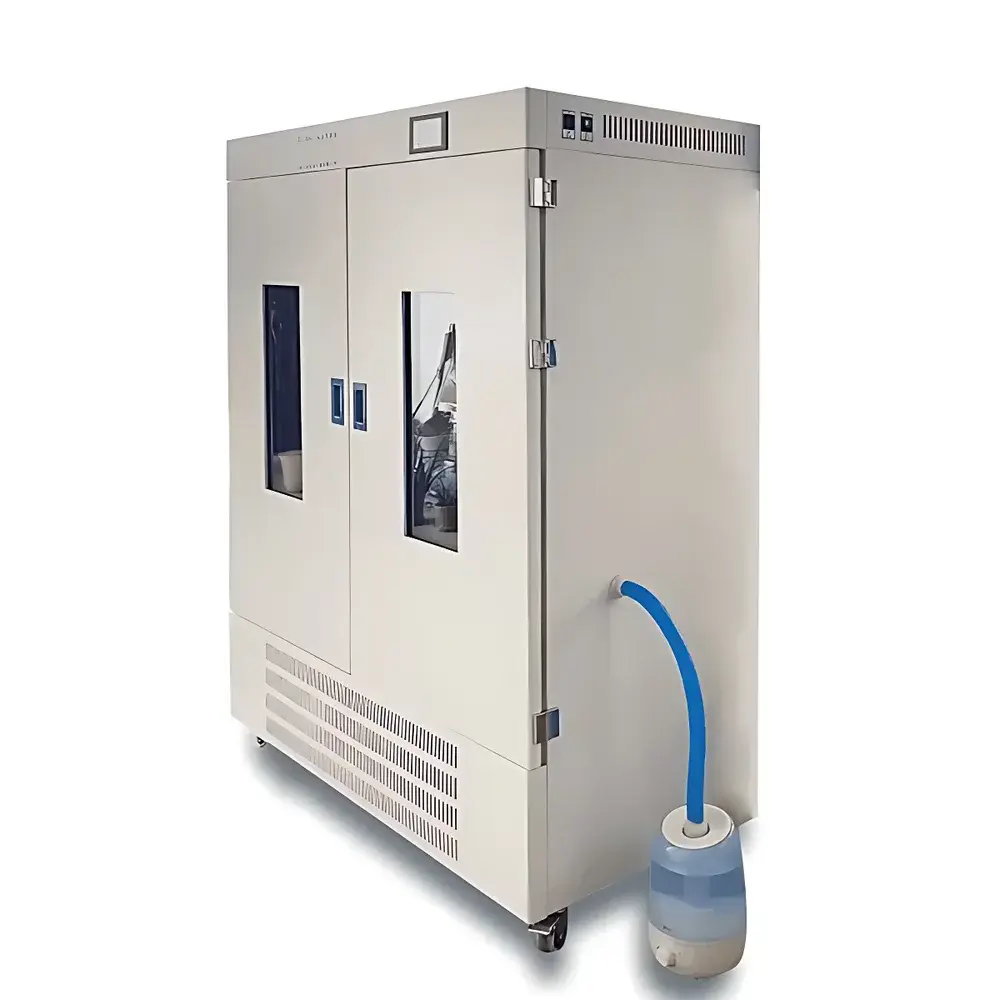
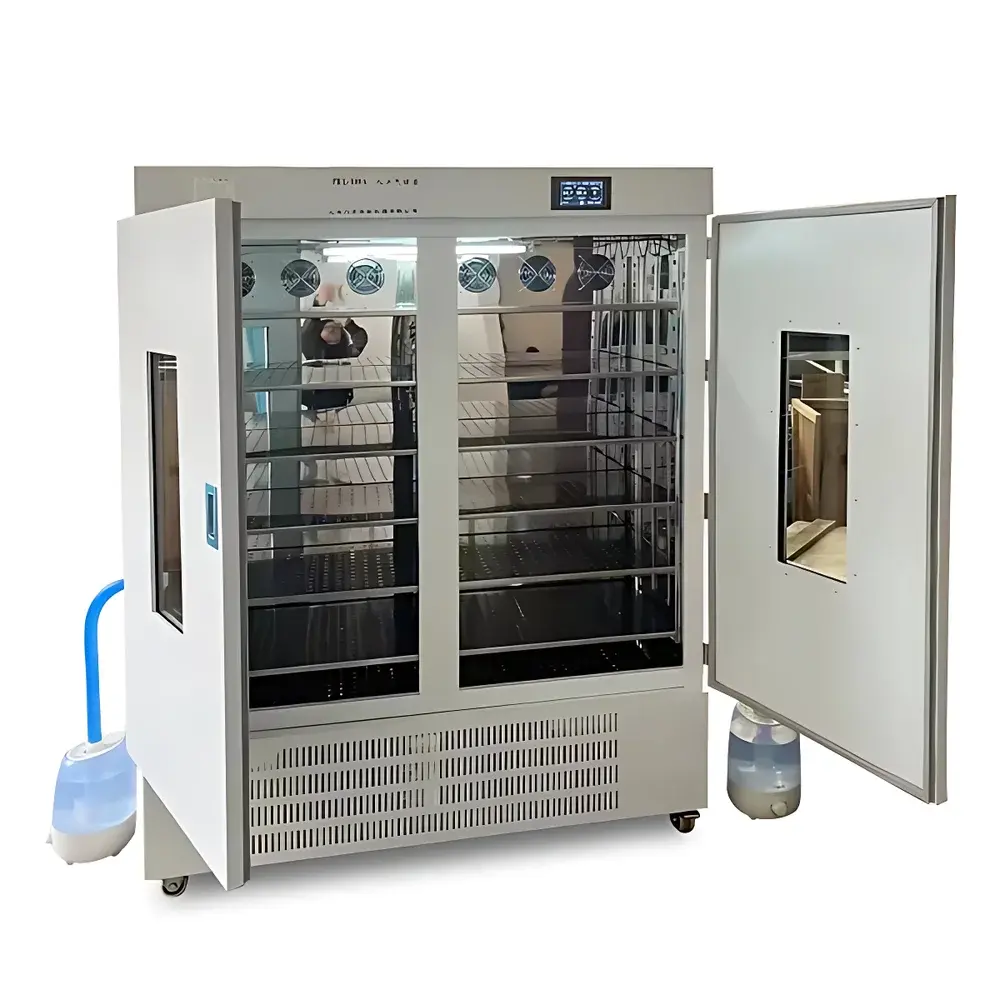
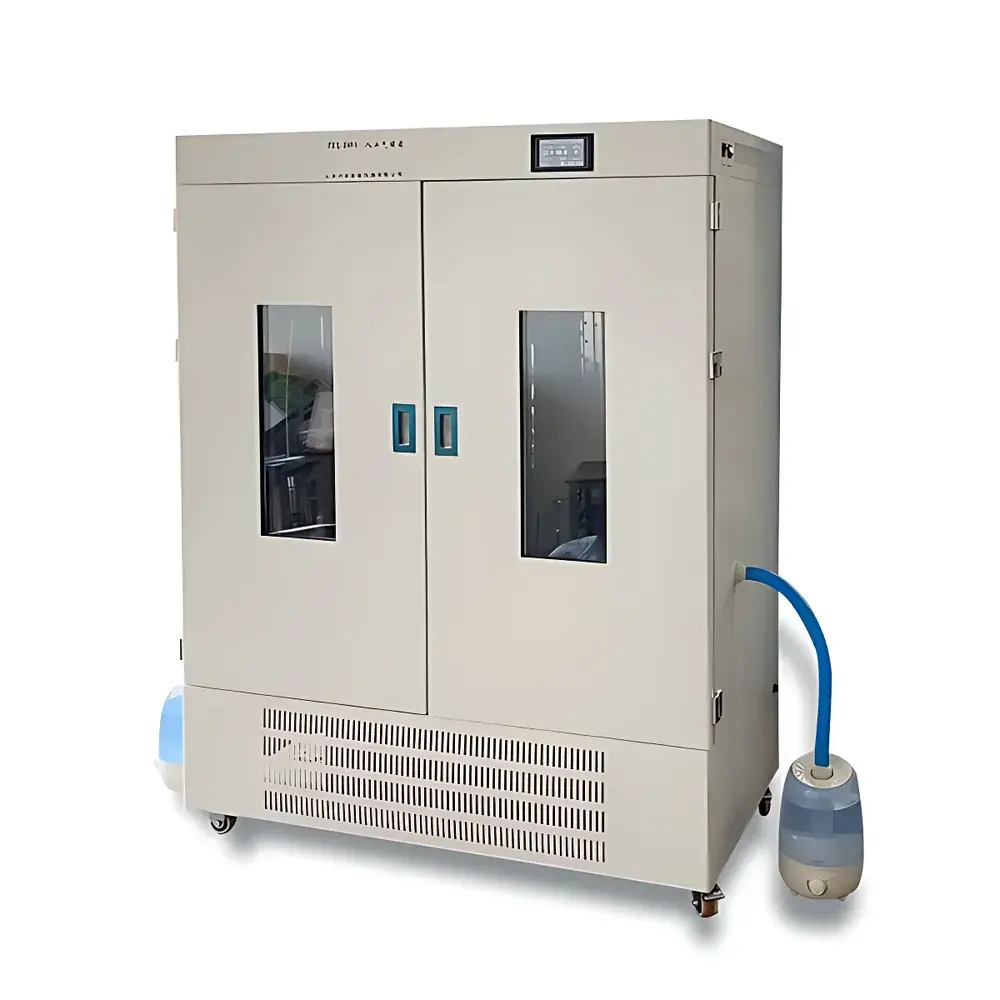
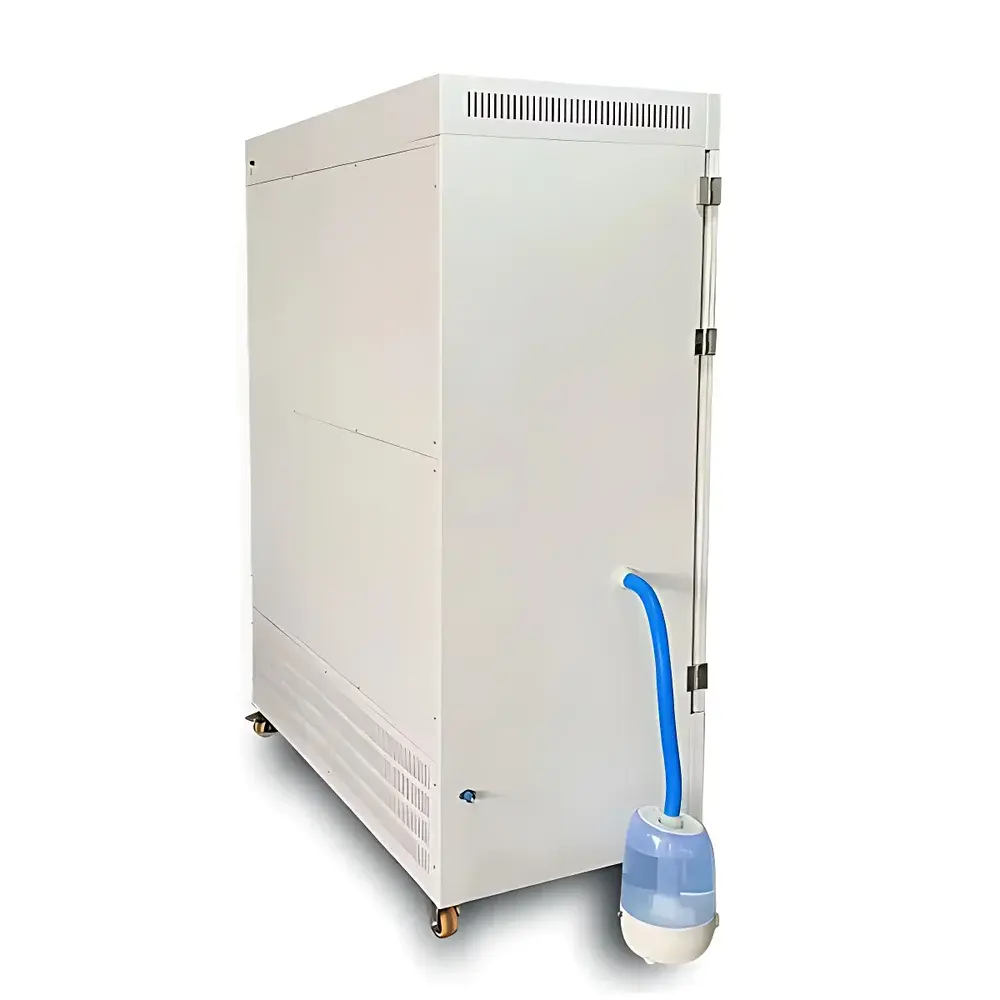
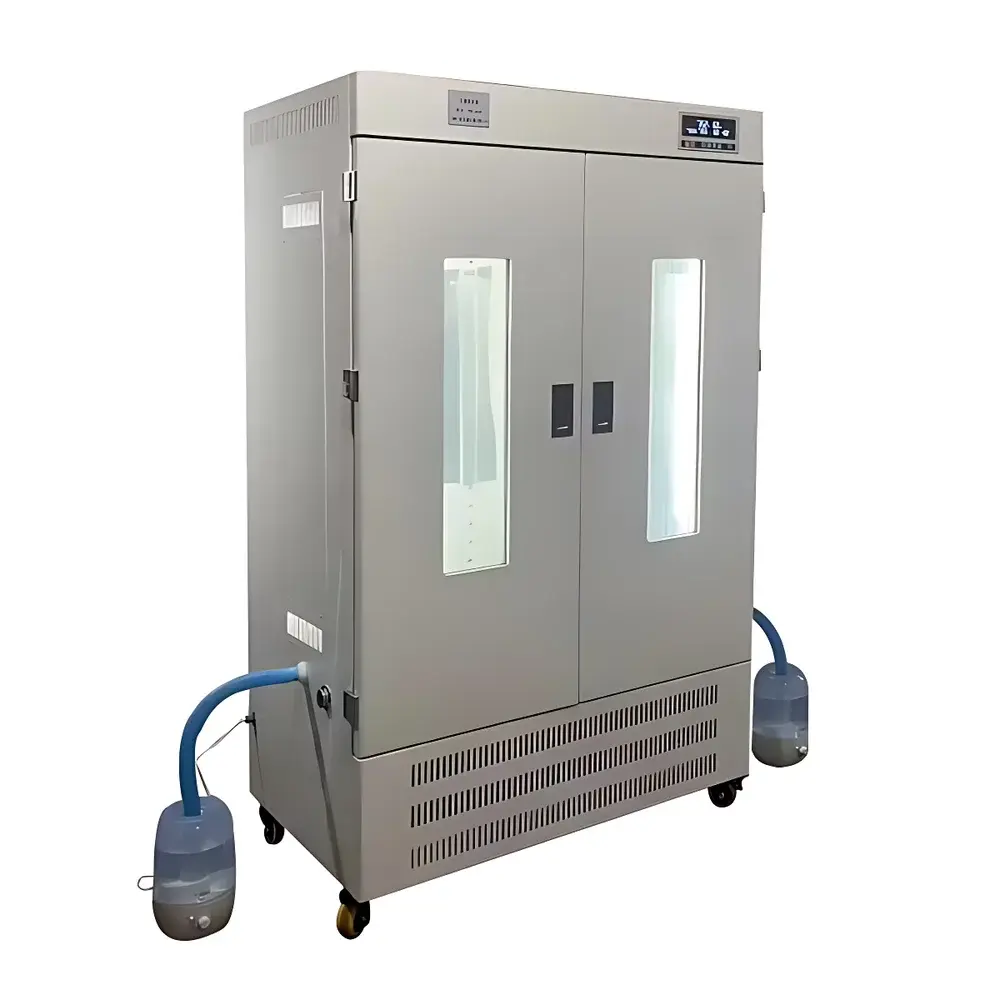
Chuanyu PRX-1200C Large-Capacity Artificial Climate Incubator with High-Intensity Programmable Lighting
| Brand | Chuanyu Instruments |
|---|---|
| Origin | Shanghai, China |
| Model | PRX-1200C |
| Type | Fully Automatic Programmable Incubator |
| Capacity | 12000 L |
| Temperature Range | 0–50 °C |
| Temperature Uniformity | ±1.5 °C |
| Humidity Range | 50–95 %RH |
| Humidity Uniformity | ±5–8 %RH |
| Illumination Intensity | 0–22000 lx |
| External Dimensions | 1500 × 860 × 1880 mm |
Overview
The Chuanyu PRX-1200C is a large-volume, fully programmable artificial climate incubator engineered for rigorous plant physiology, seed germination, photobiology, and controlled-environment research. It operates on a tri-variable control architecture—simultaneously regulating temperature, relative humidity, and spectral-light intensity—within a thermally and hygroscopically stable chamber. Its core design adheres to the principles of forced-air convection, precision PID-based thermal feedback, and ultrasonic humidification dynamics to ensure reproducible environmental conditions across its 12,000-liter working volume. Unlike standard static incubators, the PRX-1200C integrates real-time parameter logging, multi-stage program scheduling (up to 30 cycles, each with 99 segments), and independent day/night parameter assignment—enabling simulation of diurnal climatic profiles critical for phenotyping, stress-response assays, and long-term growth studies.
Key Features
- Microprocessor-controlled PID regulation for temperature (0–50 °C) and humidity (50–95 %RH), with dual-display LCD interface showing both setpoints and real-time values.
- Forced-air circulation system with optimized duct geometry and low-turbulence axial fans, ensuring temperature uniformity within ±1.5 °C and rapid recovery (<15 min) after door opening.
- Ultrasonic high-capacity humidification module delivering fast, stable RH control without condensation or mineral deposition—compatible only with distilled or deionized water per ISO 8573-1 Class 4 air quality guidelines.
- Multi-level adjustable stainless-steel shelving (mirror-finish 304 grade), fully removable and reconfigurable to accommodate trays, pots, or custom growth platforms.
- Double-glazed, magnetically sealed observation door with anti-fog coating; external cabinet finished with electrostatic epoxy-polyester powder coating for corrosion resistance.
- Environmentally compliant refrigeration circuit using R134a or R600a zero-ozone-depletion refrigerant, paired with a hermetically sealed compressor featuring high/low pressure protection and delayed restart logic.
- Comprehensive safety architecture: over-temperature tracking alarm, power-failure auto-restart with parameter retention, voltage surge suppression, and hardware-based thermal cutoff independent of controller firmware.
Sample Compatibility & Compliance
The PRX-1200C accommodates a broad spectrum of biological samples—from Arabidopsis thaliana seedlings and rice coleoptiles to tissue-cultured explants and micropropagated orchids—without compromising spatial homogeneity or temporal fidelity. Its interior chamber complies with ISO 14644-1 Class 8 cleanroom particulate limits when operated under laminar airflow protocols. While not certified for GLP/GMP production environments, its data integrity features—including non-volatile memory retention, timestamped event logs, and password-protected parameter modification—support audit readiness per FDA 21 CFR Part 11 Annex 11 requirements for research-grade environmental chambers. All electrical components meet IEC 61000-4 EMC immunity standards and GB 4793.1–2007 (equivalent to IEC 61010-1) for laboratory equipment safety.
Software & Data Management
The embedded controller supports up to 30 user-defined programs, each configurable with independent temperature, humidity, illumination, and timing parameters per segment. Illumination is digitally regulated across six discrete intensity levels (0–22,000 lx), with optional integration into third-party building management systems (BMS) via RS-485 Modbus RTU protocol. Data export is available in CSV format via USB port; no cloud connectivity or proprietary software installation is required. Event logs record all alarms, door openings, setpoint changes, and sensor deviations with UTC timestamps—facilitating traceability during peer-reviewed experimentation or regulatory submissions.
Applications
- Standardized seed germination testing per ISTA Rule 5 and AOSA Rules for Agricultural Seeds.
- Controlled abiotic stress induction (drought, heat, cold, high-light) in model and crop species for QTL mapping and transcriptomic profiling.
- Photoperiodic flowering assays requiring precise light/dark cycling and spectral consistency.
- Long-duration phytochemical accumulation studies under defined climate regimes (e.g., anthocyanin synthesis under UV-B + high PAR).
- Pre-acclimatization of in vitro-grown plantlets prior to greenhouse transfer.
- Supporting OECD Test Guidelines 208 (terrestrial plant toxicity) and EPA OPPTS 850.4400 (seedling emergence) protocols.
FAQ
What type of water must be used for humidification?
Distilled or deionized water is mandatory. Tap water or mineral-rich water will cause scale buildup on the ultrasonic transducer and impair humidification performance.
Can the incubator maintain stable conditions during frequent door access?
Yes—the forced convection system and high thermal mass insulation enable temperature recovery to ±1.5 °C within 12–15 minutes after a 10-second door opening.
Is remote monitoring or network integration supported?
The unit includes RS-485 Modbus RTU for integration into centralized lab infrastructure; Ethernet or Wi-Fi modules are not factory-installed but can be added via certified third-party gateways.
Does the device comply with international electromagnetic compatibility standards?
Yes—it meets IEC 61000-4-2 (ESD), -4-3 (radiated RF), and -4-4 (electrical fast transients) immunity requirements per EN 61326-1.
What maintenance intervals are recommended for optimal performance?
Ultrasonic tank cleaning every 3 months; condenser coil inspection biannually; calibration verification annually using NIST-traceable reference sensors.




