
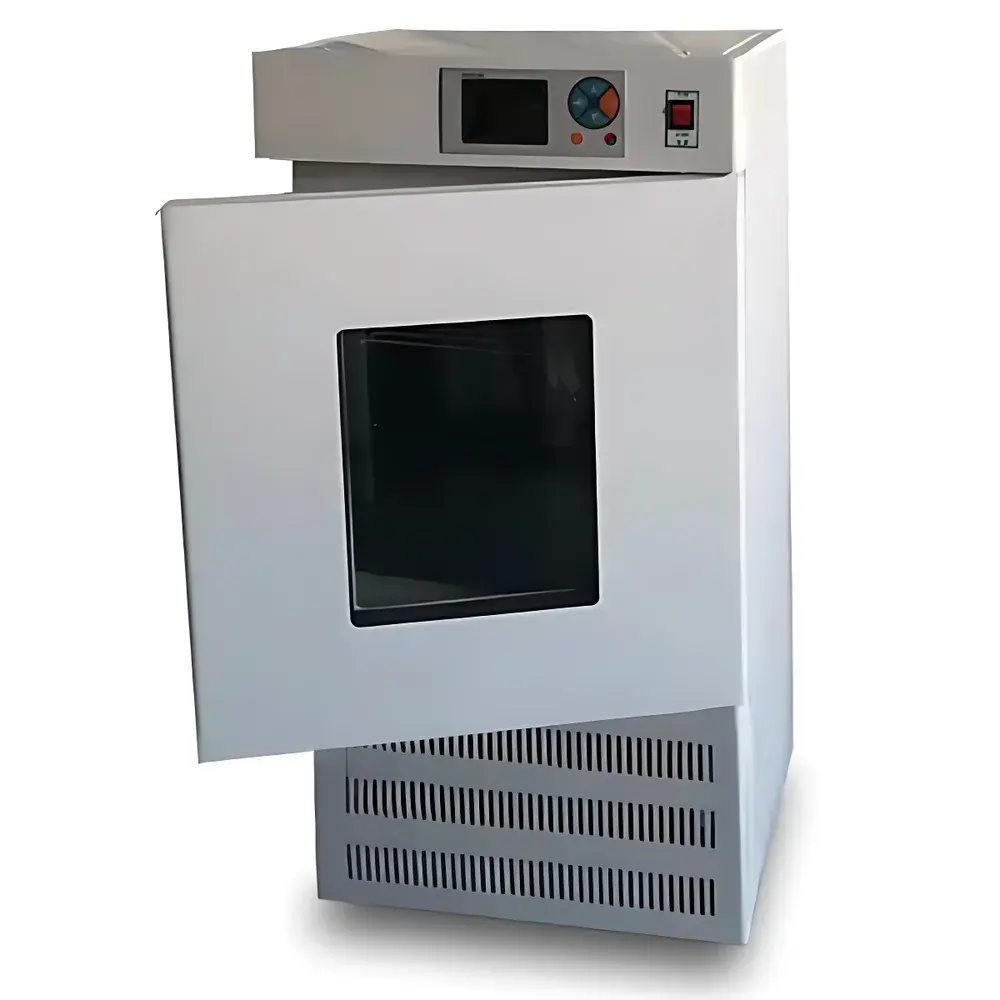
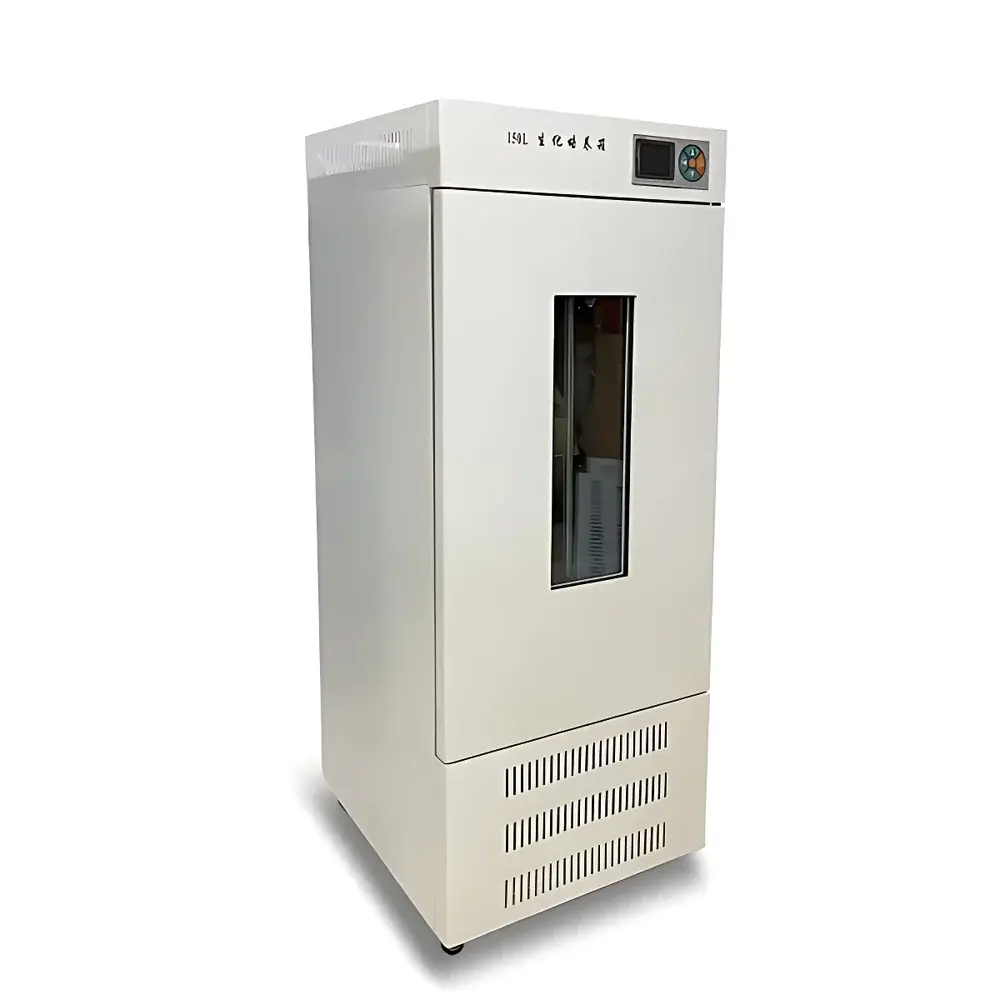
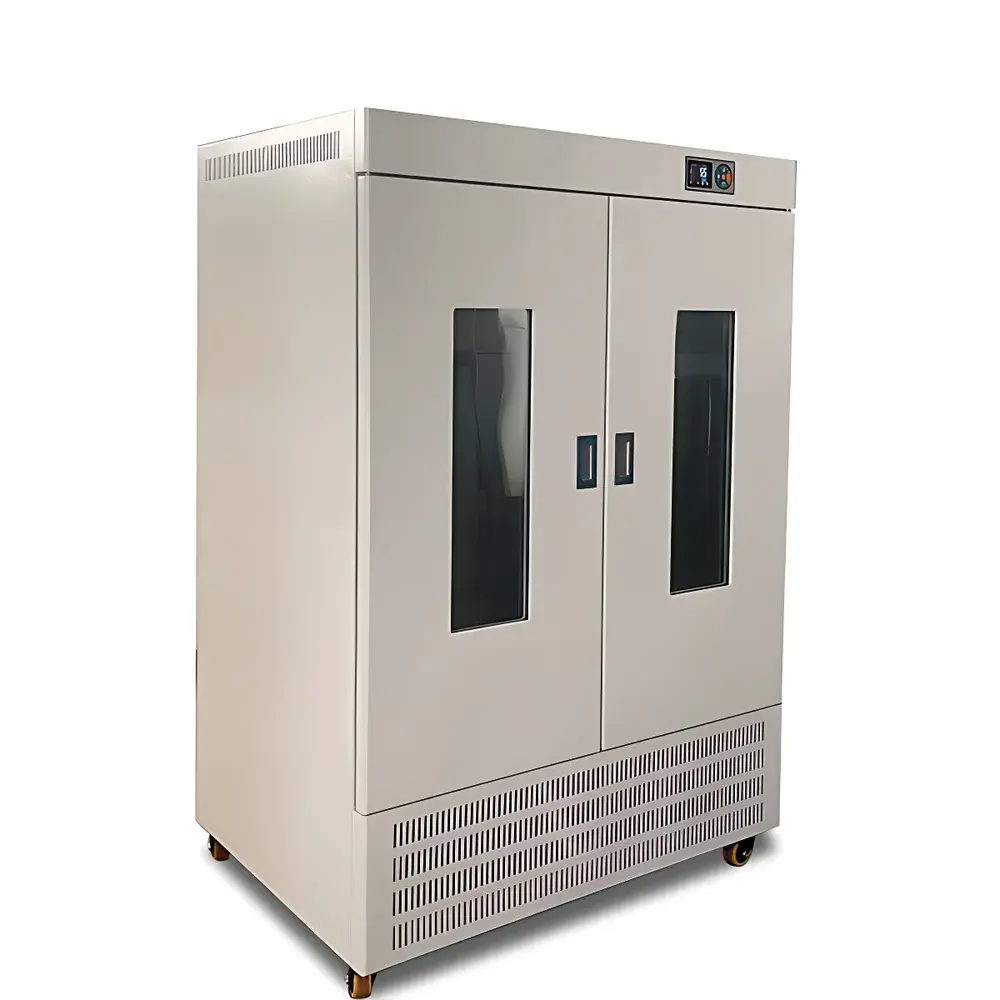
Chuanyu Yiqi MJX-250 Mold Incubator
| Brand | Chuanyu Yiqi |
|---|---|
| Origin | Shanghai, China |
| Model | MJX-250 |
| Capacity | 250 L |
| Temperature Range | 0–60 °C |
| Temperature Uniformity | ±1 °C |
| Humidity Control | Optional (50–95% RH, ±5–8% RH fluctuation) |
| Construction | Mirror-finish stainless steel chamber, electrostatically coated exterior, double-glazed magnetic door seal |
| Cooling System | Hermetically sealed compressor with eco-friendly refrigerant (R134a or equivalent) |
| Control System | LCD PID controller with real-time setpoint/actual value display, programmable timer (0–999 h/min), auto-restart after power failure, over-temperature alarm, temperature calibration function, and UV sterilization lamp |
Overview
The Chuanyu Yiqi MJX-250 Mold Incubator is a precision-engineered environmental chamber designed specifically for controlled fungal cultivation, microbial growth studies, and long-term biological stability testing. It operates on the principle of active thermoregulation via PID-controlled heating and refrigeration circuits, combined with forced-air convection to maintain stable, reproducible conditions across the entire 250 L working volume. Unlike general-purpose incubators, the MJX-250 integrates features essential for mycological applications—including UV germicidal irradiation, enhanced thermal recovery post-door opening, and extended low-temperature capability down to 0 °C—enabling reliable culture of psychrotolerant molds (e.g., Penicillium, Aspergillus, Cladosporium) under ISO 11133-compliant conditions. Its architecture supports GLP-aligned workflows in academic microbiology labs, pharmaceutical QC environments, and food safety testing facilities where traceable, repeatable incubation parameters are required.
Key Features
- PID-based microprocessor controller with dual-line LCD display showing both setpoint and real-time chamber temperature; resolution 0.1 °C, accuracy ±0.5 °C
- Forced-air circulation system with centrifugal blower and optimized airflow ducting ensures ±1 °C temperature uniformity throughout the chamber (per ASTM E1727)
- Double-layer tempered glass observation window with magnetic gasket seal minimizes thermal leakage and maintains integrity during frequent access
- Interior constructed from electropolished 304 stainless steel—non-porous, corrosion-resistant, and compatible with routine disinfection protocols (e.g., 70% ethanol, hydrogen peroxide vapor)
- Integrated 254 nm UV-C lamp (30 W) with manual override switch and safety interlock to prevent accidental exposure during operation
- Compressor-based cooling circuit using ozone-safe refrigerant (R134a), equipped with high/low pressure protection, delayed start logic, and thermal overload cutoff
- Programmable timer (0–999 hours or minutes) with automatic shutdown and memory retention for settings after power interruption
- Four swiveling casters with locking brakes facilitate repositioning within shared lab spaces without requiring disassembly
- Three adjustable, removable stainless steel shelves (standard configuration); shelf height spacing is tool-free and stepless
Sample Compatibility & Compliance
The MJX-250 accommodates standard microbiological sample formats including Petri dishes (up to 150 mm diameter), multi-well plates, slant tubes, liquid culture flasks (up to 2 L), and small animal cages (for entomological or developmental studies). Its temperature range (0–60 °C) supports both mesophilic and psychrotrophic mold propagation, while optional humidity control (MJX-250S variant) extends utility to hyphal growth kinetics and spore germination assays requiring defined water activity (aw). The unit complies with IEC 61000-6-3 (EMC emissions) and IEC 61000-6-2 (immunity), and its mechanical design aligns with ISO 13732-1 for surface temperature safety. Though not certified for GMP manufacturing use out-of-the-box, its data logging readiness, parameter traceability, and alarm event recording support validation under FDA 21 CFR Part 11 when integrated with compliant software.
Software & Data Management
The MJX-250 operates as a standalone instrument with embedded firmware; no external PC interface is included by default. However, analog output (0–5 V or 4–20 mA) is available upon request for integration into building management systems (BMS) or centralized environmental monitoring platforms. For audit-ready documentation, users may manually log temperature excursions, UV cycle timestamps, and maintenance events using the built-in event counter and alarm history buffer (retains last 16 events). When paired with third-party data acquisition hardware (e.g., Omega OM-DAQPRO-5300), continuous trend logging meets ISO/IEC 17025 clause 7.7 requirements for equipment calibration and performance verification.
Applications
- Fungal identification and strain preservation per CLSI M51-A guidelines
- Mycotoxin production studies under controlled temperature/humidity gradients
- Accelerated aging tests for biodegradable packaging materials per ASTM D5885
- Phytopathogen virulence assays on host plant tissues
- Validation of sterilization efficacy for laboratory consumables using bioindicators
- Developmental biology experiments involving fungal-insect symbioses (e.g., Attine ant cultivar studies)
- Environmental simulation for HVAC filter challenge testing (ISO 16890)
FAQ
Does the MJX-250 include humidity control as standard?
No. Humidity regulation is an optional upgrade (designated MJX-250S) and requires separate humidifier and dehumidifier modules mounted externally or integrated into the rear panel.
Can the UV lamp operate simultaneously with temperature control?
Yes. The UV system is electrically isolated and can be activated independently during incubation cycles, though best practice recommends UV treatment only during idle periods to avoid photodegradation of sensitive cultures.
Is the unit suitable for BSL-2 applications?
The MJX-250 provides physical containment but lacks HEPA filtration or negative pressure certification. It may be used for non-aerosolized mold work at BSL-1; for BSL-2 compliance, it must be installed inside a certified biosafety cabinet or ventilated enclosure.
What is the recommended calibration frequency?
Per ISO/IEC 17025, internal temperature sensors should be verified annually using NIST-traceable dry-block calibrators or calibrated RTD probes placed at geometric center and corner locations.
Are replacement shelves and UV lamps available as spare parts?
Yes. All consumables—including stainless steel shelves (part #MJX-SH-250), UV-C bulbs (GPH436T5L, 30W), and door gaskets—are stocked and shipped globally via authorized distributors.



