
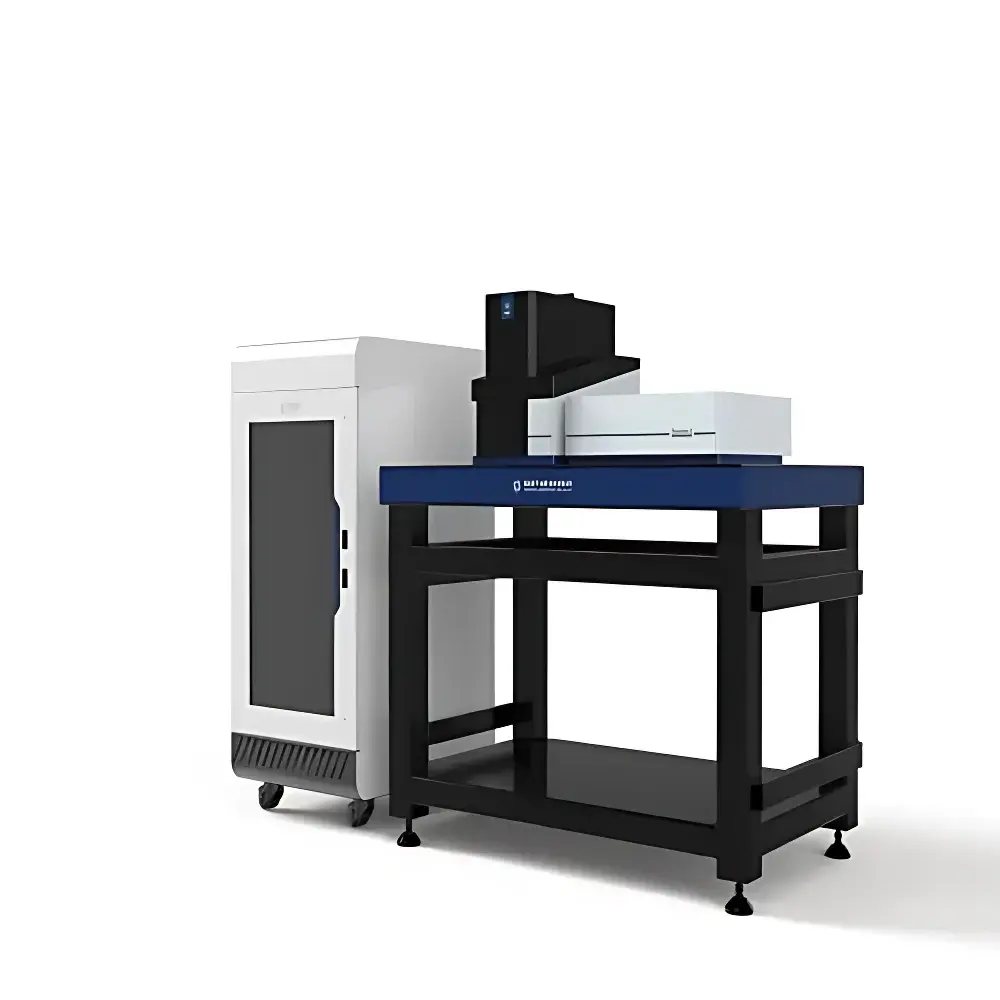
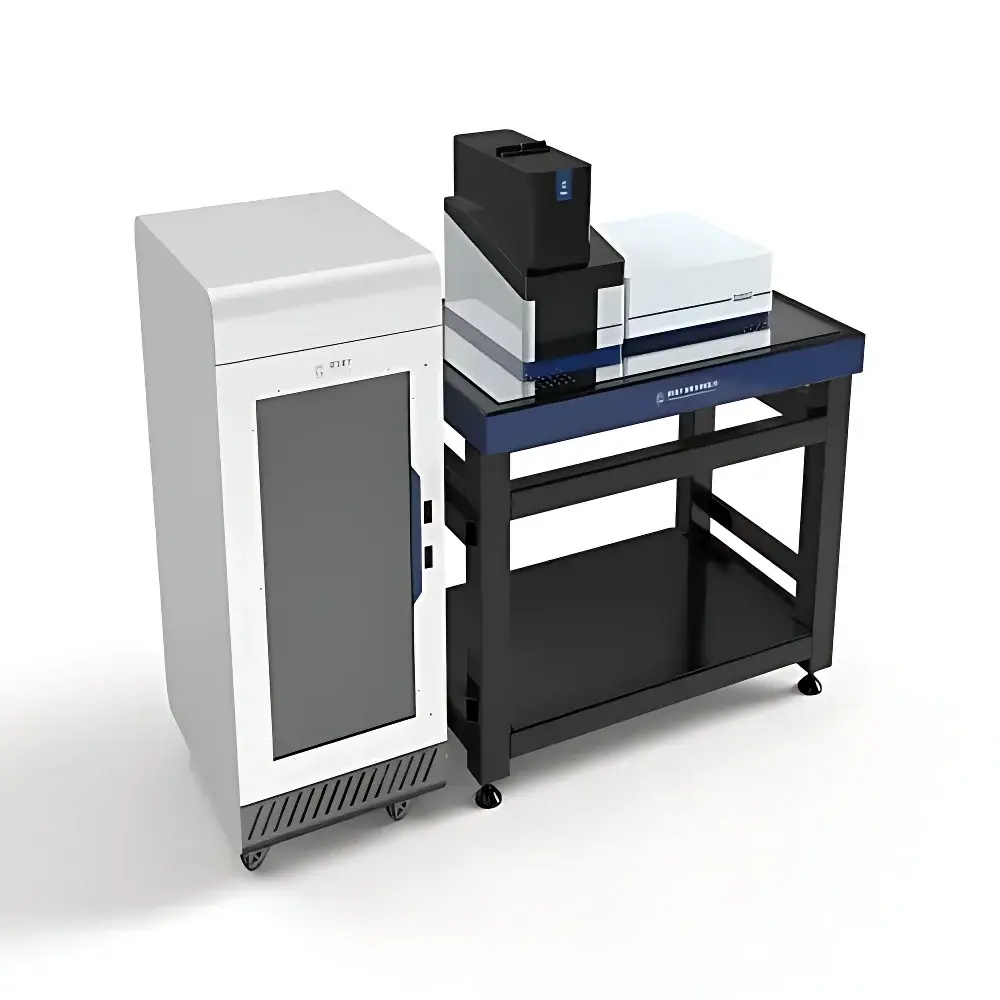
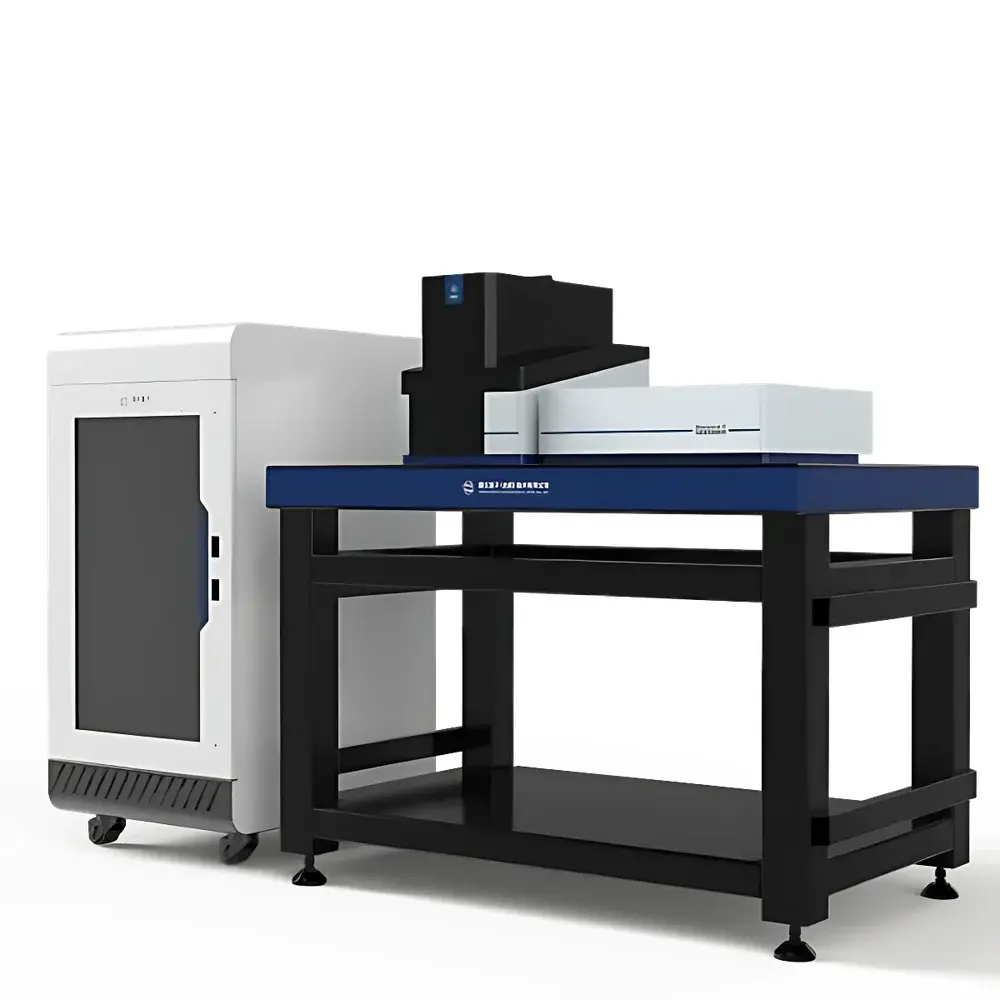
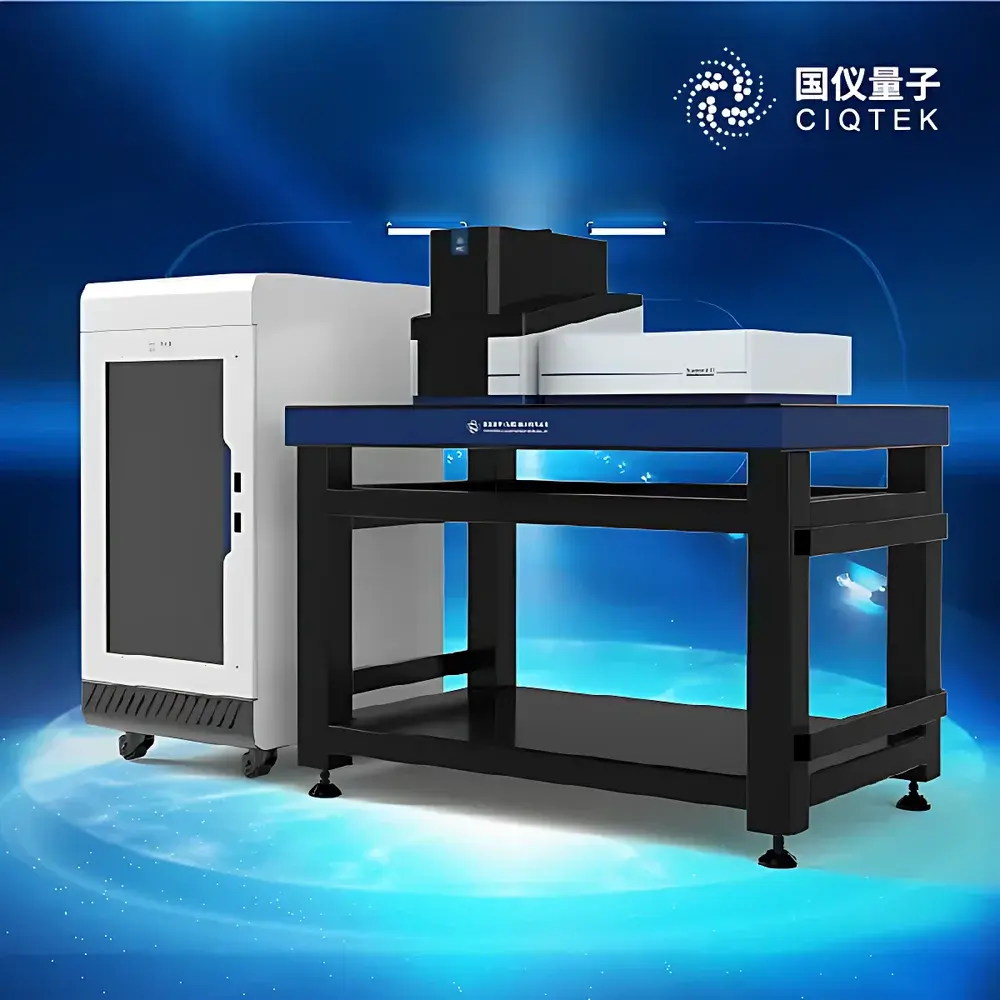
CIQTEK Diamond II Quantum Diamond Single-Spin Spectrometer (ODMR)
| Brand | CIQTEK |
|---|---|
| Origin | Anhui, China |
| Manufacturer Type | Direct Manufacturer |
| Product Origin | Domestic (China) |
| Model | Diamond II |
| Instrument Type | Pulsed |
| Magnetic Field Range | 50–550 Gauss |
| Microwave Frequency Range | 0.7–4 GHz |
| Microwave Power Output | 10 W |
Overview
The CIQTEK Diamond II Quantum Diamond Single-Spin Spectrometer is a turnkey quantum sensing platform engineered for optically detected magnetic resonance (ODMR) measurements based on nitrogen-vacancy (NV) centers in diamond. Unlike conventional electron spin resonance (ESR) or nuclear magnetic resonance (NMR) spectrometers, the Diamond II leverages the intrinsic quantum properties of negatively charged NV⁻ centers—atomic-scale point defects formed by a nitrogen atom adjacent to a lattice vacancy in ultrapure diamond. Under 532 nm green laser excitation, NV⁻ centers undergo spin-dependent intersystem crossing: the ms = 0 spin sublevel exhibits significantly higher photoluminescence intensity than the ms = ±1 states, enabling optical spin-state readout with single-shot fidelity. This quantum pure initial state, combined with millisecond-scale spin coherence times (T₂) at ambient conditions, permits high-fidelity quantum control and nanoscale magnetic field sensing without cryogenic cooling or vacuum environments.
Key Features
- Room-temperature, atmospheric-pressure operation—no cryostat, vacuum chamber, or superconducting magnet required
- Pulsed ODMR architecture with integrated 50 ps temporal resolution arbitrary waveform generator for precise spin manipulation sequences (e.g., Ramsey, Hahn echo, dynamical decoupling)
- Wideband microwave excitation system (0.7–4 GHz, up to 10 W output) supporting broadband spin resonance spectroscopy and frequency-swept magnetometry
- Tunable DC magnetic field range from 50 to 550 Gauss via compact, low-noise electromagnets with active stabilization
- Automated optical alignment module with real-time feedback for optimal NV fluorescence collection efficiency
- High-stability diamond probes fabricated in-house—type-IIa electronic-grade diamond with engineered NV⁻ density, T₂ > 1 ms (typ.), and surface passivation for enhanced spin coherence
Sample Compatibility & Compliance
The Diamond II accommodates diverse sample configurations—including bulk biological tissues, cultured cells, thin-film materials, 2D heterostructures, and microfluidic devices—mounted directly on the diamond probe or placed in proximity (<10 µm) to the NV layer. Its non-invasive, label-free detection modality enables longitudinal studies of paramagnetic species (e.g., radicals, transition metal ions, reactive oxygen species) and nanoscale magnetic textures (e.g., skyrmions, domain walls). The system adheres to ISO/IEC 17025 principles for measurement traceability and supports GLP-compliant experimental logging. Data acquisition protocols are structured to meet audit requirements under FDA 21 CFR Part 11 when paired with optional electronic signature and audit trail modules.
Software & Data Management
The proprietary QuantumControl software suite provides a unified interface for hardware orchestration, pulse sequence design, real-time signal processing, and spectral analysis. It includes pre-built experiment templates (e.g., AC magnetometry, T₁/T₂ mapping, vector magnetometry), Python API integration for custom algorithm development, and automated calibration routines for laser power, microwave amplitude, and magnetic field homogeneity. All raw and processed datasets are stored in HDF5 format with embedded metadata (timestamp, instrument configuration, environmental logs), ensuring FAIR (Findable, Accessible, Interoperable, Reusable) data practices. Long-duration unattended experiments (>72 h) are supported with thermal drift compensation and adaptive focus correction.
Applications
- Nanoscale MRI of single proteins and membrane receptors in native cellular environments
- In situ detection of free radicals in catalytic reactions and polymer degradation kinetics
- Quantitative mapping of local magnetic fields in spintronic devices and topological insulators
- Time-resolved study of electron transfer dynamics in photosynthetic complexes
- Calibration-free magnetic field standards for metrology labs and quantum sensor validation
- Teaching quantum mechanics and quantum information concepts via hands-on laboratory experiments
FAQ
What is the minimum detectable magnetic field sensitivity?
Sensitivity is sample- and protocol-dependent; typical AC field sensitivity is ~1 nT/√Hz for ensemble NV measurements at room temperature.
Can the system perform vector magnetometry?
Yes—using multiple NV orientations in a single-crystal diamond or sequential field rotations, full 3D vector reconstruction is achievable with <1° angular resolution.
Is diamond probe replacement supported?
Yes—CIQTEK supplies certified, characterized diamond probes (standard and custom geometries) with documented T₂, NV⁻ density, and surface termination specifications.
Does the system support third-party microwave sources or lasers?
The platform features standard SMA and FC/PC interfaces; external microwave amplifiers or tunable lasers may be integrated via user-defined I/O triggers and synchronization signals.
How is magnetic field homogeneity ensured across the NV sensing volume?
Active field stabilization uses Hall-effect sensor feedback to a PID-controlled current driver, achieving <±0.05 Gauss stability over 8-hour runs.




