
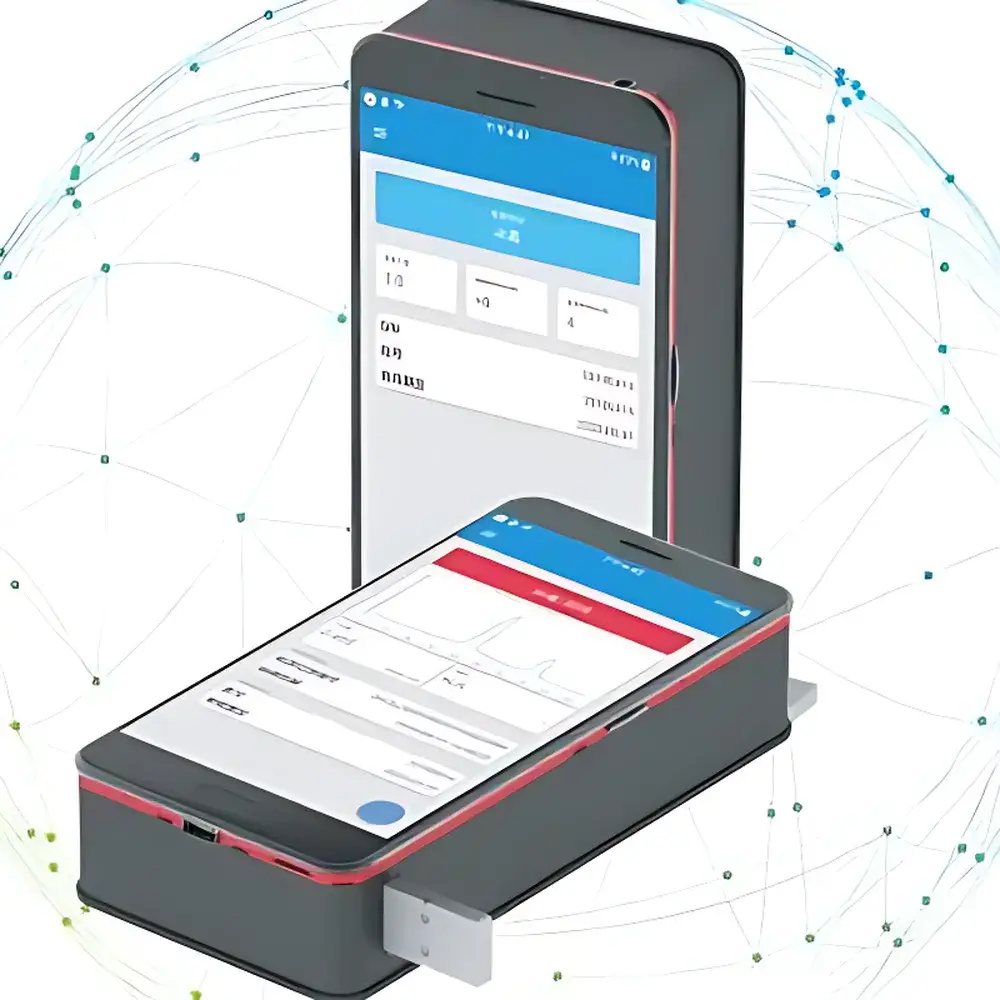
CloudOptek H1 Cloud-Enabled Trace Hair Drug Detection Analyzer
| Brand | CloudOptek |
|---|---|
| Origin | Beijing, China |
| Manufacturer Type | Authorized Distributor |
| Country of Origin | China |
| Model | H1 |
| Pricing | Upon Request |
| Detection Limits | Ketamine ≥ 0.1 ng/mL, Morphine ≥ 0.1 ng/mL, Methamphetamine ≥ 0.1 ng/mL, Fentanyl ≥ 0.1 ng/mL |
| Biometric Security | Fingerprint + Iris Recognition |
| Calibration | QR-based Auto-Curve Retrieval & Cloud-Synced Curve Library |
| GNSS | A-GPS / GLONASS / BeiDou |
| Connectivity | 4G LTE, Wi-Fi 802.11a/b/g/n/ac, Bluetooth 4.1, NFC (ID Card & IC Card Read) |
| Display | 5.7″ IPS LCD, 2560×1440 |
| Imaging System | Triple Camera (8 MP + 16 MP + 2 MP) |
| Dimensions | 160 × 82 × 38 mm |
| Weight | 450 g |
| Sample Interface | Auto-Recognizing Lateral Flow Immunoassay (LFIA) Cartridge with Batch ID & Format Detection |
| Supported Drugs | 20 Controlled Substances including Ketamine, Morphine, Methamphetamine, Fentanyl |
Overview
The CloudOptek H1 is a field-deployable, cloud-integrated trace drug detection analyzer engineered for quantitative and qualitative screening of controlled substances in human hair, powdered residues, and other forensic biological matrices. It operates on the principle of lateral flow immunoassay (LFIA) coupled with high-sensitivity optical densitometry and AI-augmented signal interpretation. Unlike conventional point-of-care rapid tests, the H1 integrates hardware-level assay recognition, real-time environmental calibration compensation, and cryptographic chain-of-custody logging—ensuring analytical traceability from sample application to result reporting. Designed for use in regulatory-constrained environments—including law enforcement checkpoints, rehabilitation centers, military recruitment stations, and clinical toxicology workflows—the system complies with foundational requirements for evidentiary integrity under ISO/IEC 17025-aligned operational protocols.
Key Features
- Automated LFIA cartridge recognition: Detects assay format, lot number, expiration date, and calibration curve ID via embedded NFC/QR metadata upon insertion
- Dual-domain architecture: Physically isolated “Inspection Domain” (instrument firmware, assay processing, sensor I/O) and “Personal Domain” (user interface, biometric authentication, local data cache), enforced by ARM TrustZone and secure boot chain
- Multi-modal biometric access control: Fingerprint and iris recognition modules certified to ISO/IEC 30107-1 PAD Level 2 standards, integrated with MCS (Multi-Channel Security) cloud-edge architecture for encrypted credential synchronization
- Real-time geotagged result upload: A-GPS/GLONASS/BeiDou hybrid positioning with sub-5m CEP accuracy; timestamps and location stamps cryptographically signed prior to transmission
- On-device AI inference engine: Quantitative intensity analysis performed locally using quantized neural networks trained on >120,000 validated LFIA images across 20 drug classes; model updates delivered via differential OTA patches
- Regulatory-ready audit trail: Full GLP-compliant event logging—including user login/logout, cartridge insertion/removal, calibration status, connectivity events, and result export—with immutable SHA-256 hashing per log entry
Sample Compatibility & Compliance
The H1 supports standardized lateral flow test strips compliant with CLSI EP12-A2 guidelines for qualitative immunoassays. Hair samples require standard alkaline hydrolysis and solvent extraction per SOP-TOX-HAIR-01 (aligned with SAMHSA and WHO laboratory manuals). Powdered residue testing follows ASTM E2912-22 procedures for surface swab recovery and elution. All reported detection limits (e.g., ketamine ≥ 0.1 ng/mL in extracted supernatant) are validated against NIST SRM 3671 reference materials and verified per ISO 13528 proficiency testing schemes. The device meets electromagnetic compatibility (EMC) requirements per IEC 61326-1:2021 and carries CE marking under Directive 2014/30/EU. While not FDA 510(k)-cleared, its design adheres to principles outlined in FDA Guidance for Industry: In Vitro Diagnostic (IVD) Devices Intended for Forensic Use (2021).
Software & Data Management
The H1 runs CloudOptek’s SecureLink OS v4.2—a Linux-based real-time operating system with SELinux mandatory access controls and kernel lockdown mode. All assay results, raw image frames, and metadata are stored in an encrypted SQLite database (AES-256-GCM) with automatic daily backup to configurable cloud endpoints (AWS S3, Azure Blob, or on-premise MinIO). Multi-tenancy is implemented at the application layer: each organization receives logically segregated workspaces with role-based permissions (e.g., operator, supervisor, auditor). Audit logs satisfy FDA 21 CFR Part 11 requirements for electronic records and signatures when deployed with optional PKI certificate integration. Software updates undergo reproducible build verification and are signed using CloudOptek’s offline root CA.
Applications
- Forensic pre-screening at border control, correctional facilities, and mobile drug interdiction units
- Longitudinal monitoring in community-based substance use disorder treatment programs (e.g., social rehabilitation and compulsory detoxification centers)
- Pre-employment and periodic fitness-for-duty screening for public safety personnel and transportation operators
- Supporting clinical toxicology triage in emergency departments where rapid turnaround informs acute intervention decisions
- Environmental contamination assessment in entertainment venues and clandestine lab sites using surface wipe sampling
- Integration into national anti-drug surveillance platforms via RESTful API with OAuth 2.0 and mutual TLS authentication
FAQ
Does the H1 require consumables other than certified LFIA cartridges?
No. The system uses only vendor-validated lateral flow strips with embedded calibration identifiers. No reagents, solvents, or external diluents are required during routine operation.
Can calibration curves be updated without internet connectivity?
Yes. Pre-loaded curve libraries are stored on removable microSD cards compliant with SDXC UHS-I specification. Offline updates follow FIPS 140-2 Level 1 cryptographic validation.
Is raw image data export supported for third-party review?
Yes. Encrypted DICOM-compliant image bundles (including annotated ROI masks and optical density heatmaps) can be exported via USB-C or secure SFTP with granular permission controls.
How is data sovereignty maintained in multi-tenant deployments?
Each tenant’s data resides in physically or logically isolated storage partitions. Cross-tenant queries are prohibited at the database driver level, and all inter-tenant APIs enforce strict namespace scoping and JWT claim validation.
What is the recommended maintenance interval for optical calibration?
The built-in photometric reference standard self-verifies daily. Full optical recalibration using NIST-traceable neutral density filters is recommended every 180 days or after 500 assay cycles—whichever occurs first.





