
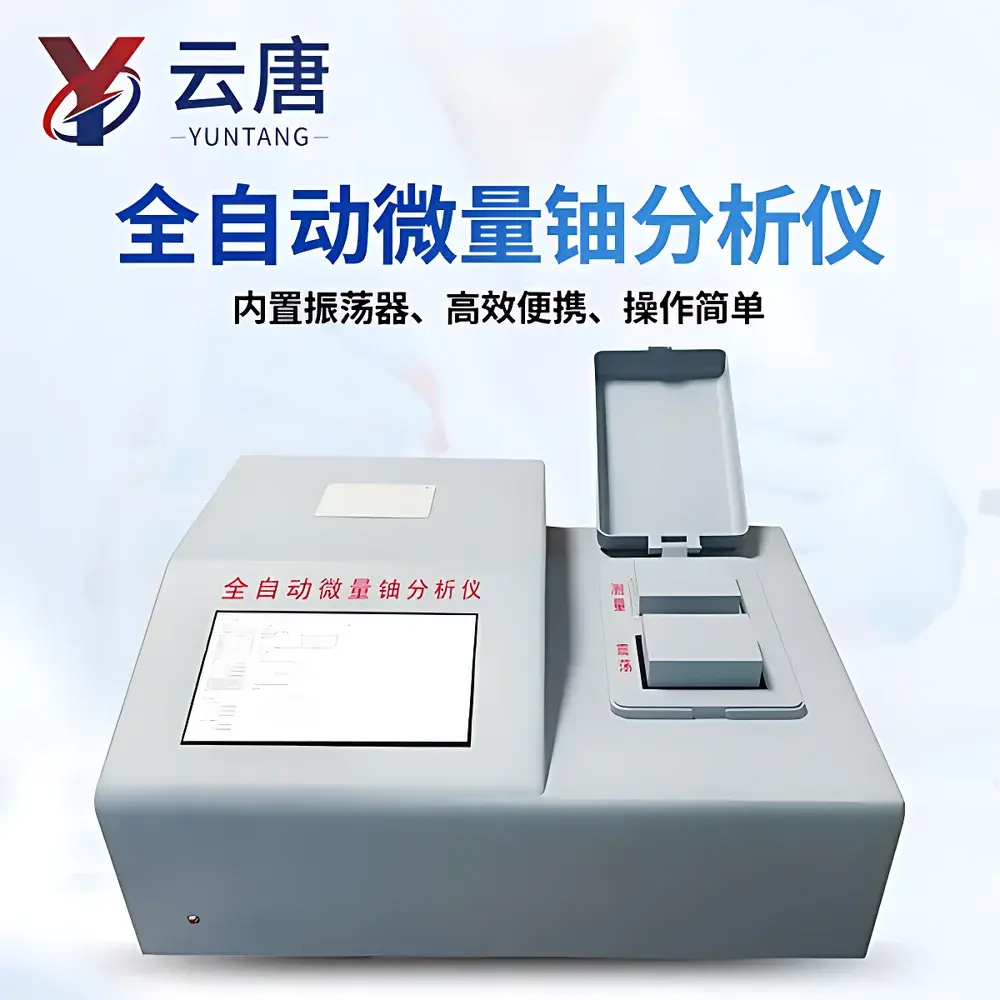
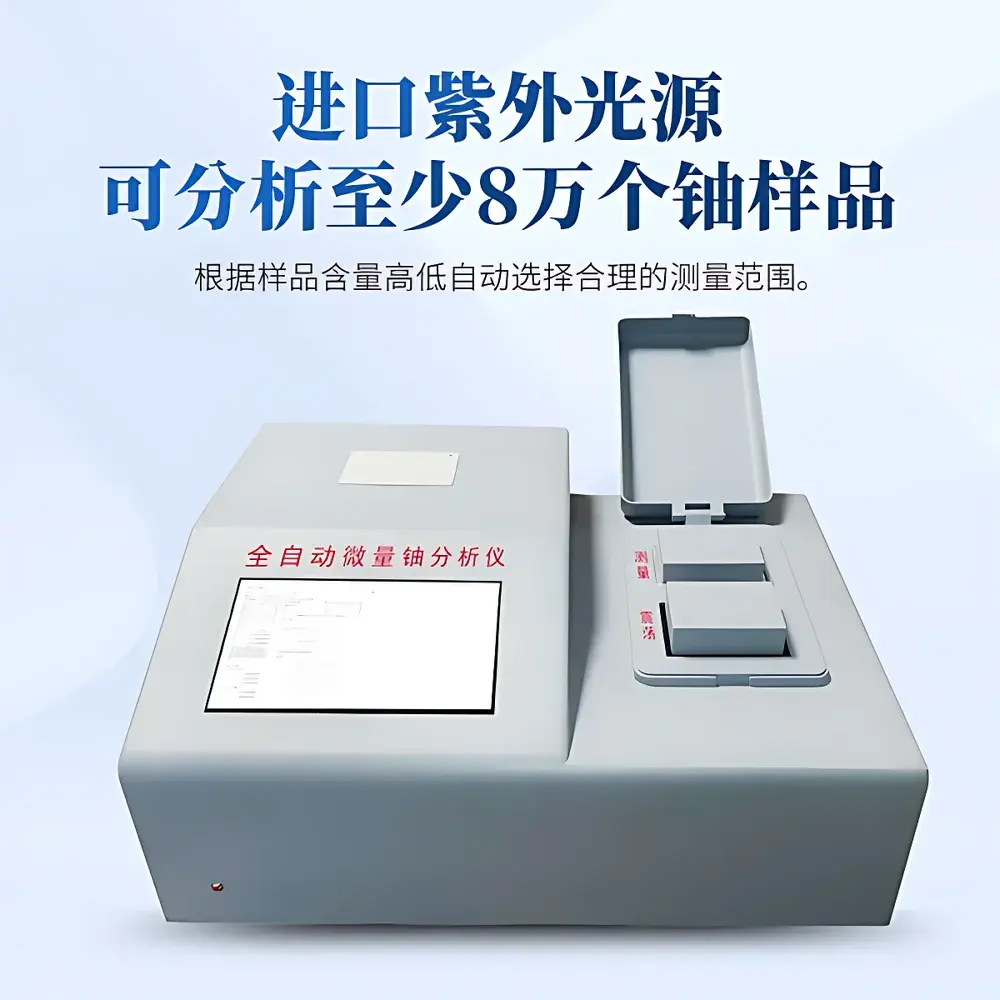
CloudTop YT-WLY Fully Automated Trace Uranium Analyzer
| Brand | CloudTop (Yuntang) |
|---|---|
| Origin | Shandong, China |
| Manufacturer Type | OEM Manufacturer |
| Origin Category | Domestic (China) |
| Model | YT-WLY |
| Price | USD 17,000 (approx.) |
| Detection Limit | ≤0.01 ng/mL |
| Uranium Quantification Range | 0–20 ng/mL (extendable to 100 ng/mL via dilution) |
| Linearity (R²) | ≥0.999 |
| Precision (RSD) | ≤5% |
| Stability (8-h drift at 2 ng/mL) | ≤7% |
| Sample Throughput | Up to 80,000 analyses per UV source |
| Data Storage | 4,000 data points |
| Interface | USB 2.0, 100Base-T4 Ethernet |
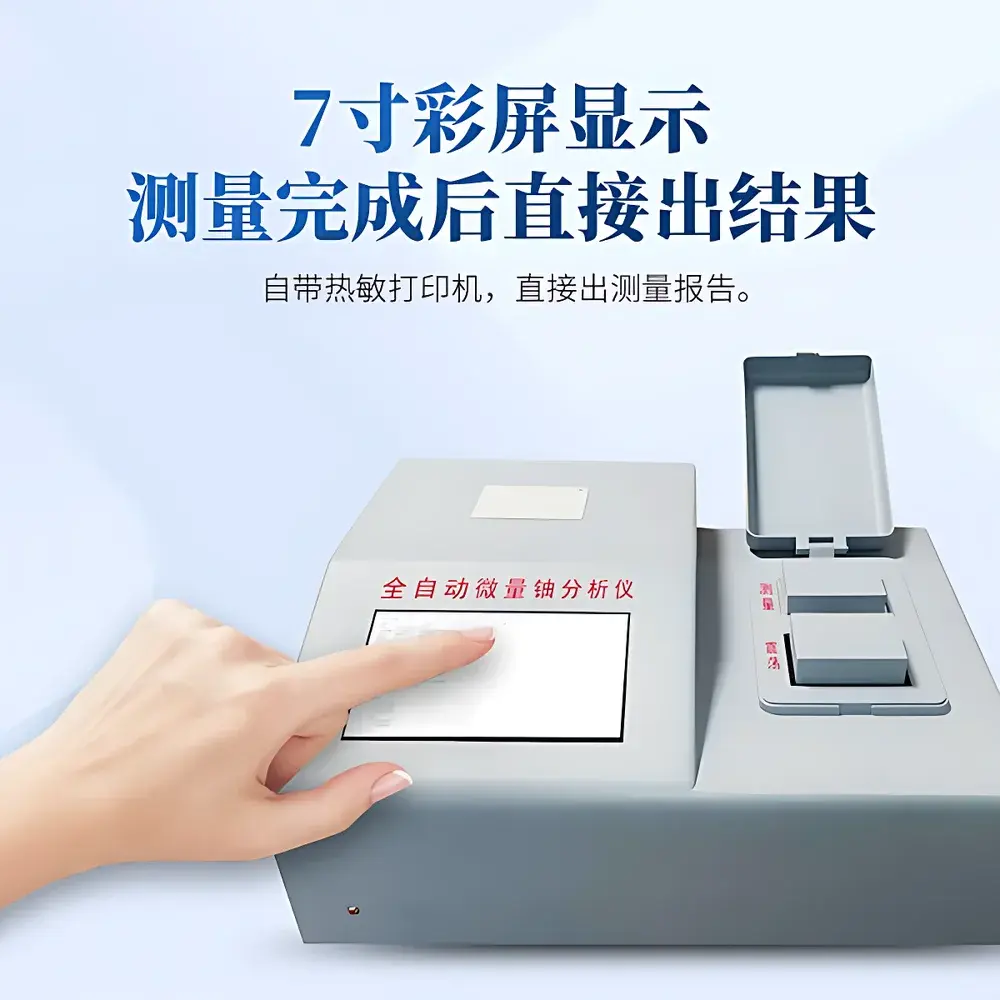
| Display | 7-inch color TFT touchscreen |
| Dimensions | 450 × 350 × 185 mm |
| Net Weight | 10 kg |
| Power Supply | 220 V ±10%, 50 Hz |
Overview
The CloudTop YT-WLY Fully Automated Trace Uranium Analyzer is a benchtop fluorometric instrument engineered for precise, high-throughput quantification of uranium in aqueous environmental, nuclear fuel cycle, and geological samples. It operates on the principle of uranium-specific fluorescence enhancement—where uranyl ions (UO₂²⁺) form highly fluorescent ternary complexes with aromatic ligands (e.g., arsenazo III or similar fluorogenic reagents) under controlled acidic conditions. Upon excitation by a stable pulsed ultraviolet light source (peak emission ~365 nm), the complex emits characteristic fluorescence at ~520 nm, which is measured via a high-sensitivity photomultiplier tube (PMT) or solid-state detector. The system integrates sample conditioning, reagent addition, vortex-assisted mixing, incubation, optical measurement, and data regression—all within a single, self-contained platform. Designed for compliance with ISO/IEC 17025 laboratory quality requirements, it supports trace-level uranium monitoring in drinking water (EPA Method 908.0 analog), nuclear facility effluents (IAEA-TECDOC-1360), and low-level radioactive waste characterization.
Key Features
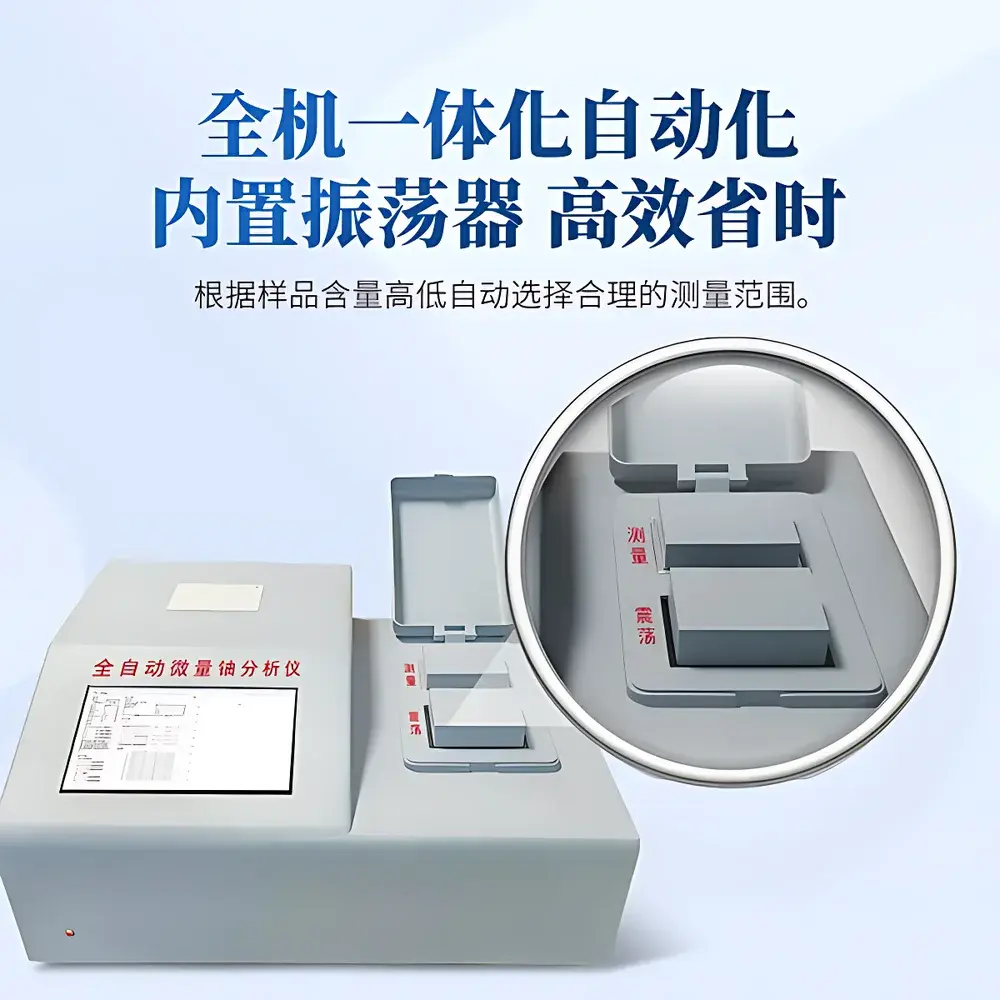
- Integrated micro-vortex mixing module eliminates external shakers—ensures homogeneous complex formation without manual intervention or cross-contamination risk.
- Self-calibrating optical path with temperature-stabilized UV LED source (rated lifetime ≥5 years, >80,000 assay cycles) and real-time intensity monitoring for photometric drift compensation.
- Intelligent range selection: automatically switches between low-range (0–2 ng/mL) and extended-range (2–20 ng/mL) modes based on preliminary signal intensity; high-concentration samples (>20 ng/mL) are accommodated via on-board serial dilution protocol.
- Embedded ARM-based microcontroller with deterministic real-time OS ensures reproducible timing for reaction kinetics (mixing → incubation → readout), critical for fluorescence lifetime consistency.
- 7-inch capacitive touchscreen GUI with multilingual support (English default); all operations—including method selection (standard addition vs. calibration curve), parameter entry, and report generation—are accessible via intuitive icon-driven navigation.
- Built-in thermal printer (57 mm wide) outputs GLP-compliant hardcopy reports containing sample ID, timestamp, operator ID (if configured), measured concentration, R² value, and QC flag status—formatted to meet internal audit traceability requirements.
Sample Compatibility & Compliance
The YT-WLY accepts clarified liquid samples directly—including groundwater, surface water, seawater extracts, acid-digested soil leachates (HNO₃/HF), and spent nuclear fuel process streams. Solid matrices require standard EPA SW-846 Method 3050B or 3052 digestion prior to analysis. Sample volume requirement is 10–50 µL per run. The analyzer complies with key regulatory frameworks governing radionuclide analysis: its detection limit (≤0.01 ng/mL, defined as 3σ of blank) meets WHO Guidelines for Drinking-water Quality (2022) and EU Council Directive 2013/51/Euratom for uranium in public water supplies. Data integrity features—including electronic audit trail, user-access levels, and immutable result logging—align with FDA 21 CFR Part 11 principles for regulated laboratories performing environmental radiochemical testing under ISO 17025 accreditation.
Software & Data Management
Data acquisition and processing are handled by embedded firmware supporting both standard addition and multi-point calibration curve methodologies. Linear regression (y = mx + b) is computed in real time using least-squares fitting; correlation coefficient (R² ≥ 0.999) and residual plots are displayed pre-reporting. Raw fluorescence intensity values, background-corrected signals, and final concentrations are stored locally in non-volatile memory (4,000 entries). Export options include CSV via USB mass storage mode or direct TCP/IP transmission to LIMS or laboratory databases through the 100Base-T4 Ethernet port. Remote diagnostics and firmware updates are supported over network connection. All data files carry embedded timestamps, method version IDs, and instrument serial numbers—enabling full chain-of-custody documentation required for regulatory submissions.
Applications
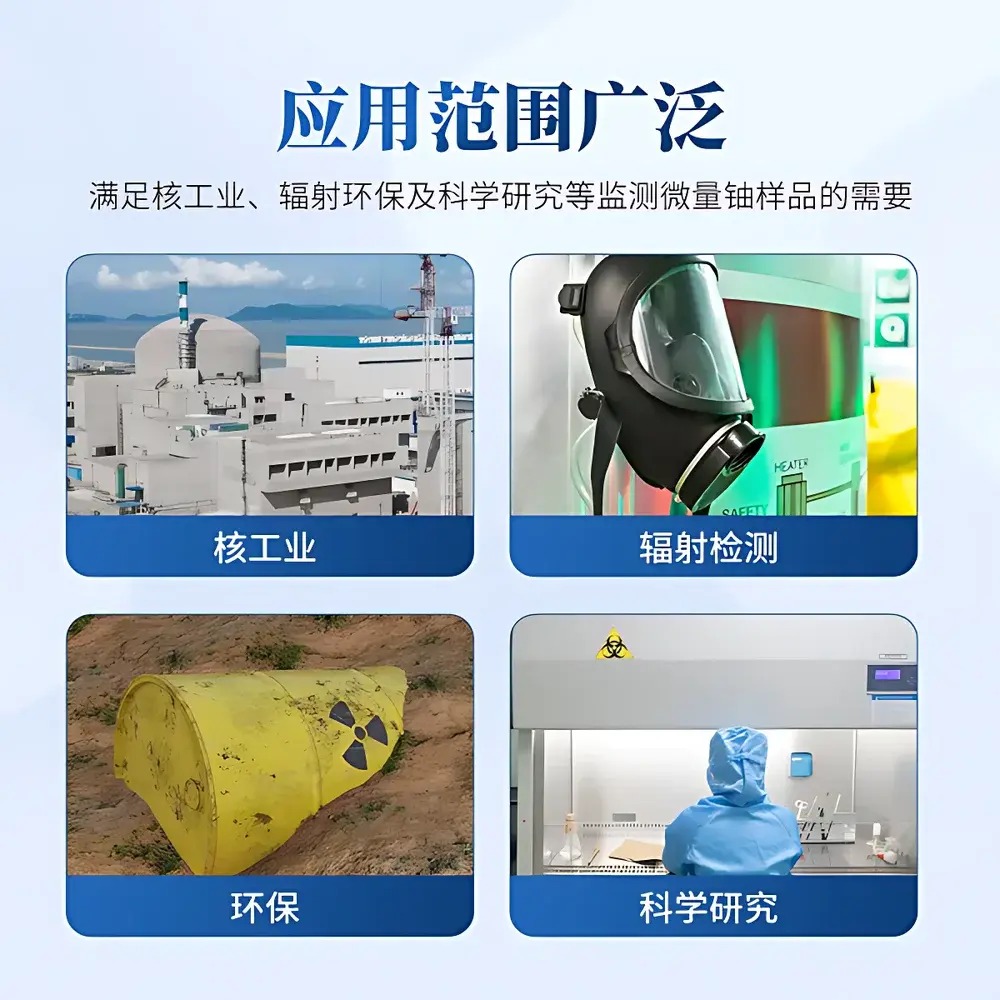
- Environmental monitoring of uranium contamination in aquifers near mining sites or mill tailings (per ASTM D5174-18).
- Quality control of uranium hexafluoride (UF₆) feedstock purity in enrichment facilities.
- Verification of decontamination efficacy in decommissioned nuclear infrastructure (IAEA NS-G-1.7).
- Geochemical prospecting via uranium anomaly detection in stream sediment eluates.
- Research-scale studies of uranium speciation and complexation kinetics in carbonate-rich groundwaters.
- Teaching laboratories requiring robust, low-maintenance instrumentation for radiochemistry coursework.
FAQ
What sample preparation is required for solid matrices?
Solid samples must undergo acid digestion (e.g., HNO₃/HF microwave-assisted per EPA Method 3052) followed by pH adjustment to 1.5–2.0 and filtration (0.45 µm) prior to injection.
Does the instrument support multi-element analysis?
No—the YT-WLY is dedicated exclusively to uranium quantification via uranyl-specific fluorescence; it does not detect thorium, plutonium, or other actinides.
Is method validation documentation provided?
Yes—each unit ships with a Factory Performance Verification Report including LOD/LOQ verification, linearity assessment across five concentrations, and precision testing (n=6 replicates at 1 ng/mL and 10 ng/mL).
Can the thermal printer output be disabled for digital-only reporting?
Yes—printer output is configurable via system settings; results can be routed exclusively to USB storage or network destinations.
What maintenance intervals are recommended?
UV source output is monitored continuously; no routine optical alignment is needed. Quarterly cleaning of fluidic pathways with 10% nitric acid and annual PM (including PMT gain verification) are advised for sustained metrological performance.
Related Products







