
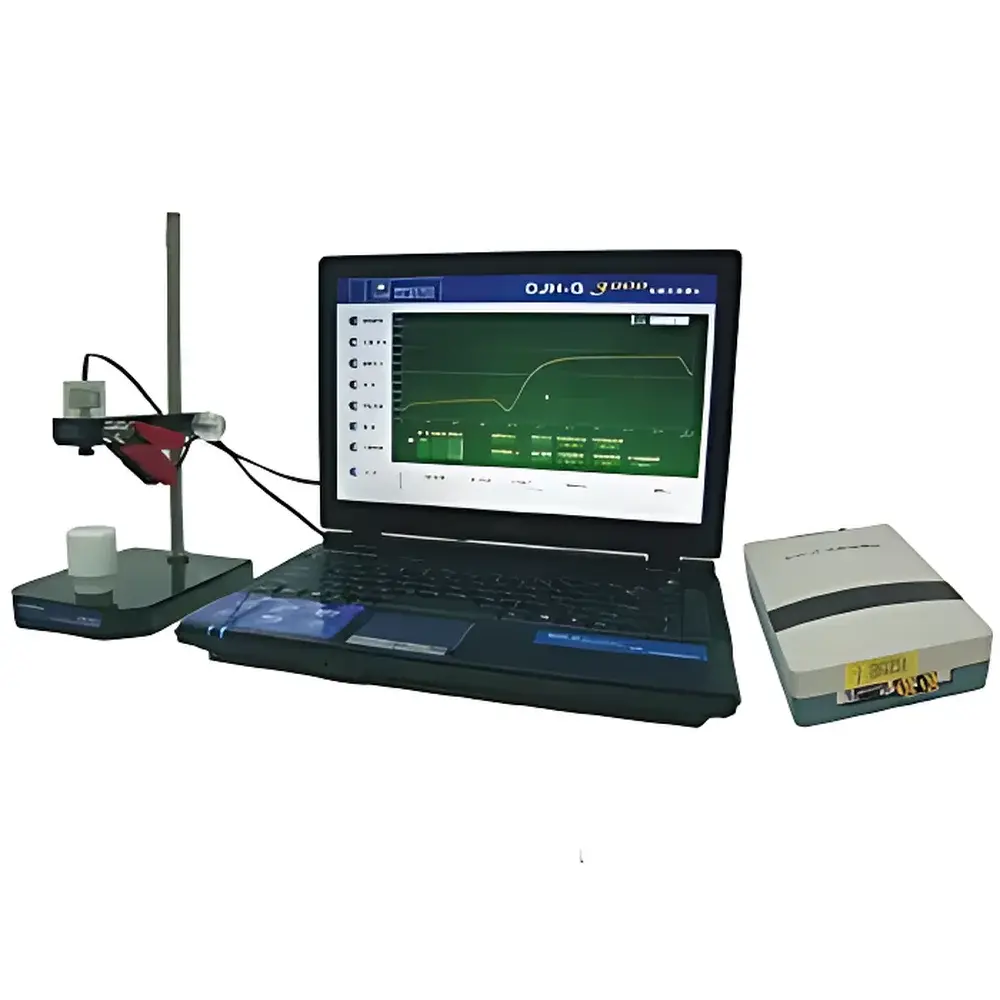
CMI830 Coulometric Coating Thickness Tester
| Origin | Hubei, China |
|---|---|
| Manufacturer Type | Distributor |
| Origin Category | Domestic |
| Model | CMI830 |
| Pricing | Upon Request |
Overview
The CMI830 Coulometric Coating Thickness Tester is a precision electrochemical instrument engineered for non-destructive, quantitative measurement of metallic coating thicknesses on conductive and non-conductive substrates. Based on the coulometric (electrolytic) principle—where controlled anodic dissolution of the coating layer generates a measurable charge proportional to mass loss—the system delivers traceable, repeatable thickness data in accordance with ASTM B504, ISO 2177, and ISO 2064 standards. Unlike destructive metallographic sectioning or X-ray fluorescence (XRF), the CMI830 enables localized, in-situ analysis without substrate damage, making it especially suitable for quality control in high-value plated components where surface integrity must be preserved. Its portable data acquisition module integrates real-time electrochemical potential monitoring, enabling simultaneous evaluation of both thickness and galvanic behavior—critical for multi-layer nickel systems (e.g., semi-bright/bright nickel duplex structures) used in corrosion-resistant automotive and aerospace applications.
Key Features
- Multi-coating capability: Supports over 30 validated coating/substrate combinations including decorative Cr, Ni, Cu, Zn, Sn, Ag, Au, Cd, hard Cr, electroless Ni, and complex multilayers such as Cr/Ni/Cu stacks.
- Dual-resolution detection: 0.01 µm resolution for Au and decorative Cr; 0.1 µm for all other coatings—optimized for regulatory-grade reporting in QC labs.
- Modular test geometry: Interchangeable B-type (φ2.4 mm) and S-type (φ1.7 mm) electrolyte containment rings accommodate fine-pitch features and micro-components.
- Real-time electrochemical profiling: Simultaneous display of thickness vs. time and open-circuit potential (OCP) curves during dissolution—enabling identification of interfacial transitions between layers.
- Robust architecture: Designed for industrial environments—CE-compliant power supply (AC 220 V ±10%, 50/60 Hz, 30 W), sealed electrolyte handling, and corrosion-resistant test fixtures.
Sample Compatibility & Compliance
The CMI830 accommodates substrates ranging from ferrous and non-ferrous metals (steel, brass, aluminum) to non-conductive materials (plated plastics, ceramics) and rare-earth magnets (NdFeB). For non-conductive substrates, a conductive undercoat or auxiliary electrode configuration is applied per ISO 2177 Annex A. Measurement range spans 0.1–35 µm at certified accuracy (≤±10% full-scale error); thicker deposits may be analyzed with documented uncertainty expansion. All measurements comply with ISO/IEC 17025 traceability requirements when calibrated using NIST-traceable standard reference plates (optional STD-L calibration kits available). The instrument supports GLP/GMP audit readiness via timestamped, user-logged test records and electronic signature-capable software export.
Software & Data Management
The bundled Windows-based software provides full instrument control, live curve visualization (thickness vs. time, potential vs. time), and automated report generation compliant with FDA 21 CFR Part 11 requirements—including electronic signatures, audit trails, and secure data archiving. Test results are stored in encrypted binary format with metadata (operator ID, date/time, sample ID, calibration status). Export options include CSV (for LIMS integration), PDF (print-ready reports), and XML (for enterprise QA databases). Software supports batch processing of up to 999 samples per session and configurable pass/fail thresholds aligned with internal specifications or customer-facing PPAP documentation.
Applications
The CMI830 serves critical metrology roles across regulated manufacturing sectors: automotive Tier-1 suppliers verifying chrome-plated trim adhesion and nickel layer ratios; PCB manufacturers validating ENIG (electroless nickel immersion gold) thickness uniformity; fastener producers auditing zinc-nickel alloy coatings per ASTM F1941; and R&D laboratories characterizing diffusion barriers in advanced magnetic components (e.g., NdFeB sintered magnets with Ni-Cu-Ni triple-layer protection). It is routinely deployed in national technical supervision institutes for third-party verification against GB/T 9798 (Chinese national standard equivalent to ISO 2177) and in university materials science departments for teaching electrochemical dissolution kinetics.
FAQ
What electrolytes are supplied with the CMI830, and how long do they last?
Four 120 mL bottles of proprietary, pH-stabilized electrolyte solutions are included—formulated specifically for Cr, Ni, Cu, and Au dissolution. Shelf life is 24 months unopened; post-opening usage depends on contamination control but typically exceeds 6 months with proper storage.
Can the CMI830 measure coatings on plastic substrates?
Yes—provided the plastic part has been metallized (e.g., ABS with electroless Ni/Cu followed by decorative Cr). The instrument measures only the conductive layers; non-conductive base material requires no electrical contact.
Is calibration traceable to international standards?
Calibration is performed using certified reference standards traceable to NIST or PTB. Optional factory-certified calibration kits (STD08, STD-L) provide on-site verification per ISO 17025 procedures.
Does the system support automated data transfer to MES or SAP?
Yes—via configurable CSV export with custom field mapping and optional OPC UA gateway integration for Industry 4.0 production line connectivity.
What safety certifications does the CMI830 hold?
Complies with IEC 61010-1 (Safety Requirements for Electrical Equipment for Measurement, Control, and Laboratory Use) and CE marking for EMC Directive 2014/30/EU and Low Voltage Directive 2014/35/EU.



