
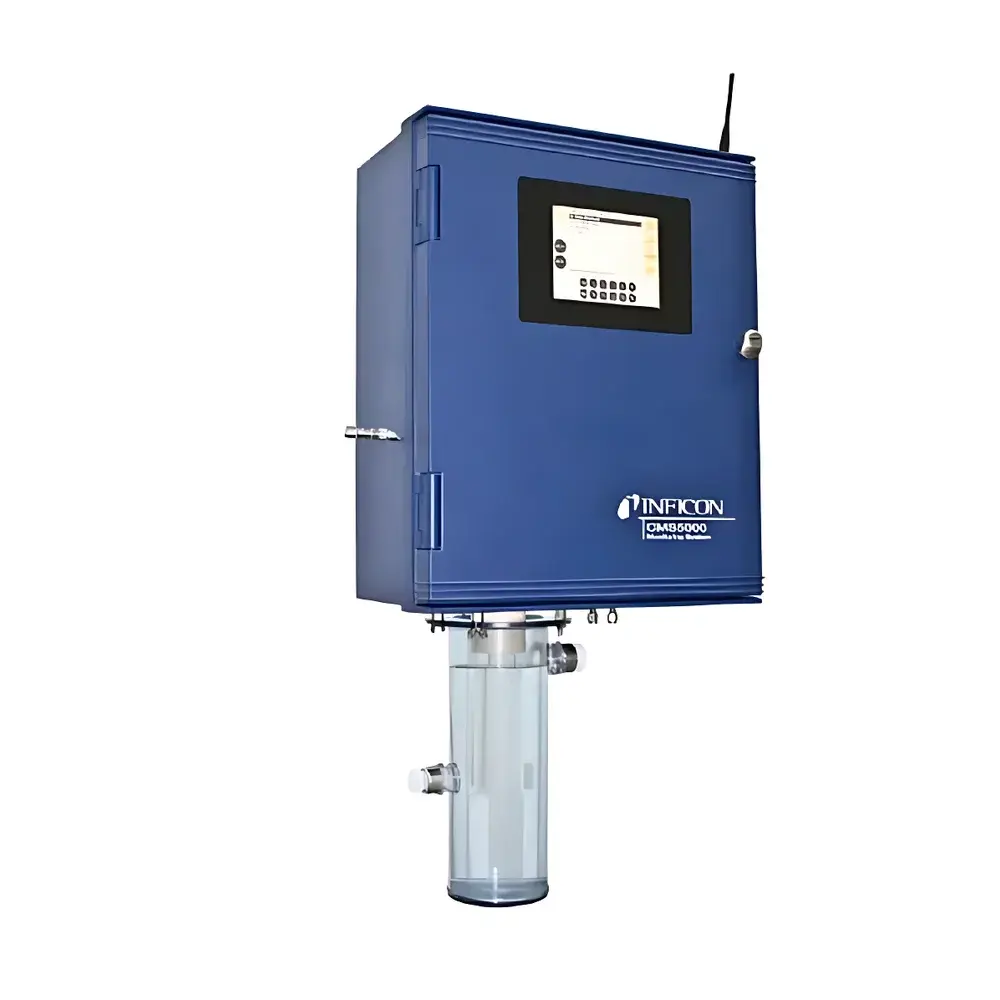
CMS5000 Online Volatile Organic Compounds Monitoring System
| Origin | USA |
|---|---|
| Manufacturer Type | Authorized Distributor |
| Origin Category | Imported |
| Model | CMS5000 |
| Price Range | USD 42,000 – 70,000 |
| Application Field | Environmental Monitoring |
| Temperature Control Range | Not Applicable (Fixed-temperature operation) |
| Heating Rate | Not Applicable |
| Cooling Rate | Not Applicable |
| Carrier Gas Flow Range & Control | Not Specified |
| Carrier Gas Pressure Range & Control | Not Specified |
| Injector Maximum Operating Temperature | Not Specified |
| Injector Pressure Setting Range | Not Specified |
| Injector Total Flow Setting Range | Not Specified |
Overview
The CMS5000 Online Volatile Organic Compounds (VOCs) Monitoring System is a fully automated, field-deployable gas chromatography-based platform engineered for unattended, real-time quantification of trace-level volatile organic compounds in ambient air and aqueous matrices. Unlike conventional benchtop GC systems requiring manual sample injection and discrete analysis cycles, the CMS5000 integrates a continuous sampling architecture grounded in purge-and-trap preconcentration (SituProbe™), low thermal mass (LTM) column heating, and micro-argon ionization detection—enabling high-sensitivity, high-frequency measurement with minimal operator intervention. Designed specifically for environmental compliance monitoring, the system operates under fixed-temperature conditions optimized for robustness and long-term stability in remote or semi-permanent installations such as water treatment plants, municipal air quality stations, and industrial fence-line monitoring sites.
Key Features
- Integrated SituProbe™ purge-and-trap module enabling continuous, automated extraction and concentration of VOCs from water or air streams without solvent or consumable traps.
- Low thermal mass (LTM) column oven architecture delivering rapid, precise temperature control during chromatographic separation—enhancing peak resolution and retention time reproducibility across extended operational cycles.
- Micro-argon ionization detector (µAID) offering selective, stable response to halogenated and non-halogenated VOCs at sub-part-per-trillion (pptv) levels in air and sub-ng/L levels in water—without reliance on radioactive sources or hydrogen fuel gases.
- Built-in calibration standard reservoir with programmable auto-injection, supporting scheduled detector response verification and drift correction per EPA Method 8260D and ISO 16017-1 requirements.
- Embedded method library with pre-validated analytical sequences for priority pollutants including benzene, toluene, ethylbenzene, xylenes (BTEX), chlorinated solvents (e.g., PCE, TCE), and C2–C10 aliphatics—fully configurable via touchscreen interface.
- User-defined alarm thresholds with relay outputs and email/SMS notification capability (via optional gateway), compliant with ISO 17025 traceability protocols for event-triggered data logging.
- Industrial-grade 7-inch color capacitive touchscreen HMI providing full local control, diagnostic access, and real-time chromatogram visualization—designed for IP65-rated enclosure integration.
Sample Compatibility & Compliance
The CMS5000 accommodates direct, unmodified sampling from ambient air (0.1–10 L/min flow), raw or treated water (0.5–2 mL/min), and saturated vapor headspace. Sample introduction employs inert stainless-steel and fused-silica pathways with passivated surfaces to prevent adsorption or catalytic degradation of reactive analytes (e.g., vinyl chloride, acrolein). The system meets structural and functional requirements outlined in U.S. EPA Compendium Method TO-17 (air) and Method 524.4 (water), and supports audit-ready data generation aligned with ISO/IEC 17025:2017 clause 7.7 (result reporting) and EU Directive 2008/50/EC Annex IX (ambient air monitoring specifications). All firmware and data handling routines are designed to support GLP-compliant environments, including secure user authentication, electronic signatures, and immutable audit trails.
Software & Data Management
The embedded Linux-based control software provides synchronized instrument management, method scheduling, and raw data acquisition at 10 Hz sampling rate. Chromatographic data files adhere to ASTM E1947-21 (standard format for chromatographic data exchange) and are exported in vendor-neutral .CDF or .CSV formats. Remote access is enabled via secure FTP(S) or SFTP protocols, with optional TLS 1.2 encryption and configurable transfer intervals (e.g., per-analysis, hourly, or daily bundles). Integration with SCADA, LIMS, or cloud-based environmental dashboards (e.g., AWS IoT Core, Microsoft Azure IoT Hub) is supported through RESTful API endpoints and Modbus TCP interfaces. All data exports include embedded metadata: timestamp (UTC), instrument ID, method version, calibration status flag, and QA/QC summary codes.
Applications
The CMS5000 serves as a reference-grade continuous emissions monitoring solution in regulated environmental contexts, including: real-time VOC monitoring at municipal drinking water intake points; fugitive emission detection along petrochemical facility perimeters; compliance verification for wastewater discharge permits (e.g., NPDES); early-warning surveillance for landfill leachate plume migration; and indoor air quality assessment in critical infrastructure (hospitals, laboratories, cleanrooms). Its modular footprint and wall-mountable chassis enable deployment in space-constrained locations—including outdoor kiosks, mobile monitoring trailers, and utility vaults—without requiring conditioned laboratory environments.
FAQ
Does the CMS5000 require carrier gas cylinders on-site?
No—its micro-argon ionization detector uses ultra-low argon consumption (<5 mL/min), supplied from a single 30-L disposable cylinder rated for ≥6 months of continuous operation.
Can the system be integrated into an existing facility SCADA network?
Yes—Modbus TCP and OPC UA drivers are included; custom protocol mapping is supported via documented SDK.
Is method validation documentation provided with the system?
Yes—each shipment includes a Factory Acceptance Test (FAT) report, system suitability test results per USP , and a Certificate of Conformance to ISO 9001:2015.
What maintenance intervals are recommended for unattended operation?
Primary consumables (trap cartridges, septa, detector filaments) are rated for ≥3 months at typical environmental sampling frequencies; automated health checks run every 24 hours and log diagnostics to internal storage.
How is cybersecurity addressed in remote data transmission?
All network interfaces enforce TLS 1.2+ encryption, certificate-based authentication, and configurable firewall rules; no default passwords or open Telnet/SSH ports are enabled out-of-box.
Related Products




