
Cnonline ST-01 Mobile Hazardous Waste Interim Storage Cabinet
| Brand | Cnonline |
|---|---|
| Origin | Hunan, China |
| Manufacturer Type | Authorized Distributor |
| Country of Origin | Domestic (China) |
| Model | ST-01 |
| Price Range | USD 56,000 – 70,000 (FOB) |
| Waste Category | Solid Hazardous Waste |
| Applicable Sectors | Academic & Industrial Laboratories, Healthcare Facilities, Chemical Manufacturing Plants |
| Storage Principle | Controlled Interim Containment |
| Total Storage Capacity | 1600 L |
| Regulatory Compliance | GB 18597–2023, GB 15562.2–1995, HJ 2025–2012 |
Overview
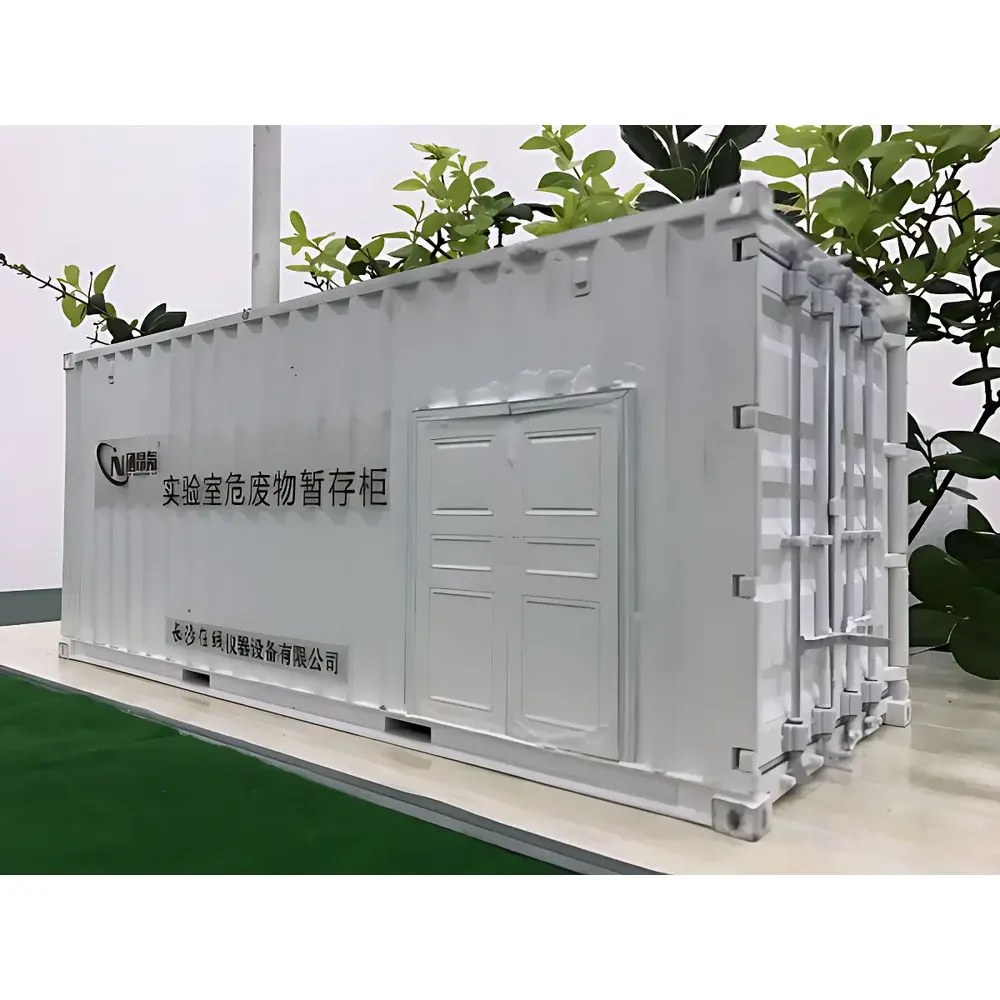
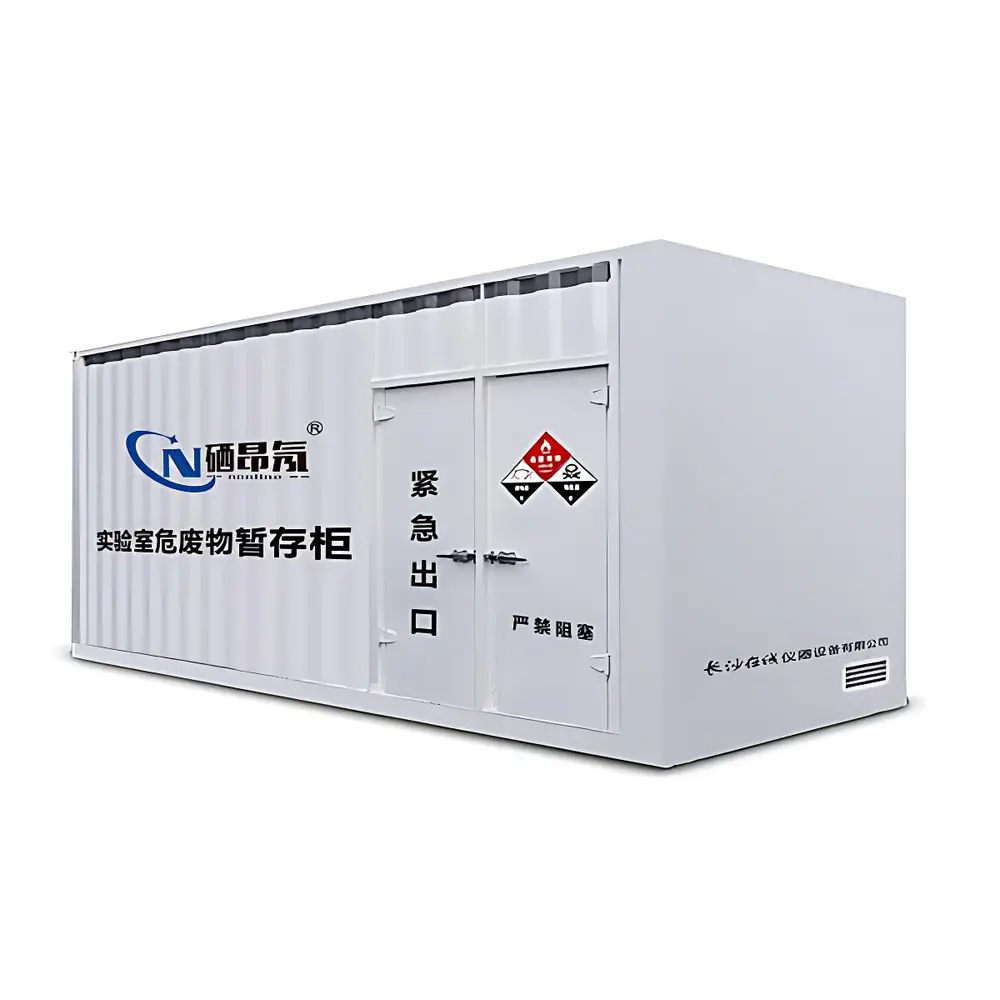
The Cnonline ST-01 Mobile Hazardous Waste Interim Storage Cabinet is an engineered containment solution designed for the safe, compliant, and operationally resilient temporary storage of solid hazardous waste in regulated laboratory, clinical, and industrial environments. Built upon a standardized ISO shipping container platform, the ST-01 integrates structural integrity, intrinsic safety engineering, and environmental control to meet stringent Chinese national standards—including GB 18597 (Technical Specification for Hazardous Waste Storage), GB 15562.2 (Environmental Protection Graphic Symbols), and HJ 2025 (Technical Guidelines for Collection, Storage, and Transportation of Hazardous Waste). Its operational principle centers on passive and active containment: maintaining a sustained negative pressure differential of −500 Pa (not PSI—corrected per IEC 60079-14 and ASHRAE 110 verification protocols) across the internal chamber via dedicated exhaust ducting, thereby preventing fugitive emissions of volatile organic compounds (VOCs), acidic vapors, or particulate contaminants. The cabinet operates as a closed-loop interim holding system—not a treatment unit—and is intended for use within defined accumulation timeframes under local environmental permits.
Key Features
- Structural chassis: Reinforced 20-ft ISO-standard container frame with fire-rated insulation lining (A-class non-combustible mineral wool, ≥120 min fire resistance rating per GB/T 9978.1)
- Safety-integrated architecture: Dual-zone layout comprising an electrical equipment compartment and a primary storage zone; explosion-proof lighting (Ex d IIB T4 Gb certified), emergency egress door with panic hardware, and intrinsically safe temperature/gas detection system (CO, VOC, H₂S configurable)
- Environmental control: Dedicated anti-static entry vestibule with human-body static discharge column; emergency eyewash and shower station (ANSI Z358.1–2022 compliant) mounted externally on southern façade; wall-mounted explosion-proof air conditioning unit (north-facing external condenser)
- Containment assurance: Continuous negative-pressure operation verified by calibrated differential pressure transducers; exhaust airflow routed through stainless-steel ductwork to central lab ventilation or dedicated scrubber systems
- Durability & corrosion resistance: All steel structural components subjected to acid pickling, phosphating, and thermoset epoxy-polyester powder coating (film thickness ≥80 µm, salt-spray resistance ≥1000 hrs per ASTM B117)
Sample Compatibility & Compliance
The ST-01 accommodates a broad spectrum of solid-phase hazardous waste streams commonly generated in research laboratories and production facilities—including spent reagent containers, contaminated PPE, filter cartridges, broken glassware with residual solvents, and expired pharmaceutical intermediates. It is not rated for liquid bulk storage, pressurized cylinders, or radioactive materials. All internal storage configurations comply with GB 18597’s segregation requirements: incompatible waste categories (e.g., oxidizers vs. organics) must be physically isolated using the modular sealed cabinets (≥200 L capacity each) or designated open-shelf zones. Certification documentation—including material safety data sheets (MSDS) for coated surfaces, third-party flame-spread test reports (GB/T 8626), and VOC emission test results (GB 18580–2017)—is supplied with each unit. The system supports audit readiness for GLP, GMP, and CNAS-accredited facility inspections.
Software & Data Management
While the ST-01 is a hardware-centric containment platform without embedded IoT controllers, it interfaces with facility-wide environmental monitoring networks via analog 4–20 mA outputs from its gas/temperature sensors and digital RS-485 Modbus RTU ports. Optional integration kits enable logging of real-time pressure differentials, ambient temperature trends, and alarm event timestamps into centralized SCADA or LIMS platforms. All alarm events trigger visual-audible indicators on the exterior panel and may be configured to activate auxiliary building management system (BMS) responses—such as halting adjacent fume hood operations or initiating backup exhaust fan staging. Audit trails comply with GB/T 22239–2019 (Cybersecurity Baseline Requirements) and support 21 CFR Part 11–aligned electronic record retention when paired with validated data acquisition software.
Applications
- Academic research labs requiring EPA-equivalent accumulation compliance prior to licensed off-site disposal
- Hospital central sterile supply departments managing cytotoxic drug waste and sharps-contaminated solids
- Contract development and manufacturing organizations (CDMOs) maintaining segregated waste streams during API synthesis campaigns
- Chemical R&D centers handling halogenated solvents, heavy metal sludges, and nitro-compound residues
- Government testing laboratories fulfilling mandatory 90-day accumulation limits under China’s Solid Waste Pollution Prevention and Control Law
FAQ
Is the ST-01 certified for explosion protection in Class I, Division 1 environments?
No—the cabinet meets Ex d IIB T4 Gb classification for Zone 2 (non-hazardous during normal operation) per GB 3836.1–2021, but is not rated for continuous presence in classified hazardous locations.
Can the cabinet be relocated after installation?
Yes—its ISO container base enables crane-lift mobility; however, structural anchoring, utility tie-ins (power, exhaust), and local environmental authority re-registration are required post-relocation.
Does the system include waste tracking or manifest generation capabilities?
No—waste tracking remains the responsibility of the end-user’s internal ERP or hazardous waste management software; the ST-01 provides only sensor-level environmental telemetry.
What maintenance intervals are recommended for the exhaust filtration system?
Filter replacement frequency depends on VOC loading; Cnonline recommends quarterly inspection of pre-filters and annual validation of duct static pressure loss per HJ 2025 Annex D.
Is third-party performance validation available prior to commissioning?
Yes—Cnonline partners with CNAS-accredited testing institutes to conduct on-site negative pressure decay tests, air exchange rate verification (≥12 ACH), and ambient air quality comparison per GB 16297–1996 at user-specified receptor points.



