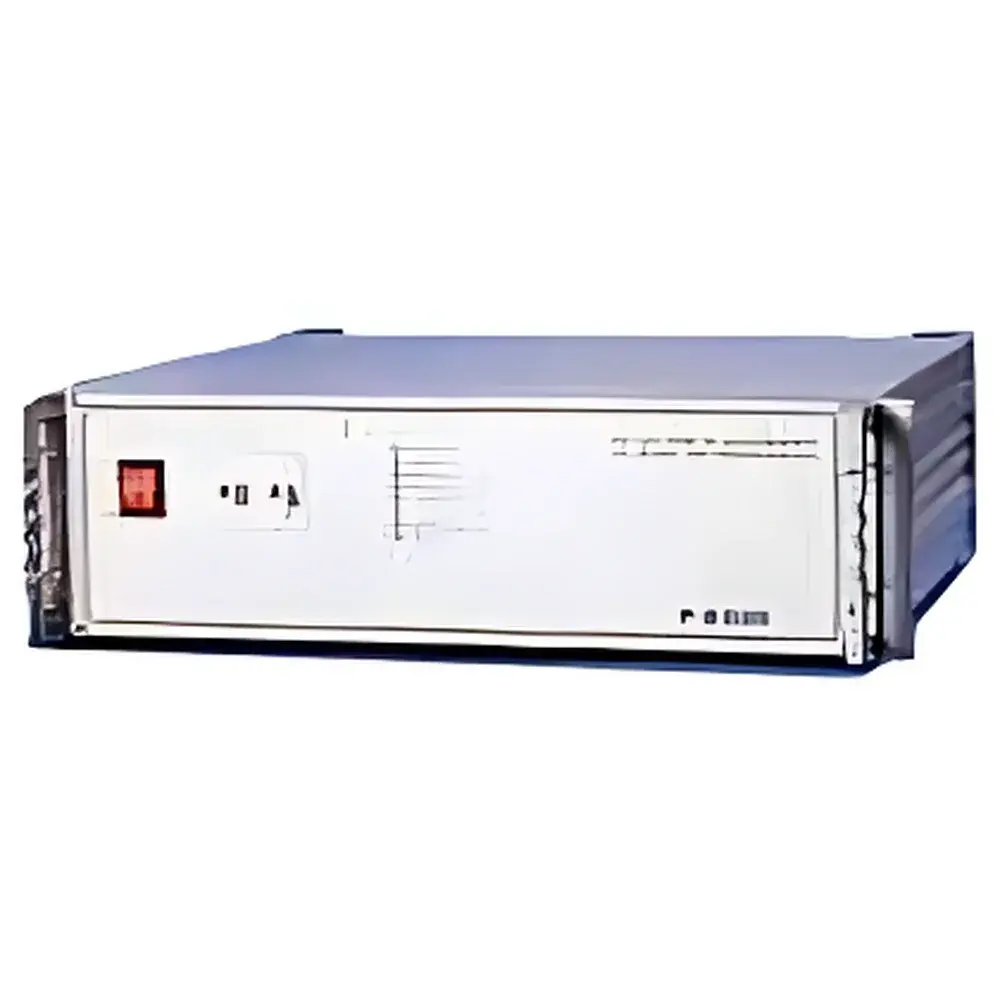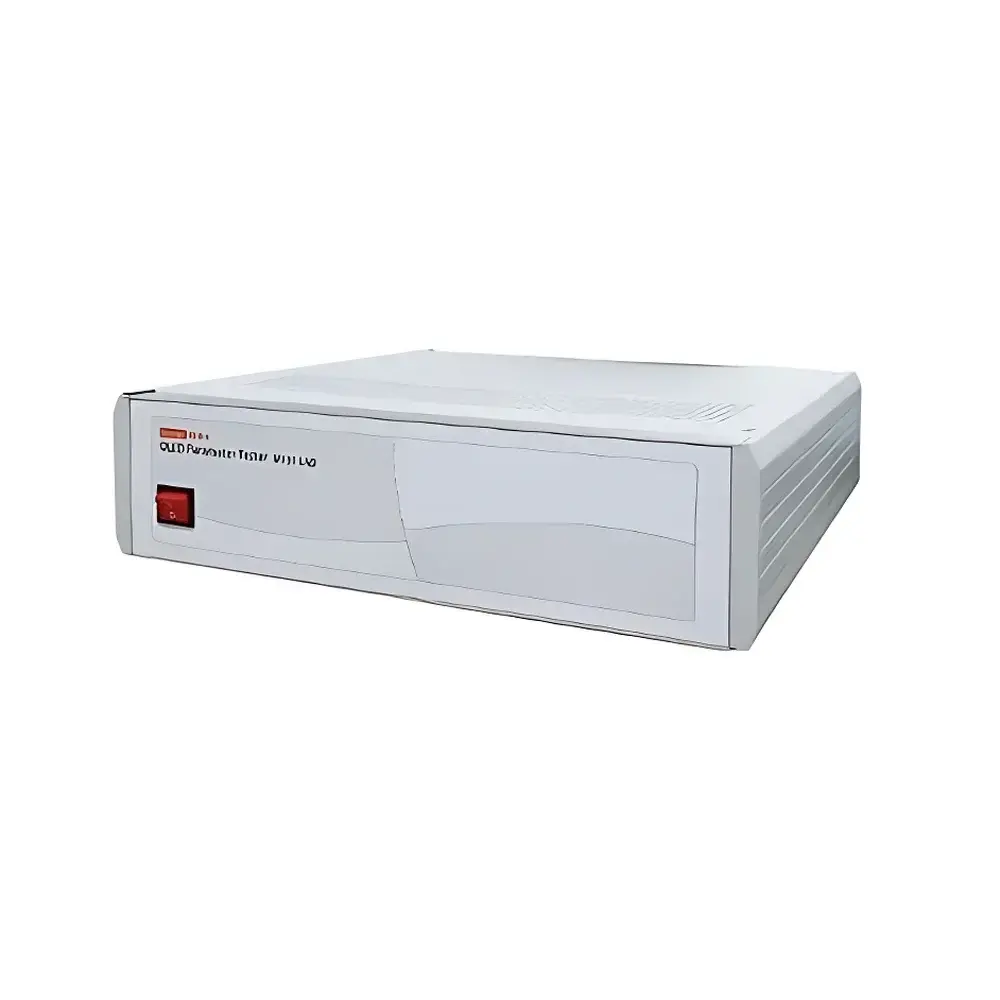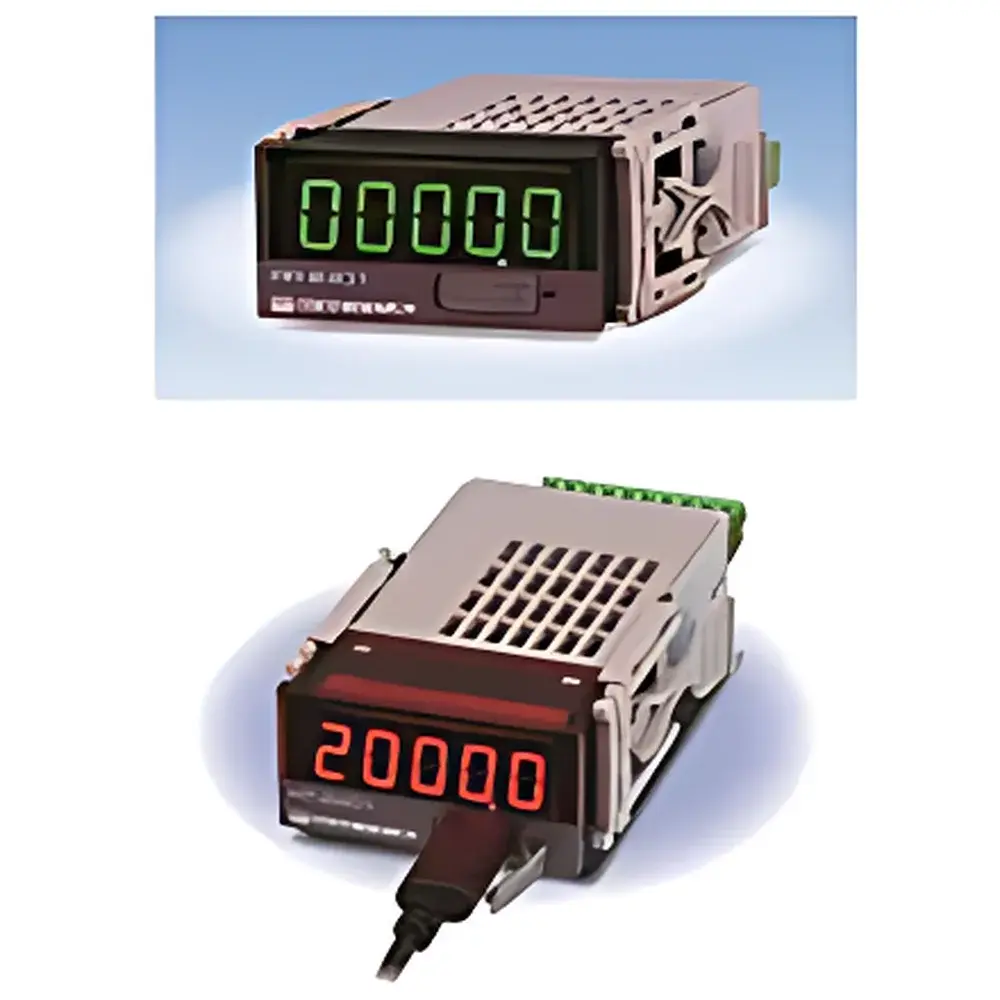
CocoResearch RR-2401 / RRL-2401 Precision Resistance Meter
| Brand | CocoResearch |
|---|---|
| Origin | Japan |
| Model | RR-2401 / RRL-2401 |
| Measurement Ranges | 150 Ω / 1.5 kΩ / 10 kΩ / 40 kΩ |
| Resolution | 0.01 Ω / 0.1 Ω / 1 Ω / 10 Ω (per range) |
| Analog Output | 16-bit, 0–5 V / 0–10 V / 4–20 mA (configurable) |
| Power Supply | DC 12 V / 24 V / 48 V (wide-range input) |
| Mounting | 24 mm × 48 mm DIN rail panel cutout |
| Optional Outputs | Simultaneous analog + CAN 2.0A/B (ISO 11898-2 compliant) |
| Zero & Span Calibration | User-adjustable via front-panel or remote command |
Overview
The CocoResearch RR-2401 and RRL-2401 are high-stability, DIN-rail-mountable resistance meters engineered for precision monitoring and feedback control in industrial sensing applications. Unlike general-purpose multimeters, these instruments implement a four-wire (Kelvin) measurement architecture—standard across both models—to eliminate lead resistance errors and ensure traceable accuracy across all four selectable ranges (150 Ω, 1.5 kΩ, 10 kΩ, and 40 kΩ). The core measurement principle relies on constant-current excitation combined with high-impedance voltage sensing, delivering stable readings under varying ambient temperatures (operating range: −10 °C to +60 °C) and electromagnetic conditions typical of factory-floor environments. Designed specifically for integration into motion and position feedback loops, the RR/RRL series interfaces directly with potentiometric sensors—including rotary potentiometers (e.g., angle transducers), linear displacement transducers (LVDT alternatives), and resistive slide sensors—where repeatable resistance-to-position correlation is critical for closed-loop system integrity.
Key Features
- Four-step manual or remote-selectable resistance ranges (150 Ω / 1.5 kΩ / 10 kΩ / 40 kΩ), each optimized for resolution and noise immunity
- True 16-bit analog output (0–5 V, 0–10 V, or 4–20 mA) with ≤0.02% full-scale linearity error and <10 ppm/°C temperature coefficient
- Simultaneous dual-output capability: configurable analog + CAN 2.0A/B interface supporting SAE J1939 and CANopen DS-301 protocols for redundancy-critical systems
- DIN 24×48 mm panel-mount form factor with IP65-rated front bezel (when installed with gasket kit)
- Wide-input power supply (DC 12 V / 24 V / 48 V) featuring reverse-polarity protection and ±15% ripple tolerance
- User-configurable zero and span calibration offsets via front-panel push-button sequence or Modbus RTU command (RS-485 option)
- 3-wire BCD-compatible wiring option reduces cabling complexity versus legacy 4-wire BCD implementations—particularly beneficial in multi-sensor arrays
Sample Compatibility & Compliance
The RR-2401 and RRL-2401 are validated for use with standard wirewound, conductive plastic, and hybrid film potentiometers meeting IEC 60393-1 and JIS C 5401 specifications. Both models comply with EN 61326-1:2013 (industrial EMC) and EN 61000-6-2/6-4 for immunity and emissions. Electrical safety conforms to UL 61010-1 and IEC 61010-1 Ed. 3.0 (Pollution Degree 2, Overvoltage Category II). For regulated environments, firmware supports audit-trail logging (via optional SD card module) aligned with GLP/GMP documentation requirements. While not intrinsically safe, the units may be deployed in Zone 2 hazardous locations when installed behind approved barriers per IEC 60079-11.
Software & Data Management
Configuration and diagnostics are supported via the CocoResearch Configuration Utility (Windows-based, USB virtual COM port). The utility enables real-time waveform capture, calibration parameter export/import (CSV), and firmware updates. All analog and CAN outputs support timestamped data streaming at up to 100 Hz sample rate. For SCADA and MES integration, the devices expose Modbus RTU (RS-485) and CANopen object dictionary (0x2000–0x20FF) with standardized process data objects (PDOs) for resistance value, status flags, and diagnostic codes. Data integrity is maintained through CRC-16 checksums on all serial/CAN frames and non-volatile storage of calibration coefficients (EEPROM with >100,000 write cycles).
Applications
- Rotary position feedback in hydraulic valve actuators, robotic joint encoders, and throttle control systems
- Linear displacement monitoring in press-fit assembly stations, CNC machine tool gaging, and material thickness gauges
- Redundant sensor validation in safety-related motion control (e.g., dual-channel comparison with SIL2-capable PLCs)
- Calibration reference in metrology labs for verifying potentiometer linearity per ISO 2768-2 and ASTM E220
- Embedded test fixtures for automotive component validation (e.g., pedal position sensors, seat track sensors)
FAQ
What is the difference between the RR-2401 and RRL-2401 models?
The RR-2401 features front-panel push-button range selection and local zero/span adjustment. The RRL-2401 adds RS-485 Modbus RTU interface as standard, enabling remote configuration, real-time register polling, and firmware updates without physical access.
Can the device measure thermistors or RTDs?
No. These meters are optimized for passive two-terminal resistive elements with stable, monotonic resistance vs. position characteristics. They do not provide excitation current compensation required for temperature-sensitive devices like NTC thermistors or Pt100 RTDs.
Is CAN bus termination included?
Yes—both models ship with an integrated 120 Ω CAN bus termination resistor, switchable via DIP switch on the rear PCB.
How is measurement stability ensured over time?
Each unit undergoes 72-hour burn-in and drift verification at 25 °C and 55 °C. Long-term stability is specified as ±0.05% of reading/year, verified per ISO/IEC 17025-accredited calibration procedures.
Does the analog output support HART protocol?
No. The 4–20 mA output is conventional current loop only; HART modulation is not implemented. For digital+analog hybrid communication, use the simultaneous CAN + analog output mode.