
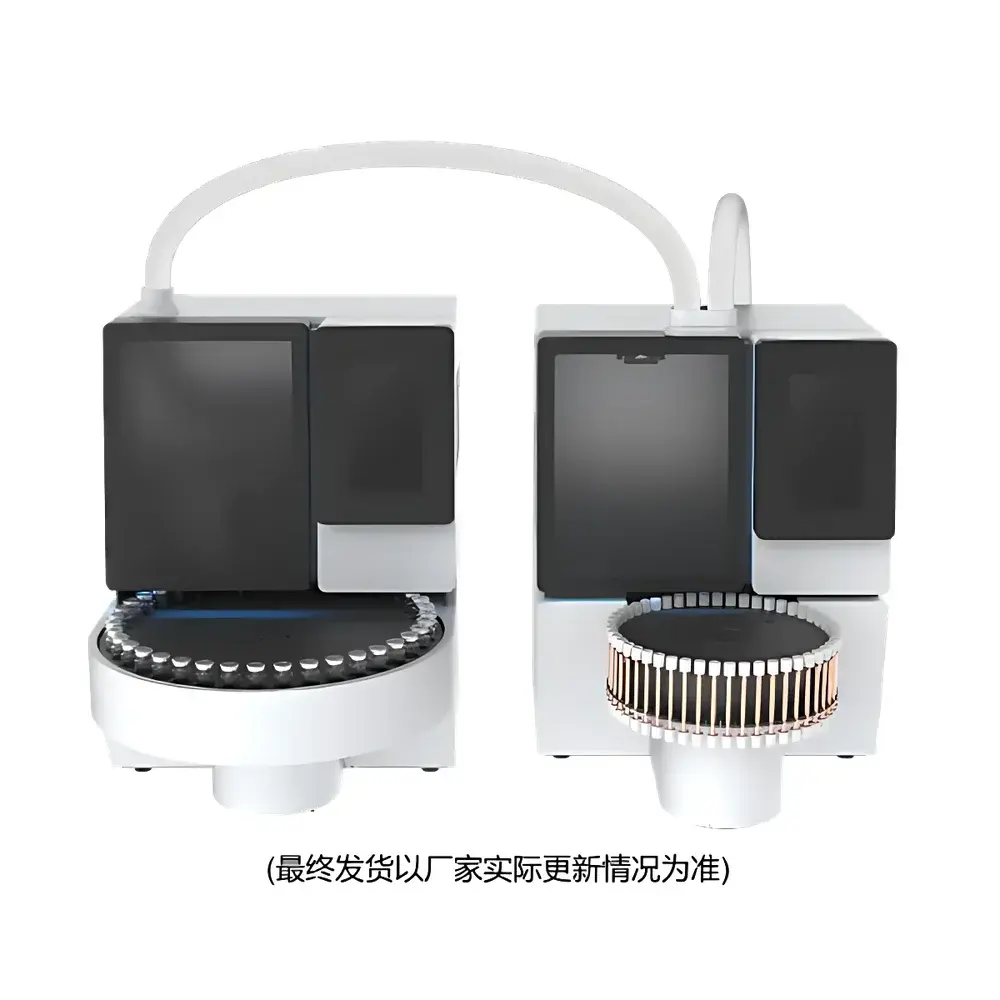
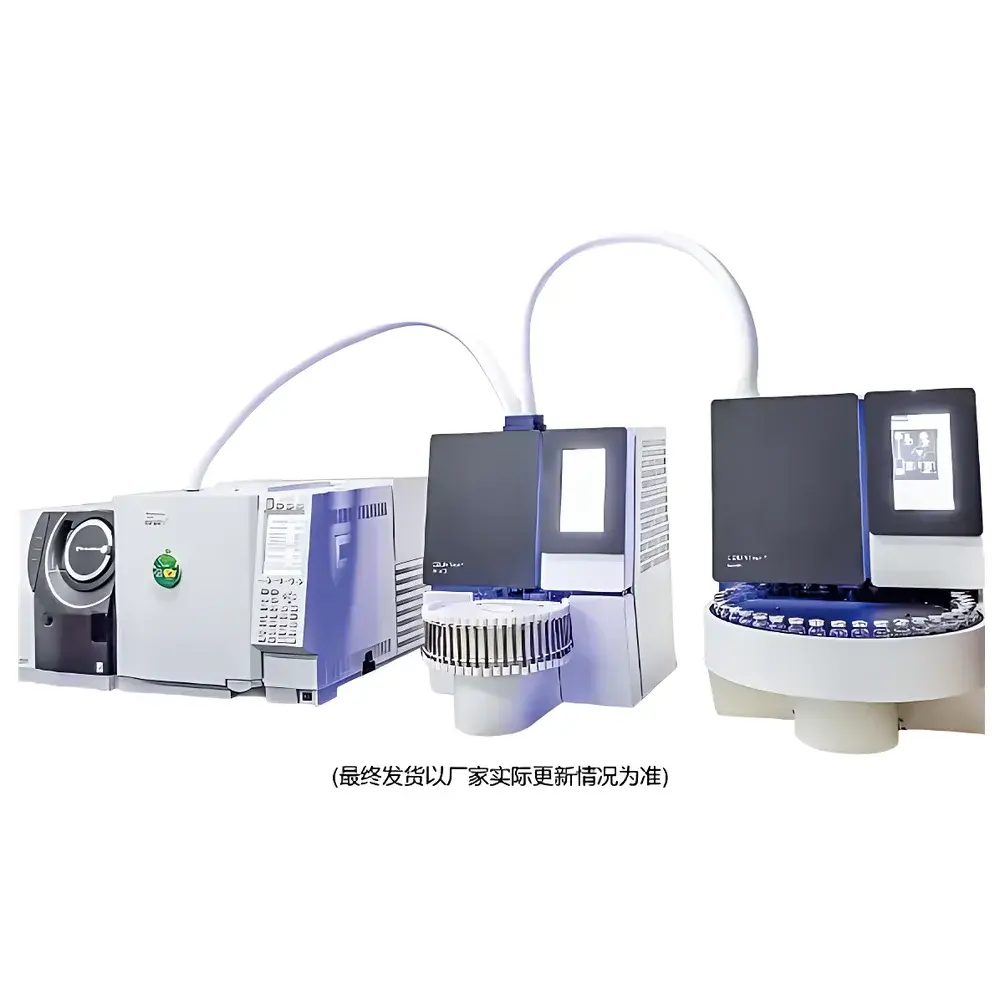
Colintech HSTD Multifunctional Headspace-Thermal Desorption Autosampler
| Brand | Colintech |
|---|---|
| Origin | Sichuan, China |
| Manufacturer Type | Direct Manufacturer |
| Regional Classification | Domestic (China) |
| Model | HSTD |
| Instrument Type | Multifunctional Autosampler for GC Sample Introduction |
| Maximum Sample Capacity | 128 × 10 mL headspace vials |
| Positioning Accuracy | < 0.3 mm |
| Sampling Needle Cleaning Method | High-Temperature Carrier Gas Reverse Purge |
| Purge Function | Reverse Purge |
| Integrated Filtration Module | Yes |
| Sampling Pathway | Dual-Channel — Static/Dynamic Extraction with Continuously Adjustable Injection Volume |
Overview
The Colintech HSTD Multifunctional Headspace-Thermal Desorption Autosampler is an integrated, software-switchable sample introduction platform engineered for high-fidelity volatile organic compound (VOC) and semi-volatile organic compound (sVOC) analysis in gas chromatography (GC). It unifies five core sample preparation modalities—static headspace (HS), thermal desorption (TD), purge-and-trap (P&T), dynamic headspace (also known as dynamic purge or trap-based enrichment), and solid-phase microextraction (SPME)—within a single mechanical architecture and GC interface. All workflows operate under fully sealed, inert gas-purged pathways to prevent analyte loss, oxidation, or cross-contamination. The system employs a dual-channel pneumatic architecture enabling simultaneous static and dynamic extraction control, with continuous volumetric adjustment of injected vapor phase—eliminating fixed-loop constraints. Designed for trace-level quantification, the HSTD achieves a method detection limit (MDL) of 0.05 µg/L for vinyl chloride in aqueous matrices, validated per EPA Method 502.2 principles and aligned with ISO 16000-6 for indoor air VOC analysis.
Key Features
- Single-GC-port integration: All five sample introduction modes route through one standardized GC inlet connection—no hardware reconfiguration or instrument relocation required between methods.
- High-precision robotic positioning: <0.3 mm repeatability ensures consistent needle insertion depth and vial septum penetration across 128-sample batches.
- Dual-pathway extraction control: Independent regulation of static equilibrium conditions (temperature, equilibration time) and dynamic transfer parameters (purge flow rate, trap temperature ramp, desorption profile).
- Integrated filtration module: In-line particulate and moisture traps protect downstream GC columns and detectors from matrix-derived contaminants.
- Carrier-gas-assisted needle cleaning: High-temperature reverse purge (up to 300 °C) eliminates carryover without solvent use—critical for low-level sVOC analysis where solvent blanks compromise integrity.
- Modular thermal management: Independent heating zones for sample vials (ambient–180 °C), transfer lines (up to 250 °C), and cold trap (−30 °C to 350 °C), enabling full compatibility with both water-based and high-boiling-point matrices.
Sample Compatibility & Compliance
The HSTD accommodates diverse sample types—including aqueous solutions, soils, polymers, food matrices, and ambient air—without modification to core hardware. Its closed-system design ensures compliance with GLP/GMP documentation requirements for audit trails and method versioning. The purge-and-trap functionality meets U.S. EPA Method 502.2, 524.4, and 624.1 specifications, as well as Chinese environmental standards HJ 639-2012 (VOCs in water), HJ 605-2011 (petroleum hydrocarbons), and HJ 713-2014 (odorants in ambient air). For pharmaceutical applications, the system supports USP residual solvents testing when coupled with appropriate GC–FID or GC–MS configurations. All thermal profiles and sequence logs are timestamped and exportable in CSV/ASCII format for regulatory submission.
Software & Data Management
The HSTD is operated via Colintech’s proprietary GC-integrated control software, compatible with Agilent, Thermo Fisher, Shimadzu, and PerkinElmer GC platforms via RS-232, USB, or Ethernet. Method templates are stored with full parameter inheritance (e.g., trap cooling setpoints, desorption hold times, carrier gas pressure ramps). Audit trail functionality records operator ID, method revision, run timestamps, and real-time error flags—meeting FDA 21 CFR Part 11 requirements for electronic records and signatures when deployed on validated Windows OS environments. Raw sequence files support batch reprocessing and retrospective method optimization without re-injection.
Applications
- Environmental monitoring: Quantification of chlorinated ethenes, BTEX, and PAHs in drinking water, wastewater, and soil extracts per HJ-series standards.
- Food & flavor science: Unbiased profiling of esters, aldehydes, terpenes, and sulfur volatiles in dairy, fruit, and fermented products—preserving native odorant ratios through zero-loss transfer.
- Occupational hygiene: OSHA-compliant analysis of workplace air for formaldehyde, acetaldehyde, and styrene using NIOSH 1501/1600 protocols.
- Clinical & pharmacokinetic research: Solvent-free extraction of breath condensate biomarkers and plasma VOC metabolites at sub-ppb levels.
- Materials testing: Off-gassing assessment of automotive interiors, building materials, and packaging films per ISO 12219-4 and VDA 278.
FAQ
Can the HSTD be used with both GC–FID and GC–MS systems?
Yes—the autosampler interfaces with all major GC platforms via standard analog/digital I/O and supports detector-specific trigger signals for synchronized injection timing.
Is method validation data available for regulatory submissions?
Colintech provides IQ/OQ documentation packages, including linearity studies (R² ≥ 0.999 over 3 orders of magnitude), precision data (RSD < 3.5% for n=6 replicates), and carryover assessments per ASTM D7883.
Does the system support automated calibration curve generation?
Yes—software includes built-in multi-level calibration sequencing with internal standard normalization and automatic peak integration weighting.
What maintenance intervals are recommended for the cold trap and filtration modules?
Cold trap regeneration is performed automatically after every 50 injections; filter cartridges are rated for 2000 injections and include end-of-life status alerts in the software dashboard.




