
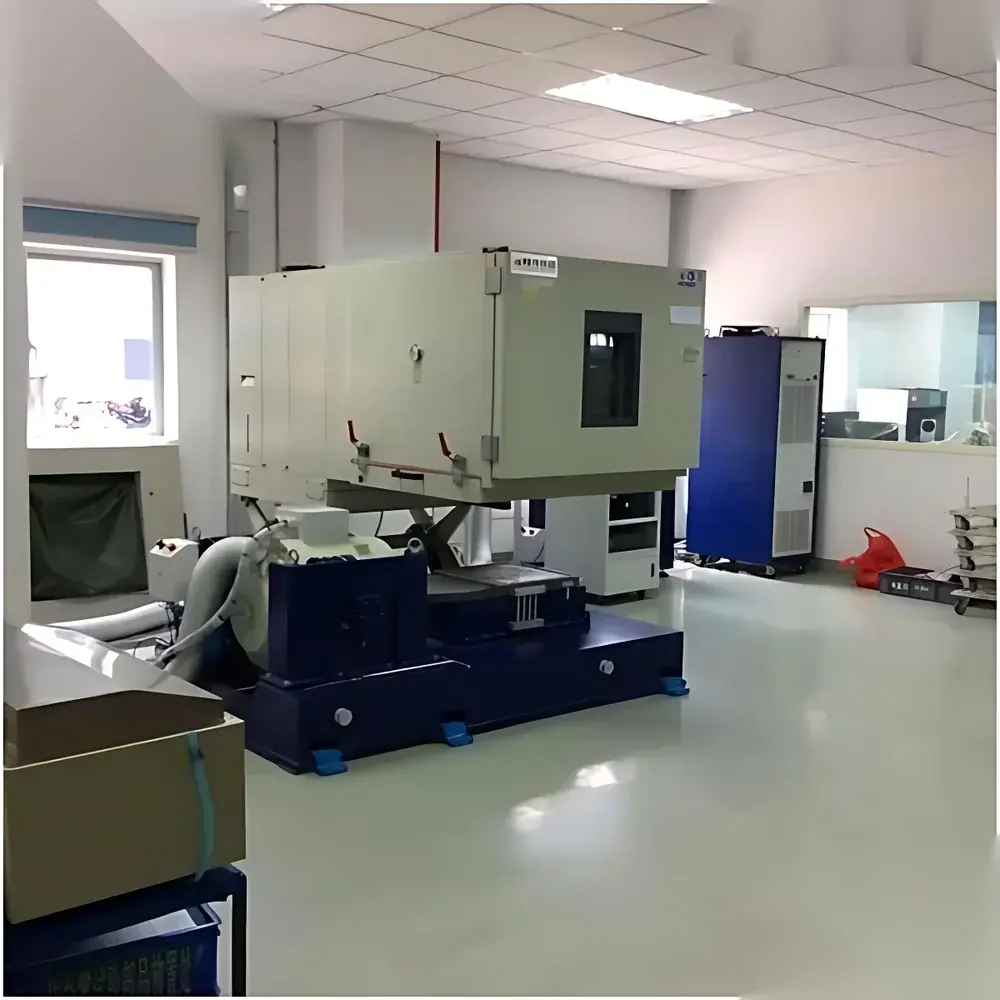
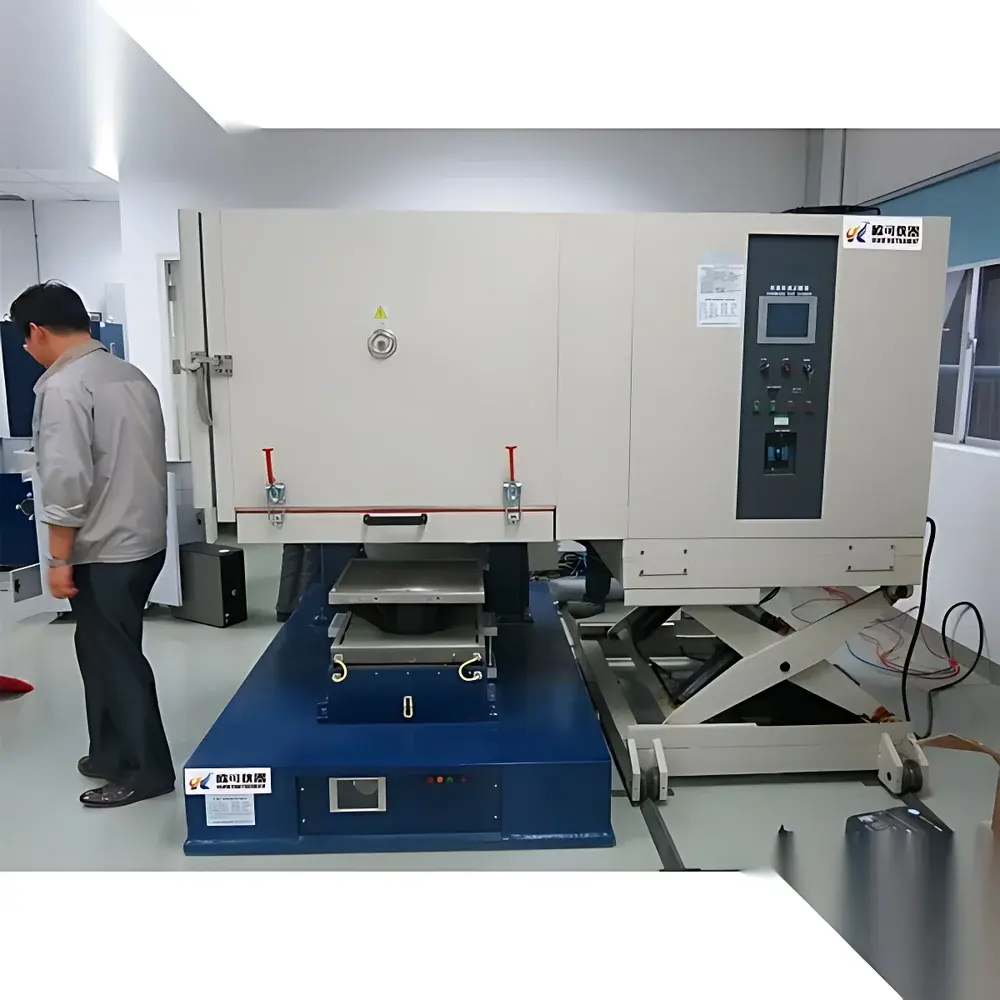
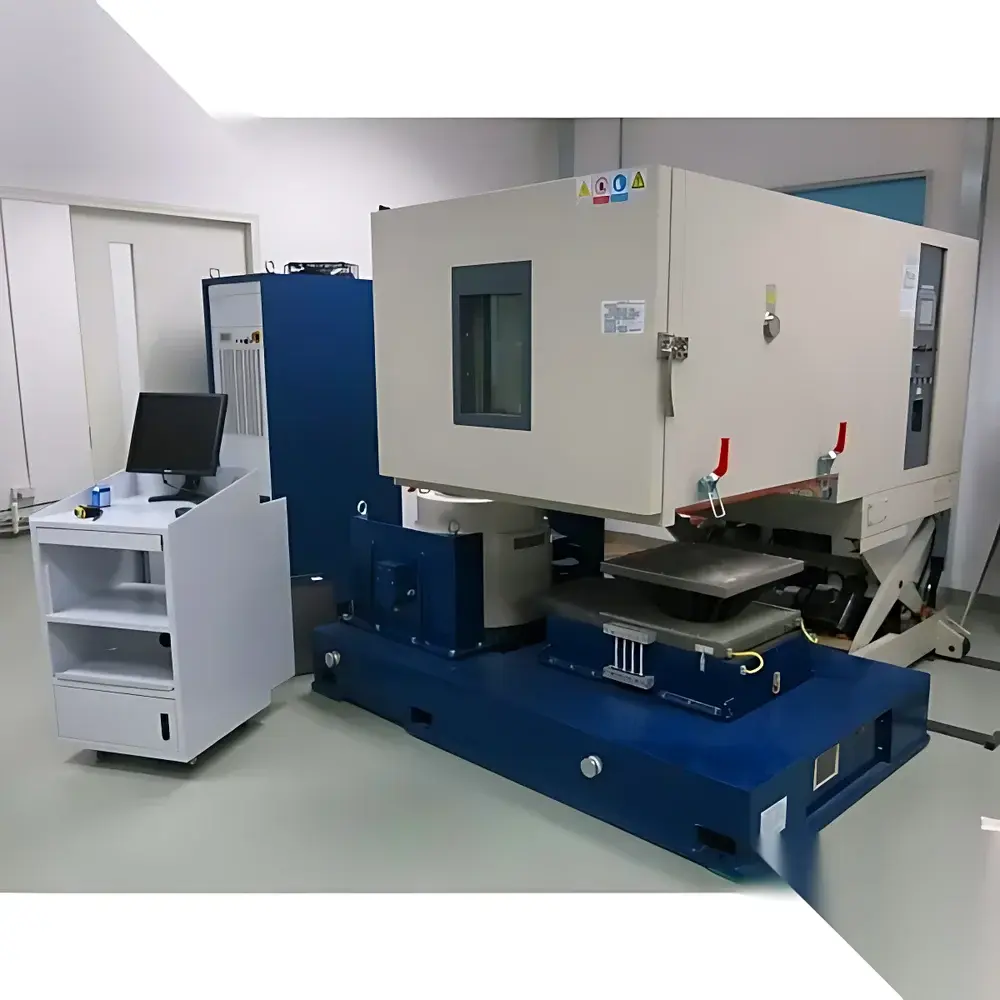
Combined Temperature-Humidity Environmental Test Chamber
| Brand | Other Brands |
|---|---|
| Origin | Imported |
| Manufacturer Type | General Distributor |
| Temperature Range | -40 °C to +150 °C |
| Humidity Range | 20–98% RH |
| Temperature Uniformity | ±0.3 °C |
| Humidity Uniformity | ±2.5% RH |
| Temperature Resolution | 0.1 °C |
| Humidity Resolution | 0.1% RH |
| Internal Dimensions (W×H×D) | 500 × 750 × 600 mm |
| External Dimensions (W×H×D) | 1070 × 1750 × 1100 mm |
| Inner Chamber Material | SUS#304 Stainless Steel |
| Outer Casing Material | SUS#304 High-Tensile Stainless Steel with Multi-Layer Surface Treatment |
| Insulation | High-Density Glass Wool + Rigid Polyurethane Foam |
| Cooling System | Twin-Stage Refrigeration with R404A Refrigerant |
| Heating System | U-Type High-Speed Electric Heaters |
| Humidification System | Stainless Steel Steam Generator with Dual Reed Switch Control |
| Dehumidification Method | ADP (Apparatus Dew Point) Contact Cooling via Evaporator Coil |
| Air Circulation | Multi-Blade Centrifugal Fan with Adjustable Horizontal/Vertical Flow Path |
| Control Interface | TEMI 880 Touchscreen Controller (Bilingual English/Chinese) |
| Compliance | Designed per IEC 60068-2 series, ASTM D4332, ISO 16750-4, and GB/T 2423.1–2423.3 |
Overview
The Combined Temperature-Humidity Environmental Test Chamber is an engineered platform for accelerated environmental stress testing of materials and finished products under precisely controlled thermal and hygroscopic conditions. Based on the principles of thermodynamic equilibrium and psychrometric control, it enables reproducible simulation of real-world climatic exposure—spanning sub-zero cold storage, high-temperature baking, cyclic humidity ramping, and steady-state combined stress profiles. Its architecture integrates independent heating, refrigeration, humidification, and dehumidification subsystems to eliminate cross-interference and ensure traceable, repeatable test outcomes. This chamber meets foundational requirements for qualification testing in electronics reliability (e.g., JEDEC JESD22-A104), automotive component validation (ISO 16750-4), and packaging integrity assessment (ASTM D4332), serving as a critical tool for design verification, process validation, and failure mode analysis.
Key Features
- Stainless steel inner chamber (SUS#304) with seamless welding and electropolished finish—resistant to corrosion, thermal fatigue, and condensation-induced degradation.
- Dual-stage refrigeration system using environmentally compliant R404A refrigerant, supported by nitrogen-pressurized leak testing and fin-tube evaporator geometry optimized for low-temperature stability.
- Independent steam-based humidification module with full stainless steel construction, dual magnetic reed switches for fail-safe level monitoring, and ADP-driven dehumidification via direct evaporator coil contact—ensuring rapid RH transitions without water carryover or mineral scaling.
- High-efficiency forced-air circulation system featuring multi-wing centrifugal fan, adjustable horizontal discharge nozzles, and arc-shaped vertical recirculation path—achieving uniform temperature distribution (±0.3 °C) and humidity homogeneity (±2.5% RH) across the working volume.
- TEMI 880 programmable controller with 7-inch color touchscreen, supporting up to 120 programmable steps per cycle, 999 total cycles, and interlinked multi-segment profiles—including ramp-soak-hold sequences with real-time deviation alarms.
- Comprehensive safety architecture: overheat protection, dry-run prevention for humidifier, refrigerant pressure monitoring, door interlock, and automatic power cutoff upon sensor fault or thermal runaway detection.
Sample Compatibility & Compliance
The chamber accommodates test specimens up to 500 × 750 × 600 mm (W×H×D), with two adjustable stainless steel shelves, a 100-mm-diameter external test port for signal/power feedthrough, and explosion-resistant multi-layer vacuum glass viewing window. It supports standard compliance workflows aligned with ISO/IEC 17025-accredited laboratories—providing auditable data logs, user-access-level permissions, and timestamped event records compatible with GLP/GMP documentation frameworks. While not inherently 21 CFR Part 11-compliant out-of-the-box, its controller supports optional audit trail modules and electronic signature integration when deployed with validated software extensions.
Software & Data Management
The TEMI 880 controller stores all operational parameters—including setpoints, actual values, alarm history, and cycle execution status—in non-volatile memory. Data export is supported via USB interface in CSV format for post-processing in MATLAB, Excel, or LIMS platforms. Optional Ethernet connectivity enables remote monitoring, centralized fleet management, and integration with MES/SCADA systems through Modbus TCP protocol. All logged data includes ISO 8601 timestamps, operator ID tags, and cycle identification codes—facilitating root-cause correlation during FA investigations or regulatory submissions.
Applications
This chamber is routinely deployed in quality assurance labs for: thermal shock evaluation of PCB assemblies; moisture absorption testing of polymer encapsulants; shelf-life modeling of pharmaceutical packaging; corrosion resistance validation of coated metal components; and functional endurance assessment of automotive ECUs under combined hot/humid conditions. Its stable operation across -40 °C to +150 °C and 20–98% RH makes it suitable for MIL-STD-810G Method 502.6 (low temperature), Method 507.5 (humidity), and Method 506.5 (temperature shock) protocols—as well as IEC 60068-2-30 (damp heat, cyclic) and GB/T 2423.4 (Chinese national standard for combined temperature/humidity testing).
FAQ
What type of water should be used for humidification?
Deionized water or reverse osmosis (RO) water is required to prevent scale buildup in the stainless steel steam generator and ensure long-term reliability of the humidification system.
Is the chamber capable of performing temperature-only or humidity-only tests?
Yes—the heating, cooling, humidification, and dehumidification systems operate independently, allowing isolation of individual stress variables per test specification.
Does the controller support automated report generation?
The base unit provides raw data logging; automated PDF report generation requires optional PC-based software (e.g., TEMI Link Suite) configured with predefined templates and digital signature capability.
What maintenance intervals are recommended for the refrigeration system?
Compressor oil and refrigerant levels should be verified annually; condenser coils require cleaning every 3 months in non-cleanroom environments; and humidity sensor calibration is advised every 6 months using NIST-traceable hygrometers.
Can the chamber be integrated into a larger environmental test suite with vibration shakers?
While this model is a standalone temperature-humidity chamber, its structural mounting points and electrical interface specifications allow mechanical and signal-level integration with third-party electrodynamic shakers—subject to custom engineering review and isolation mounting design.



