
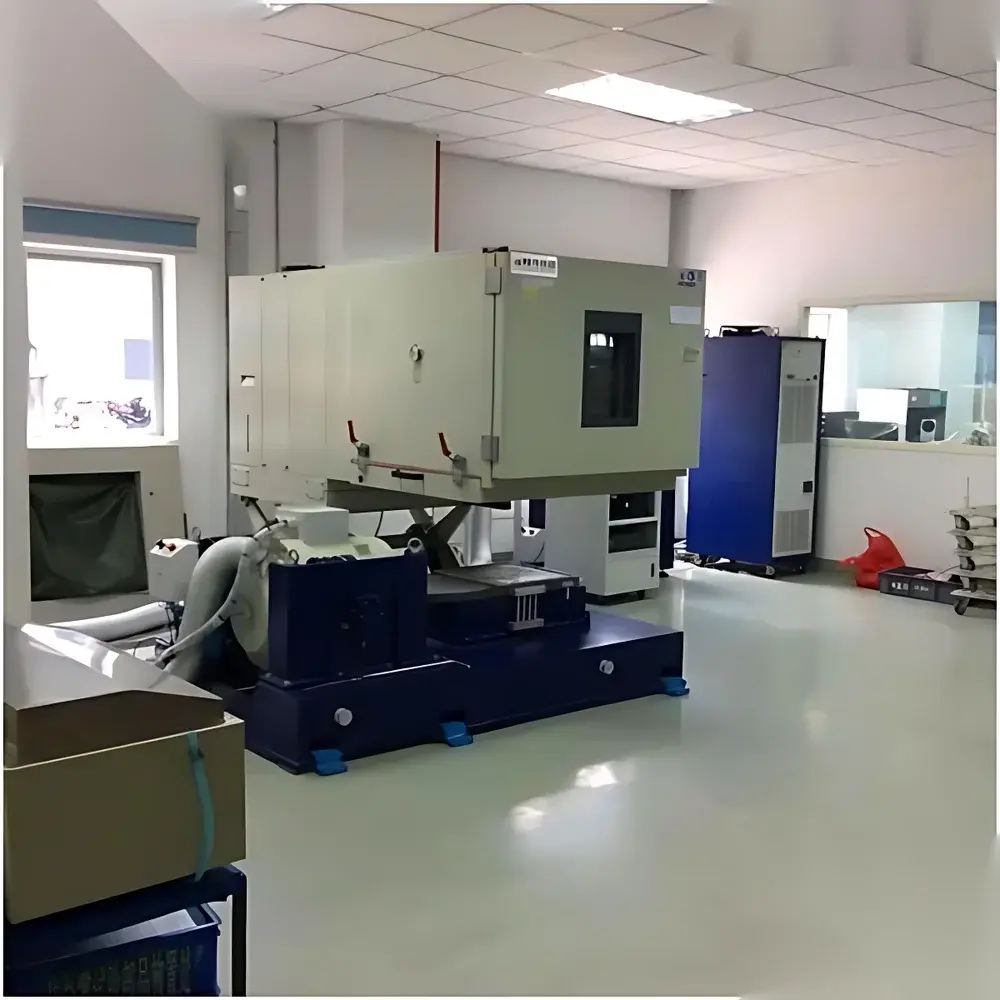
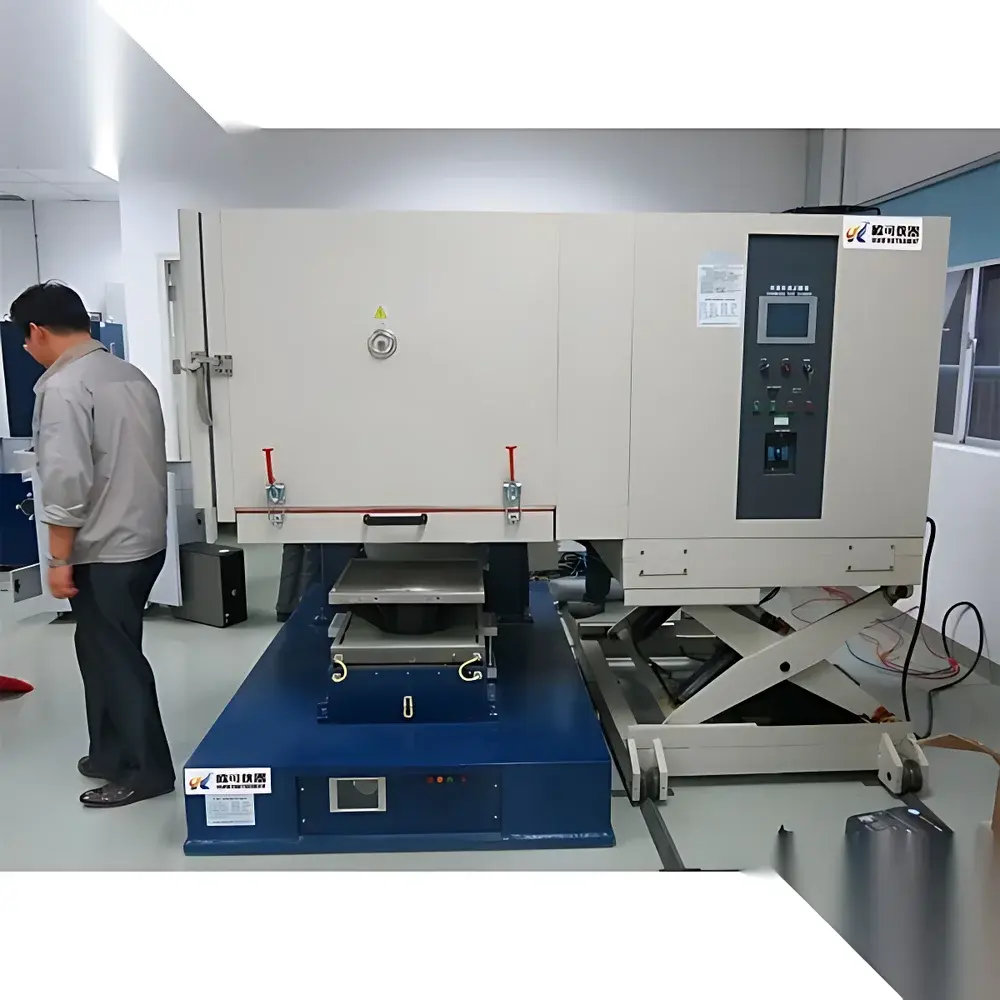
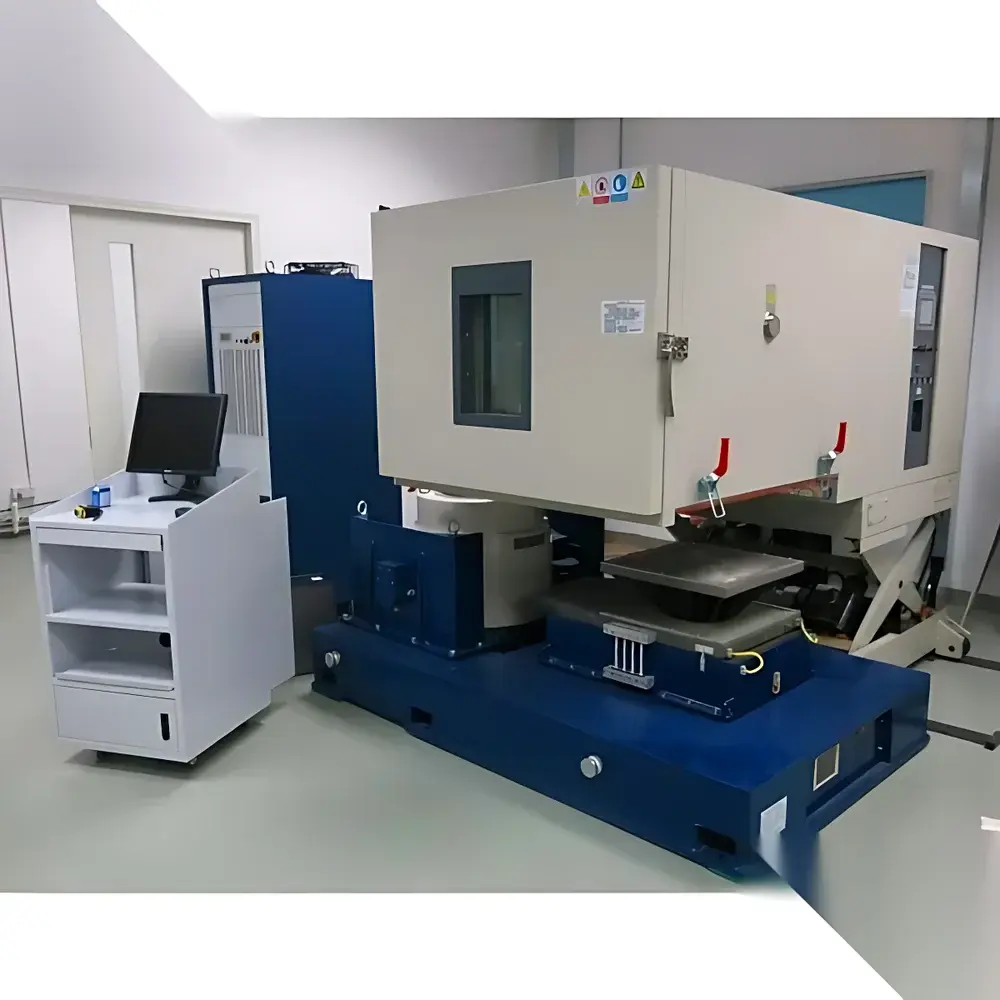
Combined Temperature-Humidity-Vibration Environmental Test Chamber
| Brand | OEM / Custom-Built |
|---|---|
| Origin | Imported |
| Manufacturer Type | Authorized Distributor |
| Price | USD 21,500 (FOB) |
Overview
The Combined Temperature-Humidity-Vibration Environmental Test Chamber is an integrated reliability validation platform engineered for accelerated stress testing of electronic components, aerospace subsystems, automotive ECUs, and industrial instrumentation under synchronized multi-stress conditions. Unlike sequential or single-factor environmental testing, this chamber implements concurrent thermal cycling (−70 °C to +180 °C), controlled humidity (10–98% RH, non-condensing), and electrodynamic vibration excitation (5–2000 Hz, up to 100 g peak acceleration) — all governed by a unified real-time control architecture. Its operational principle relies on the synergistic interaction of three independent yet time-synchronized physical stress domains: convective thermal regulation via dual-stage refrigeration and PID-controlled steam humidification; high-fidelity vibration input through a vertically oriented shaker table with force-rated armature and slip-table interface; and closed-loop environmental monitoring using traceable platinum RTD sensors and capacitive RH transducers. This triaxial stress coupling enables replication of field-relevant degradation mechanisms — such as solder joint fatigue, polymer creep, condensation-induced corrosion, and microcrack propagation — that remain undetected in isolated temperature, humidity, or vibration tests.
Key Features
- Triple-domain synchronization: Precise temporal alignment of thermal ramping, humidity modulation, and vibration profile execution within ±100 ms tolerance
- Wide operational envelope: Temperature range −70 °C to +180 °C (standard); humidity 10–98% RH at ≥+10 °C; vibration spectrum 5–2000 Hz with programmable waveforms (sine, random, shock, swept-sine)
- Modular chamber construction: Stainless steel 304 inner chamber with insulated double-wall vacuum-jacketed design; reinforced structural frame accommodating 500 kg static load and 20 kN dynamic reaction force
- Real-time data fusion: Integrated acquisition of chamber ambient parameters (T, RH, pressure), vibration response (acceleration, displacement, velocity), and DUT telemetry (voltage, current, signal integrity) via IEEE 1588 PTP time stamping
- Compliance-ready control system: Embedded audit trail logging, user role-based access control (RBAC), electronic signature support, and full traceability aligned with ISO/IEC 17025 and IEC 60068-2 series requirements
Sample Compatibility & Compliance
The chamber accommodates test specimens up to 600 mm × 600 mm × 600 mm (W×D×H) with maximum mass of 50 kg on the vibration table. It supports standard mounting interfaces including 16-mm and 28-mm threaded inserts per ISO 5344, and optional slip-table extension for larger assemblies. The system complies with critical international standards for combined environmental testing, including IEC 60068-2-68 (combined temperature/humidity/vibration), MIL-STD-810H Method 520.5 (transportation environment), and RTCA DO-160G Section 25 (environmental conditions for airborne equipment). All calibration certificates are NIST-traceable, and humidity sensors are validated per ISO 17025-accredited procedures. The chamber meets electromagnetic compatibility (EMC) requirements per EN 61326-1 and safety standards per IEC 61010-1.
Software & Data Management
Control and analysis are performed via the proprietary TriStress™ Test Suite v4.2 — a Windows-based application supporting deterministic test sequencing, live parameter overlay, and post-test spectral analysis. The software provides full 21 CFR Part 11 compliance features: electronic signatures with biometric or PKI authentication, immutable audit logs with hash-verified entries, and automatic backup to network-attached storage (NAS) with AES-256 encryption. Raw vibration data is exported in universal UFF58 format; thermal-humidity profiles adhere to ASTM E145-22 Annex A3 structured logging. Remote monitoring is enabled via TLS 1.3-secured web interface with configurable SNMP traps and email alerts for deviation events. All test reports include metadata required for GLP/GMP documentation: operator ID, calibration status, environmental chamber serial number, shaker actuator serial number, and sensor uncertainty budgets.
Applications
This chamber serves as a core tool in product development lifecycles across regulated industries. In aerospace, it validates avionics box survivability during launch vibration superimposed on cryogenic fuel tank thermal gradients. In automotive electronics, it replicates under-hood thermal soak followed by road-induced random vibration and condensation cycles per ISO 16750-4. For medical device manufacturers, it supports accelerated aging of implantable sensor housings per ISO 14971 risk management protocols. Semiconductor packaging labs use it to assess wire bond integrity under thermo-mechanical stress, while telecom infrastructure suppliers apply it to base station power supplies undergoing temperature-cycled vibration per GR-3108-CORE. The system is also employed in failure analysis laboratories to induce latent defects prior to HALT/HASS screening.
FAQ
What standards does this chamber support for combined environmental testing?
IEC 60068-2-68, MIL-STD-810H Method 520.5, RTCA DO-160G Section 25, and ISO 16750-4.
Can vibration profiles be synchronized with specific temperature ramp phases?
Yes — the controller supports phase-locked triggering of vibration events relative to temperature setpoint transitions, dwell periods, or rate thresholds.
Is remote operation and data export supported for regulatory submissions?
Yes — TriStress™ software includes 21 CFR Part 11-compliant electronic signatures, audit trails, and PDF/A-2 report generation with embedded digital signatures.
What is the maximum payload capacity on the vibration table during simultaneous thermal-humidity operation?
50 kg at ambient temperatures; derating applies above +120 °C per shaker manufacturer specifications.
How is humidity controlled during rapid temperature transitions to prevent condensation on test specimens?
The system employs predictive dew-point tracking and adaptive dehumidification sequencing, coordinated with chamber wall temperature feedback to maintain surface temperature above dew point throughout ramping cycles.



