
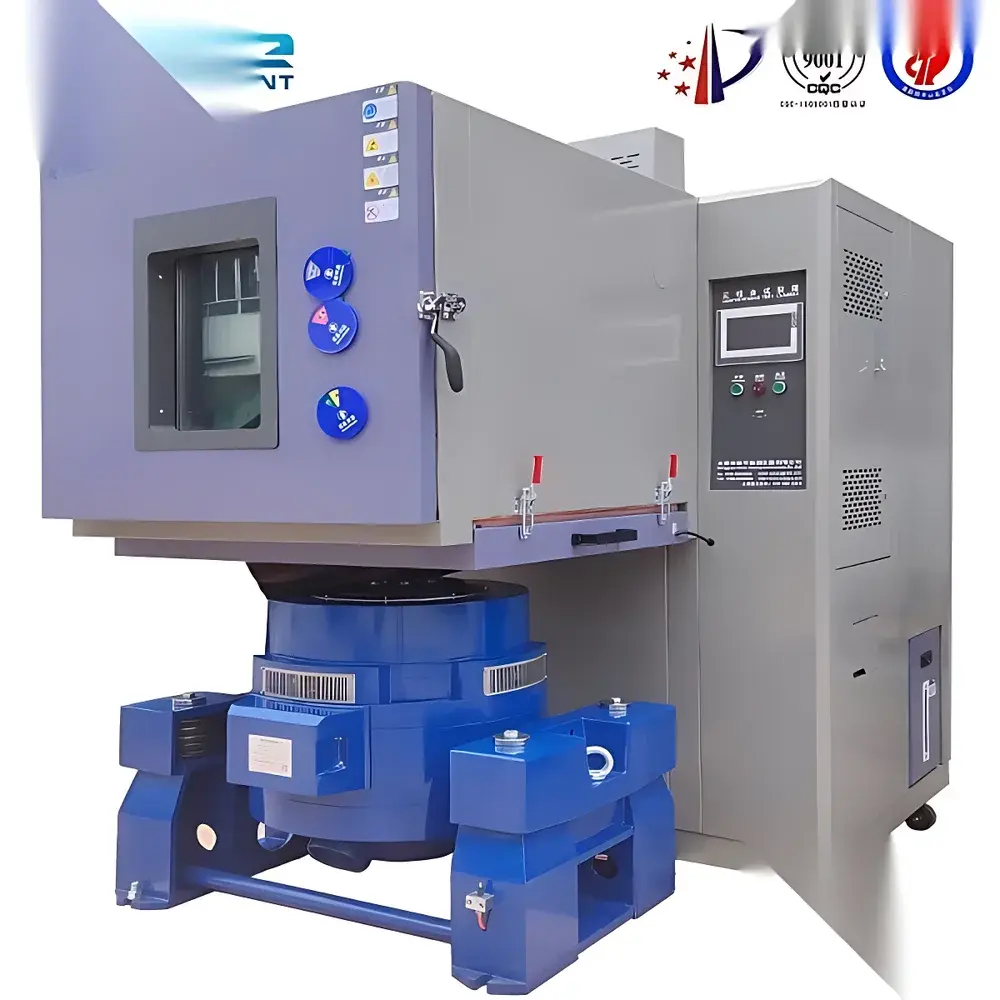
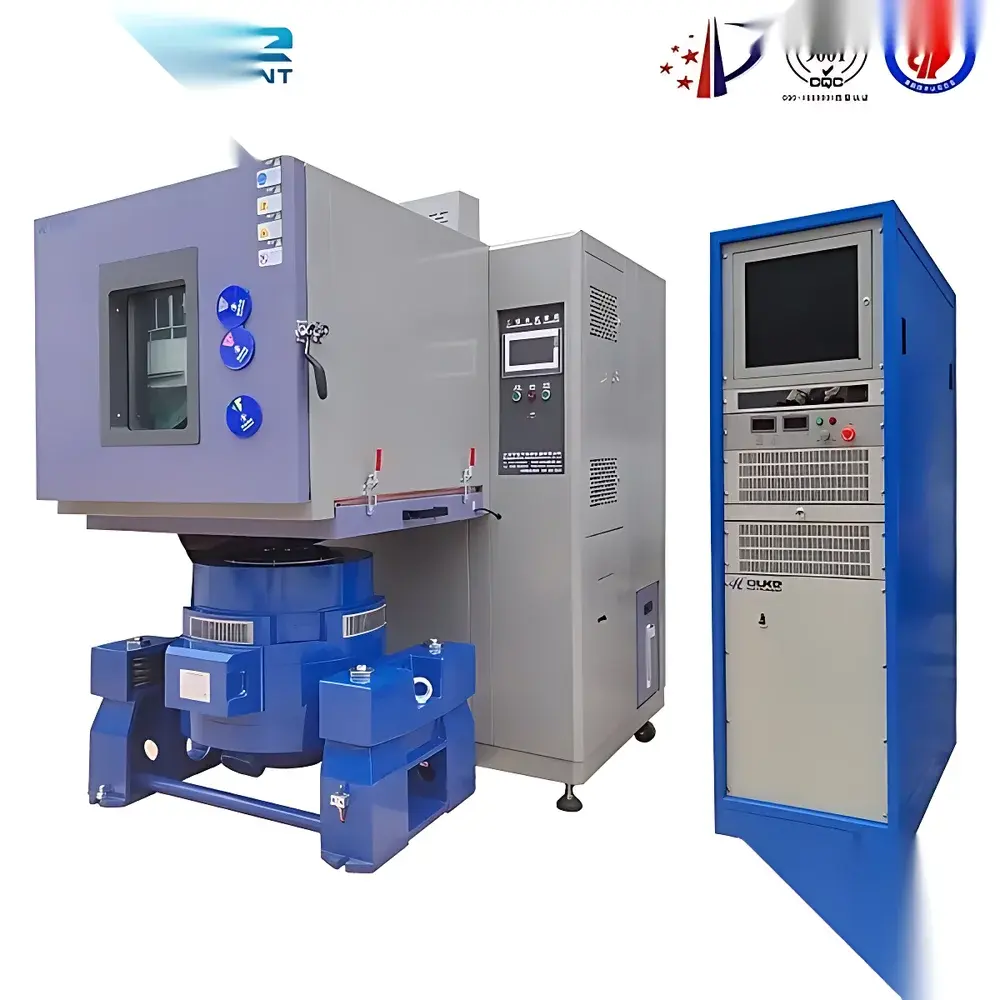
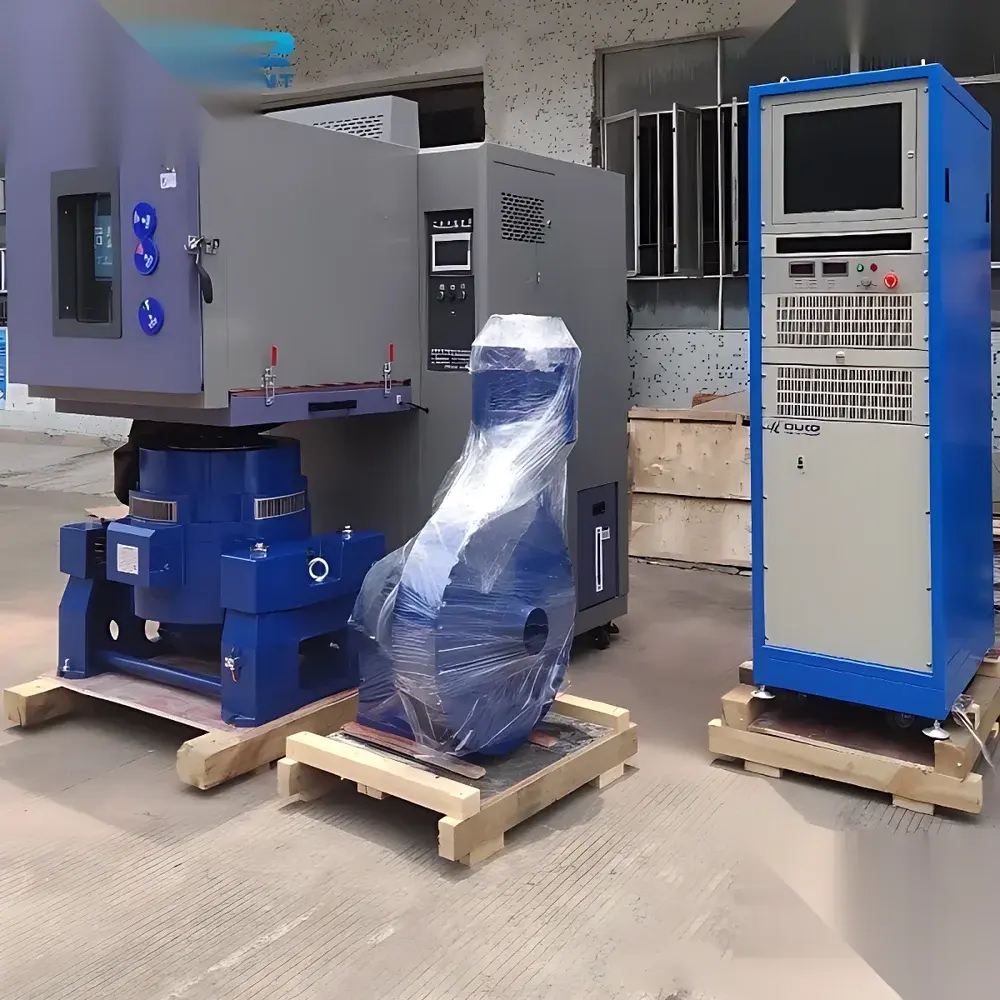
Combined Temperature-Humidity-Vibration Environmental Test Chamber
| Brand | Other Brands |
|---|---|
| Origin | Imported |
| Manufacturer Type | Authorized Distributor |
| Price | USD 14,000 (FOB) |
| Temperature Range | −40 °C to +100 °C |
| Humidity Range | 30–98 %RH |
| Temperature Uniformity | ≤2 °C |
| Temperature Fluctuation | ±0.5 °C |
| Humidity Deviation | +2 to −3 %RH |
| Ramp Rate | 0.5–1.2 °C/min |
Overview
The Combined Temperature-Humidity-Vibration Environmental Test Chamber is an integrated reliability validation platform engineered for accelerated stress testing of electronic components, aerospace subsystems, automotive ECUs, and industrial materials under synchronized thermal, hygrothermal, and mechanical excitation conditions. Unlike sequential single-stress chambers, this system implements concurrent environmental profiles per MIL-STD-810H Method 509.6 (combined temperature/humidity/vibration), IEC 60068-2-60, and GB/T 2423.34–2012. Its triaxial vibration table (electrodynamic or servo-hydraulic, configurable) is rigidly coupled to a high-fidelity climate chamber with dual-stage refrigeration, steam-based humidification, and precision PID-controlled air distribution. The architecture supports real-time synchronization of vibration spectra (sine, random, or transient shock) with programmable temperature/humidity ramps—enabling replication of field-relevant failure modes such as solder joint fatigue, polymer delamination, and condensation-induced corrosion.
Key Features
- Triple-stress integration: Simultaneous control of temperature (−40 °C to +100 °C), relative humidity (30–98 %RH), and multi-axis vibration (up to 10 grms, 5–2000 Hz bandwidth, depending on configured shaker)
- Thermal performance: ±0.5 °C temperature fluctuation, ≤2 °C spatial uniformity across working volume; humidity deviation maintained within +2 to −3 %RH per ISO 16750-4 Annex A
- Robust safety architecture: Dual-stage overtemperature cutoff (mechanical & electronic), compressor high-pressure/overload protection, motor thermal overload relay, ground fault interruption, and automatic power cutoff with audible alarm upon any fault condition
- Structural integrity: Welded stainless-steel inner chamber with anti-condensation insulation; reinforced mounting interface for vibration isolation; level-adjustable feet with load-rated casters
- Operational envelope compliance: Designed for ambient installation conditions of 15–35 °C ambient temperature, ≤85 %RH, no direct solar exposure, minimal electromagnetic interference (EMI < 3 V/m @ 1 MHz), and stable floor vibration (<0.01 g RMS)
Sample Compatibility & Compliance
The chamber accommodates test specimens up to 1 m³ (customizable larger volumes available). Internal dimensions, payload capacity, and vibration force ratings are specified per customer DUT (Device Under Test) mass and mounting requirements. All configurations comply with international standards governing environmental simulation: MIL-STD-810H (Methods 502.7, 507.6, 514.7, and 509.6), IEC 60068-2 series (including -2-1, -2-2, -2-30, -2-64), ISO 16750-4 (road vehicles), and ASTM D4332 (conditioning of plastics). Data acquisition and reporting support GLP/GMP audit trails per FDA 21 CFR Part 11 when paired with validated software modules.
Software & Data Management
Control and monitoring are executed via a Windows-based HMI with real-time graphical waveform display, profile editor, and event logging. The system records timestamped temperature, humidity, acceleration (X/Y/Z axes), and chamber status parameters at user-defined intervals (minimum 1 Hz). Export formats include CSV, PDF test reports, and binary data compatible with MATLAB and Python analysis workflows. Firmware updates and calibration certificate management are supported remotely. Optional add-ons include Ethernet/IP integration for SCADA systems and encrypted data archiving compliant with ISO/IEC 27001 information security controls.
Applications
This chamber serves critical roles in design verification, qualification testing, and production lot screening. Typical use cases include: thermal cycling-induced solder joint reliability assessment per IPC-9701; humidity-driven creep corrosion evaluation of PCBAs; combined thermal-vibration stress screening of avionics enclosures; accelerated life testing of battery packs under dynamic thermal load; and validation of hermetic seals in medical devices per ISO 11607. It is widely deployed in R&D labs certified to ISO/IEC 17025, automotive Tier-1 supplier validation centers, and defense prime contractor test facilities.
FAQ
What is the standard warranty period for this chamber?
The unit carries a 12-month parts-and-labor warranty from commissioning date, extendable to 24 months with annual service contract.
Can the chamber be customized for non-standard vibration frequencies or higher g-force capability?
Yes—vibration subsystems are modular; options include electrodynamic shakers (up to 50 gpk) or hydraulic exciters (up to 100 gpk) with extended low-frequency response down to 0.5 Hz.
Is remote diagnostics and firmware update supported?
All units include embedded Ethernet connectivity enabling secure remote access for troubleshooting, parameter adjustment, and over-the-air firmware upgrades.
Does the system meet electromagnetic compatibility (EMC) requirements for laboratory environments?
Yes—the entire system complies with EN 61326-1 (industrial EMC) and EN 61000-6-3 (emission limits), verified by third-party test reports.
How is traceability ensured for calibration and maintenance records?
A dedicated maintenance log module stores calibration certificates, sensor drift history, and service technician reports with digital signatures and time-stamped audit trails.



