
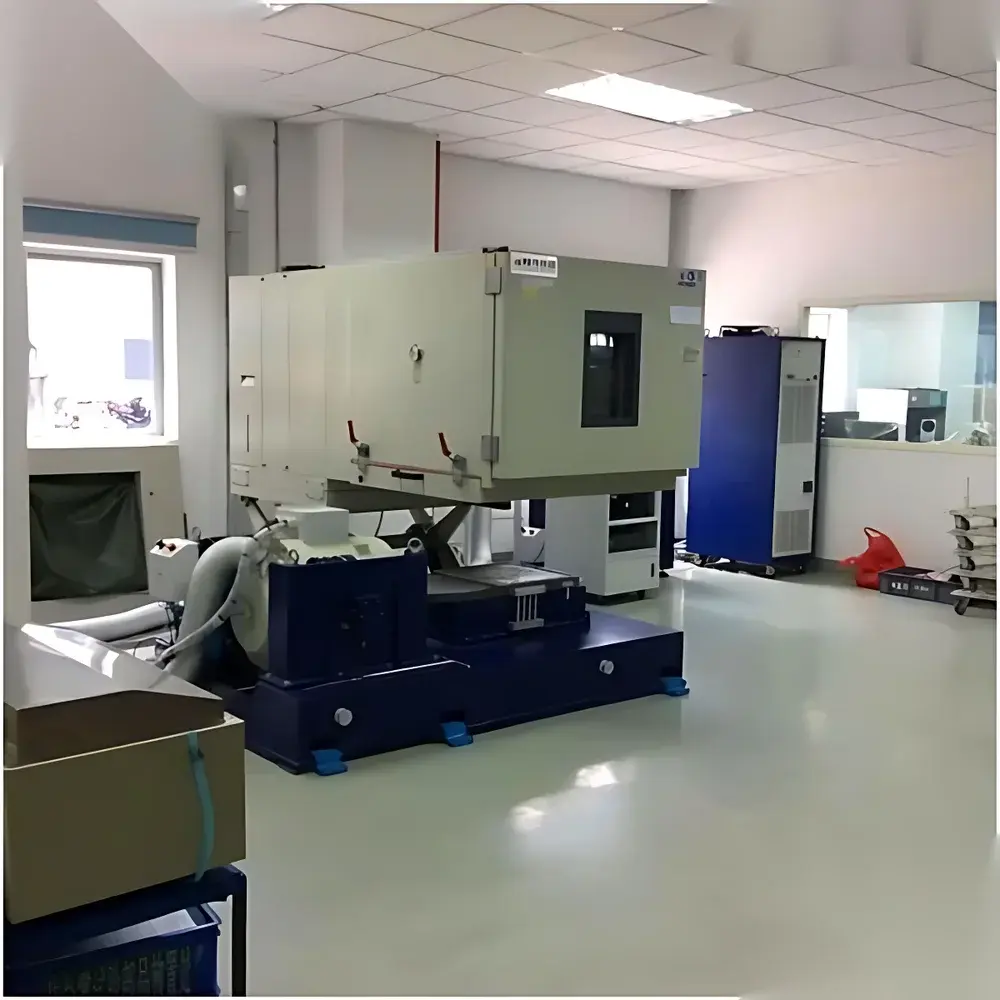
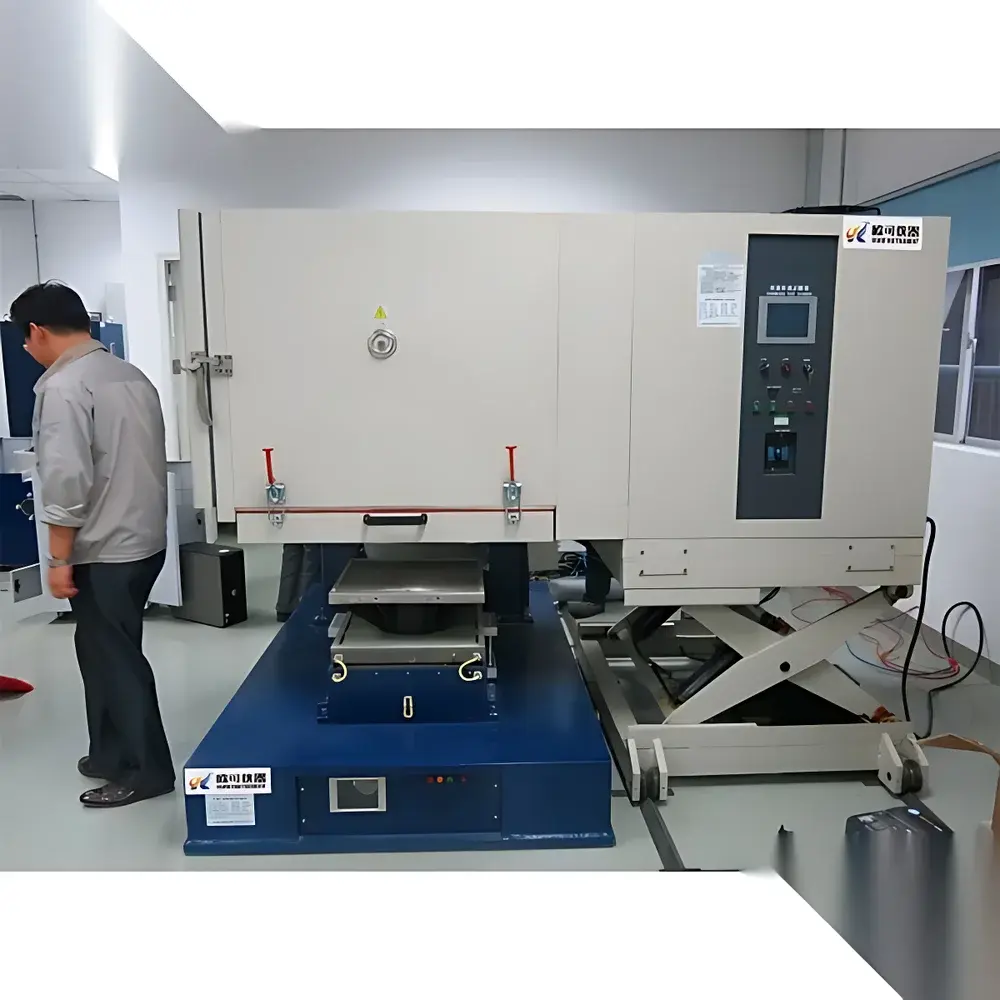
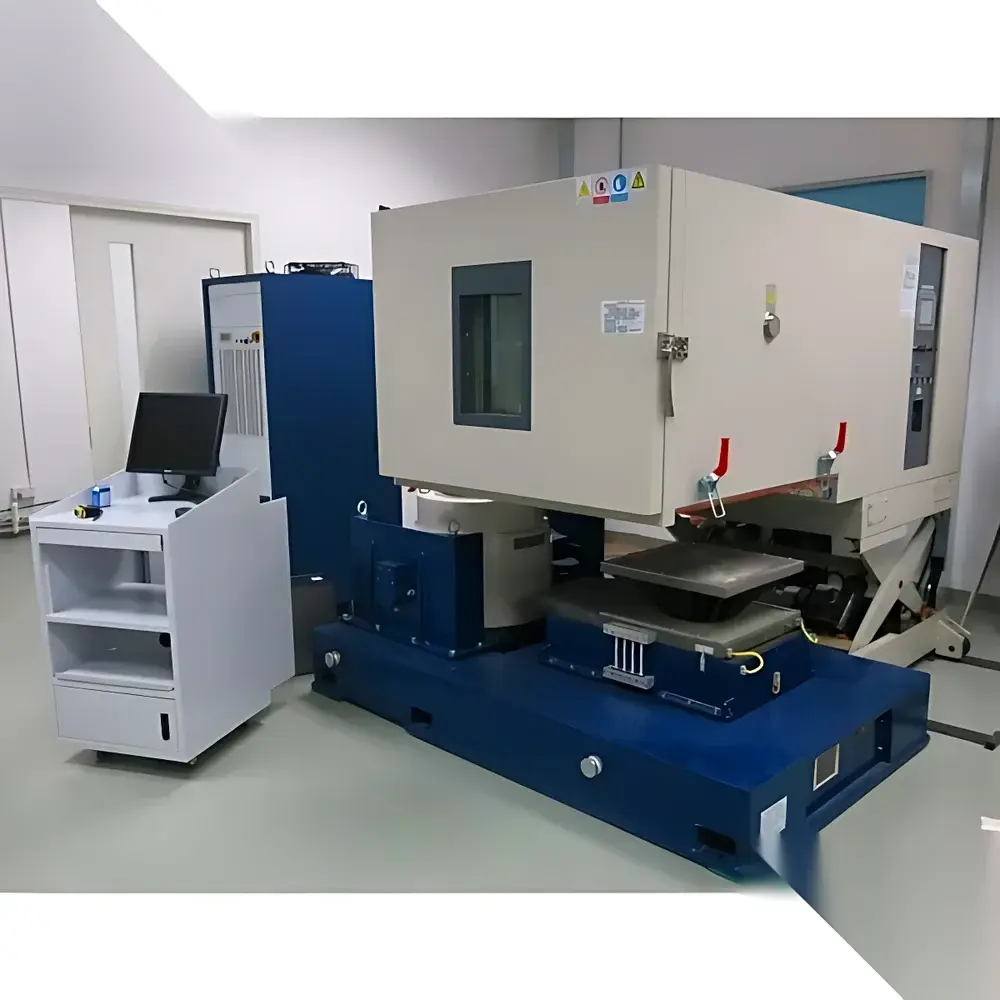
Combined Temperature-Humidity-Vibration Environmental Test Chamber
| Brand | OEM / Custom-Built |
|---|---|
| Origin | Imported |
| Manufacturer Type | Authorized Distributor |
| Price | USD 21,500 (FOB) |
| Temperature Range | −70°C to +180°C |
| Humidity Range | 10%–98% RH |
| Vibration Interface | ISO 10816-compliant mounting flange (standard), compatible with electrodynamic shakers up to 10 kN force |
| Control System | 7″ or 10″ capacitive touchscreen HMI with real-time PID tuning, Ethernet/RS-485 communication, data logging (SD card & USB), alarm notification via email/SMS |
| Construction | Interior – mirror-finish 304 stainless steel (TIG-welded seams) |
| Compliance | Meets ASTM D4332, IEC 60068-2-1, -2-2, -2-30, -2-64 |
Overview
The Combined Temperature-Humidity-Vibration Environmental Test Chamber is an integrated reliability validation platform engineered for simultaneous exposure of test specimens to controlled thermal, hygroscopic, and mechanical stress fields. Unlike sequential or single-stress test systems, this chamber implements true concurrent triaxial environmental simulation—leveraging a calibrated air-handling system, dual-stage refrigeration circuitry, and rigid structural coupling to external vibration exciters. Its operational principle relies on precise decoupling of thermal/humidity control loops from dynamic excitation inputs, ensuring minimal cross-talk between climate parameters and acceleration profiles during extended dwell or sweep tests. Designed for qualification testing in aerospace, automotive electronics, medical device packaging, and high-reliability PCB assembly, the chamber enables accelerated life-cycle assessment per MIL-STD-810H Method 520.4 (combined environments) and JEDEC JESD22-A108F.
Key Features
- Tri-Independent Control Architecture: Independent PID-regulated temperature (−70°C to +180°C), humidity (10–98% RH), and vibration input channels—each with real-time feedback compensation and auto-tuning capability.
- High-Integrity Air Management: Multi-blade centrifugal circulation fan with adjustable static pressure output; laminar airflow design ensures ≤±0.5°C spatial uniformity and ≤2 min temperature recovery after door opening (per IEC 60068-3-5).
- Dual-Circuit Refrigeration: Twin-stage cascade refrigeration system utilizing environmentally compliant R404A/R23 refrigerants; compressor sourced from Tecumseh (France) for stable low-temperature hold performance down to −70°C.
- Vibration Integration Interface: ISO 5349-1 compliant 300 mm × 300 mm mounting plate with threaded inserts and sealed feedthroughs; supports direct bolting to electrodynamic shakers (e.g., LDS V875, TIRA TV 51120) without structural resonance interference.
- Hermetic Construction: All interior welds executed via full-penetration TIG process on 304 stainless steel; no gasketed joints in critical moisture zones—eliminates long-term seal degradation and condensation leakage pathways.
- Advanced Human-Machine Interface: 7″ or 10″ industrial-grade touchscreen controller with embedded web server; supports multi-user role-based access control, password-protected parameter locking, and firmware-upgradable logic modules.
Sample Compatibility & Compliance
The chamber accommodates samples up to 600 mm × 600 mm × 600 mm (W×D×H) with maximum mass load of 50 kg under vibration. Internal lighting (LED, 1000 lux) and double-glazed anti-fog observation window enable continuous visual monitoring without thermal disturbance. All materials contacting test specimens—including shelves, brackets, and cable ports—are non-outgassing and RoHS-compliant. The system conforms to ASTM D4332 (conditioning of plastics), IEC 60068-2 series (environmental testing procedures), and ISO 16750-4 (road vehicles—electrical disturbances). When configured with optional audit trail logging and electronic signature modules, it satisfies FDA 21 CFR Part 11 requirements for regulated pharmaceutical and biotech applications.
Software & Data Management
Standard controller firmware includes built-in data logger with 16-channel analog/digital input support (sample rate up to 10 Hz), time-stamped event tagging, and CSV export via USB or Ethernet. Optional EZ-View™ centralized monitoring software enables remote supervision of up to 24 chambers across geographically dispersed facilities—supporting live parameter overlay, historical trend comparison, and automated report generation (PDF/Excel). All logged data retains traceable metadata (operator ID, calibration timestamp, sensor serial numbers), meeting GLP documentation standards. Alarm escalation paths include SMTP email, SMS gateway integration, and SNMP trap forwarding to enterprise SCADA systems.
Applications
- Qualification of avionics enclosures subjected to rapid thermal cycling combined with random vibration spectra (MIL-STD-810H, Method 520.4).
- Accelerated aging of lithium-ion battery packs under humid heat soak followed by sinusoidal shock loading.
- Validation of hermetic seals in implantable medical devices using temperature-humidity dwell + resonant frequency scanning.
- Thermal-mechanical fatigue analysis of solder joints in automotive ECUs exposed to −40°C/85% RH ramp-and-soak cycles with 5–2000 Hz broadband excitation.
- Environmental stress screening (ESS) of defense-grade connectors undergoing combined temperature/humidity/vibration profiling per NAVMAT P-9492.
FAQ
What vibration standards does this chamber support?
It interfaces with shakers certified to ISO 10816-3 (machinery vibration), ISO 5349-1 (hand-arm vibration), and MIL-STD-167-1A (shipboard equipment), provided external exciter specifications are matched during system integration.
Can humidity be maintained during vibration operation?
Yes—the chamber’s humidity control loop remains active during vibration input; however, sustained high-amplitude (>5 g RMS) broadband excitation above 1 kHz may induce localized condensation at specimen interfaces, requiring pre-test moisture barrier evaluation.
Is third-party calibration certification available?
Factory calibration is performed per ISO/IEC 17025-accredited procedures; NIST-traceable certificates (temperature, humidity, vibration transducer sensitivity) are available as optional deliverables.
What maintenance intervals are recommended?
Refrigerant oil change every 36 months; desiccant cartridge replacement every 12 months; annual verification of door seal integrity and PID loop stability using reference sensors.
Does the system support automated test sequencing across multiple stress domains?
Yes—via EZ-View software or native controller scripting (IEC 61131-3 compliant), users can define nested profiles combining thermal ramps, humidity holds, dwell periods, and synchronized vibration sweeps with conditional branching logic.



