
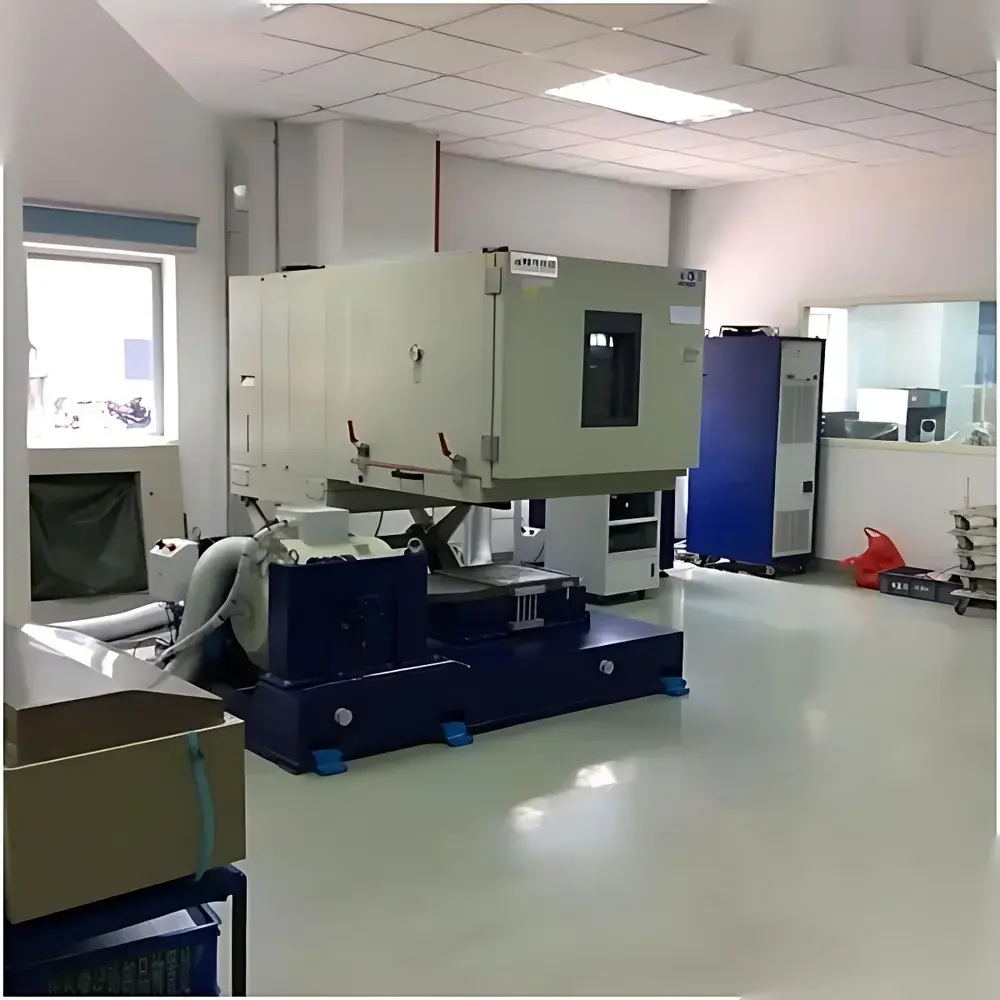
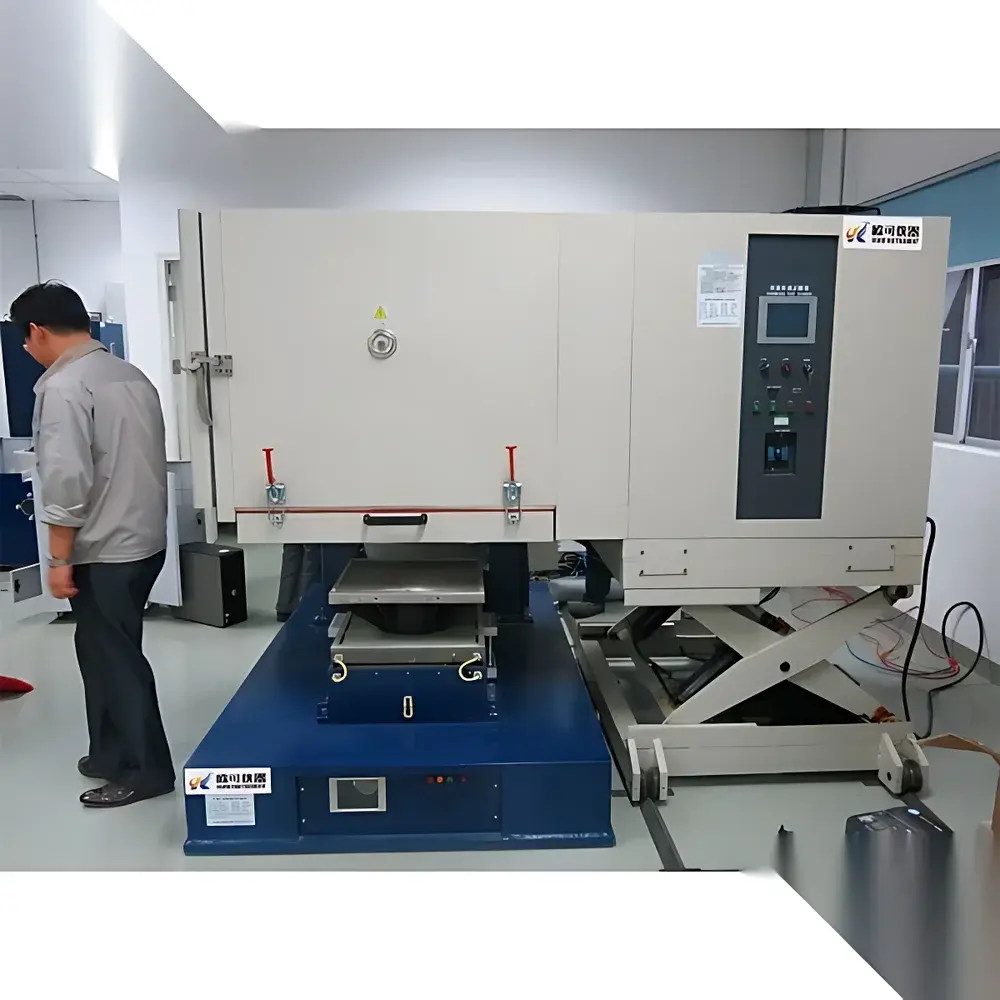
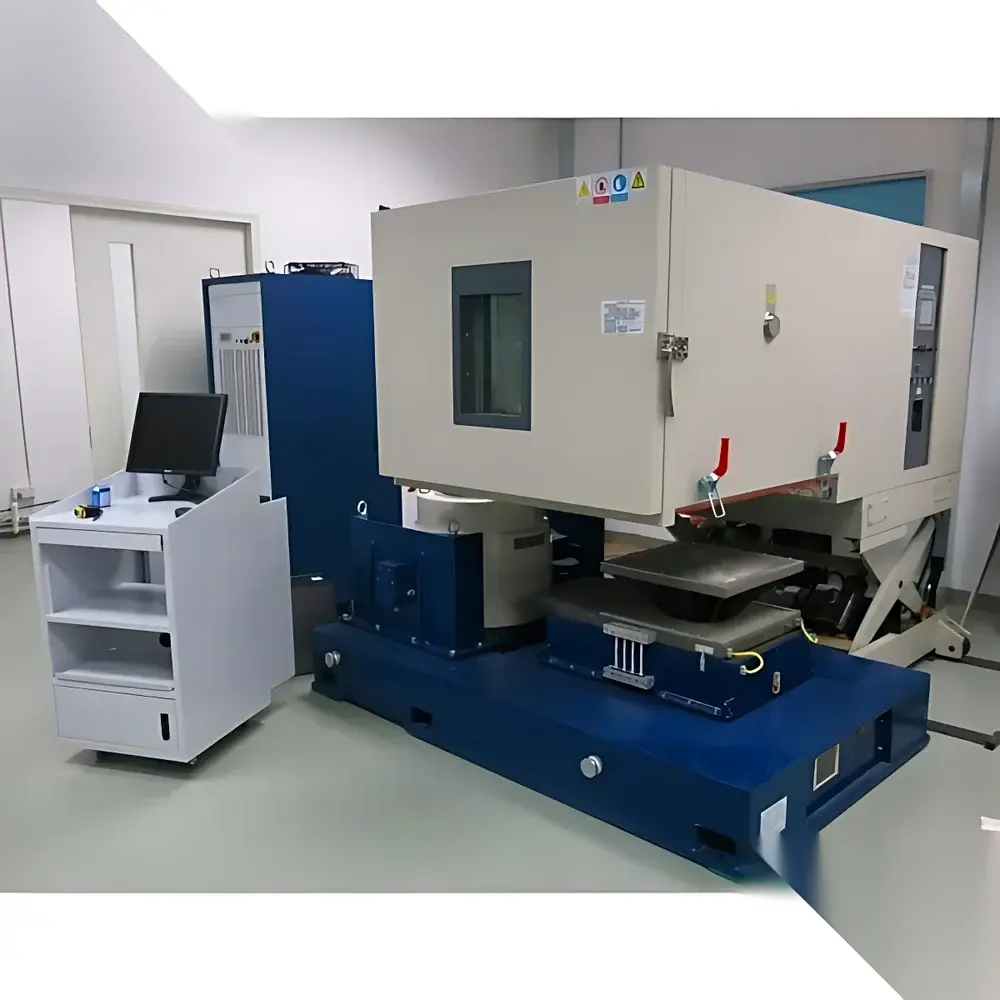
Combined Temperature-Humidity-Vibration Environmental Test Chamber
| Brand | Other Brands |
|---|---|
| Origin | Imported |
| Manufacturer Type | Authorized Distributor |
| Price | USD 21,500 (FOB) |
| Cooling Medium | R404A |
| Heating System | Stainless Steel (SUS#304) Immersion-Type Electric Heaters with PTFE Coating |
| Humidification System | SUS#304 Steam Generator with Level Sensor & Solenoid Valve |
| Water Reservoir | 25 L Integrated Drawer-Type Tank with Auto-Replenishment |
| Air Circulation | Multi-Blade Centrifugal Fan with Sealed Motor & Adjustable Horizontal/Vertical Outlet Dampers |
| Refrigeration | Dual-Stage Cascade System with Air-Cooled Condenser (Optional Water-Cooled) |
| Safety Features | Low-Water-Level Cut-off, Over-Temperature Protection, Visual Alarm Indicator, Low-Conductivity Electrolyte Warning |
Overview
The Combined Temperature-Humidity-Vibration Environmental Test Chamber is an integrated reliability validation platform engineered for simultaneous exposure of test specimens to controlled thermal, hygroscopic, and dynamic mechanical stress conditions. It operates on the principle of synergistic environmental simulation—where temperature cycling (typically −70 °C to +180 °C), relative humidity control (10–98% RH), and electrodynamic or servo-hydraulic vibration inputs (frequency range: 5–2000 Hz, acceleration up to 100 g, displacement ±25 mm peak-to-peak) are precisely coordinated in real time. This triaxial environmental replication enables accelerated life testing per IEC 60068-2-64, MIL-STD-810H Method 514.7, and ISO 16750-4 for automotive electronics, aerospace avionics, medical device packaging, and high-reliability PCB assemblies. The chamber’s structural integrity derives from a monolithic SUS#304 stainless steel inner chamber, double-wall insulated enclosure, and vibration-isolated base frame with active/passive damping interfaces.
Key Features
- Independent dual-loop climate control: Separate heating, humidification, dehumidification, and cooling circuits ensure rapid thermal ramp rates (≥3 °C/min) and stable RH transitions without cross-interference.
- PTFE-coated SUS#304 immersion heaters and steam-type humidifier with optical water-level monitoring and solenoid-regulated auto-fill—minimizing mineral scaling and enabling unattended operation over 72-hour test cycles.
- Dual-stage cascade refrigeration system utilizing environmentally compliant R404A refrigerant, air-cooled condenser with thermostatically regulated fan array (water-cooled option available for high-ambient installations).
- Multi-blade centrifugal circulation fan with sealed induction motor and adjustable directional outlets—ensuring uniform temperature/humidity distribution (±0.5 °C, ±2% RH) across the working volume per ASTM E145 Class A requirements.
- Integrated safety architecture including low-water cutoff, over-temperature cutout, visual alarm beacon, and conductivity-based electrolyte level warning for humidity reservoirs—fully compliant with IEC 61000-4-29 and UL 61010-1.
Sample Compatibility & Compliance
The chamber accommodates standard test specimens up to 600 mm × 600 mm × 600 mm (W×D×H) with optional internal mounting rails and through-wall feedthroughs for signal/power cabling. Vibration table interface supports both vertical and horizontal excitation modes via configurable slip-table or shaker head adapters. All operational parameters—including setpoint profiles, real-time sensor logs, and alarm events—are recorded with timestamped audit trails meeting FDA 21 CFR Part 11 data integrity requirements when paired with validated software. Calibration certificates traceable to NIST standards are provided upon delivery; periodic verification follows ISO/IEC 17025-accredited protocols.
Software & Data Management
The embedded controller features a 10.1″ capacitive touchscreen HMI running real-time Linux OS with multi-user role-based access (Operator, Engineer, Administrator). Test sequencing supports complex multi-step profiles with conditional branching (e.g., “hold at 85 °C/85% RH until leakage current exceeds 100 nA, then initiate 20 g random vibration”). Data export formats include CSV, XML, and PDF reports with embedded metadata (operator ID, calibration status, environmental deviations). Optional Ethernet/IP and Modbus TCP interfaces enable integration into MES/SCADA systems. Firmware updates are digitally signed and validated to prevent unauthorized modification.
Applications
This chamber is routinely deployed in failure mode analysis (FMA) labs for identifying latent defects induced by thermo-mechanical fatigue—such as solder joint cracking under thermal cycling combined with resonant vibration, delamination in multilayer ceramic capacitors during humidity soak + shock, or seal integrity loss in hermetic MEMS packages subjected to humidity gradient + sinusoidal sweep. It supports qualification testing per AEC-Q200 for passive components, JEDEC JESD22-A104 for temperature cycling, and IPC-9701 for interconnect reliability. Automotive Tier-1 suppliers use it for validating ADAS camera modules under combined thermal shock and road-spectrum vibration per ISO 16750-4 Annex C.
FAQ
What vibration standards does this chamber support?
It complies with ISO 5344 (shaker mounting), IEC 60068-2-64 (random vibration), and MIL-STD-810H Method 514.7 (transportation vibration profiles). Custom PSD profiles can be imported via USB or network.
Is remote monitoring possible?
Yes—via built-in Ethernet port supporting SNMP traps, HTTP API, and optional cloud gateway for real-time dashboarding and SMS/email alerts on critical alarms.
How is humidity accuracy maintained during vibration?
The humidification system uses a dedicated steam generator with closed-loop PID control and inline RH sensors positioned downstream of the air diffuser—ensuring stability within ±2% RH even at 100 Hz vibration frequency.
Can the chamber operate continuously for extended durations?
Rated for 100% duty cycle with redundant compressor staging, automatic defrost logic, and predictive maintenance alerts based on cumulative operating hours and refrigerant pressure trends.
What documentation is included for regulatory submissions?
Factory calibration report, IQ/OQ protocol templates, traceable uncertainty budgets, and a full compliance matrix mapping all hardware/software functions to ISO/IEC 17025, GLP, and GMP Annex 11 requirements.



