
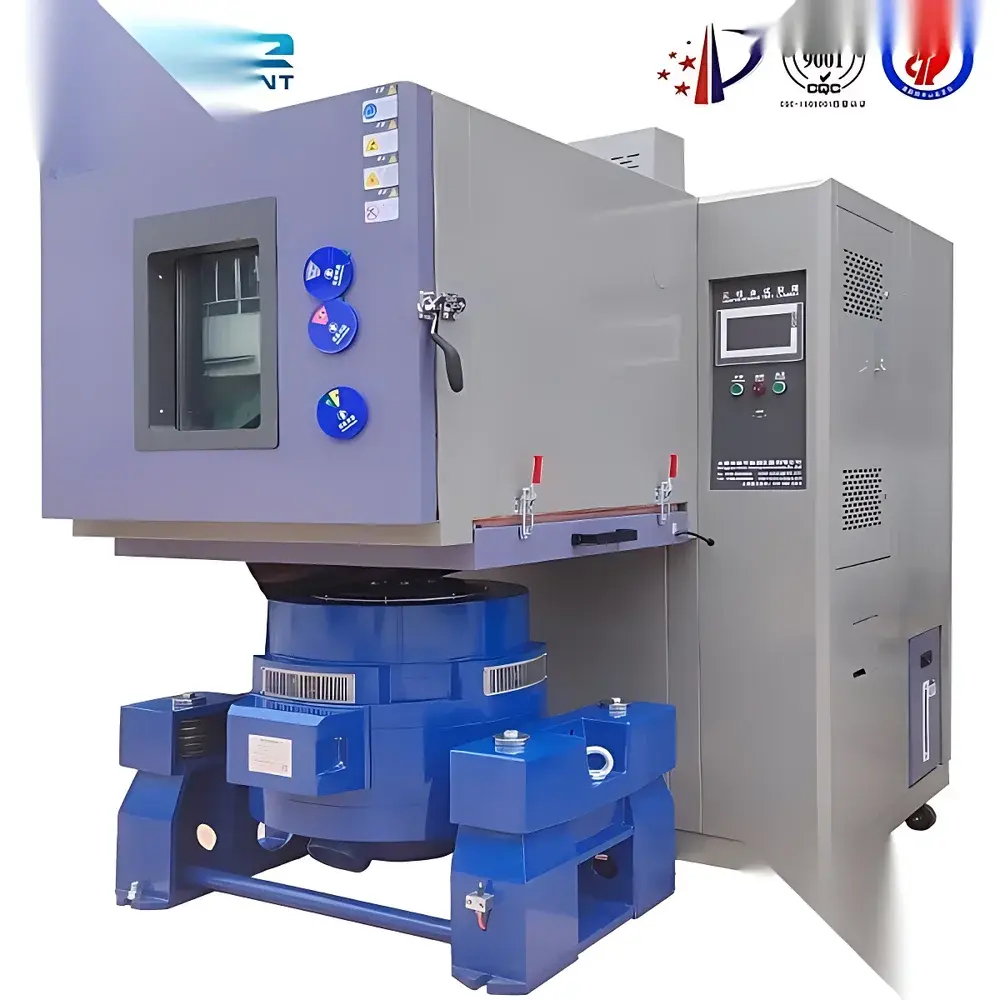
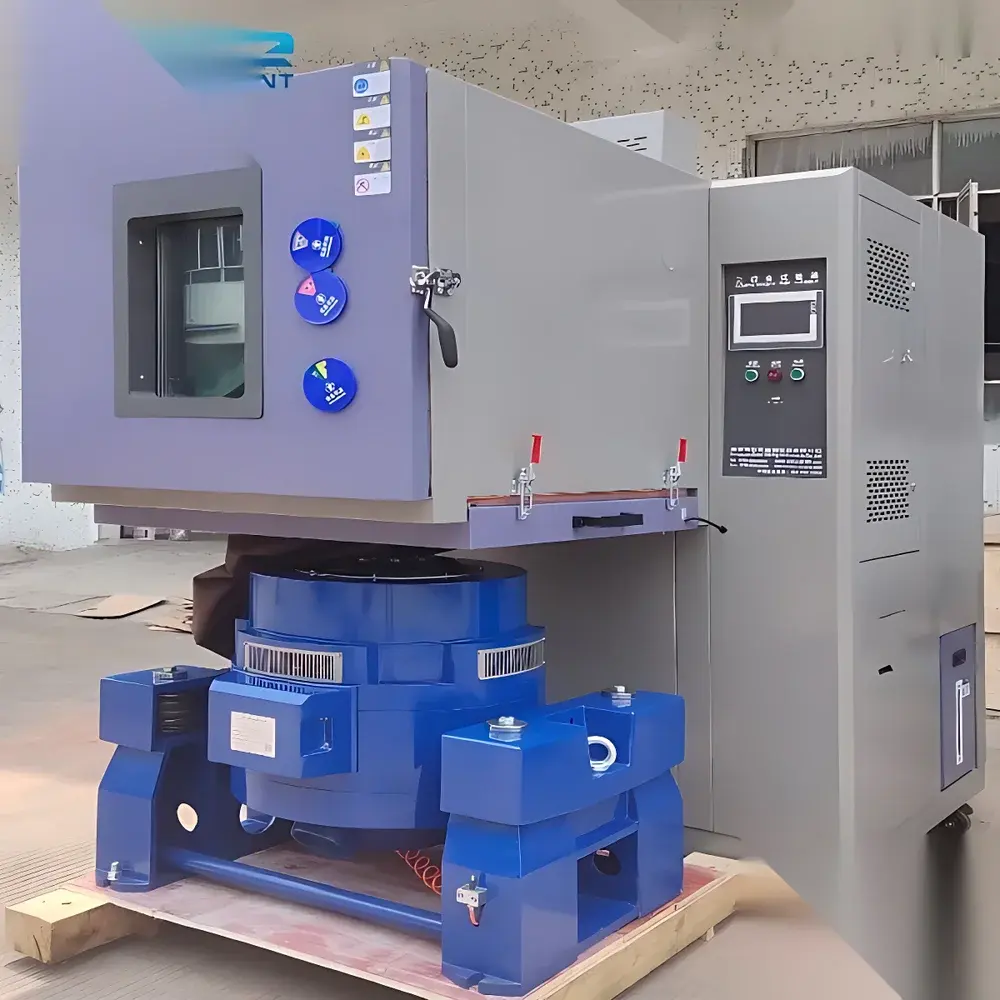
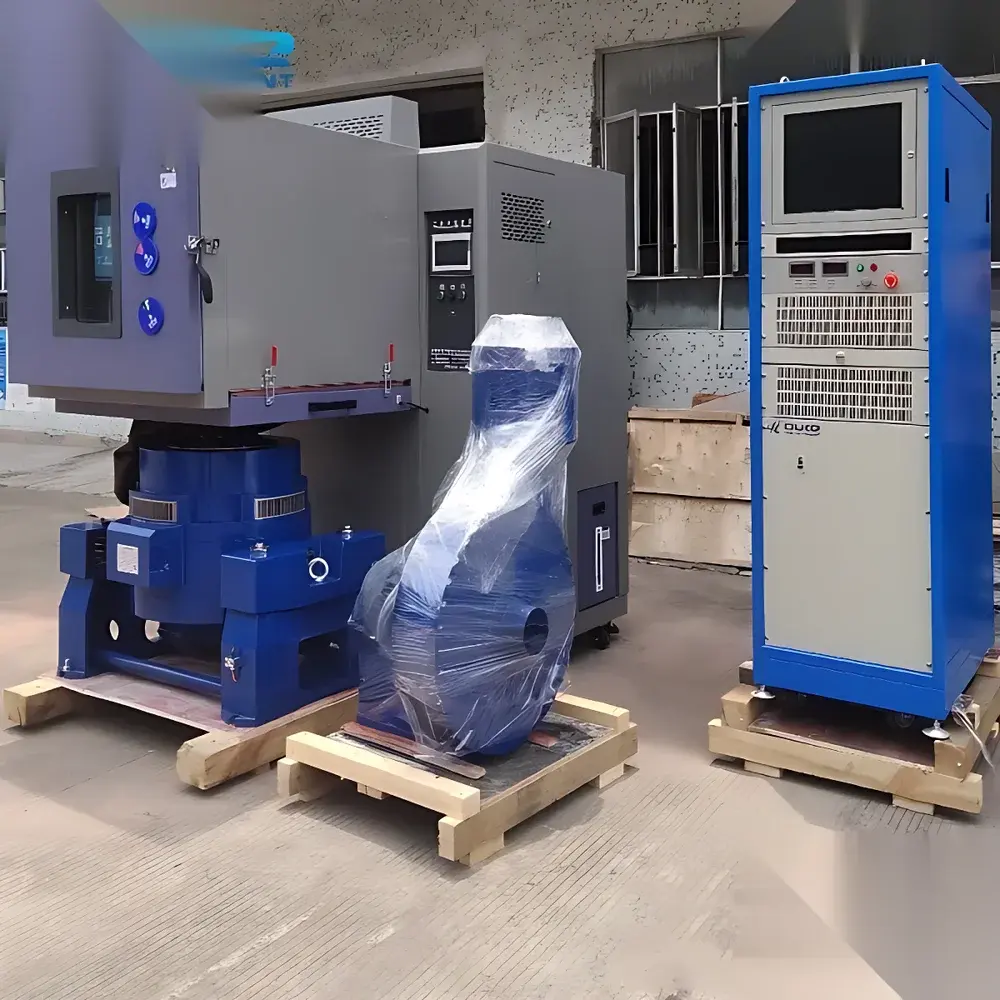
Combined Temperature-Humidity-Vibration Environmental Test Chamber
| Key | Brand: Other Brands |
|---|---|
| Origin | Imported |
| Manufacturer Type | Authorized Distributor |
| Price | USD 21,000 (FOB) |
| Compliance | GB/T 2423.1–2008, GB/T 2423.2–2008, GB/T 2423.3–2006, GB/T 2423.10–1999, JJG 190–1997 |
Overview
The Combined Temperature-Humidity-Vibration Environmental Test Chamber is an integrated reliability validation platform engineered for simultaneous or sequential application of thermal, hygroscopic, and mechanical stress stimuli to electronic components, automotive modules, aerospace subsystems, and industrial control units. It operates on a triaxial synergistic test paradigm—precisely coupling controlled climatic conditions (temperature range: −70 °C to +180 °C; humidity range: 10–98% RH) with electrodynamic vibration excitation (frequency range: 5–2000 Hz; acceleration up to 100 gpk; displacement ±25 mmpp). This architecture enables accelerated life testing, HALT/HASS protocols, and qualification per IEC 60068-2 series, MIL-STD-810H, and automotive OEM-specific environmental specifications. The chamber’s modular design supports decoupled operation: the vibration table can be fully retracted from the climate-controlled workspace via precision ground rails—eliminating thermal cross-talk during standalone temperature-humidity cycling.
Key Features
- Modular vibration integration: Retractable electrodynamic shaker table mounted on hardened linear rails; full mechanical isolation from climate chamber structure during non-vibration cycles
- Hermetic interface: Multi-layer sealing between shaker table and chamber floor using alternating epoxy resin layers and high-temperature silicone rubber gaskets (rated to 200 °C), ensuring pressure integrity and humidity containment
- Dual-independent control architecture: Separate PID-regulated climate control system and real-time DSP-based vibration controller—no software or hardware interference between domains
- Robust chamber construction: Exterior housing of powder-coated A3 carbon steel; interior liner of electropolished SUS304 stainless steel with mirror finish; insulation comprising ≥100 mm thick ultra-fine glass wool (thermal conductivity ≤0.035 W/m·K)
- Uniform air distribution: Top-mounted low-noise Sanyo Denki centrifugal blower with multi-wing impeller; bottom return airflow path; laminar flow optimization via internal baffle geometry
- Human-centric interface: Touchscreen PID controller with dual-channel display (direct %RH readout without lookup tables); built-in power failure memory (retains setpoints and elapsed time for ≥5 years); alarm-triggered event logging with timestamp and error code
- Optical observation: Triple-layer tempered safety glass viewport with embedded ITO conductive film for anti-fogging and EMI shielding; 50 mm diameter cable port (left-side, sealed with silicone grommet)
Sample Compatibility & Compliance
This chamber accommodates DUTs up to 150 kg mass and 600 × 600 × 600 mm³ volume on its actively cooled/heated shaker table. Fixture mounting follows ISO 5344 and ASTM D4728 standards for vibration test interfaces. All electrical and thermal subsystems comply with CE/EMC Directive 2014/30/EU and RoHS 2011/65/EU. Calibration traceability adheres to ISO/IEC 17025 requirements through NIST-traceable reference sensors (PT100 for temperature, capacitive polymer for humidity, IEPE for acceleration). The system meets mandatory test conditions defined in GB/T 2423.1 (cold), GB/T 2423.2 (dry heat), GB/T 2423.3 (damp heat, cyclic), GB/T 2423.10 (vibration, sinusoidal), and metrological verification per JJG 190 (vibration calibration).
Software & Data Management
Bundled vibration control software—licensed from U.S.-based developer—is certified for GLP-compliant data integrity: full 21 CFR Part 11 audit trail (user login, parameter changes, run start/stop, fault events), electronic signatures, and immutable raw data archiving (binary .tdms format). Capabilities include closed-loop sine sweep, random PSD synthesis (up to 8192 lines resolution), classical shock pulse generation (half-sine, trapezoidal, sawtooth), and real-time FFT analysis. Climate control logs temperature/humidity at 1 Hz with automatic CSV export. All data streams are time-synchronized via IEEE 1588 PTP protocol. System firmware supports remote diagnostics via secure TLS-encrypted Ethernet connection; no cloud dependency or third-party telemetry.
Applications
- Automotive electronics: ECUs, ADAS sensors, infotainment units under combined thermal cycling and road-simulation vibration profiles
- Aerospace avionics: Flight-critical modules subjected to altitude-representative low-pressure humidity ramps with broadband mechanical excitation
- Medical device validation: Sterilizable enclosures and battery-powered diagnostic instruments per IEC 60601-1 environmental clauses
- Consumer electronics: Smartphones, wearables, and IoT gateways undergoing accelerated corrosion and fatigue testing
- Industrial IoT: Ruggedized edge controllers and wireless transmitters deployed in harsh manufacturing environments
- Research laboratories: Material adhesion studies, solder joint reliability modeling, and conformal coating performance assessment
FAQ
Can the vibration table remain inside during temperature-humidity-only tests?
Yes—the table is thermally isolated and rated for continuous operation within the full chamber temperature range; however, retraction is recommended to maximize workspace volume and minimize thermal mass loading.
Is third-party calibration certification included with delivery?
Factory calibration reports (temperature uniformity ±0.5 °C, humidity accuracy ±2% RH, vibration amplitude linearity ±1.5%) are provided; ISO/IEC 17025-accredited field calibration is available as optional service.
What safety interlocks prevent hazardous operation?
Hardware-enforced interlocks include door switch cut-off, over-temperature cutoff (dual independent sensors), shaker table position verification, and emergency stop circuit integrated with Schneider Electric safety relays.
Does the system support custom test profile scripting?
Yes—via LabVIEW-compatible API and ASCII command protocol; users may define nested loops, conditional branching, and external trigger inputs (TTL, 0–10 V).
Are spare parts and technical support available globally?
All critical subassemblies—including IMV shaker armature, Schneider PLC modules, and Sanyo Denki blowers—are stocked in regional depots; 24/7 remote engineering support and on-site service contracts are offered under separate agreement.



