
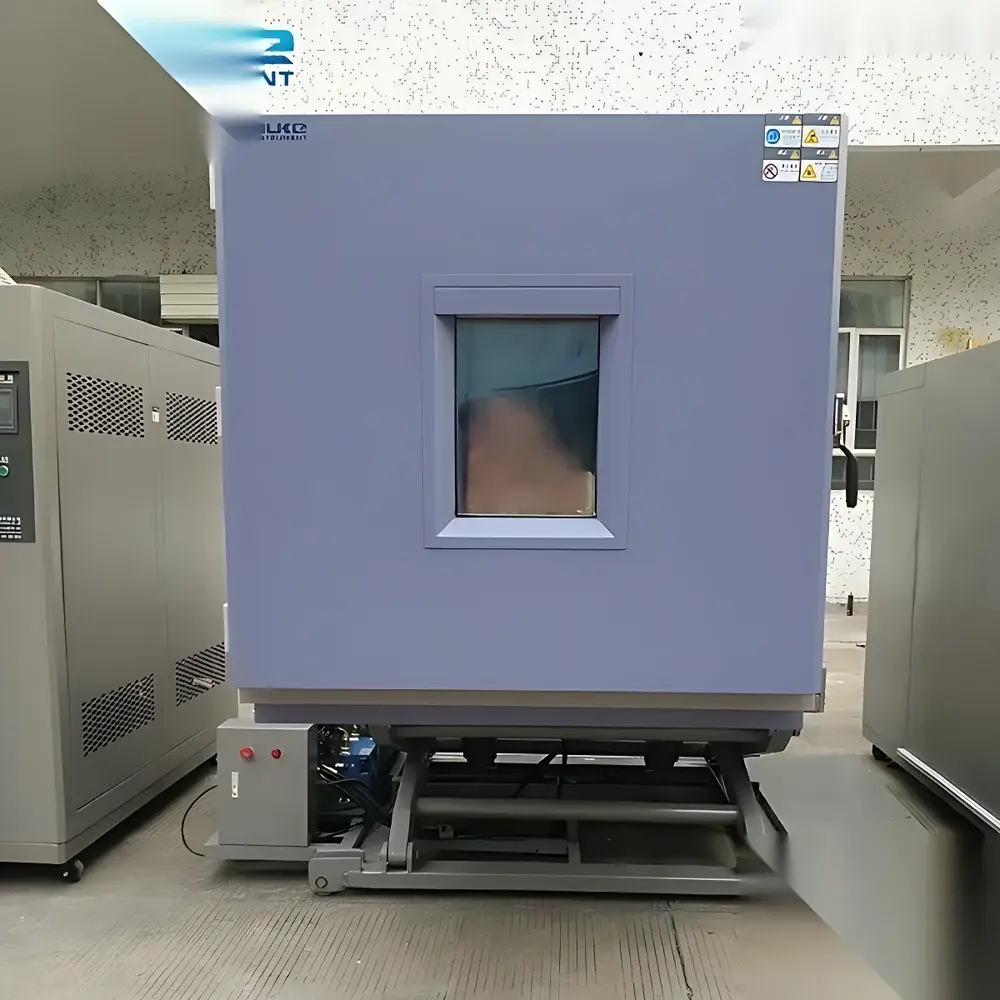
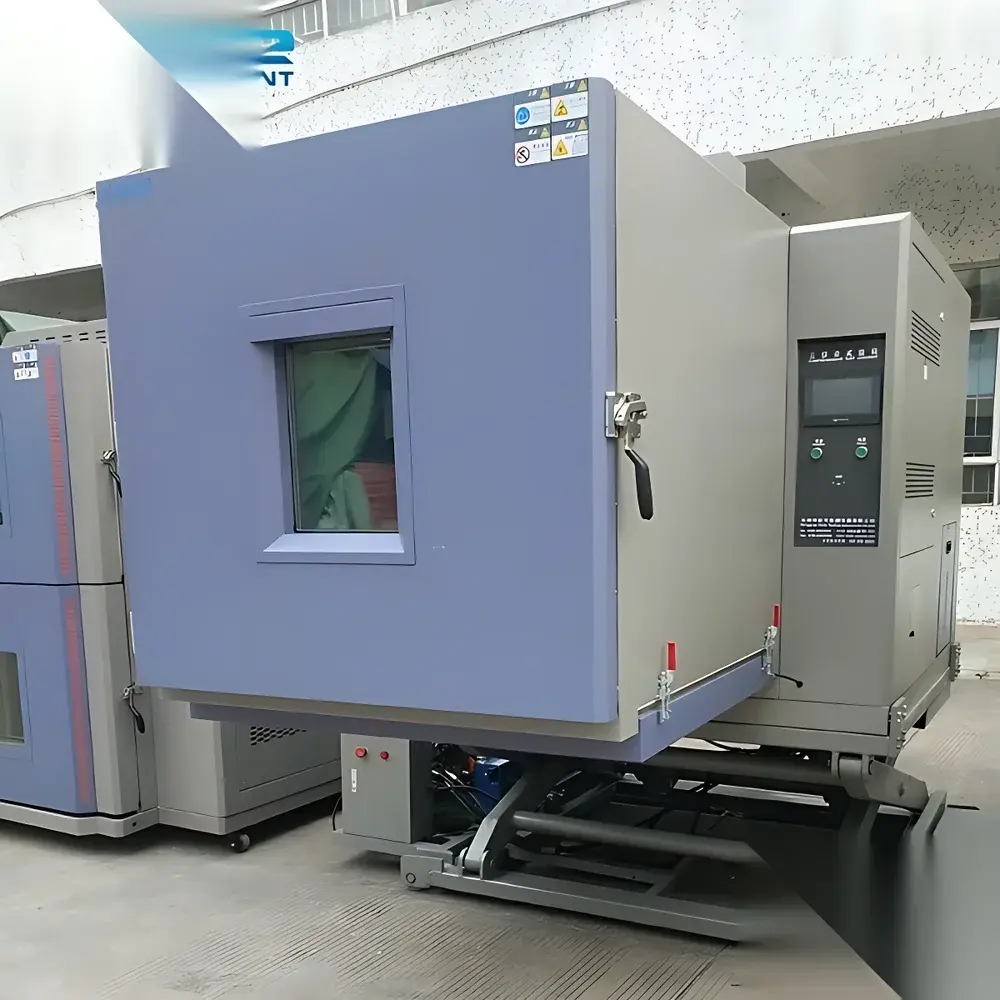
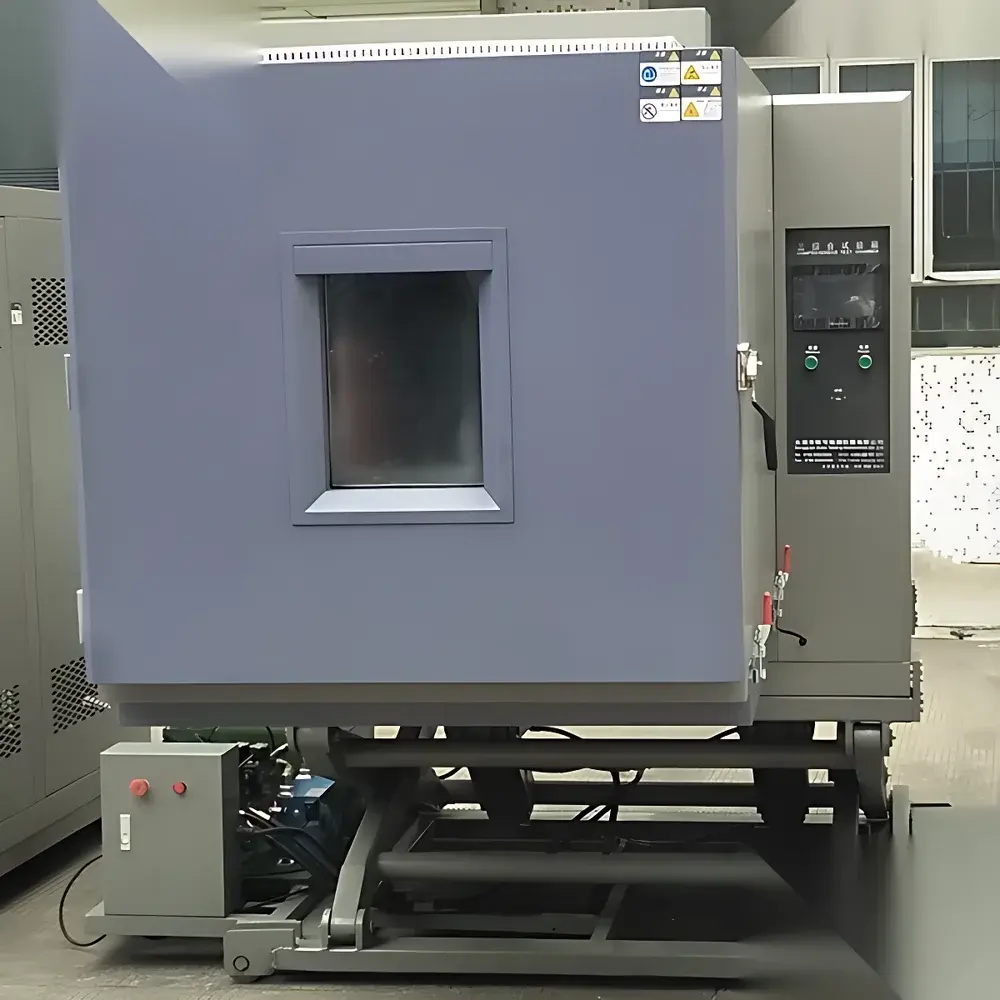
Combined Temperature-Humidity-Vibration Environmental Test Chamber
| Brand | Other Brands |
|---|---|
| Origin | Imported |
| Manufacturer Type | Authorized Distributor |
| Temperature Range | -70 to +150 °C |
| Humidity Range | 10–98 %RH |
| Temperature Uniformity | ≤ ±2 °C |
| Humidity Uniformity | ≤ ±3 %RH (>75 %RH), ≤ ±5 %RH (≤75 %RH) |
| Temperature Fluctuation | ≤ ±0.5 °C |
| Humidity Fluctuation | ≤ ±2 %RH |
| Vibration Table Size | 350 × 350 mm (customizable) |
| Payload Capacity | 25 / 50 / 75 / 100 kg |
| Vibration Axis | Vertical, Horizontal, or Dual-Axis (selectable) |
| Frequency Range | 1–600 Hz, 1–3000 Hz, or 1–5000 Hz (model-dependent) |
| Displacement Peak-to-Peak | 0–5 mm |
| Maximum Acceleration | <20 g |
| Waveform | Sine |
| Frequency Resolution | 0.01 Hz |
| Frequency Accuracy | ±0.1 Hz |
| Test Duration | 0–9999 h/min/sec (programmable) |
| Power Supply | AC 220 V / 50 Hz or AC 380 V / 50 Hz |
Overview
The Combined Temperature-Humidity-Vibration Environmental Test Chamber is an integrated reliability validation platform engineered for accelerated stress testing of electronic components, aerospace subsystems, automotive modules, and industrial instrumentation under synchronized thermal, hygroscopic, and mechanical dynamic loads. Unlike sequential single-stress testing, this chamber applies temperature cycling, humidity conditioning, and controlled sinusoidal vibration—simultaneously—to replicate real-world operational and transit environments where multiple environmental stressors co-occur. Its design adheres to fundamental principles of accelerated life testing (ALT) and highly accelerated stress screening (HASS), enabling early detection of latent defects such as solder joint fatigue, delamination in PCB assemblies, moisture-induced corrosion, and thermal expansion mismatch failures. The system operates on a closed-loop control architecture with independent PID-regulated zones for thermal/humidity chambers and high-fidelity electrodynamic shaker feedback, ensuring traceable, repeatable, and metrologically sound test conditions compliant with IEC 60068-2 series, MIL-STD-810H Method 520.3 (combined environments), and ISO 16750-4 for automotive electronics qualification.
Key Features
- Triple-stress integration: Simultaneous control of temperature (−70 °C to +150 °C), relative humidity (10–98 %RH), and electrodynamic vibration (1–5000 Hz, up to 20 g acceleration)
- Modular vibration subsystem with selectable axis configuration: vertical-only, horizontal-only, or dual-axis (vertical + horizontal) operation
- High-precision shaker controller with 0.01 Hz frequency resolution and ±0.1 Hz accuracy; supports programmable sweep, dwell, and multi-step fixed-frequency profiles
- Uniformity-optimized chamber design: ≤ ±2 °C temperature uniformity and ≤ ±3 %RH (at >75 %RH) verified per ASTM E145 and IEC 60068-3-5
- Robust thermal management: Cascade refrigeration + electric heating + steam-based humidification ensures rapid ramp rates and stable steady-state performance
- Structurally isolated vibration table (350 × 350 mm standard; customizable) with rigid kinematic coupling to minimize cross-axis interference and acoustic transmission
- Compliance-ready hardware architecture: Supports audit trails, user-level access control, and calibration logging aligned with GLP/GMP documentation requirements
Sample Compatibility & Compliance
The chamber accommodates full-system units (e.g., avionics racks, telecom base station modules) or subassemblies (PCBAs, sensors, connectors, battery packs) with payload capacities ranging from 25 kg to 100 kg. Its internal dimensions and vibration interface are configurable to meet MIL-STD-810H Annex G (vibration fixture mounting), JEDEC JESD22-A108 (temperature-humidity-bias testing), and IPC-9701A (reliability qualification of interconnects). All thermal and humidity control algorithms comply with ISO/IEC 17025 traceability standards when paired with NIST-traceable reference sensors. The system meets CE marking requirements for EMC (EN 61326-1) and safety (EN 61010-1), and its data acquisition firmware supports FDA 21 CFR Part 11-compliant electronic signatures when deployed in regulated pharmaceutical or medical device validation workflows.
Software & Data Management
Equipped with Windows-based test sequencing software, the chamber enables creation of multi-segment test profiles—including nested temperature/humidity ramps, vibration sweep sequences, and hold steps—with real-time monitoring of chamber setpoints, actual values, and shaker output metrics (acceleration, displacement, velocity). Data is logged at user-defined intervals (100 ms to 10 s) and exported in CSV or MATLAB-compatible formats. The software includes built-in pass/fail criteria evaluation, alarm escalation (email/SNMP), and automated report generation with digital signature support. Audit trail functionality records all parameter changes, user logins, and calibration events with immutable timestamps—essential for ISO 9001 internal audits and regulatory submissions.
Applications
This chamber serves critical roles across R&D, qualification, and production phases: validating thermal-mechanical robustness of 5G mmWave front-end modules; screening solder joint integrity in EV battery management systems; verifying sealant performance in outdoor IoT enclosures; assessing condensation resistance in optical sensor housings; and conducting HALT/HASS on military-grade power supplies. It is widely adopted by Tier-1 automotive suppliers for ISO/TS 16949 compliance, aerospace OEMs for DO-160 Section 25 (combined environment testing), and semiconductor manufacturers for JEDEC J-STD-020 moisture sensitivity level (MSL) correlation studies.
FAQ
What standards does this chamber support for combined environment testing?
It complies with IEC 60068-2-60 (combined temperature/humidity/vibration), MIL-STD-810H Method 520.3, and ISO 16750-4 for automotive electronics. Full compliance documentation and test reports are available upon request.
Can the vibration system be calibrated independently of the environmental chamber?
Yes—the electrodynamic shaker subsystem features separate transducer inputs and supports third-party calibration per ISO 16063-21 using reference accelerometers traceable to national metrology institutes.
Is remote monitoring and control supported?
The system includes Ethernet connectivity and optional VPN-enabled remote access via secure HTTPS interface, allowing real-time observation and profile modification from off-site locations.
Does the chamber support non-sinusoidal waveforms such as random vibration?
Standard configuration supports sine vibration only. Random, shock, or transient waveform capabilities require optional controller upgrade and are subject to mechanical and thermal derating constraints.
What maintenance intervals are recommended for long-term reliability?
Refrigerant pressure verification and humidity sensor recalibration every 6 months; shaker armature alignment and bearing inspection annually; full system performance verification per ASTM E145 every 12 months.



