
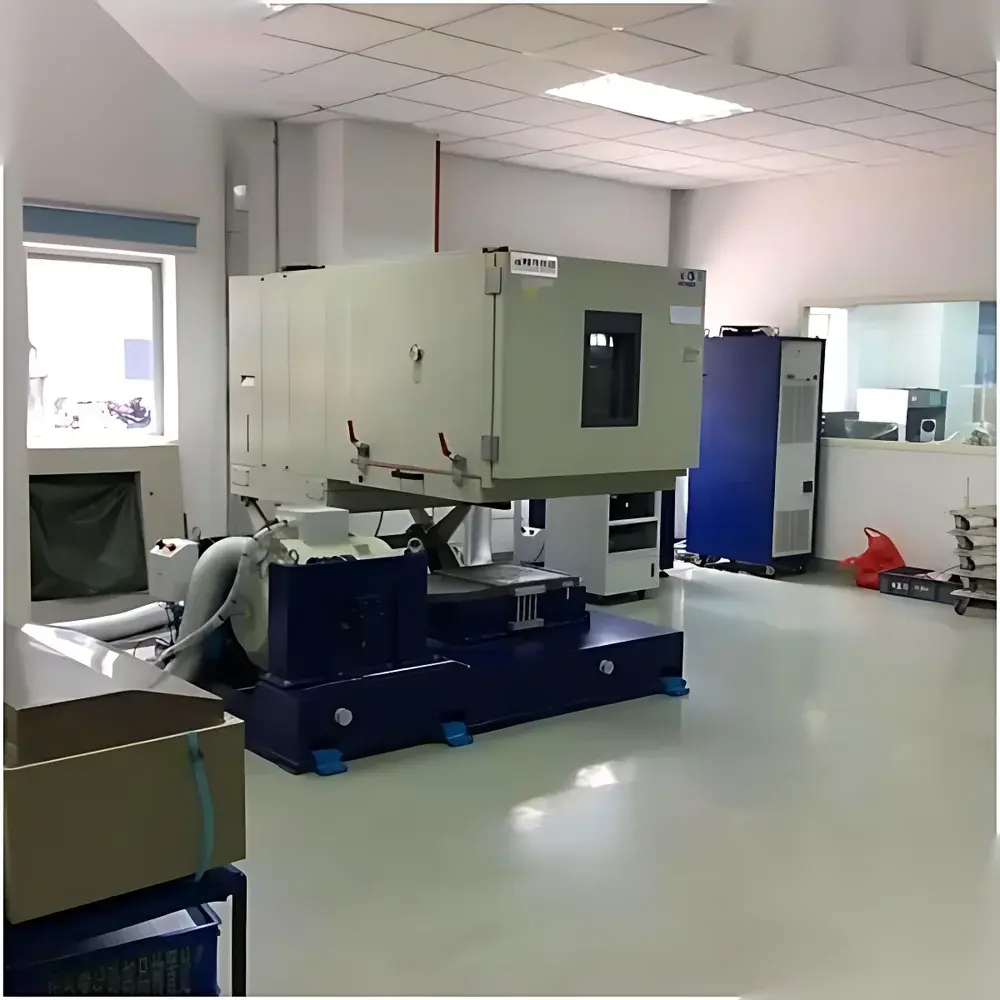
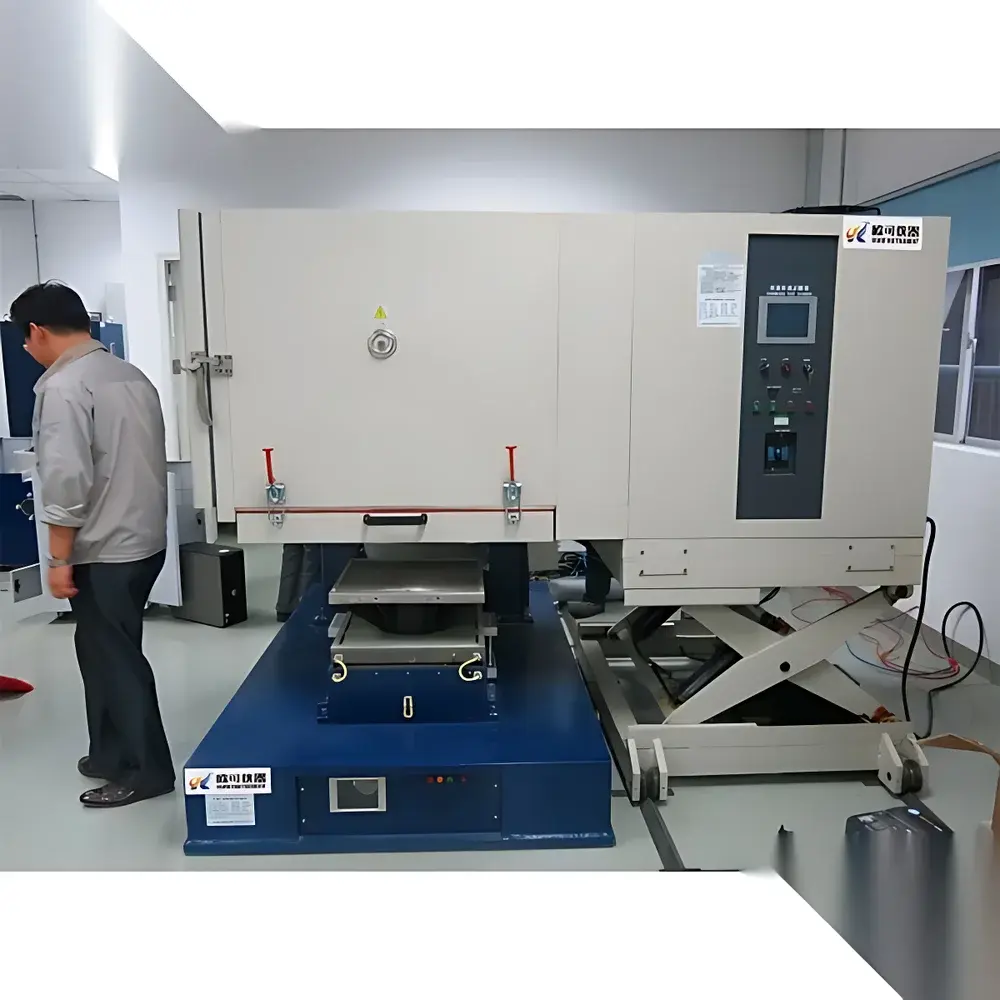
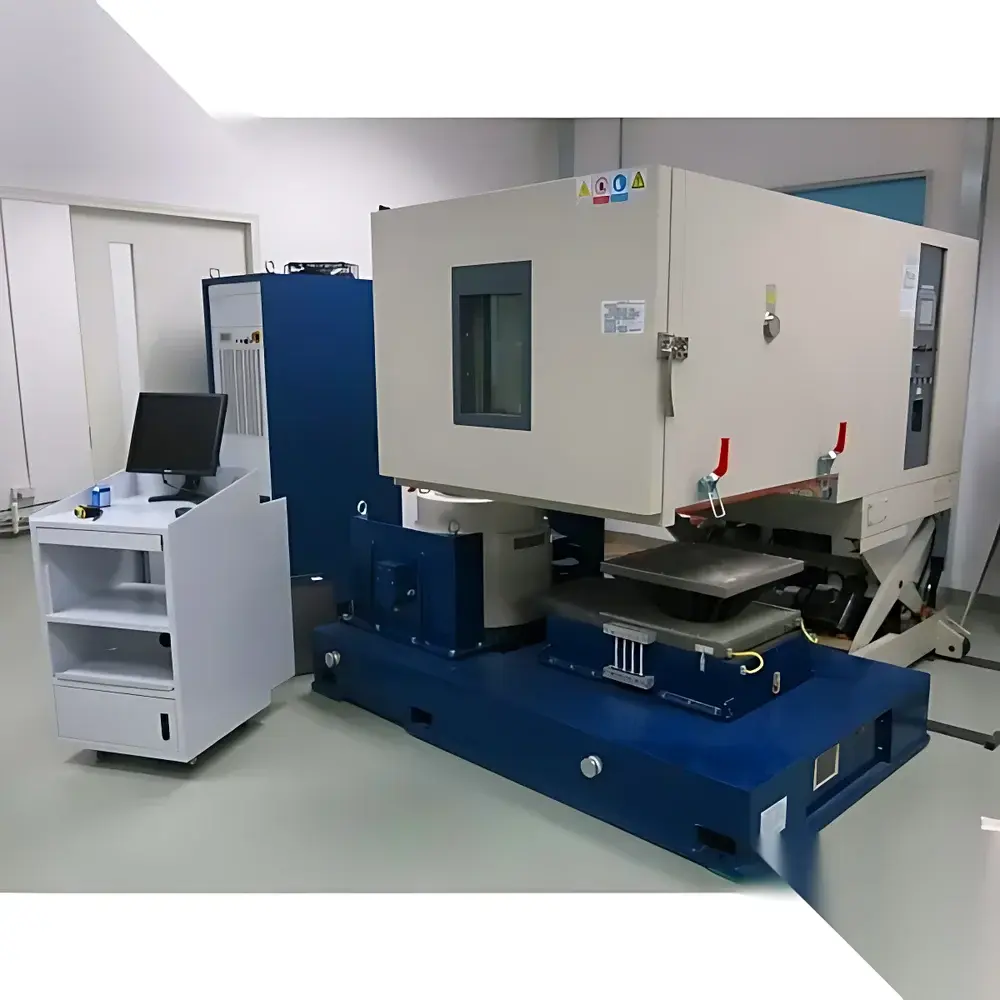
Combined Temperature-Humidity-Vibration Environmental Test Chamber
| Brand | OEM / Custom-Built |
|---|---|
| Origin | Imported |
| Manufacturer Type | Authorized Distributor |
| Price | USD 21,500 (FOB) |
Overview
The Combined Temperature-Humidity-Vibration Environmental Test Chamber is an integrated reliability validation platform engineered for simultaneous application of thermal cycling, controlled humidity, and multi-axis mechanical vibration—enabling accelerated stress testing that replicates real-world operational environments. Unlike sequential single-stress testing, this chamber implements true concurrent conditioning based on Couette-flow-coupled thermal-hygrometric dynamics and electrodynamic or servo-hydraulic vibration excitation synchronized via IEEE 1588 Precision Time Protocol (PTP). The system adheres to the fundamental principles outlined in MIL-STD-810H Method 520.5 (Combined Environments), IEC 60068-2-68 (Combined Temperature/Humidity/Vibration), and ISO 16750-4 (Road Vehicles – Environmental Conditions). Its core architecture supports deterministic stress profile execution—critical for failure mode identification during design verification, HALT/HASS development, and qualification testing under GLP/GMP-compliant audit trails.
Key Features
- Triple-stress synchronization: Independent yet coordinated control of temperature (−70 °C to +180 °C), relative humidity (10–98 % RH), and vibration (5–2000 Hz, up to 100 gpk, 3-axis electrodynamic or servo-hydraulic options)
- Modular baseplate system with precision-machined T-slots and alignment dowels—compatible with standard shaker table interfaces (e.g., LDS V994, TIRA TV 51120) and configurable for horizontal/vertical excitation orientation
- Large observation window with low-emissivity heated laminated glass (700 × 500 mm), preventing condensation during rapid thermal transitions
- 7-inch industrial-grade capacitive touchscreen HMI with embedded real-time waveform monitoring, alarm logging, and password-protected user-level access (Operator/Engineer/Admin)
- Preset-tension door latch mechanism ensuring uniform gasket compression and leak-tight sealing at all operating conditions (tested per ASTM E283 for air leakage)
- Dual-side cable ports (Φ60 mm, stainless steel flanged) with optional feedthroughs for thermocouples, strain gauges, or high-frequency signal lines
- Customizable internal dimensions—from standard 1000 × 1000 × 1000 mm (W×D×H) up to 3000 × 2000 × 1500 mm—with reinforced structural framing and vibration-isolated mounting feet
Sample Compatibility & Compliance
The chamber accommodates test specimens ranging from PCB assemblies and automotive ECUs to aerospace avionics enclosures and medical device housings. Internal airflow is optimized per ISO 16750-4 Annex B to ensure uniform thermal/hygrometric distribution (±1.5 °C, ±3 % RH across load volume). Humidity sensing employs calibrated capacitive polymer sensors (Vaisala HUMICAP® or equivalent), eliminating wet-bulb maintenance and drift-related calibration drift over extended test durations (>1000 h). Refrigeration utilizes environmentally compliant R-513A refrigerant with PID-controlled electronic expansion valves (EEVs), enabling energy-efficient “cooling-only” temperature regulation without compensatory heating—reducing power consumption by up to 35 % versus traditional balance-heating systems. All safety interlocks comply with IEC 61000-6-2 (EMC immunity) and UL 61010-1 (electrical safety).
Software & Data Management
Control software runs on a real-time Linux-based OS with deterministic scheduling (≤10 ms loop resolution). It supports import of industry-standard test profiles (MIL-STD-810H, DO-160G, GB/T 2423.34), custom script-driven sequences (Python API), and live overlay of vibration FFT spectra against thermal/humidity trends. Data export conforms to ASTM E2918 for test documentation integrity, including full metadata stamping (user ID, timestamp, firmware version, sensor calibration expiry). Audit trail functionality satisfies FDA 21 CFR Part 11 requirements—featuring electronic signatures, immutable event logs, and role-based permissions. Optional integration with enterprise LIMS or PLM systems via OPC UA 1.04.
Applications
- Design validation of electronics subjected to thermal shock + humidity cycling + random vibration (e.g., ADAS modules, battery management systems)
- Qualification testing of military-grade connectors and sealed enclosures per MIL-DTL-38999 and IP67/IP68 protocols
- Accelerated life testing of polymer components experiencing hygrothermal swelling + resonant fatigue
- Reliability screening of medical devices undergoing sterilization-cycle simulation (steam + vibration + thermal ramping)
- Automotive component certification to GM W3177, Ford CETP 00.00-L-467, and VW 80101
FAQ
What standards does this chamber support for combined environment testing?
It natively executes test methods defined in MIL-STD-810H Method 520.5, IEC 60068-2-68, ISO 16750-4, and GB/T 2423.34—with full traceability to NIST-traceable calibration certificates for temperature, humidity, and acceleration sensors.
Can the chamber operate as a standalone temperature-humidity chamber?
Yes—the environmental control subsystem functions independently; vibration excitation is fully decoupled and may be disabled without affecting thermal/hygrometric performance or calibration validity.
Is remote monitoring and control supported?
Standard Ethernet (TCP/IP) and optional cellular (LTE-M) connectivity enable secure remote operation, real-time data streaming, and predictive maintenance alerts via TLS 1.2-encrypted web interface.
What maintenance intervals are recommended for long-term reliability?
Compressor oil analysis every 2000 operating hours; humidity sensor recalibration annually; vibration shaker armature alignment verification per ISO 5347-13 every 5000 h or after major shock events.
Does the system support third-party vibration controller integration?
Yes—via IEEE 1588 PTP time sync and analog/digital I/O (0–10 V, TTL), enabling seamless interoperability with controllers from Siemens, Data Physics, or m+p International.
Related Products



