
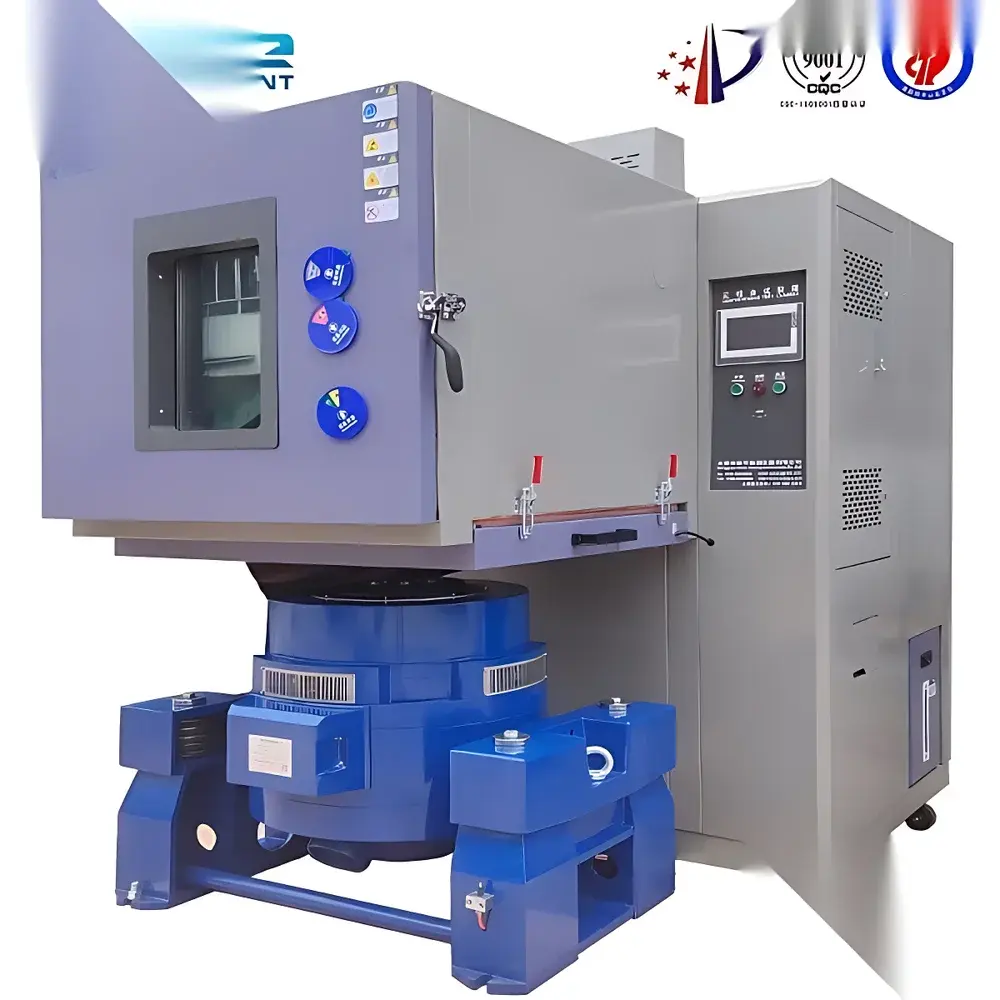
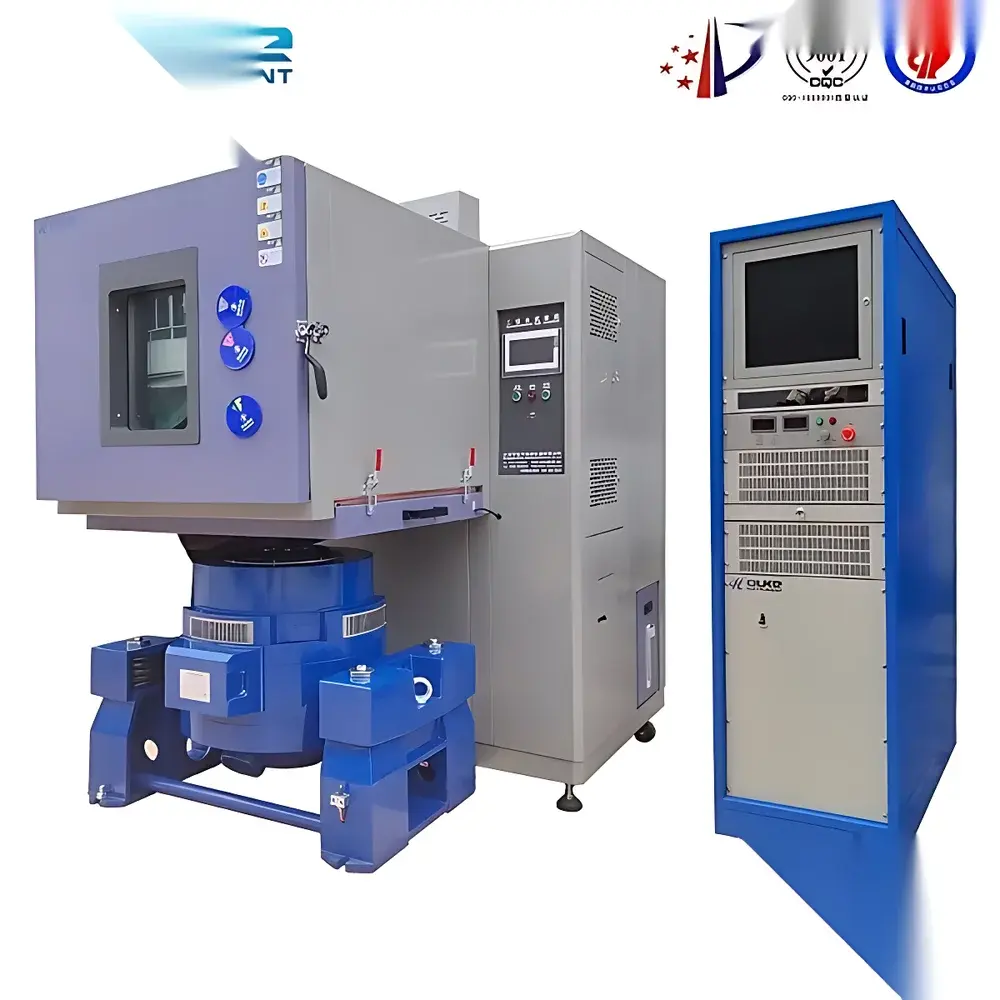
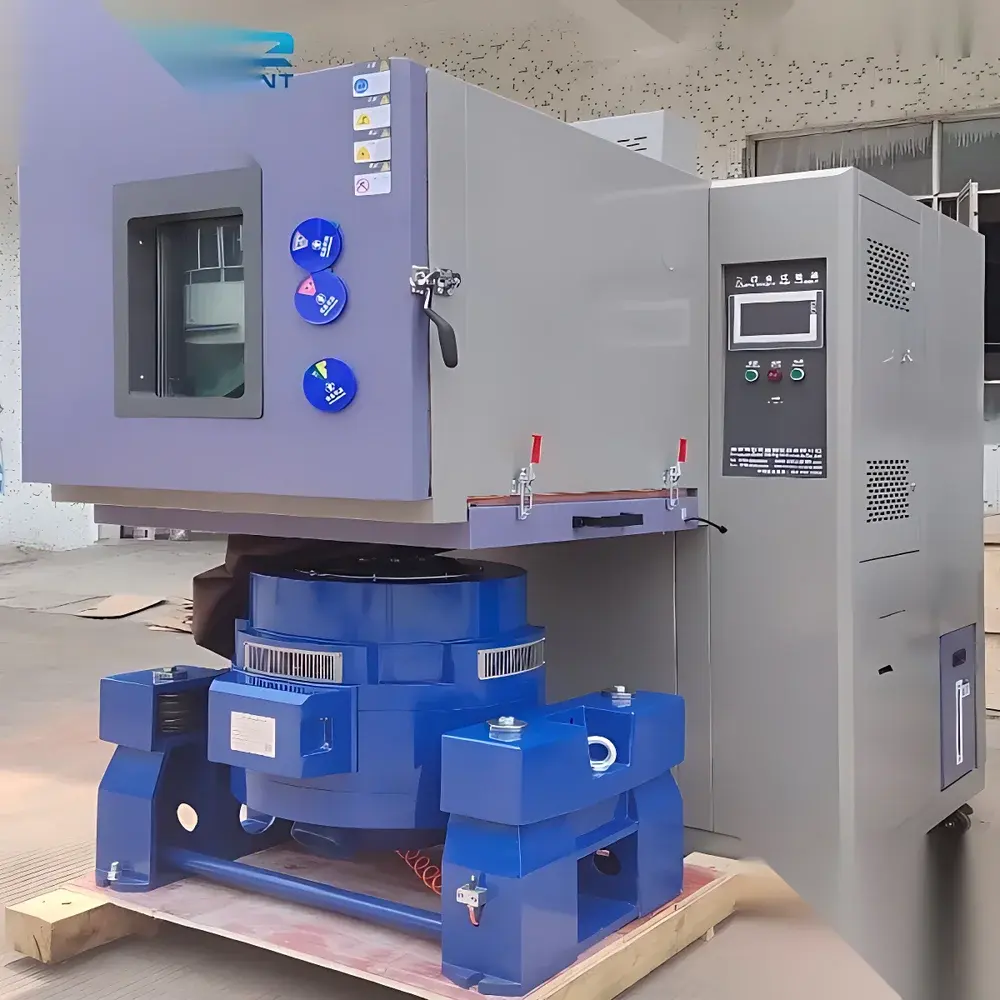
Combined Temperature-Humidity-Vibration Environmental Test Chamber – Model TCVC-120 / TCVC-250 / TCVC-500
| Brand | OEM Industrial Grade |
|---|---|
| Origin | Imported (EU/JP Engineering Design) |
| Manufacturer Type | Authorized Distributor |
| Quotation | USD 21,500–48,000 (FOB, depending on configuration and chamber volume) |
Overview
The Combined Temperature-Humidity-Vibration Environmental Test Chamber (TCVC Series) is an integrated reliability validation platform engineered for accelerated life testing and qualification of high-reliability components under simultaneous multi-stress conditions. It implements a rigorously synchronized triaxial environmental stress profile—precisely controlled temperature (−60 °C to +150 °C), relative humidity (30–98 %RH), and electrodynamic vibration (sine, random, and classical shock waveforms)—in accordance with MIL-STD-810H, IEC 60068-2-64, ASTM D4728, and ISO 16750-4 test protocols. Unlike sequential or single-stress chambers, the TCVC architecture maintains thermal-hygrometric stability *during* active vibration excitation via decoupled mechanical isolation, hermetic dynamic sealing, and real-time closed-loop compensation of thermal drift in accelerometer feedback paths. This enables physically representative failure mode induction—such as solder joint fatigue, conformal coating delamination, or MEMS resonator frequency shift—under operationally relevant combined loading.
Key Features
- Triple-independent climate control system: Dual-stage refrigeration (R404A/R23 cascade circuit), PID-regulated steam humidification, and high-efficiency finned-tube stainless steel heating elements—each subsystem fully isolated and independently commissioned.
- Integrated electrodynamic shaker table: 1000 kgf peak force capacity (model-dependent), 2–2000 Hz operational bandwidth, low-base-motion design with epoxy-silicone composite interface gasketing ensuring ≤0.5 dB insertion loss across full spectrum.
- Chamber construction: A3 carbon steel outer shell with powder-coated finish; SUS304 mirror-finish interior liner; 120 mm thick ultra-fine glass wool insulation; double-layer high-tensile silicone seal on observation door with conductive ITO-coated laminated glass viewport.
- Intelligent dual-channel PID controller: Touchscreen HMI with 17″ industrial LCD, embedded DSP-based vibration control engine (2-channel charge amplifier, 24-bit ADC), automatic fault logging with 5-year non-volatile memory retention, and compliance-ready audit trail per FDA 21 CFR Part 11 Annex 11 requirements.
- Dynamic airflow management: Forward-curved centrifugal blower (SANYO DENKI), unidirectional air circulation path with bottom return and top discharge, uniformity maintained at ≤±2.0 °C temperature deviation and ±5 %RH (≤75 %RH) / +2/−3 %RH (>75 %RH) across working volume.
Sample Compatibility & Compliance
The TCVC series accommodates test specimens up to 500 L internal volume (400 × 550 × 700 mm to 800 × 1000 × 1200 mm), supporting PCB assemblies, avionics enclosures, automotive ECUs, and medical device housings. All models meet CE Machinery Directive 2006/42/EC, EMC Directive 2014/30/EU, and RoHS 2011/65/EU. Calibration traceability follows ISO/IEC 17025-accredited procedures using NIST-traceable reference sensors. Optional GMP/GLP-compliant validation packages include IQ/OQ/PQ documentation, uncertainty budget analysis, and temperature/humidity/vibration cross-talk verification reports.
Software & Data Management
Pre-installed vibration control software supports real-time spectrum editing (sine sweep, resonance dwell, random PSD shaping), time-history playback, and shock response spectrum (SRS) synthesis. Climate parameters are logged synchronously at 10 Hz resolution via shared timestamped binary data streams (.tdms format). Export options include CSV, MATLAB .mat, and PDF-certified test reports with digital signature and electronic audit trail. Remote monitoring is enabled via Ethernet/IP with TLS 1.2 encryption; integration with LabVIEW, Python (PyVISA), or enterprise MES systems is supported through OPC UA server module.
Applications
- Aerospace: Qualification of satellite payload modules per ECSS-E-ST-10-03C under combined thermal cycling and launch vibration spectra.
- Automotive: Validation of ADAS radar units against ISO 16750-4 road-simulation profiles including thermal soak, humidity ramp, and 3-axis random vibration.
- Electronics manufacturing: HALT/HASS screening of 5G mmWave RF front-end modules with simultaneous −40 °C cold start, 85 %RH condensation risk, and 10–2000 Hz broadband excitation.
- Medical devices: Biocompatibility and functional safety assessment of implantable pulse generators per ISO 14971 and IEC 60601-1-11 under environmental stress screening protocols.
FAQ
What standards does this chamber comply with for aerospace qualification?
It meets MIL-STD-810H Method 520.5 (combined environments), DO-160G Section 25 (temperature/humidity/vibration), and ECSS-E-ST-10-03C Annex B for simultaneous stress application.
Can the vibration table be retracted during non-vibration tests?
Yes—motorized rail system allows full extraction of the shaker table from the test chamber without disassembly, enabling pure thermal-humidity testing with improved uniformity.
Is remote calibration and firmware update supported?
Calibration constants are stored in secure EEPROM and can be updated remotely via authenticated SSH session; firmware upgrades require signed binaries verified by onboard cryptographic hash.
What is the maximum specimen weight supported on the vibration table?
Standard configurations support 100 kg payload (center of gravity ≤150 mm above table surface); heavy-duty variants accommodate up to 300 kg with reinforced mounting interface and extended stroke.
Does the system provide test report generation compliant with FDA 21 CFR Part 11?
Yes—the control software includes electronic signatures, role-based access control, immutable audit logs, and exportable PDF reports with embedded digital certificate and tamper-evident hashing.
Related Products



