
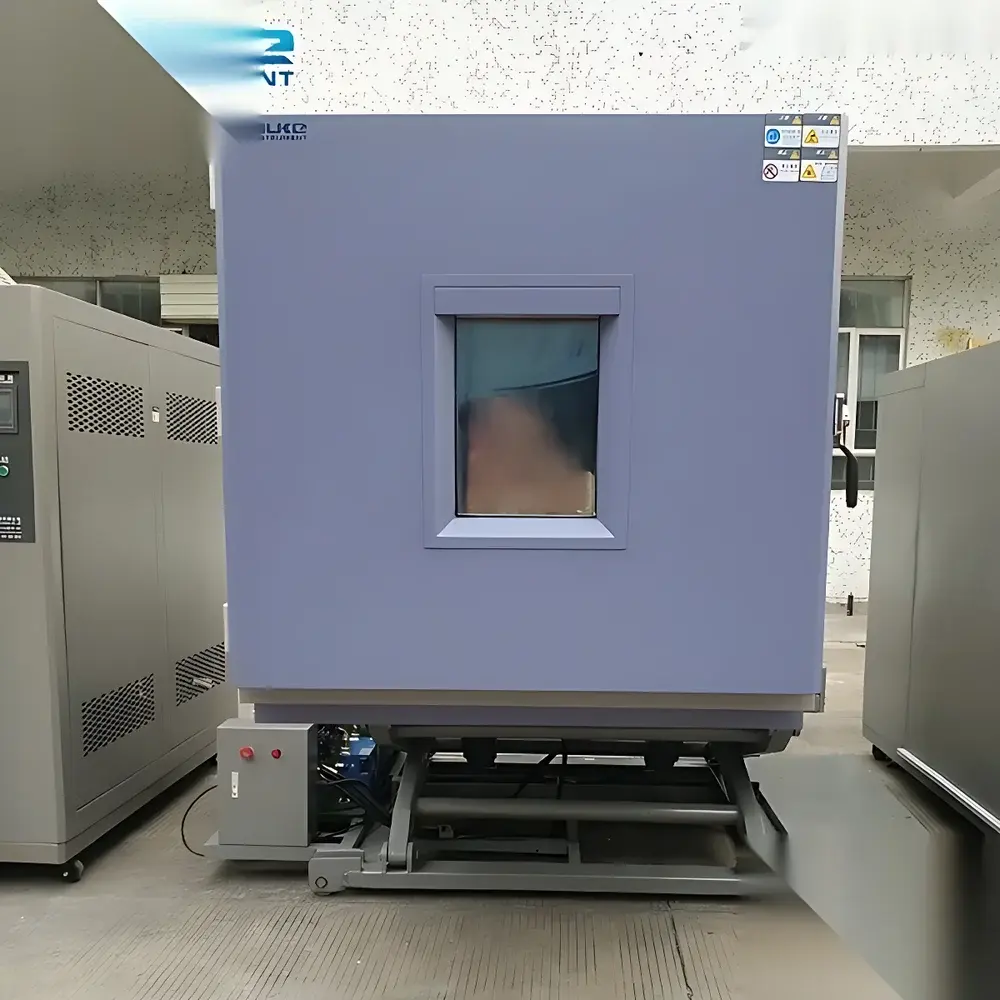
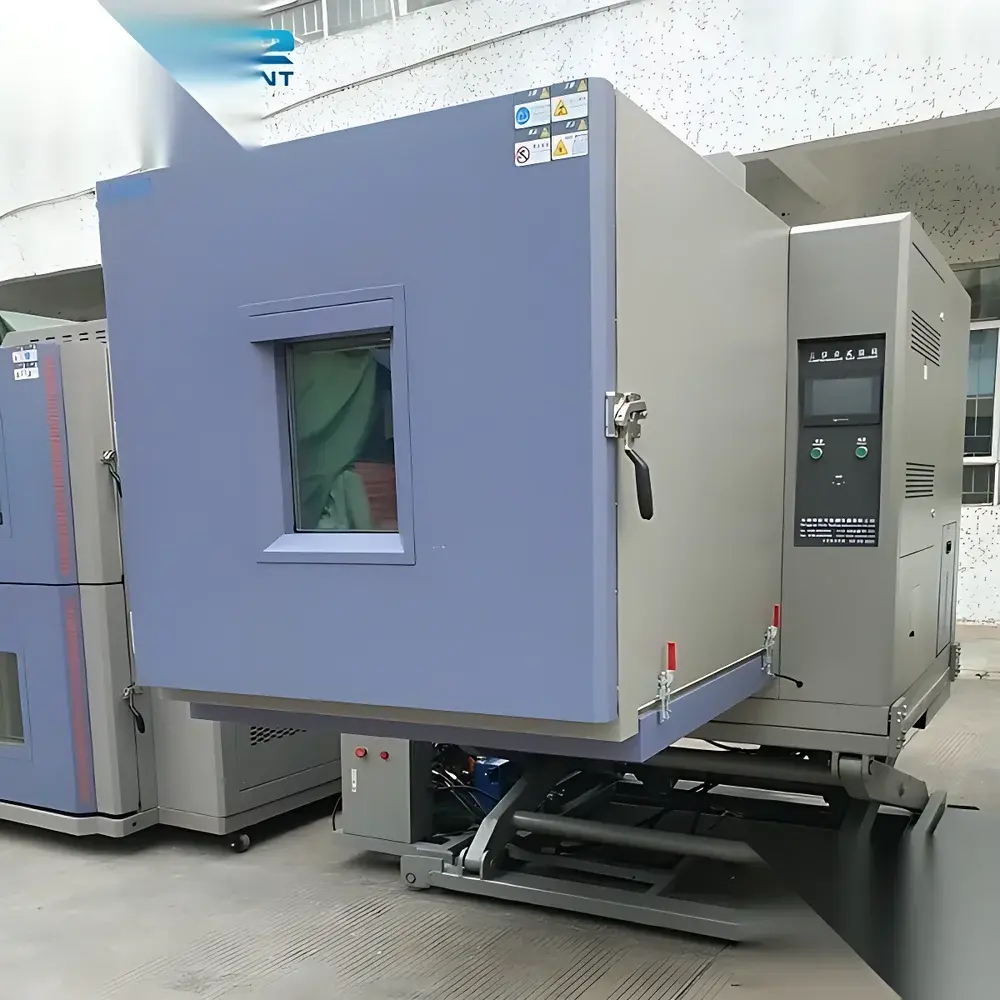
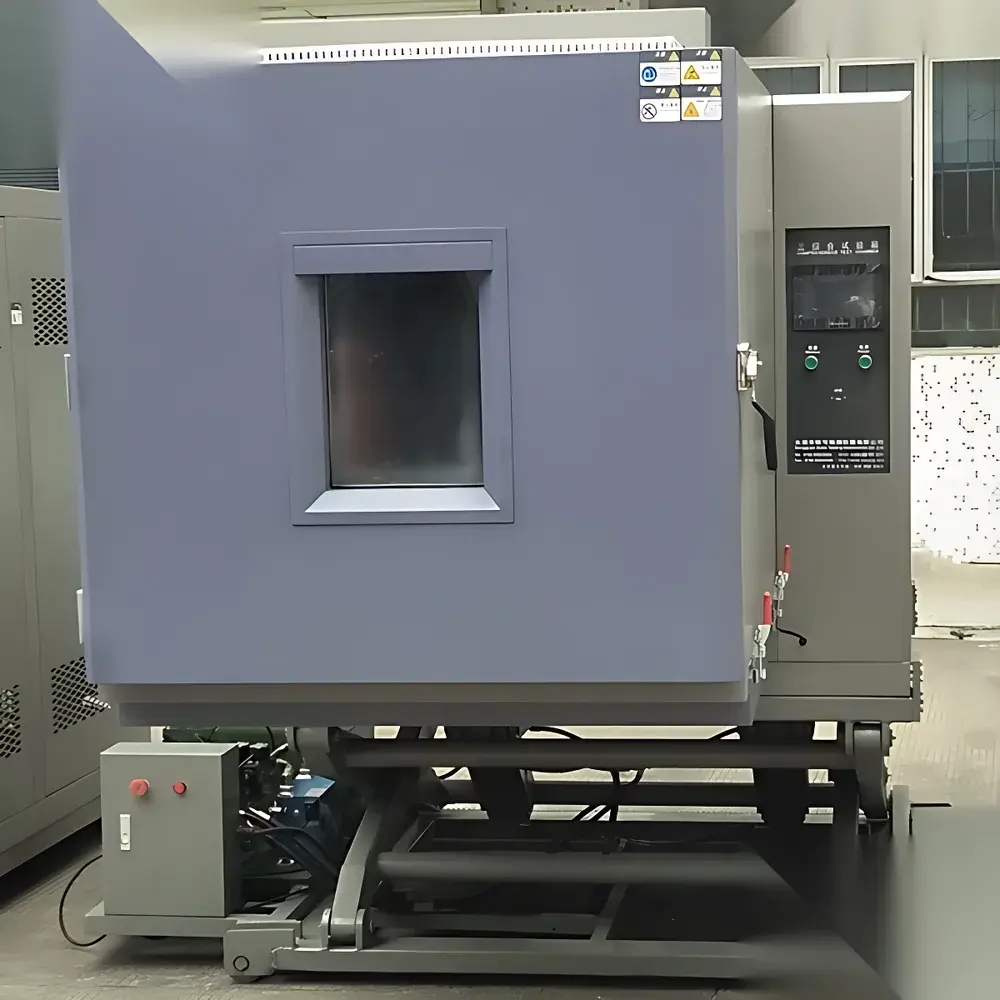
Combined Temperature-Humidity-Vibration Environmental Test Chamber – OEM/ODM Manufacturer
| Origin | Imported |
|---|---|
| Supplier Type | Authorized Distributor |
| Price | USD 21,500 (FOB) |
Overview
The Combined Temperature-Humidity-Vibration Environmental Test Chamber is an integrated reliability validation platform engineered for accelerated environmental stress screening (ESS) and qualification testing of electronic components, automotive modules, aerospace subsystems, and industrial control units. It simultaneously subjects test specimens to controlled thermal profiles (from −70 °C to +150 °C), regulated humidity (30–98 %RH), and mechanical vibration—enabling realistic simulation of real-world transport, storage, and operational conditions. Based on Couette-flow air circulation, direct-expansion refrigeration, and electrodynamic shaker integration, the system adheres to fundamental principles of environmental physics and mechanical fatigue analysis. Its architecture supports deterministic stress sequencing—critical for HALT (Highly Accelerated Life Testing), HASS (Highly Accelerated Stress Screening), and compliance-driven validation per IEC 60068-2 series, MIL-STD-810H, and RTCA DO-160G Section 16.
Key Features
- Triple-stress synchronization: Independent yet coordinated control of temperature, relative humidity, and broadband vibration (5–2000 Hz, up to 100 gpk, depending on payload and shaker configuration)
- Precision climate control: ±0.5 °C temperature uniformity, ≤2 °C chamber-wide deviation, and humidity accuracy of +2 to −3 %RH (measured at 25 °C/50 %RH reference point)
- Ramp rate flexibility: Programmable thermal transition rates from 0.7 to 1.0 °C/min—adjustable via PID-tuned refrigeration and steam/humidification modulation
- Robust safety architecture: Dual-stage overtemperature cutoff, compressor high-pressure shutdown, motor overload protection, ground-fault interrupter (GFI), and automatic power isolation upon fault detection with audible alarm
- Modular shaker interface: Standard 12-inch or 16-inch moving table; optional slip-table or multi-axis vibration excitation for complex motion profiles
- Industrial-grade insulation: 150 mm thick polyurethane foam with vacuum-sealed vapor barrier, minimizing thermal leakage and condensation risk during rapid cycling
Sample Compatibility & Compliance
The chamber accommodates DUTs (Devices Under Test) up to 150 kg with dimensional envelope compatibility for standard rack-mount enclosures (e.g., 19″ EIA, 21″ IEEE). It supports non-intrusive sensor integration—including thermocouples (Type T/K), RH probes (capacitive polymer), and accelerometers (IEPE or MEMS)—via dedicated feedthrough ports. The system complies with key international standards including IEC 60068-2-1 (Cold), IEC 60068-2-2 (Dry Heat), IEC 60068-2-30 (Damp Heat, Cycling), ISO 16750-4 (Road Vehicles – Environmental Conditions), and ASTM D4332 (Conditioning Containers, Packages, or Packaging Components for Testing). All calibration procedures follow ISO/IEC 17025 requirements, and traceable documentation is provided for GLP/GMP audit readiness.
Software & Data Management
Equipped with a Windows-based control suite featuring real-time multi-parameter visualization, programmable test sequences (up to 999 steps), and event-triggered data logging at configurable intervals (100 ms to 10 s resolution). The software supports .csv and .tdms export formats, time-synchronized waveform capture (vibration + thermal + humidity), and automated report generation compliant with FDA 21 CFR Part 11 (electronic signatures, audit trail, user role management). Optional Ethernet/IP and Modbus TCP interfaces enable integration into centralized MES or SCADA environments for Industry 4.0 deployment.
Applications
- Qualification of PCBAs and embedded controllers under combined thermal shock and mechanical resonance
- Validation of battery pack sealing integrity and thermal runaway propagation under cyclic humidity exposure
- Reliability assessment of optical sensors and camera modules subjected to condensation-induced fogging and vibration-induced misalignment
- Verification of connector mating durability across wide temperature-humidity-vibration envelopes
- Pre-compliance screening for automotive ECUs targeting AEC-Q200 stress categories
- Accelerated aging studies for conformal coatings and potting compounds under hygrothermal-mechanical loading
FAQ
What is the maximum allowable payload mass for simultaneous three-stress operation?
Standard configurations support up to 150 kg on the vibration table; derating applies above 85 kg depending on frequency range and acceleration profile.
Does the system include NIST-traceable calibration certificates?
Yes—factory calibration includes certified reference instruments for temperature (±0.15 °C), humidity (±1.5 %RH), and vibration amplitude (±2 %FS), with full documentation supplied.
Can the chamber be configured for salt spray integration?
No—salt fog functionality requires separate corrosion chambers; this model is optimized exclusively for temperature-humidity-vibration coupling.
Is remote monitoring supported over secure network protocols?
Yes—TLS 1.2-encrypted web interface and OPC UA server are available as optional firmware upgrades.
What maintenance intervals are recommended for refrigeration and humidification subsystems?
Compressor oil and refrigerant checks every 2,000 operating hours; humidifier tank cleaning and electrode replacement every 6 months under continuous use.



