
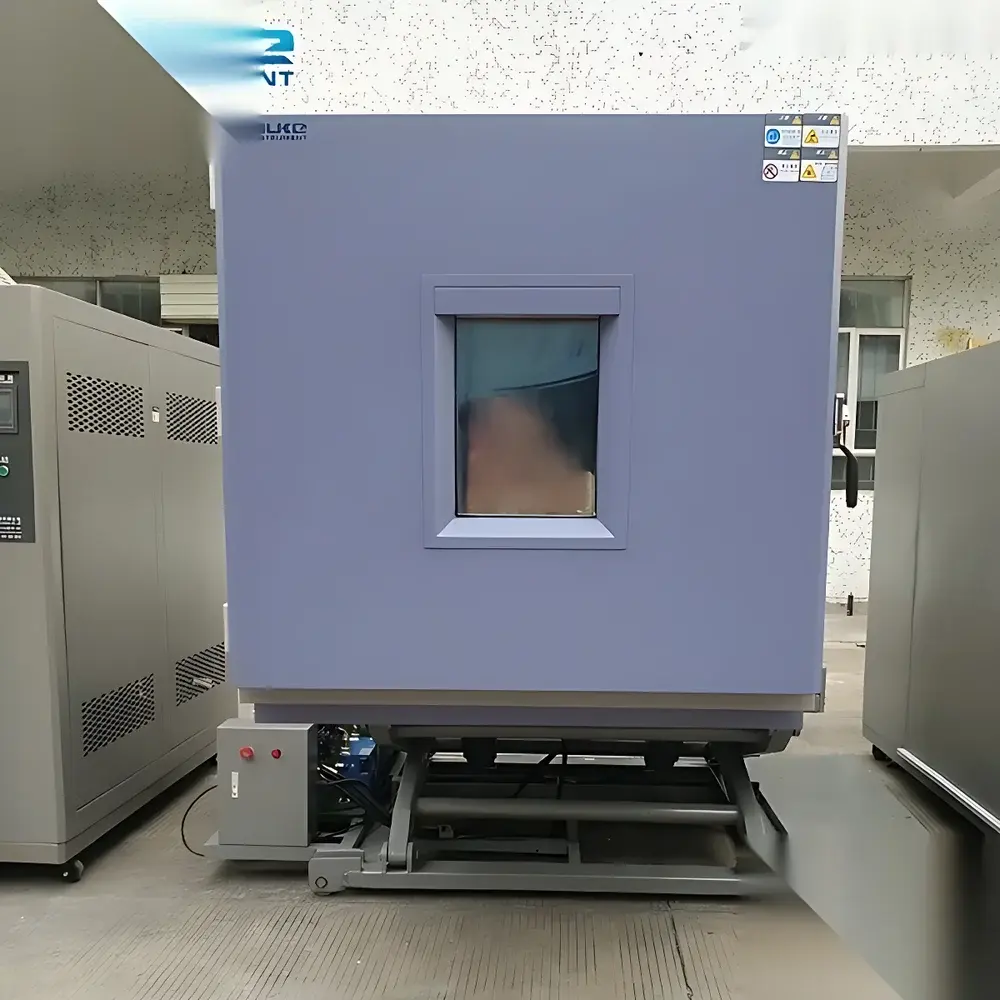
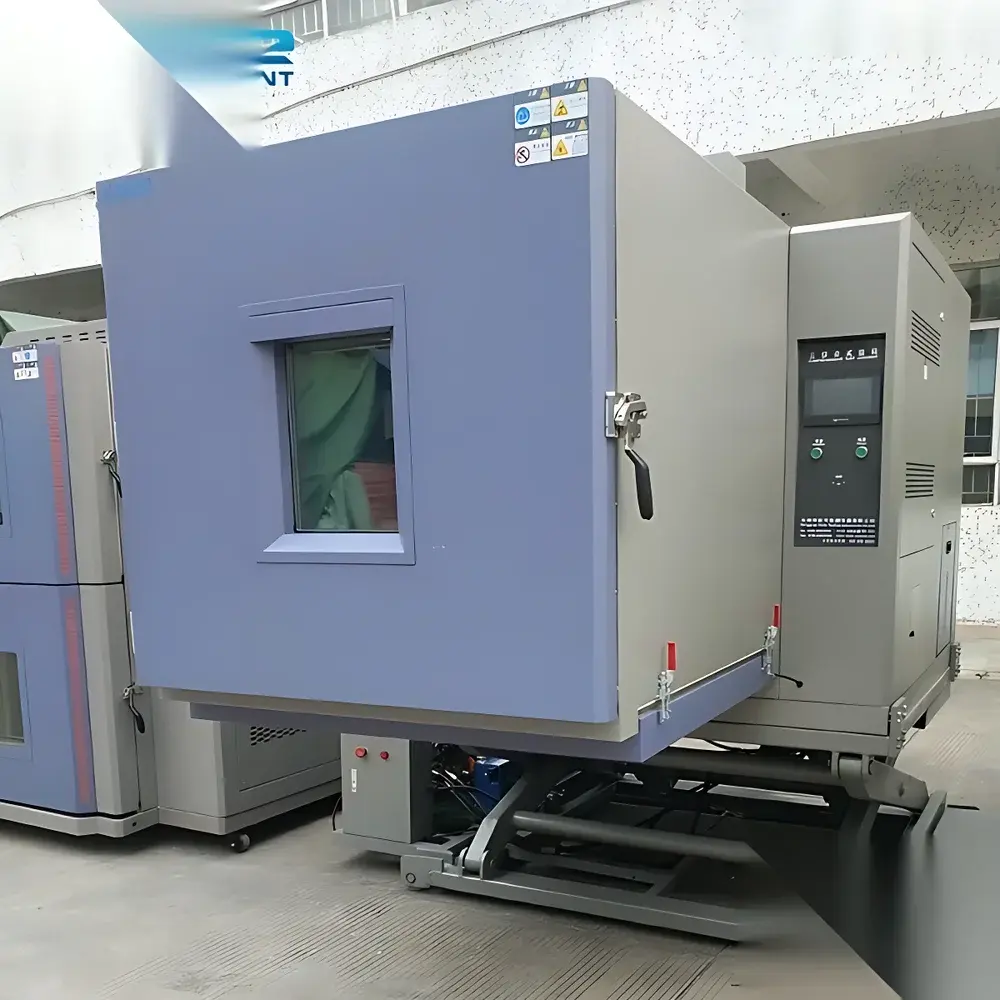
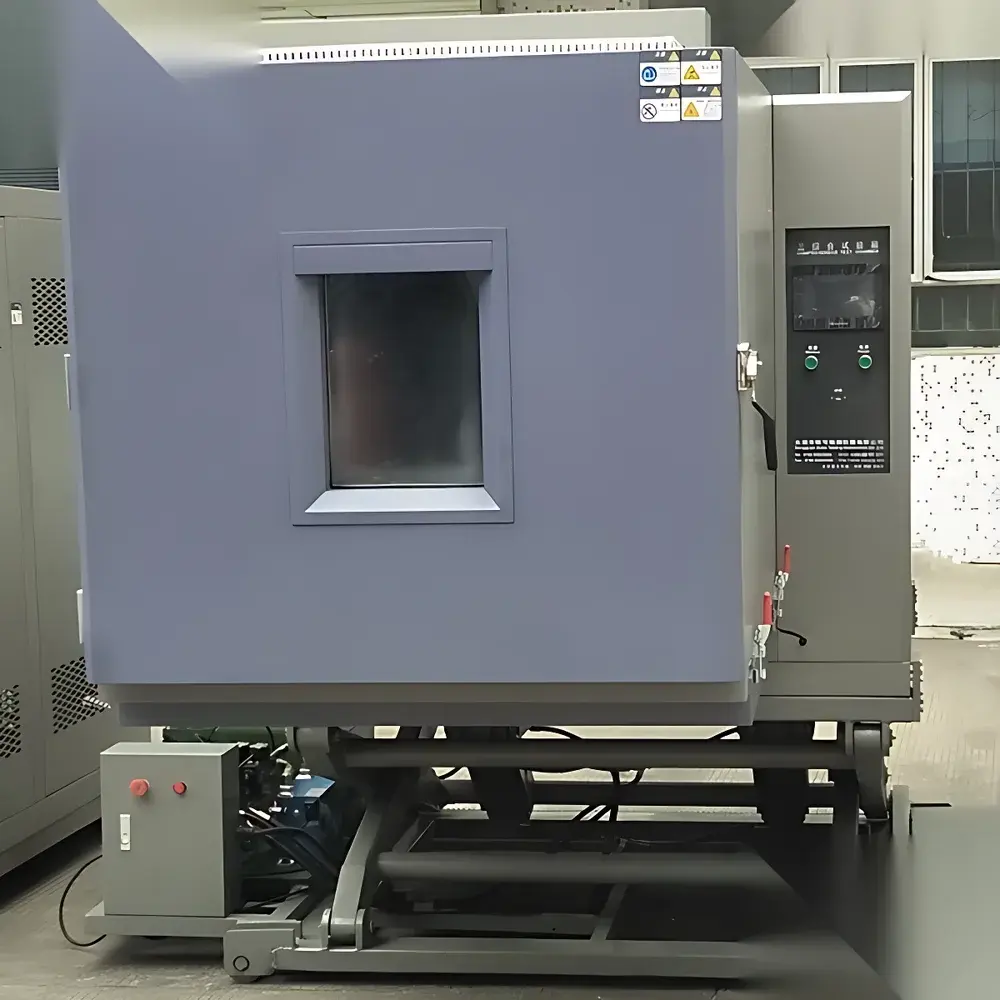
Combined Temperature-Humidity-Vibration Environmental Test Chamber – Standard-Compliant Triple-Combination Test System
| Key | Brand: OEM / Third-Party Manufacturer |
|---|---|
| Origin | Imported |
| Supplier Type | Authorized Distributor |
| Price | USD 21,000 (FOB) |
| Compliance | GB/T 5170.2–1996, GB/T 2423.3–1993, GB/T 2423.1–1989, GB/T 2423.2–1989, GJB 150.3–1986, GJB 150.4–1986 |
| Refrigerant | R134a or R507 (ODP = 0, non-flammable, non-explosive) |
| Humidity Sensor | Capacitive electronic type, ±1.5% RH accuracy |
| Cooling System | Twin-stage or cascade refrigeration circuit with hermetic Tecumseh (France) compressors |
| Airflow | Multi-blade centrifugal blower, uniform velocity distribution, ΔT ≤ ±1.0°C across working volume |
| Control Algorithm | PID auto-tuning with disturbance rejection and setpoint ramping |
Overview
The Combined Temperature-Humidity-Vibration Environmental Test Chamber is an integrated reliability validation platform engineered for simultaneous or sequential exposure of test specimens to controlled thermal, hygrothermal, and mechanical vibration stressors. It operates on the principle of coupled environmental simulation—precisely synchronizing chamber-based climate control (via forced-air convection and steam/humidification systems) with electrodynamic or servo-hydraulic shaker table excitation. This architecture enables replication of real-world field conditions encountered by aerospace components, automotive ECUs, military electronics, and medical devices during transport, storage, or operational life cycles. The system conforms strictly to international and national environmental test standards—including ISO 16750, IEC 60068-2 series, MIL-STD-810H, and the full suite of referenced Chinese national and military standards (GB/T and GJB). Its structural integrity, thermal mass management, and vibration isolation design ensure high reproducibility across repeated test cycles under GLP-compliant laboratory environments.
Key Features
- Triple-stress integration: Independent yet synchronized control of temperature (−70 °C to +180 °C), relative humidity (10–98% RH), and broadband vibration (5–2000 Hz, up to 100 gpk, depending on shaker configuration)
- Dual-stage or cascade refrigeration circuit using hermetically sealed Tecumseh compressors, enabling rapid cooling rates (≥10 °C/min from 25 °C to −40 °C) and stable sub-zero operation
- Multi-wing centrifugal circulation blower with aerodynamically optimized ductwork ensures uniform airflow (velocity deviation < ±15% across workspace) and minimal thermal gradient (≤ ±0.8 °C at steady state)
- PID auto-tuning controller with adaptive learning capability—dynamically adjusts control parameters in response to load changes, door openings, or ambient fluctuations
- Electronic capacitive humidity sensor with factory-calibrated traceability, low drift (<0.1% RH/month), and self-diagnostic reporting
- Integrated deionized water filtration system (5 µm pre-filter + activated carbon + reverse osmosis optional) prevents mineral deposition in steam generators and extends maintenance intervals
- Real-time pressure monitoring via calibrated compound gauges on refrigerant circuits, with configurable pre-alarm thresholds for early fault detection
- Full system lockout function: Prevents unauthorized parameter modification during test execution; supports user-level access control (operator/engineer/admin)
Sample Compatibility & Compliance
This chamber accommodates test specimens up to 1 m³ in volume (standard configuration), with customizable internal dimensions and mounting interfaces for vibration table coupling (e.g., slip tables, isolators, or direct bolt-down fixtures). It supports standard test specimen fixtures per IEC 60068-2-64 and MIL-STD-810H Annex G. All materials contacting the test environment—including insulation, gaskets, and humidification nozzles—meet RoHS and REACH requirements. Refrigerant selection complies with Montreal Protocol Phase-Out schedules: zero ozone depletion potential (ODP = 0), low global warming potential (GWP < 1430), and non-toxic, non-flammable classification per ASHRAE Standard 34. Certification documentation includes factory calibration reports traceable to NIM (China National Institute of Metrology) and third-party verification against GB/T 5170.2–1996 (temperature uniformity/accuracy), GB/T 2423.3–1993 (damp heat cycling), and GJB 150.3/4–1986 (military thermal shock protocols).
Software & Data Management
The embedded controller runs a deterministic real-time OS with dual-channel Ethernet connectivity (100BASE-TX). Test profiles are defined via intuitive graphical interface supporting step, ramp, dwell, and looping logic—with up to 999 segments per program. Data logging occurs at user-selectable intervals (100 ms to 60 s), storing time-stamped temperature, humidity, vibration acceleration (x/y/z axes), chamber pressure, and compressor status. Export formats include CSV, XML, and PDF reports compliant with FDA 21 CFR Part 11 requirements (electronic signatures, audit trail, data integrity controls). Optional PC-based software provides remote monitoring, multi-chamber fleet management, statistical process control (SPC) charting, and automated report generation aligned with ISO/IEC 17025 laboratory accreditation needs.
Applications
- Qualification testing of avionics modules per DO-160 Section 24 (temperature/humidity/vibration combined stress)
- Accelerated life testing (ALT) of battery packs under thermal cycling + mechanical shock profiles
- Environmental stress screening (ESS) of PCB assemblies prior to burn-in
- Validation of packaging integrity for pharmaceutical cold-chain logistics (ISTA 3A/7E)
- Reliability assessment of MEMS sensors exposed to condensation-prone thermal transients
- Development testing of electric vehicle power electronics under simulated road-induced vibration + under-hood thermal loads
FAQ
Does this chamber support real-time synchronization between vibration input and climate profile execution?
Yes—the system employs a master-slave controller architecture with IEEE 1588 Precision Time Protocol (PTP) synchronization, ensuring phase-aligned triggering of shaker motion with temperature/humidity setpoint transitions within ±5 ms tolerance.
What is the maximum allowable specimen mass for vibration testing within the chamber?
Standard configurations support up to 50 kg on the integrated shaker table; heavy-duty variants (optional) accommodate 200 kg with extended stroke and enhanced thermal decoupling.
Is the humidity system capable of performing dry-out cycles without condensation risk?
Yes—the steam generator features pulse-width modulated power control and dew-point-based termination logic, preventing uncontrolled condensation during rapid dehumidification ramps.
Can test data be exported in formats compatible with LIMS integration?
Absolutely—CSV and XML exports include metadata headers compliant with ASTM E1482 and ISO/IEC 17025 Annex A.2 requirements for laboratory information management system ingestion.
Are calibration certificates provided with initial delivery?
Each unit ships with a full metrological verification package: NIST-traceable temperature/humidity probe calibration, vibration transducer sensitivity certification, and refrigerant circuit pressure gauge verification—all valid for 12 months post-installation.



