
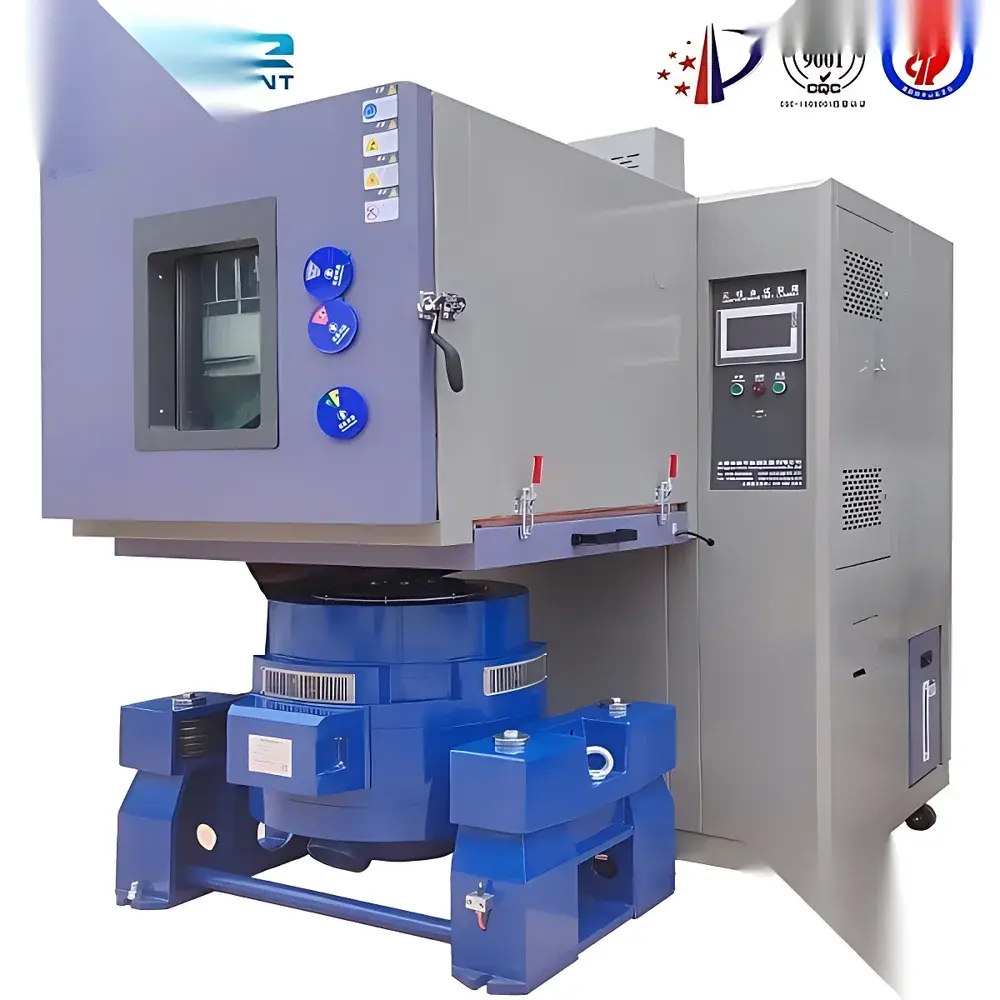
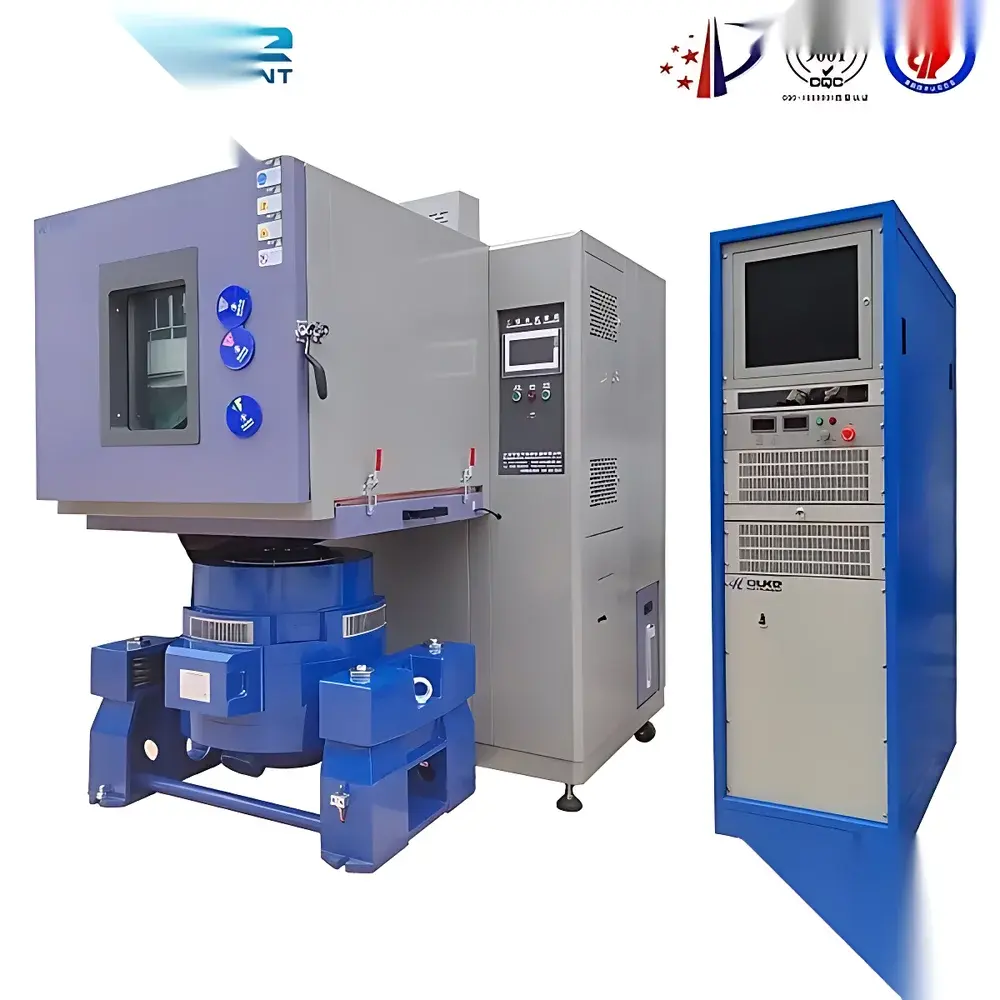
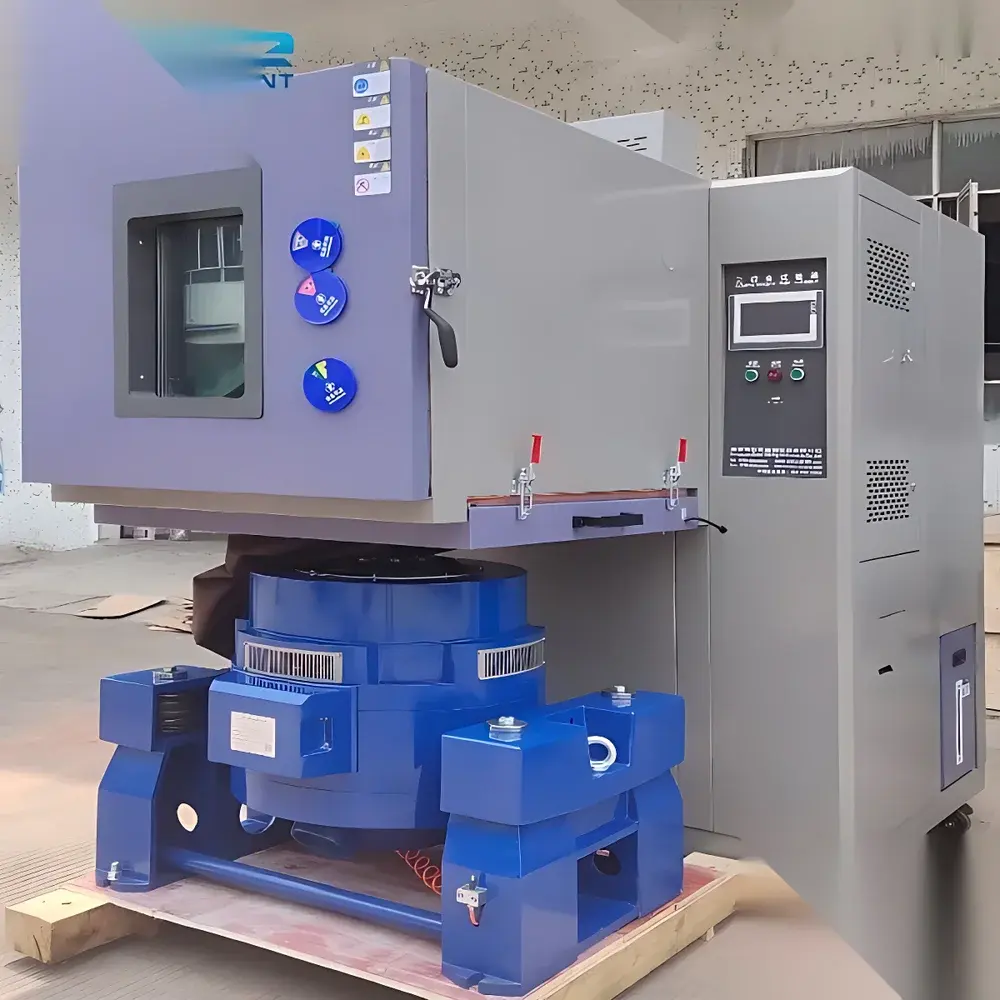
Combined Temperature-Humidity-Vibration Environmental Test System
| Key | Brand: Other Brands |
|---|---|
| Origin | Imported |
| Manufacturer Type | General Distributor |
| Price | USD 21,500 (approx. based on ¥150,000 at 1 USD = ¥6.97) |
Overview
The Combined Temperature-Humidity-Vibration Environmental Test System is an integrated reliability validation platform engineered for simultaneous multi-stress environmental simulation. It operates on the principle of accelerated life testing (ALT) and highly accelerated stress screening (HASS), applying controlled thermal gradients (−70 °C to +180 °C), relative humidity modulation (10–98 % RH, non-condensing), and broadband mechanical excitation (5–2000 Hz, up to 100 grms) in a single test chamber. This concurrent stress application enables identification of latent design weaknesses, material interface failures, solder joint fatigue, and condensation-induced corrosion mechanisms that remain undetected under sequential single-stress testing. The system complies with core test standards including IEC 60068-2-64 (random vibration), IEC 60068-2-30 (damp heat cyclic), MIL-STD-810H Method 514.8 (vibration), and ISO 16750-4 (road vehicle environmental conditions), supporting qualification testing for aerospace avionics, automotive ECUs, medical electronics, and industrial IoT sensors.
Key Features
- Triple-stress synchronization: Real-time coordinated control of temperature, humidity, and vibration profiles via a unified master controller—eliminating phase lag between environmental domains.
- PWM-based refrigeration architecture: Patented pulse-width modulated cold stage control reduces energy consumption by up to 35 % during low-temperature operation (−40 °C to −70 °C) compared to conventional cascade systems.
- Anti-condensation logic: Adaptive dew-point monitoring and dynamic chamber wall heating prevent moisture accumulation on test specimens during rapid thermal transitions.
- Modular expansion capability: Optional LN2V cryogenic assist module enables ramp rates exceeding 15 °C/min from +25 °C to −70 °C; LHC low-humidity sensor and regenerative desiccant dryer extend RH lower limit to 5 % RH at 25 °C.
- Dual-interface data acquisition: RS-232 serial port for real-time control integration with external DAQ systems; USB 2.0 host port for firmware updates and test log export (CSV/Excel format).
- Redundant safety architecture: 12-point thermal/humidity/vibration fault detection with audible/visual alerts; optional GSM-based remote SMS notification for off-site monitoring during unattended operation.
Sample Compatibility & Compliance
The system accommodates DUTs up to 150 kg mass and 600 × 600 × 600 mm (W×D×H) volume on its magnesium alloy vertical extension table (VT0404). Chamber internal dimensions (1000 × 800 × 800 mm) support full-system ECU housing, PCB assemblies, and sealed enclosures. All humidity generation uses saturated steam injection via a precisely thermostated air-saturation vessel (47 °C ±1 °C), ensuring traceable RH calibration per ISO/IEC 17025-accredited methods. Vibration subsystem comprises OK-ES series electrodynamic shaker (force rating: 12 kN peak), DA-6 power amplifier, and dedicated励磁 (field) supply—fully compliant with IEEE 1159 Class A waveform fidelity requirements. System documentation supports GLP/GMP audit readiness, including electronic signature-capable test reports and full audit trail logging per FDA 21 CFR Part 11 Annex 11 guidelines.
Software & Data Management
The embedded Windows-based control suite includes three functional modules: (1) Profile Editor for defining multi-segment temperature/humidity/vibration schedules with conditional triggers (e.g., “initiate random vibration only after chamber reaches −40 °C”); (2) Real-Time Monitor displaying synchronized time-history plots of chamber setpoints, actual values, and accelerometer feedback (±500 g range, IEPE output); (3) Post-Test Analyzer enabling FFT spectral analysis, PSD calculation (per MIL-STD-810H Fig. 514.8-1), and pass/fail margin assessment against user-defined acceptance thresholds. All raw data—including 10 kHz sampled acceleration waveforms and 1 Hz environmental telemetry—is stored in vendor-neutral HDF5 format for third-party MATLAB/Python interoperability. Backup archives are encrypted and timestamped with SHA-256 hash verification.
Applications
- Aerospace: Qualification of flight-critical sensors under combined thermal cycling and turbulent airflow-induced vibration (DO-160 Section 23).
- Automotive: Validation of ADAS camera modules against thermal shock + road-spectrum vibration (ISO 16750-4 Level 3b).
- Medical Devices: Sterility integrity testing of hermetically sealed implantable housings under damp-heat aging + mechanical flexure.
- Consumer Electronics: Accelerated wear-out analysis of flexible printed circuits subjected to humidity swelling + bending fatigue.
- Energy Storage: Electrolyte leakage evaluation in lithium-ion battery packs during thermal runaway simulation with mechanical agitation.
FAQ
What vibration waveforms does the system support?
Sine, random (PSD-based), classical shock (half-sine, trapezoidal), and transient vibration synthesis—all programmable with user-defined breakpoints and tolerances per ISO 10816-1.
Is humidity control possible below 10 % RH?
Yes—when equipped with the optional LHC low-humidity sensor and regenerative desiccant dryer, the system achieves stable 5–10 % RH at ambient temperatures (20–30 °C).
How is traceability maintained for calibration records?
Each chamber includes NIST-traceable PT100 temperature sensors, capacitive RH probes certified to ISO/IEC 17025, and triaxial accelerometers calibrated annually per ISO 17025 accredited labs—with digital certificates embedded in the software archive.
Can the system operate unattended for extended durations?
Yes—continuous 72-hour+ test execution is supported with automatic fault recovery, email/SMS alerting, and uninterruptible power supply (UPS) handshake protocol.
What level of software validation is provided for regulated industries?
IQ/OQ documentation packages are available, including installation qualification checklists, operational qualification test scripts, and 21 CFR Part 11 compliance matrices covering electronic signatures, audit trails, and data integrity controls.
Related Products



