
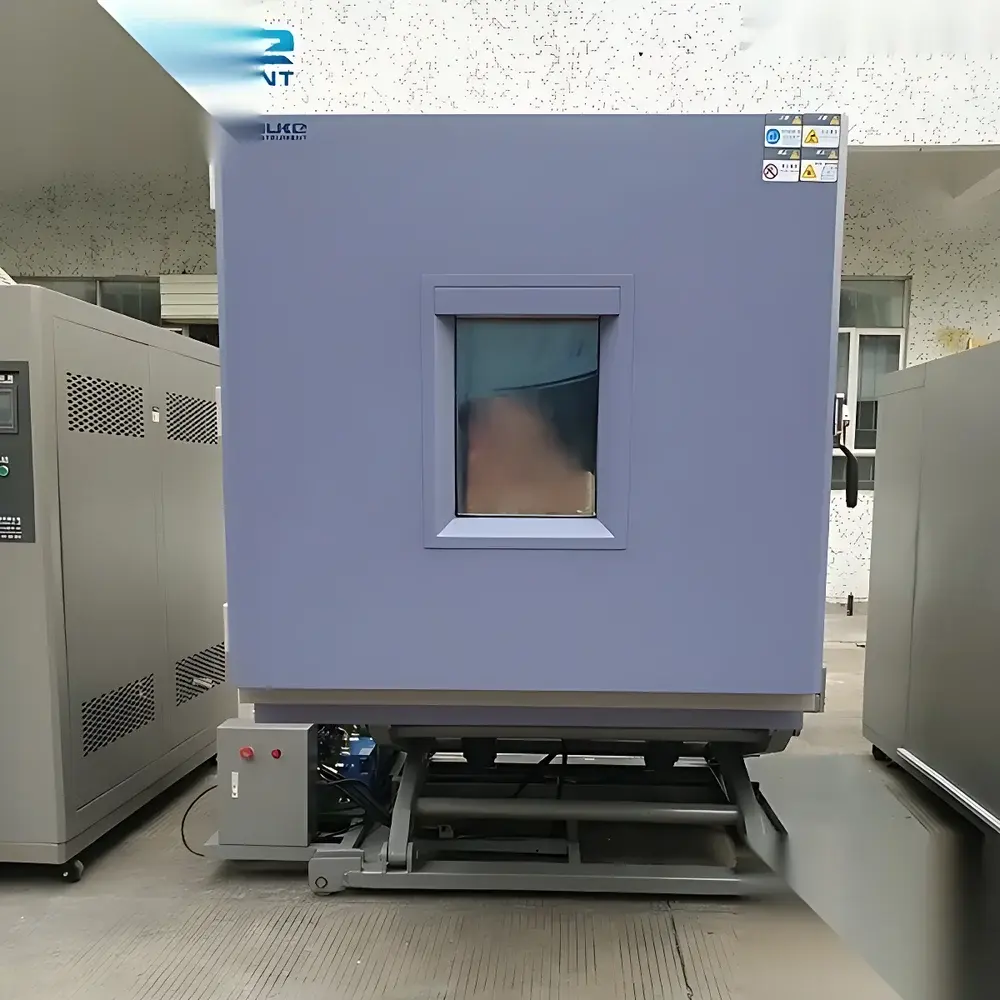
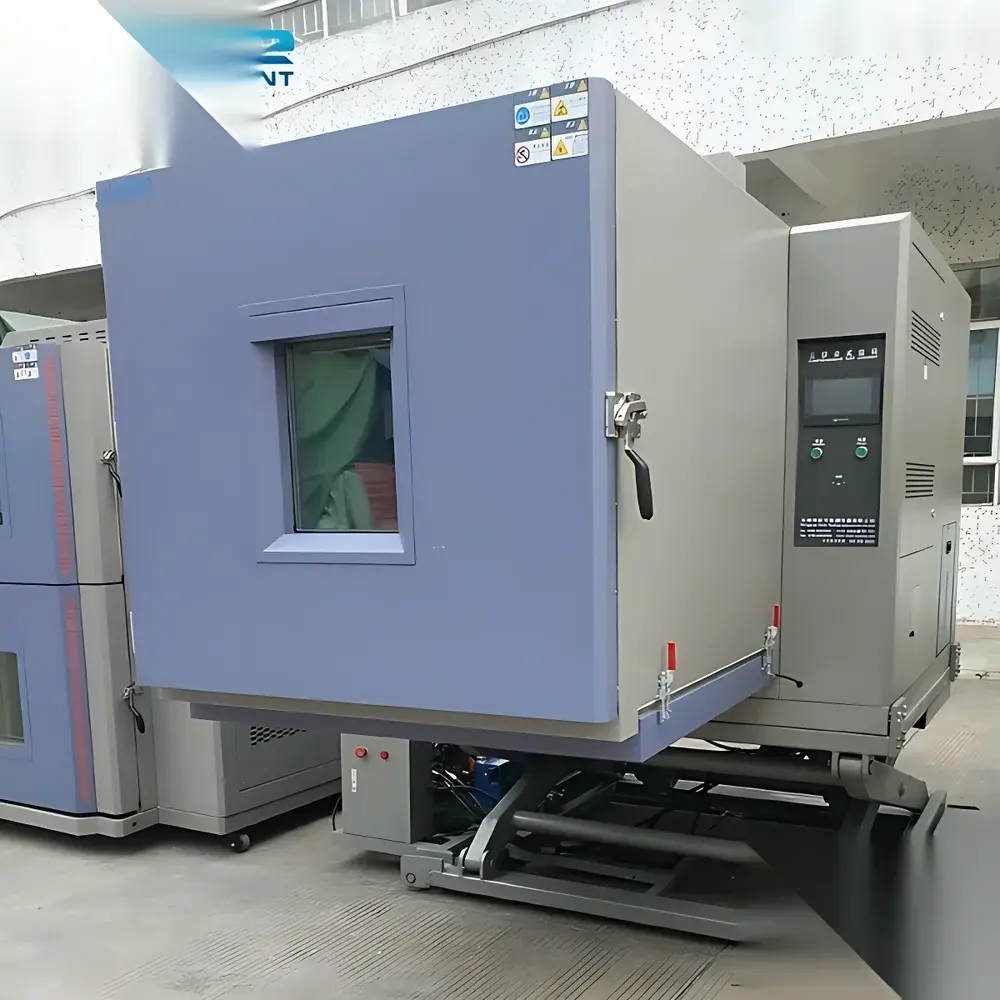
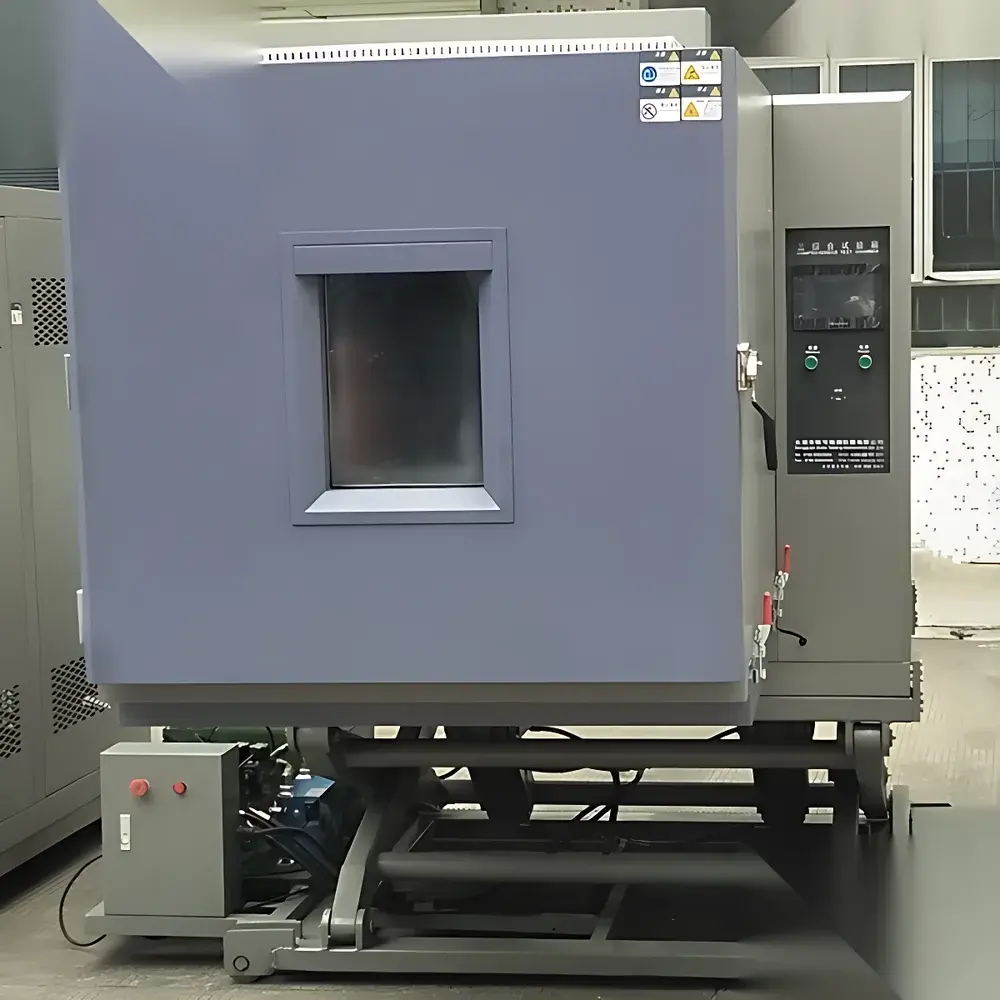
Combined Temperature-Humidity-Vibration Environmental Test System
| Brand | Custom OEM / Other Industrial Brands |
|---|---|
| Origin | Imported |
| Manufacturer Type | Authorized Distributor |
| Temperature Range | -70°C to +150°C |
| Humidity Range | 5%–98% RH (standard: 20%–98% RH) |
| Temperature Control Accuracy | ±0.5°C |
| Humidity Control Accuracy | ±2.5% RH |
| Temp. Uniformity | ±2.0°C |
| Humidity Uniformity | ±3.0% RH |
| Heating Rate | ~4.0°C/min |
| Cooling Rate | ~1.0°C/min |
| Vibration Interface | Integrated horizontal/vertical shaker mounting platform with sealed mechanical coupling |
| Construction | Inner chamber – SUS#304 stainless steel |
| Insulation | High-density polyurethane foam (CFC-free, temperature-resistant) |
| Cooling System | Air-cooled, single-stage compressor (to −20°C), dual-stage cascade compressor (to −70°C) |
| Safety Protections | Compressor overheat/overload protection, refrigerant high/low pressure cutoff, humidity/temperature over-limit alarms, fuse protection, water shortage detection, fault logging system |
| Controller | Touchscreen LCD interface (English/Chinese selectable), 100 programmable profiles × 1000 segments × 999 cycles, max segment duration 99h 59m, real-time curve display, RS-232/RS-485 serial communication, screen lock function, audit trail-ready data logging |
Overview
The Combined Temperature-Humidity-Vibration Environmental Test System is an integrated reliability validation platform engineered for accelerated stress testing of electronic assemblies, aerospace components, automotive ECUs, and industrial instrumentation under synchronized multi-stress conditions. It combines precise climatic control—governed by thermodynamic principles of vapor compression refrigeration and PID-controlled steam humidification—with mechanically coupled electrodynamic vibration excitation. This triaxial stress synergy enables simulation of real-world operational environments where thermal cycling, moisture ingress, and mechanical shock or resonance occur concurrently—critical for identifying latent defects in solder joints, conformal coatings, PCB laminates, and hermetic seals. Designed to meet the foundational requirements of MIL-STD-810H Method 514.7 (vibration), Method 502.7 (temperature), and Method 507.6 (humidity), the system supports qualification-level testing for products intended for deployment in harsh field conditions across defense, avionics, energy infrastructure, and telecommunications sectors.
Key Features
- Triple-stress synchronization: Independent yet coordinated control of temperature (−70°C to +150°C), relative humidity (5–98% RH), and broadband vibration (frequency range and displacement amplitude configurable per shaker specification)
- High-fidelity climate chamber: SUS#304 stainless steel inner chamber with double-wall construction, CFC-free polyurethane insulation (≥120 mm thickness), and dual-sealed observation window with conductive ITO film for EMI-shielded visual monitoring
- Modular vibration integration: Removable heavy-duty shaker table mounted on precision linear rails; sealed interface using alternating layers of epoxy resin and high-temperature silicone gasketing to maintain chamber integrity during dynamic operation
- Intelligent controller architecture: 7-inch capacitive touchscreen HMI with dual-language support (English/Chinese), embedded non-volatile memory for 100 test profiles (1000 segments, 999 loops), and real-time graphical trace of all controlled parameters
- Robust safety & diagnostics: Comprehensive hardware interlocks including refrigerant pressure transducers, PT100 temperature redundancy sensors, humidity sensor self-diagnostics, automatic shutdown on deviation exceeding preset thresholds, and event-logged fault history accessible via USB export
- Compliance-ready connectivity: Standard RS-232/RS-485 interfaces for SCADA integration, optional Ethernet module for remote monitoring, and controller firmware supporting time-stamped data export compatible with GLP/GMP audit trail requirements
Sample Compatibility & Compliance
The chamber accommodates test specimens up to 600 mm × 600 mm × 600 mm (W×D×H) with a maximum payload of 50 kg on the integrated vibration stage. Specimen access is facilitated via a front-opening door with anti-deformation torsion hinges and dual-layer high-elasticity silicone gasketing ensuring ≤0.5 Pa·m³/s leakage rate under differential pressure. Electrical feedthroughs include one 50 mm diameter cable port (IP54-rated) with removable blanking plate. The system complies with structural safety standards IEC 61000-6-2 (immunity) and IEC 61000-6-4 (emission), and its control software architecture aligns with FDA 21 CFR Part 11 principles for electronic records and signatures when paired with validated PC-based supervision tools. It supports test execution per ISO 16750-4 (road vehicles), JEDEC JESD22-A108 (temperature cycling), and IPC-9701 (performance qualification of solder interconnections).
Software & Data Management
While the embedded controller provides local test orchestration, optional PC-based software enables advanced test sequence design, multi-channel data acquisition (up to 16 analog inputs), and automated report generation in PDF/CSV formats. All logged data—including chamber temperature, humidity, vibration acceleration (m/s²), and system status flags—are timestamped with microsecond resolution and stored with cryptographic hash verification to ensure data integrity. Audit trails record operator login/logout events, profile modifications, manual overrides, and alarm acknowledgments—meeting GLP documentation rigor. Exported datasets are structured to integrate directly into statistical process control (SPC) platforms such as Minitab or JMP for Weibull analysis and failure mode correlation.
Applications
- Environmental stress screening (ESS) of printed circuit board assemblies prior to burn-in
- Design verification of battery management systems under combined thermal gradient and mechanical shock loading
- Qualification testing of MEMS sensors exposed to condensing humidity and resonant frequencies
- Reliability assessment of fiber-optic transceivers in telecom base stations operating at elevated ambient temperatures
- Failure analysis root cause identification for solder joint fatigue in automotive ADAS modules
- Validation of sealing performance for medical device enclosures subjected to sterilization-cycle mimicry
FAQ
Can this system perform vibration testing independently without temperature/humidity conditioning?
Yes—the vibration stage can be operated in isolation with the climate chamber held at ambient conditions or fully dehumidified and stabilized.
Is the controller firmware compliant with FDA 21 CFR Part 11 for regulated industries?
The embedded controller supports user authentication, electronic signatures, and audit-trail-enabled operations when used with validated external software; full Part 11 compliance requires site-specific IQ/OQ/PQ and documented SOPs.
What is the maximum allowable vibration frequency range when operating at −40°C?
Vibration performance is specified per shaker model; typical electrodynamic shakers retain full rated stroke and force output down to −30°C; operation below that requires derating per manufacturer’s environmental derating curves.
Does the system support custom humidity ramp profiles, such as rapid dry-out followed by saturation?
Yes—programmable humidity profiles allow arbitrary ramp rates, dwell times, and step transitions within the 5–98% RH operating envelope.
Are calibration certificates provided with the unit?
NIST-traceable calibration certificates for temperature and humidity sensors are available upon request as an optional add-on service; vibration transducer calibration must be performed separately by an accredited metrology lab.



