
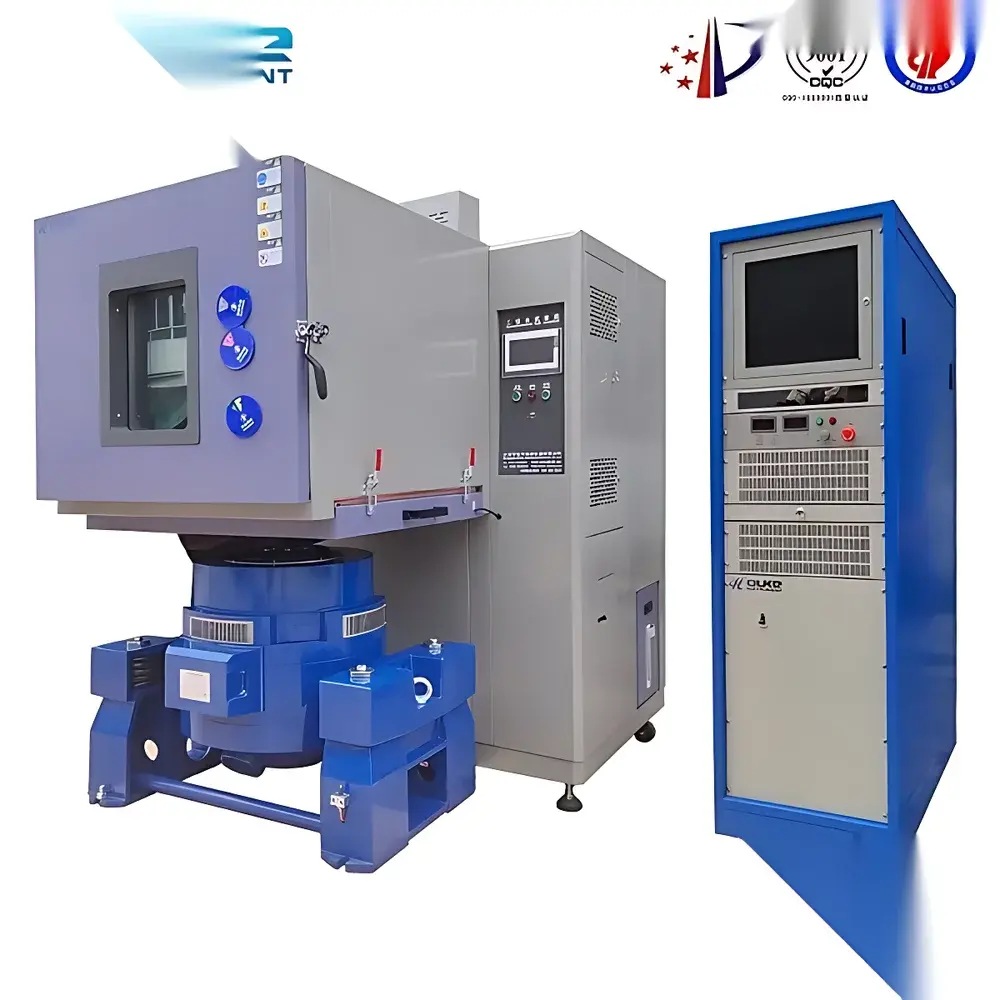
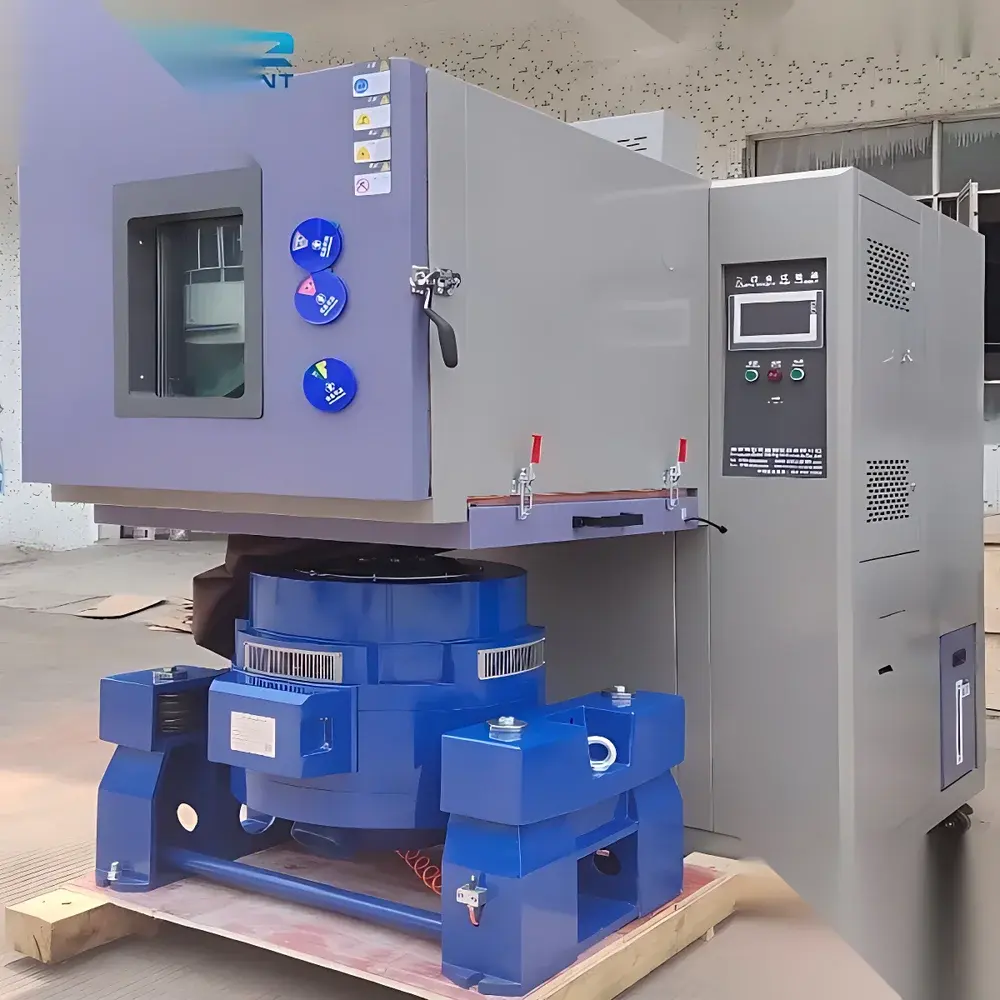
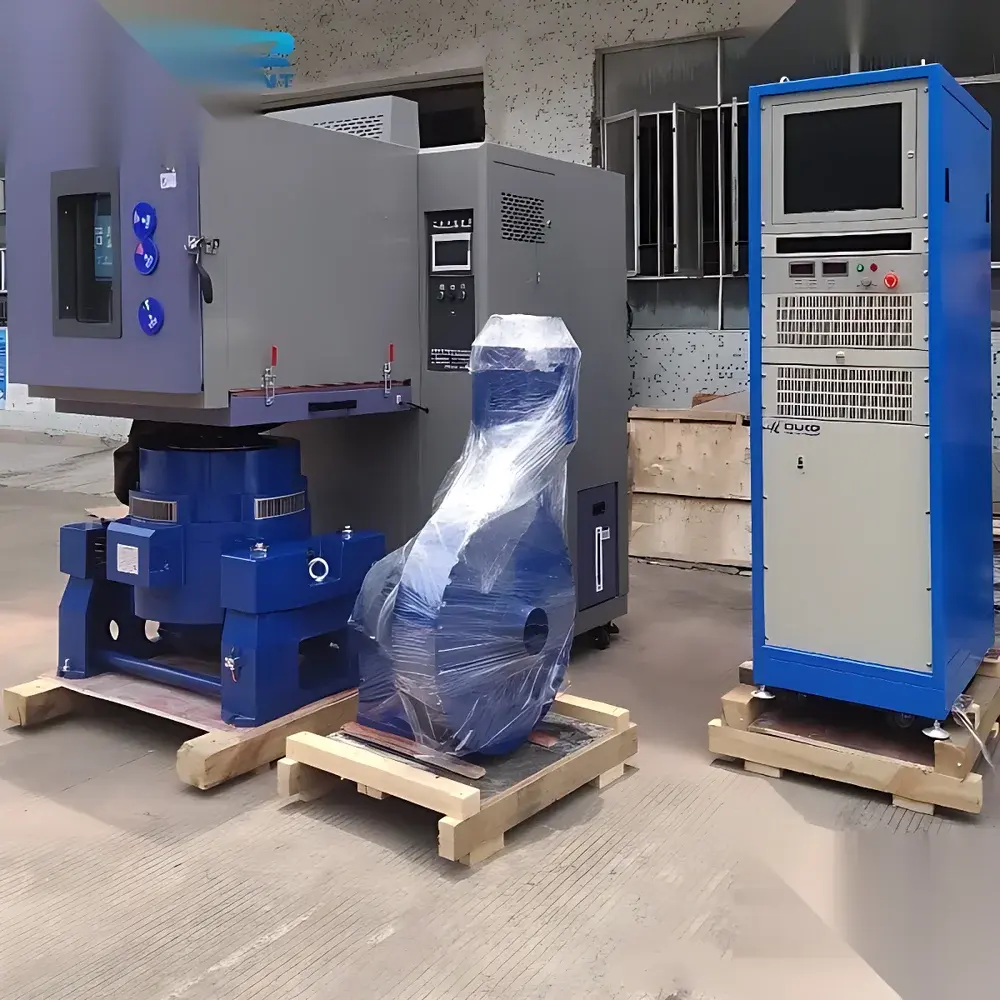
Combined Temperature-Humidity-Vibration Environmental Test System – OEM Manufacturer
| Key | Brand: Other brands |
|---|---|
| Origin | Imported |
| Manufacturer Type | Authorized Distributor |
| Price | USD 14,200 (FOB) |
| Compliance | GB/T 2423, GJB 150, IEC 60068 series |
| Control System | Siemens S7-1200 PLC + 10.1″ TFT Touch HMI |
| Vibration Interface | ISO 10816-compliant mechanical coupling |
| Refrigeration | Capillary tube-based auto-capacity modulation |
| Safety | Dual-stage overtemperature, compressor high/low pressure, phase loss, motor overload, door interlock, airflow monitoring |
Overview
The Combined Temperature-Humidity-Vibration Environmental Test System is an integrated reliability validation platform engineered for accelerated environmental stress screening (ESS) and qualification testing of electronic components, aerospace subsystems, automotive ECUs, and industrial control modules. It simultaneously subjects test specimens to controlled thermal cycling (–70 °C to +180 °C), relative humidity (10–98 % RH), and mechanically coupled vibration (sinusoidal or random, 5–2000 Hz, up to 60 gpeak), replicating real-world operational and logistical stresses in a single chamber. The system operates on the principle of combined stress interaction—where thermal expansion mismatch, moisture ingress under cyclic loading, and resonant amplification of structural defects are co-induced—to expose latent design weaknesses not detectable under single-stress conditions. Its architecture conforms to the physical test philosophy defined in MIL-STD-810H Method 520.5 (Combined Environments) and IEC 60068-2-68 (combined temperature/humidity/vibration), enabling deterministic failure mode analysis for HALT/HASS protocols.
Key Features
- Balance Temperature & Humidity Control (BTHC) system utilizing PID-regulated SSR outputs to precisely match heating/humidification energy input with chamber thermal/hygrometric losses—ensuring long-term stability (< ±0.3 °C, ±2 % RH) without drift.
- Capillary tube-based refrigeration with automatic capacity modulation—eliminating reliance on mechanical expansion valves and delivering faster, smoother ramp rates (≥3 °C/min cooling from +25 °C to –40 °C; ≥2 °C/min heating from –40 °C to +85 °C).
- Modular mechanical integration: vibration shaker mount interfaces comply with ISO 10816-3 surface flatness and bolt-hole pattern tolerances; dynamic isolation between chamber structure and shaker base minimizes cross-coupling and preserves vibration fidelity.
- Siemens S7-1200 PLC core controller with redundant watchdog timers, 10.1″ resistive touch HMI, and dual Ethernet ports—supporting both local operation and deterministic remote supervision via PROFINET or Modbus TCP.
- Comprehensive safety architecture: dual independent thermal cutoffs (chamber wall + air sensor), compressor high/low pressure switches, oil-level monitoring, three-phase imbalance detection, forced-airflow interlock, and electromechanical door latch verification.
- Optional redundant upper-level control: Windows-based supervisory software with audit trail logging compliant with FDA 21 CFR Part 11 (electronic signatures, operation history, change tracking), supporting GLP/GMP traceability requirements.
Sample Compatibility & Compliance
The chamber accommodates DUTs up to 600 mm × 600 mm × 600 mm (W×D×H) with maximum mass load of 50 kg on the vibration table interface. Internal stainless-steel construction (AISI 304) and double-glass observation window with anti-fog heater ensure compatibility with corrosive test environments and optical inspection needs. All thermal and humidity profiles adhere strictly to GB/T 2423.1 (cold), GB/T 2423.2 (dry heat), GB/T 2423.4 (cyclic damp heat), and GB/T 2423.10 (sinusoidal vibration). Vibration excitation meets GJB 150.16A (military) and ISO 16750-3 (automotive) spectral density requirements. Full compliance documentation—including calibration certificates traceable to NIM (China National Institute of Metrology) and uncertainty budgets—is provided with each system shipment.
Software & Data Management
The proprietary control software (v4.2) enables synchronized multi-parameter logging at 10 Hz resolution across all domains: chamber air temperature/humidity, shaker table acceleration (via IEPE input), DUT surface thermocouple readings (up to 8 channels), and refrigeration system pressures. Real-time trend graphs support overlay comparison of reference vs. actual profiles. Data export is available in CSV, TDMS, and XML formats compatible with MATLAB, Python (pandas), and JMP for statistical process control (SPC) and Weibull analysis. Audit logs record all operator actions, setpoint changes, alarm events, and calibration interventions—retained for ≥18 months with automatic rollover. Optional integration with LIMS platforms via RESTful API allows automated test report generation and electronic batch record linkage.
Applications
- Qualification of avionics enclosures per DO-160G Section 25 (combined temperature/vibration) and Section 26 (humidity/vibration).
- Automotive ECU validation against ISO 16750-4 (combined climatic and mechanical stress) during pre-production release.
- Accelerated life testing of PCBAs exposed to solder joint fatigue mechanisms under thermal-hygro-mechanical coupling.
- Reliability assessment of battery management systems (BMS) under cold-start + road-shock conditions per UL 2580 Annex C.
- Outgassing and condensation behavior analysis of optical assemblies during rapid thermal transients with concurrent vibratory loading.
- Design verification of hermetic seals and gasket materials subjected to simultaneous thermal cycling and resonant vibration.
FAQ
What vibration standards does this system support?
It fully implements sinusoidal sweep and fixed-frequency modes per GB/T 2423.10, GJB 150.16A, and ISO 10816-2. Random vibration profiles can be added via optional shaker controller upgrade (e.g., LDS V875 or TIRA TV 51120).
Can the system operate unattended for extended durations?
Yes—equipped with self-diagnostic routines, email/SMS alarm notification (via optional GSM module), and uninterruptible power supply (UPS) interface for graceful shutdown during grid failure.
Is third-party calibration included?
Factory calibration is performed using NIST-traceable references prior to shipment. On-site ISO/IEC 17025-certified calibration services are available upon request with documented uncertainty budgets.
How is data integrity ensured during network outages?
All measurement data is buffered locally on industrial-grade SSD storage (32 GB) and automatically synced to external servers once connectivity resumes—no data loss occurs.
Does the system support custom test sequence programming?
Yes—the HMI supports hierarchical test script creation (up to 999 steps), including conditional branching, dwell timing, and interlocked start/stop triggers based on sensor thresholds.
Related Products



