
Combined Temperature-Humidity-Vibration Test Chamber
| Key | Brand – Other Brands |
|---|
Overview
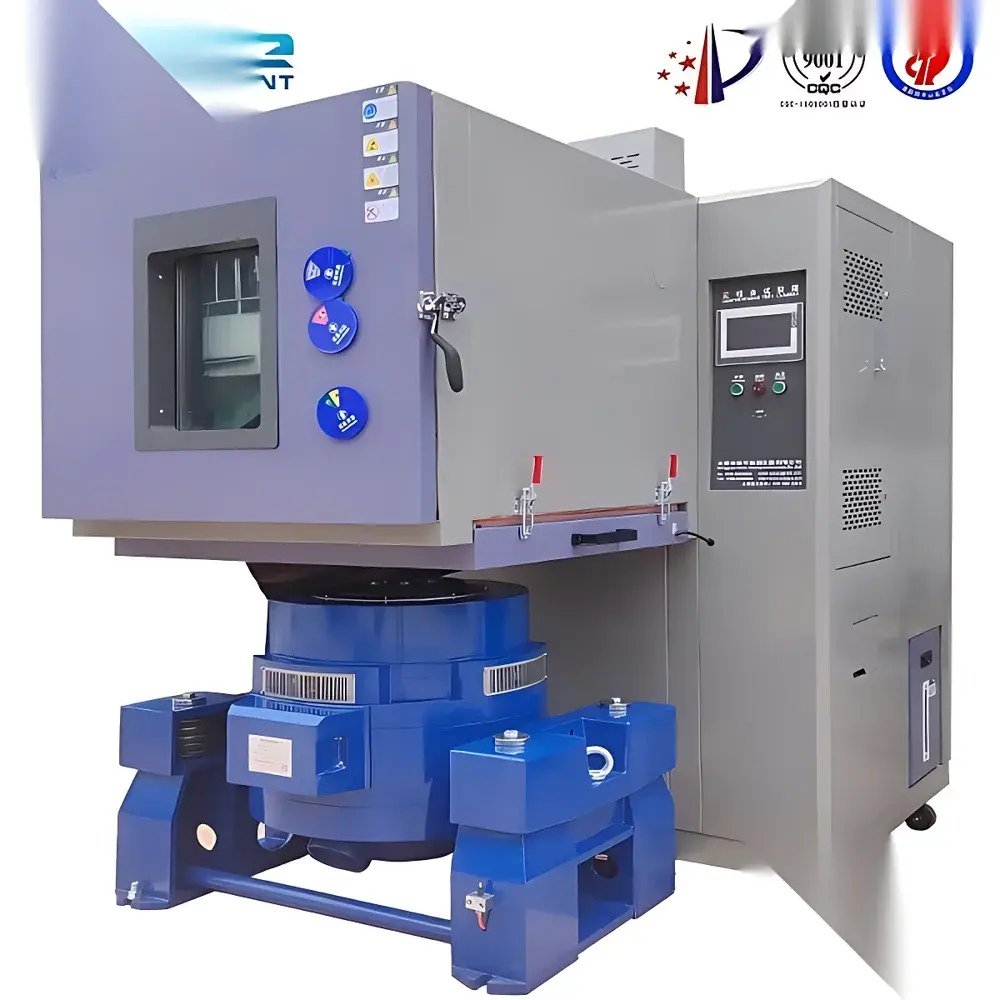
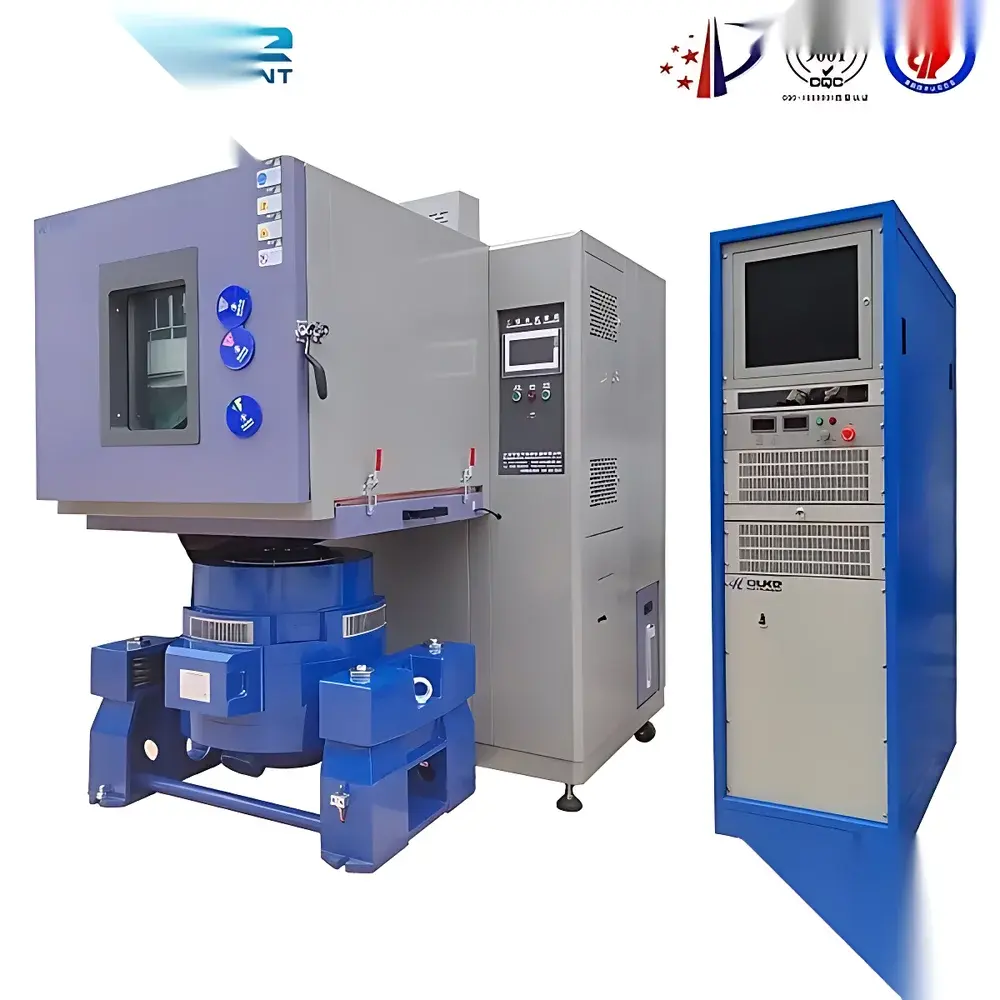
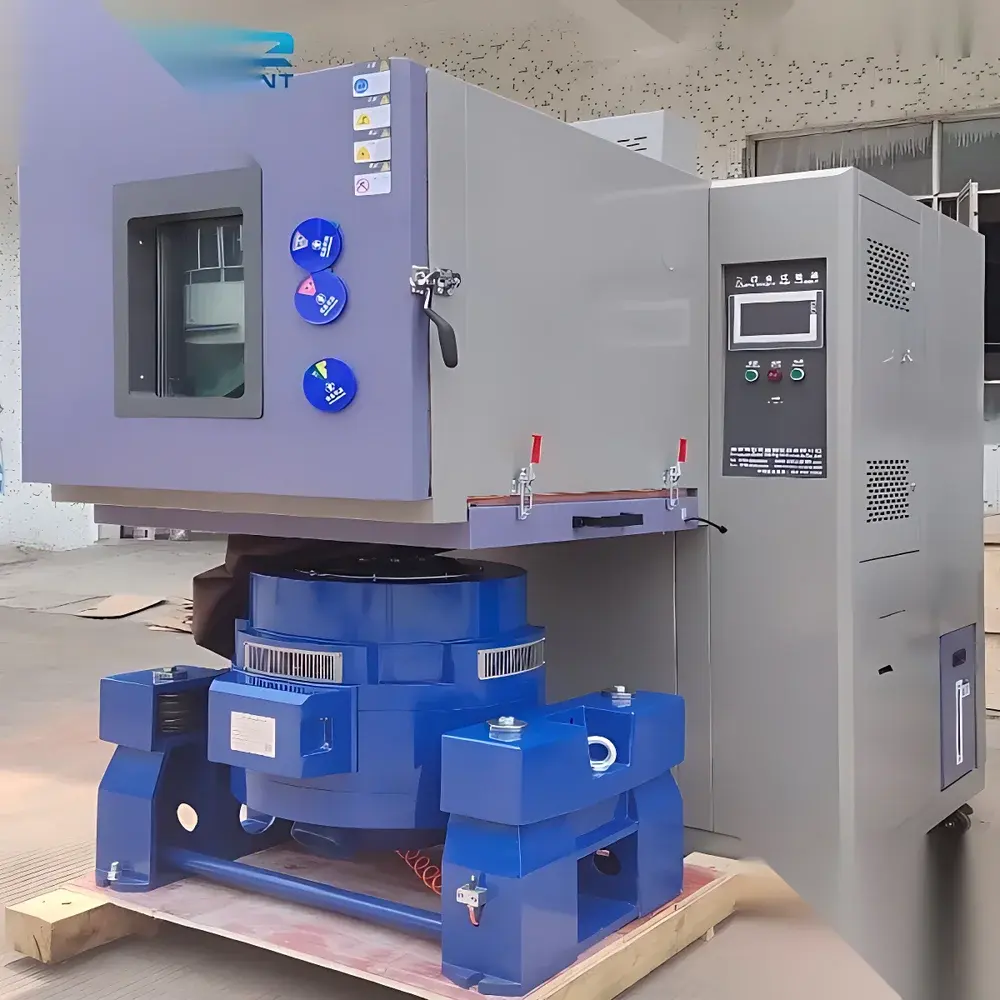
The Combined Temperature-Humidity-Vibration Test Chamber is an integrated environmental simulation system engineered for concurrent or sequential exposure of test specimens to controlled thermal, hygroscopic, and dynamic mechanical stress conditions. It operates on the principle of multi-stress synergy—simultaneously applying programmable temperature (-60 °C to +150 °C), relative humidity (10 % RH to 98 % RH), and triaxial vibration (X, Y, Z axes) within a single chamber or via synchronized external shaker tables. This architecture enables accelerated reliability testing per international standards such as IEC 60068-2-64 (vibration), IEC 60068-2-30 (damp heat cyclic), and MIL-STD-810H Method 514.7 (combined environments). The system is designed for laboratory-based qualification of electronic assemblies, automotive ECUs, aerospace components, and packaging materials where real-world field failure modes involve coupled thermal expansion, moisture ingress, and resonant mechanical fatigue.
Key Features
- Triaxial vibration capability: Independent or synchronized excitation across vertical (Y-axis, ±50 × 50 cm table surface) and horizontal (X- and Z-axes, each with dedicated 50 × 25 × 50 cm shaker body) directions.
- High-stability vibration platform: 6 mm-thick rigid aluminum table with 24 × M10 threaded mounting holes; optimized resonance profile ensures ±0.5 % stability improvement per 1 cm reduction in overall height.
- Programmable waveform generation: Selectable sine wave output (full-cycle or half-cycle) with independent configuration per axis—enabling asymmetric excitation profiles (e.g., full-wave vertical + half-wave horizontal).
- Fixed-frequency operation at 50 Hz line frequency, compliant with standard industrial power supply requirements and widely adopted in L-series test protocols.
- Maximum payload capacity: 100 kg distributed load, verified under combined thermal-humidity-vibration stress without derating.
- Modular configuration support: Optional add-ons include impact shakers (semi-manual drop-type), rotary shakers, swing-type exciters, and inline production-line vertical-only vibrators.
Sample Compatibility & Compliance
The chamber accommodates samples up to 100 kg with dimensional constraints aligned to standard ISO/IEC 17025-compliant test fixtures. Its control architecture supports traceable execution of 28 standardized test profiles—including those defined in JEDEC JESD22-B103 (mechanical shock), IPC-9701 (thermal cycling with vibration), and GB/T 2423.10–2019 (sinusoidal vibration). All firmware and controller logs maintain audit-ready timestamps and user authentication, supporting GLP/GMP-aligned validation documentation. While not pre-certified to FDA 21 CFR Part 11, the system’s data integrity framework—including write-protected event logs and non-editable test reports—facilitates compliance readiness when deployed in regulated QC/QA laboratories.
Software & Data Management
The embedded controller features a touchscreen HMI with intuitive profile sequencing, real-time parameter overlay (temperature, RH, acceleration, displacement), and dual-channel FFT analysis for in-situ resonance detection. Test data—including time-stamped sensor readings, alarm events, and actuator status—is exported in CSV and XML formats compatible with LabVIEW, MATLAB, and enterprise QMS platforms (e.g., TrackWise, MasterControl). Optional Ethernet/IP and Modbus TCP interfaces enable integration into centralized MES or SCADA environments. Firmware updates are delivered via secure USB import with SHA-256 signature verification to ensure configuration integrity.
Applications
- Electronics reliability screening: Solder joint fatigue assessment under thermally induced strain and vibratory shear.
- Automotive component validation: ECU housing integrity testing during cold-soak/hot-humid cycling with road-spectrum-equivalent vibration.
- Packaging performance evaluation: Corrugated box compression resistance and seal integrity under humidity-swelling + transport-vibration stress.
- Aerospace subsystem qualification: Connector retention force degradation analysis across temperature extremes while subjected to launch-profile sinusoidal sweeps.
- Medical device sterilization packaging: Validation of barrier film delamination risk during steam autoclave preconditioning followed by simulated shipping vibration.
FAQ
Does this system support random vibration profiles?
No—this model is configured exclusively for programmable sinusoidal excitation (full- or half-wave) at fixed 50 Hz. Random vibration requires optional upgrade to a digital signal processor (DSP)-based controller and electrodynamic shaker package.
Is humidity control available as a built-in function or only as an add-on?
Humidity control (10–98 % RH) is available as a factory-installed option; base configurations include only temperature and vibration subsystems. Humidity functionality requires dedicated steam generator, dehumidification coil, and RH sensor calibration certificate.
Can vibration and climate conditioning operate simultaneously without performance compromise?
Yes—the system’s thermal management and shaker isolation design ensure simultaneous operation at maximum rated conditions (-60 °C to +150 °C, 10–98 % RH, 100 kg load) with no specified derating per IEC 60068-2-64 Annex B.
What documentation is provided for IQ/OQ validation?
Standard delivery includes Factory Acceptance Test (FAT) report, calibration certificates for all primary sensors (Pt100, capacitive RH, piezoelectric accelerometer), electrical safety certification (IEC 61000-6-2/4), and a configurable URS template for user-defined validation protocols.



