
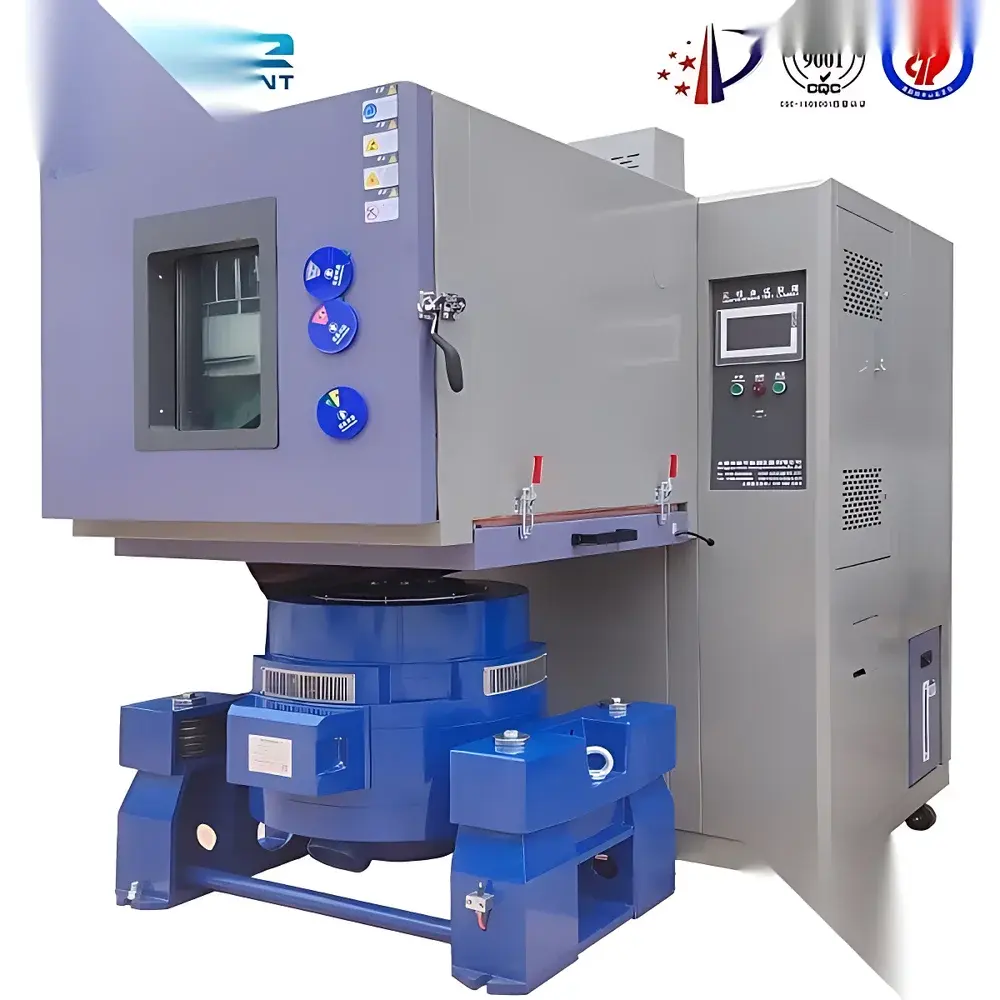
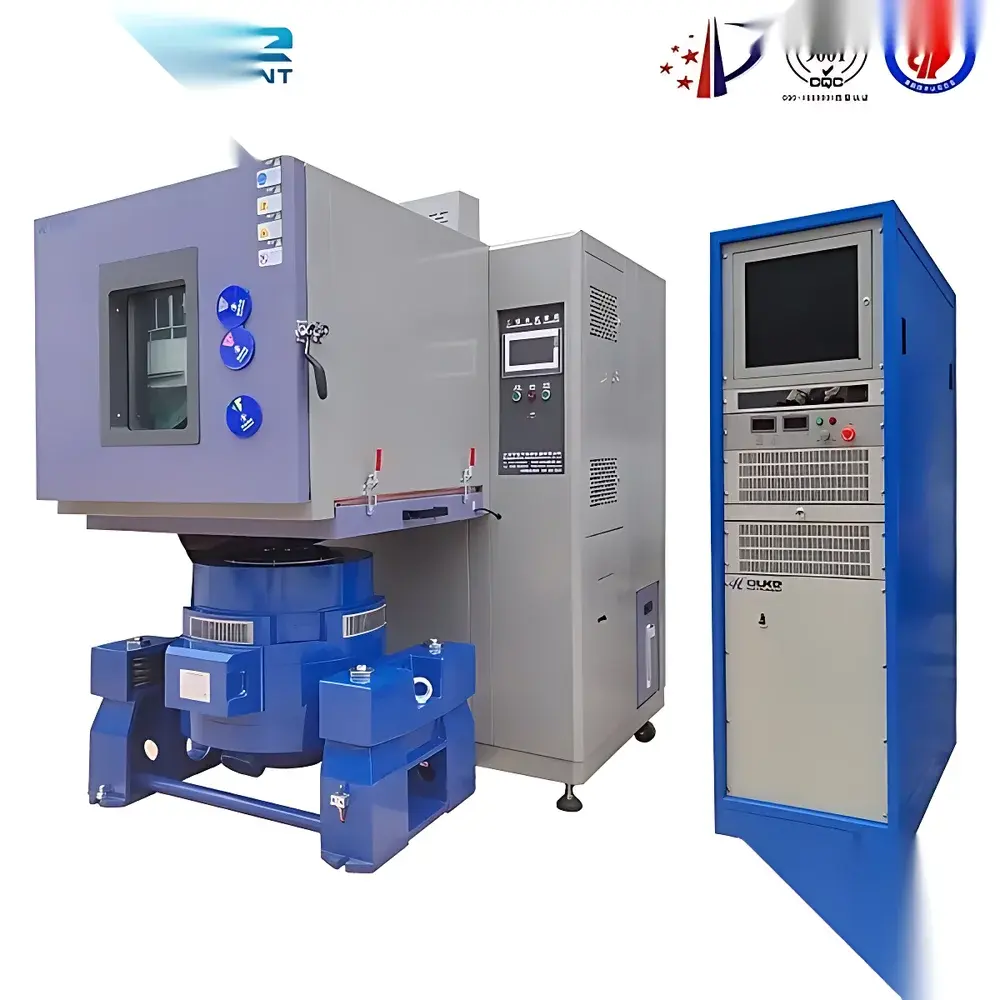
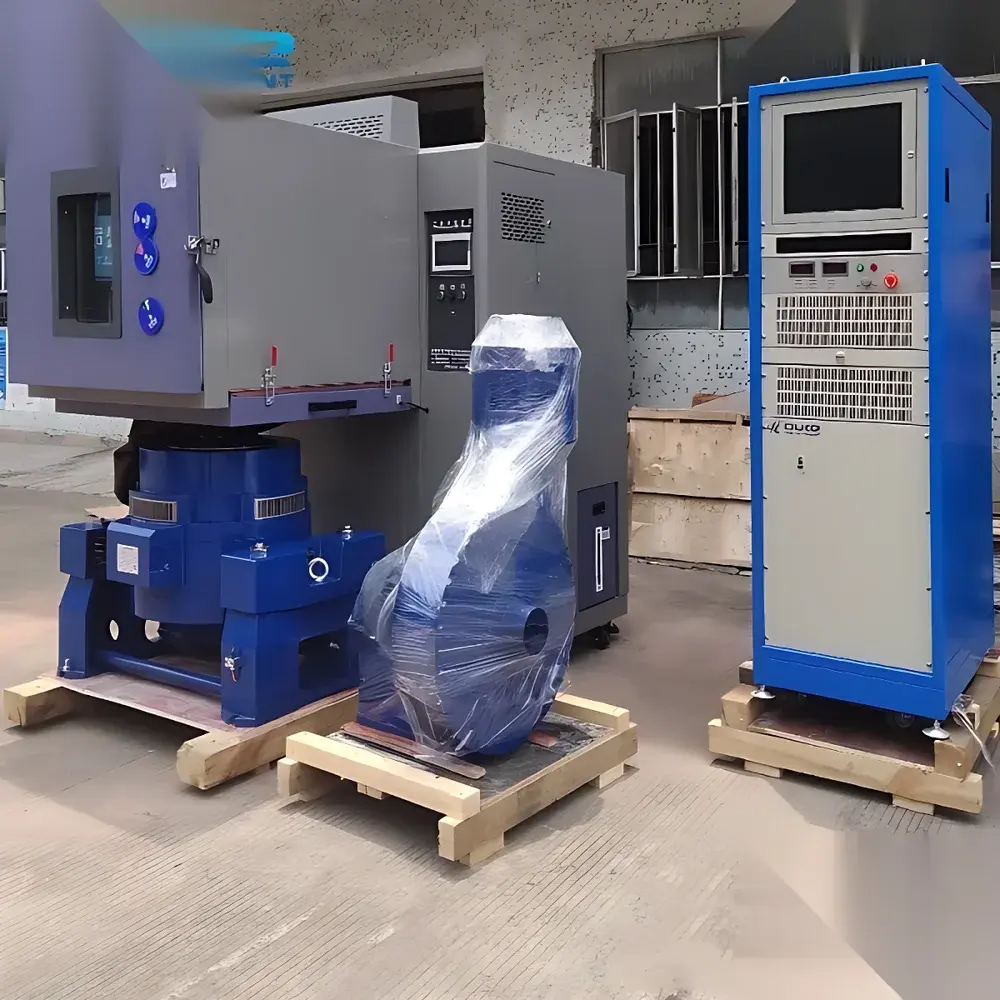
Combined Temperature-Humidity-Vibration Test Chamber – OK-ZTH Series by OEM Manufacturer
| Key | Temperature Range: -40°C to +100°C |
|---|---|
| Humidity Range | 30–98% RH |
| Temp. Uniformity | ≤±2°C |
| Temp. Fluctuation | ±0.5°C |
| Humidity Deviation | +2 to −3% RH |
| Ramp Rate | 0.5–1.2°C/min |
| Chamber Models | OK-ZTH-408 (60×85×80 cm), OK-ZTH-800 (100×100×80 cm), OK-ZTH-1000 (100×100×100 cm) |
| Safety Protections | Overload, Ground Fault, Overtemperature, Compressor High-Pressure, Motor Overload, Auto Power Cut-off with Audible Alert |
| Compliance | Designed per IEC 60068-2-1, IEC 60068-2-2, IEC 60068-2-14, ISO 16750-4, MIL-STD-810H (Temperature & Humidity Sections), and ASTM D4332 |
Overview
The OK-ZTH Series Combined Temperature-Humidity-Vibration Test Chamber is an engineered environmental simulation system designed for rigorous reliability validation of electronic components, automotive modules, aerospace subsystems, and industrial materials under concurrent thermal, hygroscopic, and mechanical stress conditions. Unlike sequential or single-stress test systems, this triaxial chamber integrates programmable climatic control (temperature and relative humidity) with electrodynamic vibration excitation—enabling real-time correlation of physical degradation mechanisms across multiple stress domains. The system operates on the principle of accelerated life testing (ALT), where synergistic stress interactions replicate field failure modes such as solder joint fatigue, polymer delamination, condensation-induced corrosion, and thermal expansion mismatch in multi-material assemblies. Its architecture conforms to the foundational test methodologies outlined in IEC 60068-2-1 (cold), IEC 60068-2-2 (dry heat), IEC 60068-2-14 (thermal shock), and ISO 16750-4 (road vehicle environmental conditions), supporting both qualification and conformance testing in R&D labs and QA/QC environments.
Key Features
- Triple-stress integration: Simultaneous control of temperature (−40°C to +100°C), humidity (30–98% RH), and broadband vibration (5–2000 Hz, up to 100 gpk, configurable per customer-specified shaker interface)
- Precision climatic performance: Temperature uniformity ≤±2°C across working volume; humidity deviation maintained within +2 to −3% RH at steady state; ramp rates programmable from 0.5 to 1.2°C/min with overshoot suppression
- Modular chamber configurations: Three standard internal volumes—OK-ZTH-408 (408 L), OK-ZTH-800 (800 L), and OK-ZTH-1000 (1000 L)—with stainless-steel 304 inner chamber, double-wall insulation, and anti-condensation heating trace
- Redundant safety architecture: Dual-stage overtemperature cutoff, compressor high-pressure switch, motor thermal overload relay, ground-fault circuit interrupter (GFCI), and automatic mains disconnection upon any fault condition with audible alarm and event logging
- Robust mechanical interface: Integrated flange-mounting for third-party electrodynamic shakers (e.g., LDS V875, TIRA TV 51120); vibration isolation base with adjustable leveling feet and seismic anchoring points
- Environmental installation compliance: Designed for operation within ambient conditions of 15–35°C, ≤85% RH non-condensing, minimal electromagnetic interference (<3 V/m), and stable floor loading ≥5 kN/m²
Sample Compatibility & Compliance
The OK-ZTH series accommodates samples ranging from PCB assemblies and ECUs to full-scale automotive lighting units and avionics enclosures. Standard sample mounting provisions include universal fixture plates (M6 threaded holes on 50 mm grid), load-bearing shelves rated to 50 kg uniformly distributed, and optional through-wall feedthroughs (electrical, pneumatic, optical). All models are constructed and validated to meet the mechanical and environmental requirements of IEC 60068-2-6 (vibration), IEC 60068-2-30 (damp heat cyclic), and MIL-STD-810H Method 502.7 (low temperature), Method 507.6 (humidity), and Method 514.7 (vibration). Electrical safety complies with IEC 61000-6-2 (immunity) and IEC 61000-6-4 (emissions). Documentation includes full Declaration of Conformity (DoC), traceable calibration certificates for internal sensors (NIST-traceable RTDs and capacitive RH sensors), and CE marking per EU Machinery Directive 2006/42/EC and EMC Directive 2014/30/EU.
Software & Data Management
Control and monitoring are executed via a Windows-based HMI platform featuring deterministic real-time scheduling, multi-channel data acquisition (up to 32 analog inputs), and synchronized timestamped logging at 10 Hz resolution. The software supports user-defined test profiles—including step, ramp-soak, cycling, and custom waveform-driven sequences—with built-in compliance checking against USP , FDA 21 CFR Part 11 (audit trail, electronic signature, role-based access), and ISO/IEC 17025 data integrity requirements. Export formats include CSV, MATLAB .mat, and PDF test reports with digital signatures. Firmware updates and protocol enhancements are provided free of charge throughout the product lifecycle, with version-controlled release notes and backward-compatible configuration migration tools.
Applications
This system is routinely deployed in component-level qualification per AEC-Q200, module-level validation for ADAS sensors under combined thermal-vibration stress, battery pack thermal runaway propagation studies, and reliability screening of medical device PCBs prior to ISO 13485 certification. It supports accelerated aging protocols for conformal coating adhesion assessment, solder interconnect lifetime modeling using Coffin-Manson and Norris-Landzberg correlations, and moisture diffusion analysis in encapsulated optoelectronics. In academic research, it serves as a platform for investigating hygrothermal-mechanical coupling in composite laminates and MEMS packaging integrity under thermo-mechanical cycling.
FAQ
What is the maximum allowable sample weight and dimensional envelope for each chamber model?
OK-ZTH-408 supports up to 30 kg; OK-ZTH-800 and OK-ZTH-1000 support up to 50 kg. Maximum sample height must remain below 75% of internal chamber height to ensure airflow uniformity and sensor representativeness.
Can the system be integrated with external data acquisition or PLC-based factory MES?
Yes—standard Modbus TCP and OPC UA interfaces are provided; optional IEEE 1588 PTP time synchronization enables microsecond-level cross-system event correlation.
Is vibration control limited to sine sweeps, or does it support random, transient, and synthesized road-load data?
Full spectrum capability is supported: sine, random (PSD), shock (half-sine, trapezoidal), and time-history playback—including imported MCD, ASAM MDF, or MATLAB MAT files.
What documentation is delivered with the system for regulatory audit readiness?
Final delivery includes IQ/OQ protocols, sensor calibration certificates, electrical schematics, spare parts list with OEM part numbers, maintenance logbook template, and GxP-compliant validation support package.
Are extended warranties or preventive maintenance contracts available?
Comprehensive 3-year on-site service agreements—including biannual thermographic inspection, humidity sensor recalibration, and vibration shaker alignment verification—are offered post-warranty period.



