


COMECAUSE IN-DK1 Portable Headspace Oxygen Analyzer
| Brand | COMECAUSE |
|---|---|
| Model | IN-DK1 |
| Type | Portable Headspace Gas Analyzer |
| Measurement Principle | Electrochemical O₂ Sensor (Primary), Optional NDIR CO₂ Sensor |
| Gas Targets | O₂ (0–30% vol), CO₂ (0–100% vol, optional) |
| Resolution | 0.01% vol |
| Accuracy | ±0.2% vol (O₂, 0–50%), ±2% (O₂, 50–100%) |
| Response Time | ≤15 s (O₂), ≤20 s (CO₂) |
| Sampling Volume | <5 mL (O₂), <15 mL (CO₂) |
| Pressure Range | 700–1500 mbar (abs.) |
| Calibration | Two-point (zero/span) |
| Data Storage | 2000 entries (circular buffer) |
| Interface | USB 2.0 |
| Power | Rechargeable 6800 mAh Li-ion battery |
| Operating Temperature | 0–40 °C |
| Dimensions | 180 × 106 × 80 mm |
| Weight | 450 g |
| Compliance | Designed per JJG 365–2008 (Chinese Metrological Verification Regulation for Electrochemical Oxygen Analyzers) |
Overview
The COMECAUSE IN-DK1 Portable Headspace Oxygen Analyzer is a handheld, field-deployable instrument engineered for rapid, non-destructive quantification of residual oxygen (O₂) in sealed headspace environments—such as flexible pouches, rigid containers, vials, and aseptic packaging. It operates on the electrochemical sensing principle for O₂ detection, delivering trace-level sensitivity and high reproducibility in ambient-pressure or mildly sub-atmospheric headspace conditions. An optional integrated non-dispersive infrared (NDIR) sensor enables simultaneous CO₂ measurement, supporting dual-gas analysis for modified atmosphere packaging (MAP) validation. The device complies with the metrological requirements outlined in JJG 365–2008, ensuring traceability to national standards for electrochemical oxygen analyzers. Its compact architecture, built-in pressure transducer, and pump-assisted sampling system allow direct penetration and real-time gas extraction from intact packages—eliminating the need for destructive sampling or external gas handling infrastructure.
Key Features
- True handheld form factor (450 g) with ergonomic single-hand operation—optimized for line-side QC checks, warehouse audits, and lab-based method development.
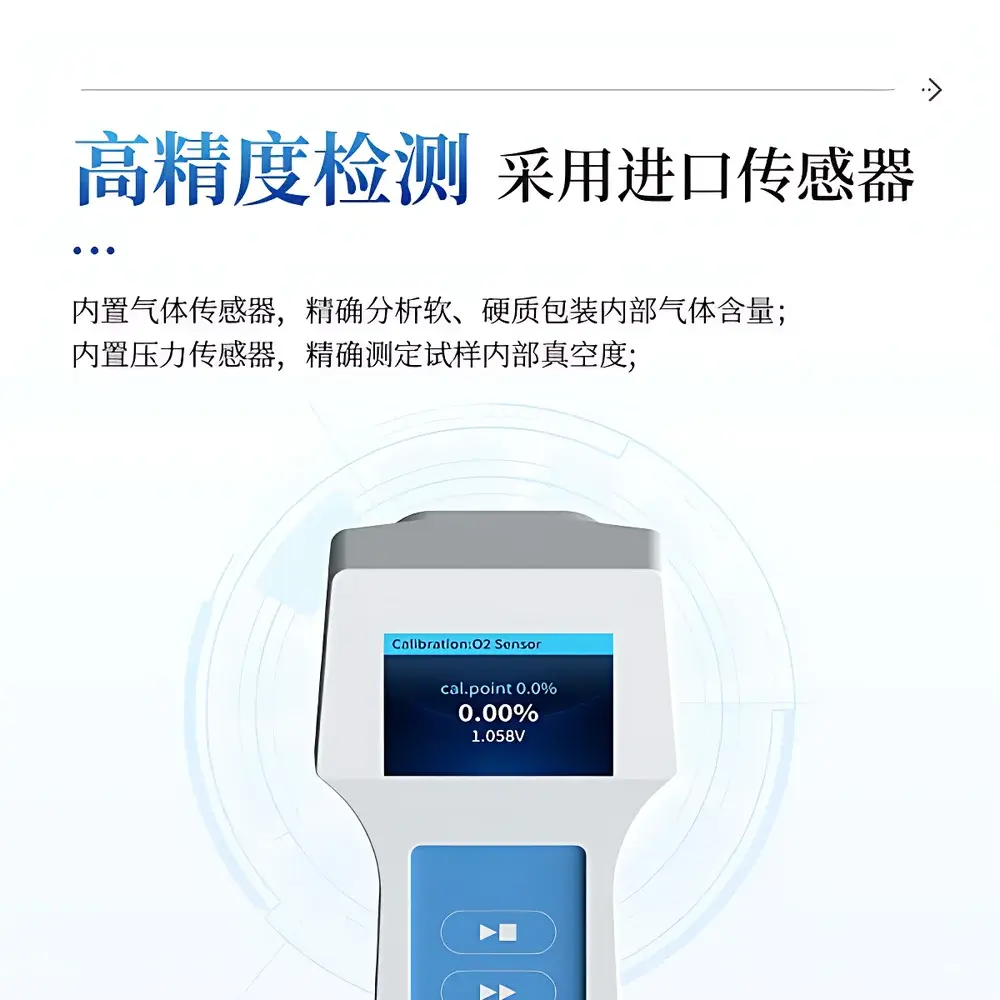
- Integrated electrochemical O₂ sensor (global OEM-sourced) and optional NDIR CO₂ module—both calibrated to certified reference gases and validated across full dynamic range.
- Onboard absolute pressure sensor (700–1500 mbar abs.) enables automatic compensation for altitude-induced barometric variation and vacuum-sealed package evaluation.
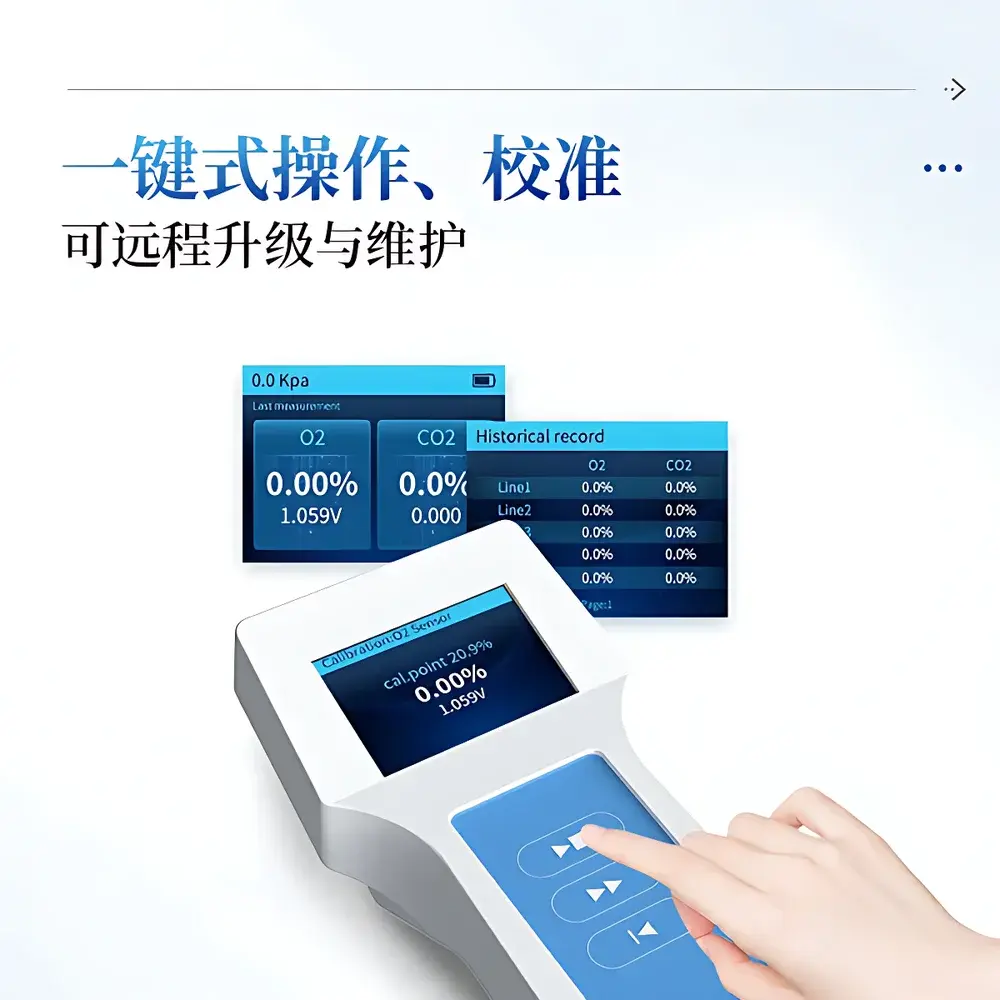
- One-touch calibration workflow with zero/span two-point procedure—supporting user-initiated recalibration using certified air (20.9% O₂) and nitrogen (0% O₂) standards.
- Intuitive graphical interface with dual-language support (English/Chinese), auto-backlight, and tactile feedback—designed for glove-compatible operation in production environments.
- Robust data integrity architecture: automatic timestamping, circular storage of 2000 test records, USB mass-storage mode for CSV export, and power-loss recovery with EEPROM-backed memory retention.
- Long-duration field operation enabled by 6800 mAh Li-ion battery—rated for ≥12 hours continuous use at 25 °C and ≥500 charge cycles with minimal capacity degradation.
Sample Compatibility & Compliance
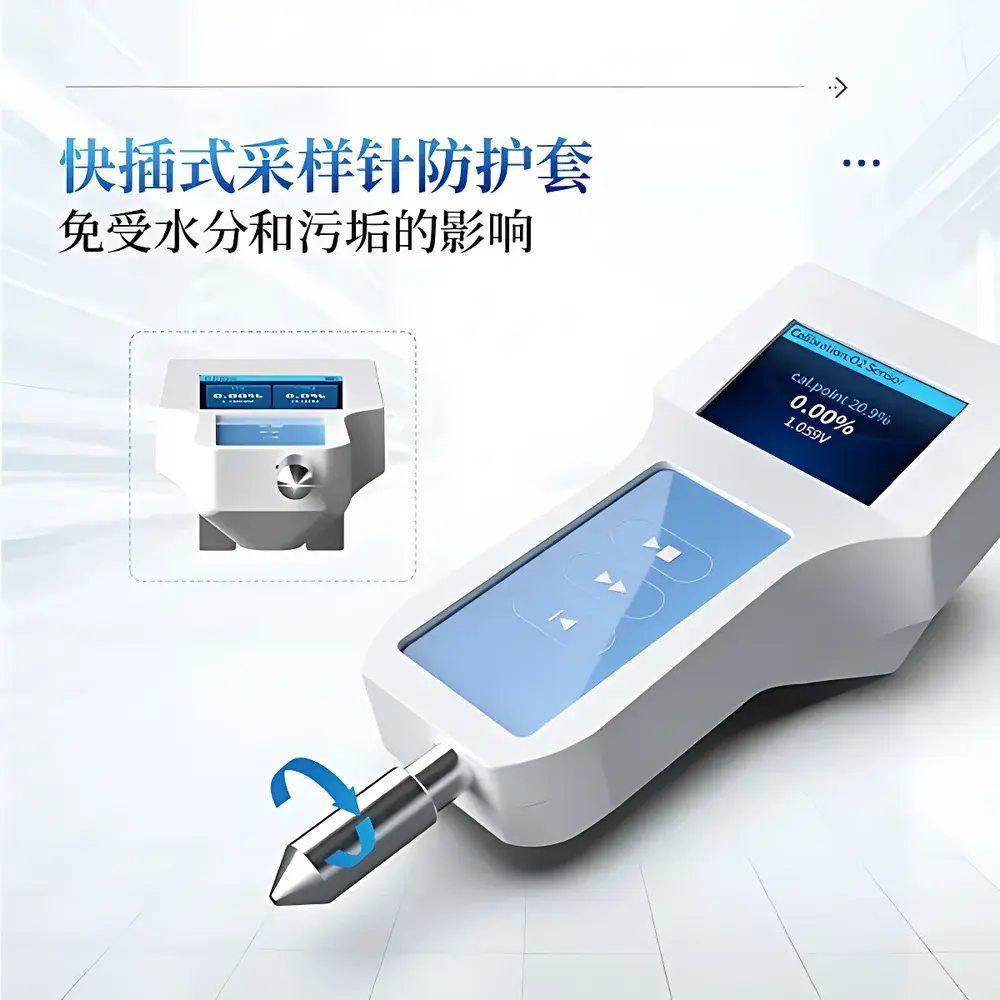
The IN-DK1 accommodates a broad spectrum of commercial packaging formats without modification: laminated foil pouches, PET/PE trays, aluminum cans, glass jars, Tetra Pak® cartons, and pharmaceutical-grade ampoules. Its 1.2 mm stainless-steel sampling needle—with quick-release protective sleeve—ensures sterile, low-leakage penetration into soft and semi-rigid barriers. All measurements adhere to principles defined in ISO 11671:2020 (Plastics — Determination of oxygen transmission rate), ASTM F2622 (Standard Test Method for Oxygen Transmission Rate Through Plastic Film Using a Modulated Infrared Sensor), and USP (Packaging Integrity Evaluation). While not FDA 21 CFR Part 11–certified out-of-the-box, audit trails, user access logs, and electronic signature readiness can be implemented via optional firmware extension for GMP/GLP-regulated environments.
Software & Data Management
Data acquisition and reporting are managed through embedded firmware—not reliant on PC software. Each stored record includes: date/time stamp, O₂ (and CO₂, if equipped) concentration, internal package pressure, ambient temperature, operator ID (optional), and pass/fail flag based on user-defined thresholds. USB connectivity supports drag-and-drop export to standard spreadsheet applications; no proprietary drivers required. Firmware updates are delivered via signed binary files over USB—verified for cryptographic integrity prior to installation. Future versions will include Bluetooth LE telemetry for integration with MES/SCADA systems (under development).
Applications
- Quality assurance of nitrogen-flushed snack bags, coffee pouches, and infant formula containers—verifying O₂ levels ≤0.5% vol to prevent lipid oxidation.
- In-process verification of MAP parameters in ready-to-eat meal trays (e.g., 70% N₂ / 30% CO₂)—ensuring microbial inhibition and shelf-life stability.
- Stability testing of lyophilized biologics in sealed vials—monitoring headspace O₂ ingress during accelerated aging studies per ICH Q1A(R2).
- Regulatory compliance documentation for pharmaceutical secondary packaging—supporting Annex 1 (EU GMP) and WHO TRS 961 Annex 10 requirements for container closure integrity.
- Root cause analysis of premature spoilage events—correlating headspace composition shifts with batch-specific sealing parameters (heat seal temperature, dwell time, vacuum level).
FAQ
What is the recommended calibration frequency?
For routine QC use, calibrate before each shift using certified zero (N₂) and span (air) gases. For GLP/GMP applications, perform daily calibration verification with a third reference gas (e.g., 1.0% O₂ in N₂) and document all deviations.
Can the IN-DK1 measure gases other than O₂ and CO₂?
No. The sensor stack is fixed to O₂ (electrochemical) and optionally CO₂ (NDIR). Cross-sensitivity to CO, H₂S, or SO₂ is negligible per sensor datasheet specifications.
Is the sampling needle compatible with sterile pharmaceutical vials?
Yes—the 1.2 mm needle meets ISO 8536-5 requirements for rubber stopper penetration and leaves no visible residue when used with halobutyl stoppers.
Does the device require external vacuum or purge gas?
No. Integrated micro-diaphragm pump provides sufficient suction (<5 mL draw volume) for representative sampling without altering headspace equilibrium.
How is measurement uncertainty quantified?
Total expanded uncertainty (k=2) is ±0.35% vol for O₂ (0–5% range) and ±0.6% vol (5–30% range), derived from sensor accuracy, pressure compensation error, and repeatability testing per ISO/IEC 17025:2017 Annex A.
Related Products





