


COMECAUSE IN-DK3 Portable Headspace Oxygen and CO₂ Analyzer
| Brand | COMECAUSE |
|---|---|
| Model | IN-DK3 |
| Type | Portable Headspace Gas Analyzer |
| Measurement Principle | Electrochemical (O₂) & Non-Dispersive Infrared (NDIR, CO₂) |
| Gas Targets | O₂ (0–30% vol), CO₂ (0–100% vol) |
| Resolution | 0.01% vol for both |
| Accuracy | ±0.2% vol (O₂, 0–50%) |
| Response Time | ≤15 s (O₂), ≤20 s (CO₂) |
| Sample Volume | <5 mL (O₂), <15 mL (CO₂) |
| Sampling Method | Integrated diaphragm pump with needle probe |
| Calibration | Two-point (zero/span) using certified gases |
| Pressure Range | 700–1500 mbar (abs.) |
| Data Storage | 2000 records (circular buffer) |
| Interface | USB 2.0 |
| Battery | 6800 mAh Li-ion, >12 h continuous operation |
| Operating Temperature | 0–40 °C |
| Dimensions | 180 × 106 × 80 mm |
| Weight | 450 g |
| Compliance | Designed per JJG 365–2008 (Chinese metrological verification regulation for electrochemical oxygen analyzers) |
| Language Support | Switchable English/Chinese UI |
Overview
The COMECAUSE IN-DK3 is a handheld, field-deployable headspace gas analyzer engineered for precise quantification of residual oxygen (O₂) and carbon dioxide (CO₂) concentrations in sealed packaging environments. It operates on dual-sensor architecture: an electrochemical cell for trace-level O₂ detection (0–30% vol) and a non-dispersive infrared (NDIR) sensor for broad-range CO₂ measurement (0–100% vol). Unlike benchtop GC-based headspace systems, the IN-DK3 delivers real-time, in-situ analysis without sample transfer or carrier gas dependency—making it ideal for rapid quality assurance at line-side, warehouse, or R&D lab settings. Its design aligns with core principles of package integrity verification: minimizing headspace sampling volume (<5 mL for O₂; <15 mL for CO₂), maintaining absolute pressure awareness (700–1500 mbar abs.), and delivering metrologically traceable results consistent with JJG 365–2008—the national verification regulation governing electrochemical oxygen analyzers in China. While not certified to ISO/IEC 17025, its sensor calibration protocol supports GLP-aligned documentation when used with certified span/zero gases.
Key Features
- True portable form factor: 450 g mass and ergonomic single-hand grip enable extended use during production audits or cold-chain inspections.
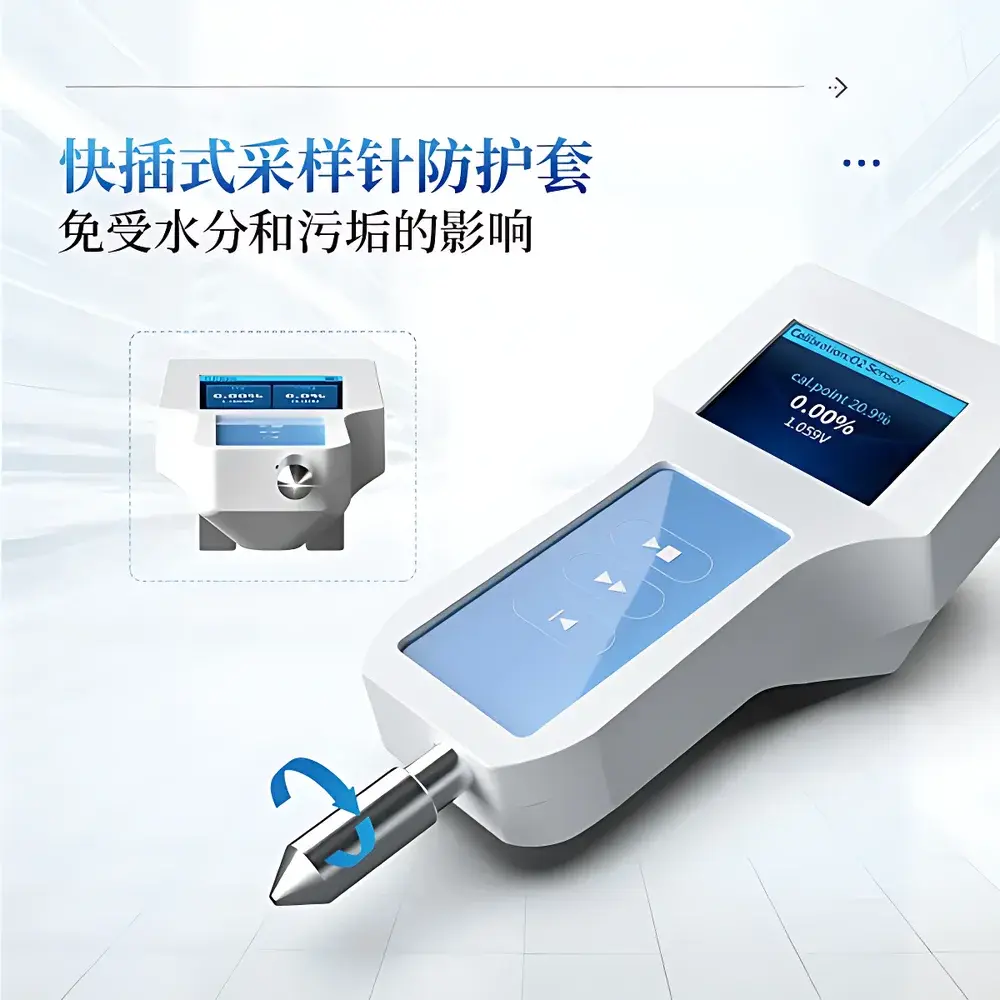
- Integrated sampling system: Stainless-steel quick-connect needle probe with protective sleeve ensures safe, repeatable puncture of flexible and rigid packaging (e.g., pouches, cans, vials, Tetra Pak).
- Dual independent sensing: Electrochemical O₂ sensor (2-year typical service life in ambient air) and NDIR CO₂ sensor (>15-year expected lifetime) minimize cross-interference and drift.
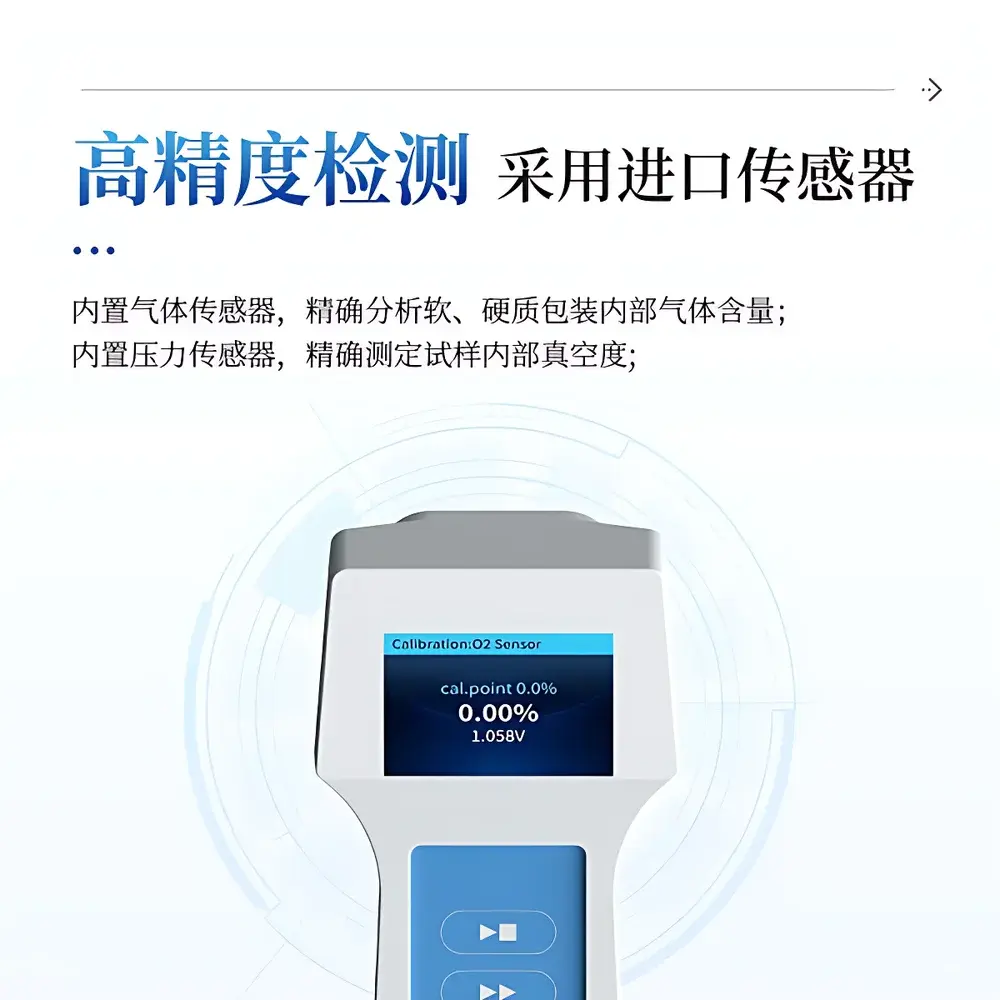
- Onboard pressure transducer: Measures internal headspace absolute pressure in real time—critical for normalizing gas concentration readings across varying fill conditions and altitudes.
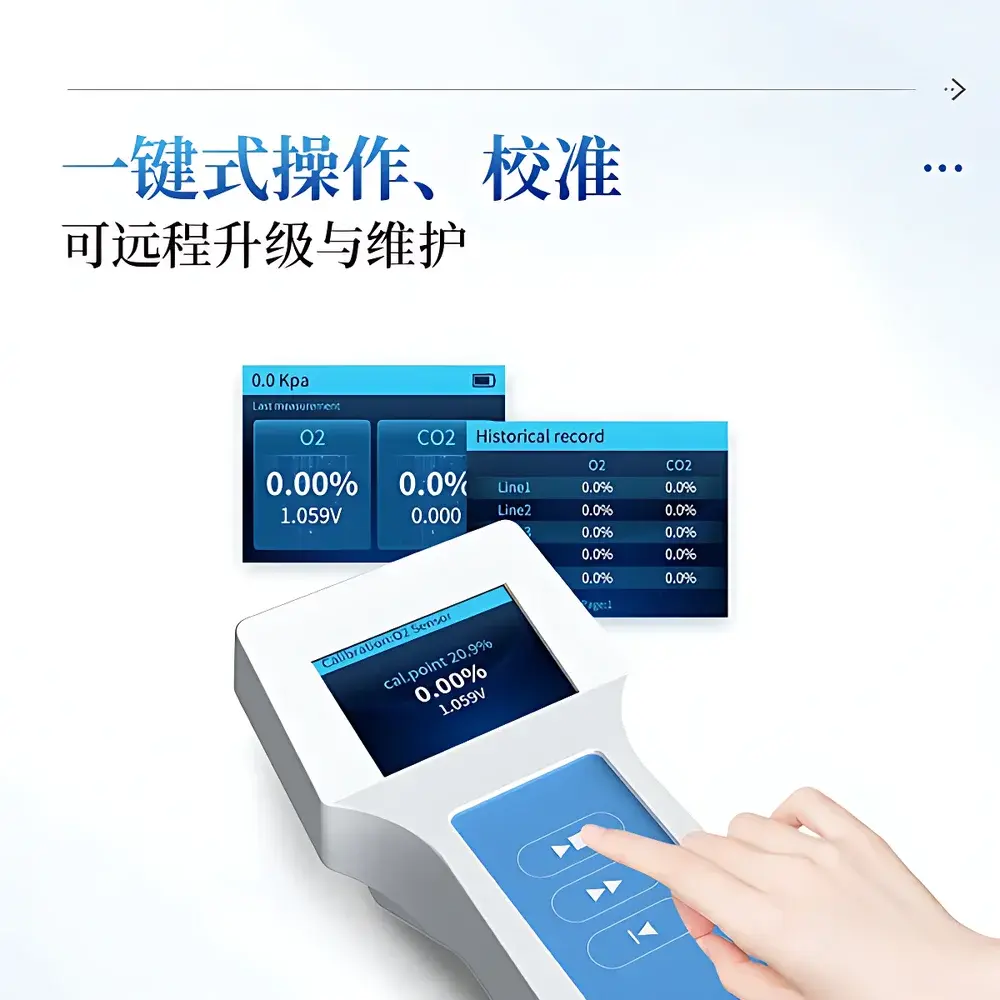
- Intuitive embedded interface: Graphical LCD with one-touch calibration, auto-zero, and data review functions; language toggle (English/Chinese) supports multinational QA teams.
- Robust data governance: 2000-cycle circular memory with timestamped entries; USB 2.0 export enables CSV-compatible integration into LIMS or statistical process control (SPC) platforms.
- Extended operational autonomy: 6800 mAh rechargeable lithium-ion battery sustains >12 hours of continuous testing under typical sampling frequency (1 test/90 s).
Sample Compatibility & Compliance
The IN-DK3 accommodates a wide range of commercial packaging formats without modification: laminated foil pouches (coffee,奶粉, cheese), metal/aluminum cans (ready-to-eat meals, infant formula), plastic bottles (carbonated beverages), cartons (UHT milk), and pharmaceutical primary containers (glass ampoules, vials). Its low-volume draw (<15 mL total) prevents package collapse or artificial gas redistribution—preserving representative composition. Although developed against JJG 365–2008, its measurement methodology is functionally compatible with internationally recognized standards including ASTM F2476 (standard test method for oxygen transmission rate of plastic film), ISO 11665-2 (radiation protection — radon measurements — part 2: integrated measurement), and USP <1207> (packaging integrity evaluation). For regulated pharmaceutical or food manufacturing, users should validate instrument performance per their internal SOPs and document calibration against NIST-traceable gas standards.
Software & Data Management
No external software installation is required. All configuration, calibration, and data retrieval occur via the onboard menu system. Calibration employs two-point methodology: zero gas (nitrogen or argon) and span gas (certified O₂/CO₂ mixtures at known concentrations). Each calibration event logs date, operator ID (manual entry), and gas lot numbers—supporting audit readiness under FDA 21 CFR Part 11 if paired with controlled access procedures. Exported USB files contain raw values (O₂ %, CO₂ %, pressure mbar, temperature °C), test ID, and UTC timestamp. No cloud connectivity or remote telemetry is implemented—ensuring data sovereignty and compliance with ITAR- or GDPR-sensitive environments.
Applications
- Food & beverage: Monitoring modified atmosphere packaging (MAP) efficacy for shelf-life prediction—e.g., verifying <1.0% O₂ in coffee pouches or confirming CO₂ retention in carbonated drink cans.
- Pharmaceuticals: Assessing headspace composition in lyophilized vials and ampoules to prevent oxidation of sensitive biologics or APIs.
- Industrial packaging QA: Validating nitrogen flush efficiency in electronics packaging or inert-gas blanketing in chemical drum storage.
- Supply chain verification: Conducting unannounced spot checks at distribution centers to confirm transport-induced seal failure or permeation-related O₂ ingress.
- R&D prototyping: Rapid iteration of new barrier films or closure designs by correlating headspace gas profiles with accelerated aging outcomes.
FAQ
Does the IN-DK3 require daily calibration?
No. Two-point calibration is recommended before first use, after sensor replacement, or when accuracy verification is mandated by internal QA protocols—typically every 30–90 days depending on usage intensity.
Can it measure nitrogen (N₂) directly?
No. N₂ is inferred by difference: N₂ (%) = 100% − O₂ (%) − CO₂ (%), assuming no other significant gases are present. This method is valid for standard MAP applications where O₂ and CO₂ dominate.
Is the probe compatible with glass ampoules?
Yes. The included 0.8 mm stainless-steel needle and adjustable depth stop allow controlled penetration of thin-walled ampoules without fragmentation or excessive headspace disturbance.
What maintenance does the electrochemical O₂ sensor require?
The sensor consumes electrolyte over time and requires replacement approximately every 24 months under normal ambient-air exposure; CO₂ NDIR sensor requires no consumables.
Does it meet FDA 21 CFR Part 11 requirements?
The device itself is not Part 11-certified, but its audit trail features (calibration logs, timestamps, operator input fields) support implementation within a validated electronic record system when governed by appropriate procedural controls.
Related Products





