
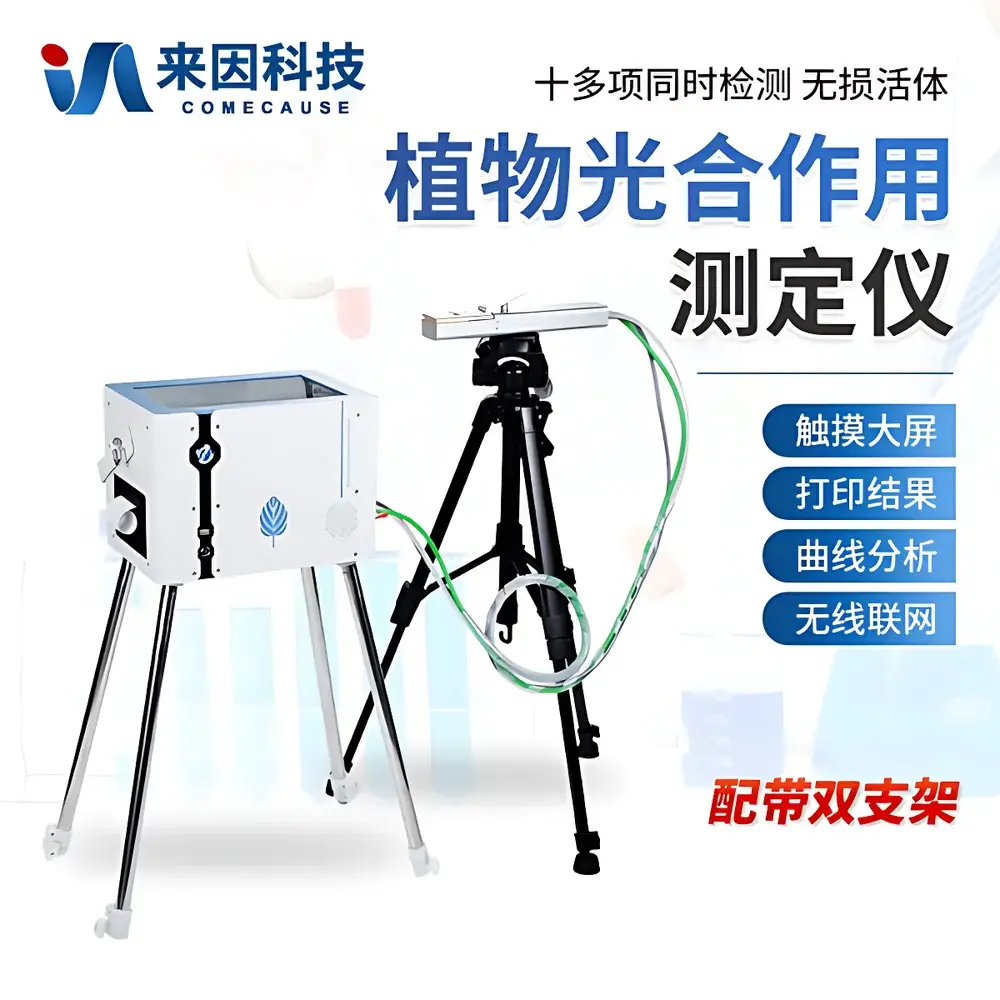
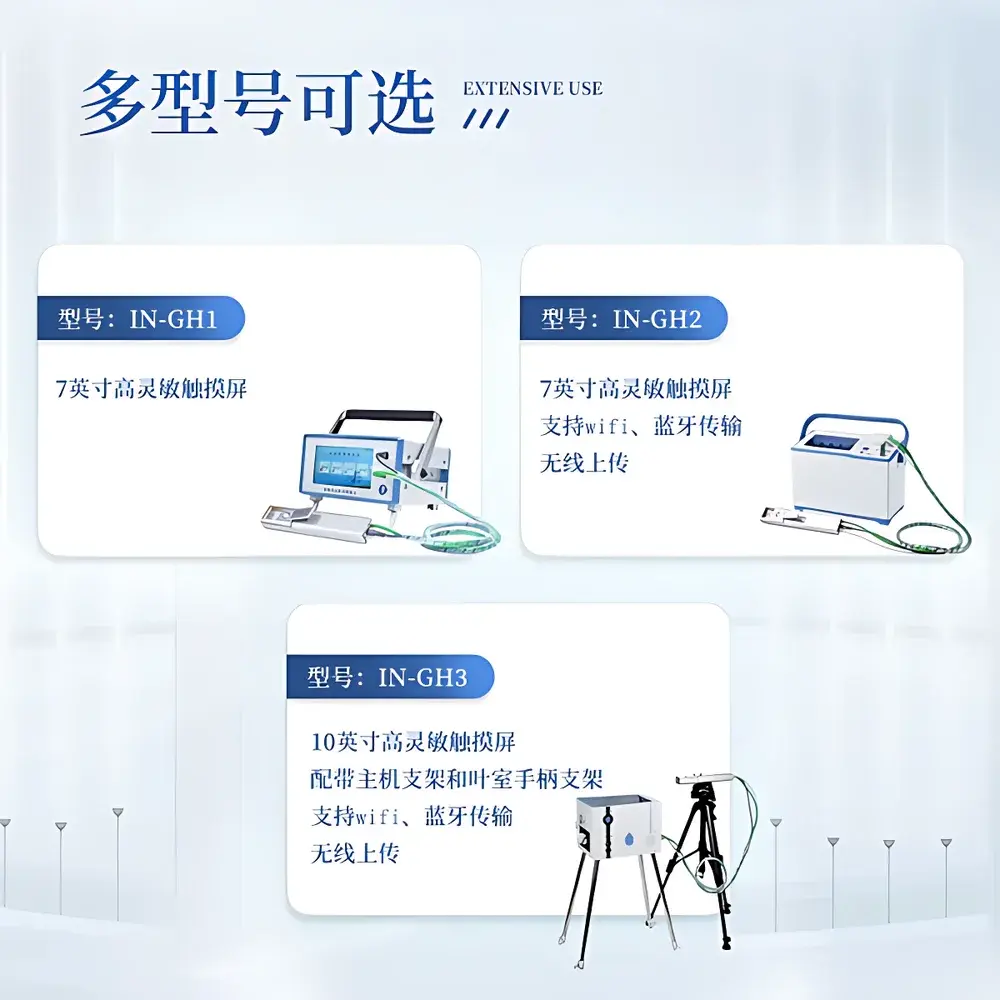
COMECAUSE IN-GH3 Portable Photosynthesis & Stomatal Conductance Analyzer
| Brand | COMECAUSE |
|---|---|
| Origin | Shandong, China |
| Manufacturer Type | Direct Manufacturer |
| Model | IN-GH3 |
| CO₂ Measurement Range | 0–3000 µmol/mol (ppm) |
| CO₂ Accuracy | ≤3% FS |
| Operating Temperature Range | 0–50 °C |
| PAR Range | 0–3000 µmol/(m²·s) |
| Battery Life | 10–12 h (field use) |
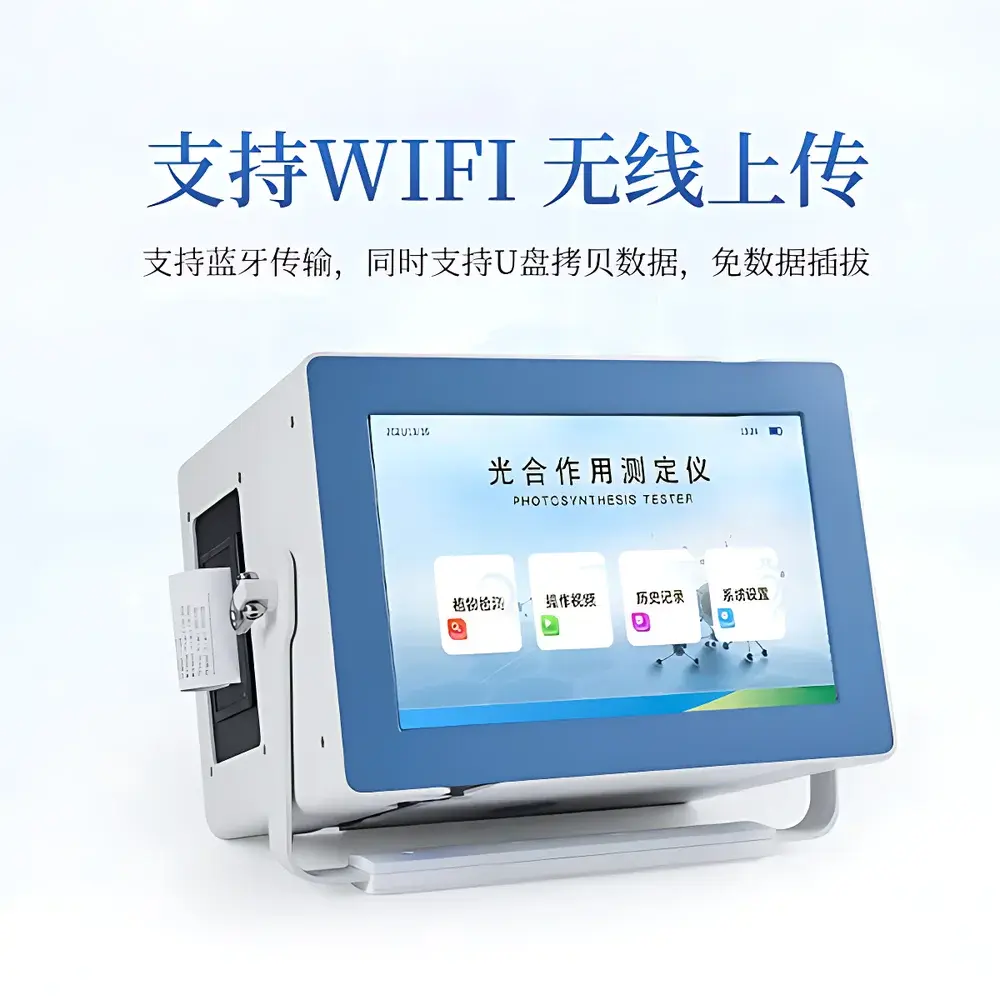
| Display | 10-inch capacitive touchscreen |
| Data Connectivity | Wi-Fi, Bluetooth, USB, cloud platform integration |
Overview
The COMECAUSE IN-GH3 Portable Photosynthesis & Stomatal Conductance Analyzer is a field-deployable, closed-system infrared gas analyzer (IRGA)-based instrument engineered for real-time, in situ measurement of leaf-level photosynthetic gas exchange. It operates on the principle of non-dispersive infrared (NDIR) spectroscopy to quantify CO₂ concentration differentials across a leaf chamber, enabling calculation of net photosynthetic rate (Pn), stomatal conductance (Gs), transpiration rate (Tr), intercellular CO₂ concentration (Ci), and intrinsic water-use efficiency (WUE). Integrated environmental sensors simultaneously monitor ambient and leaf chamber temperature, relative humidity, atmospheric pressure, and photosynthetically active radiation (PAR; 400–700 nm), ensuring physiologically relevant contextualization of gas exchange data. Designed for robustness in variable outdoor conditions—from open-field plots to greenhouse and growth chamber environments—the IN-GH3 supports both short-term physiological snapshots and longitudinal monitoring under controlled or natural light regimes.
Key Features
- High-Fidelity NDIR CO₂ Sensing: Dual-wavelength infrared CO₂ analyzer with integrated temperature compensation and barometric pressure correction, minimizing drift and improving long-term stability (≤3% full-scale error).
- Comprehensive Parameter Output: Simultaneously calculates and logs 15 biophysically coupled parameters—including Pn, Gs, Tr, Ci, WUE, Rd (dark respiration), TR (transpiration ratio), leaf temperature, chamber humidity, and PAR—without requiring post-hoc calibration or manual derivation.
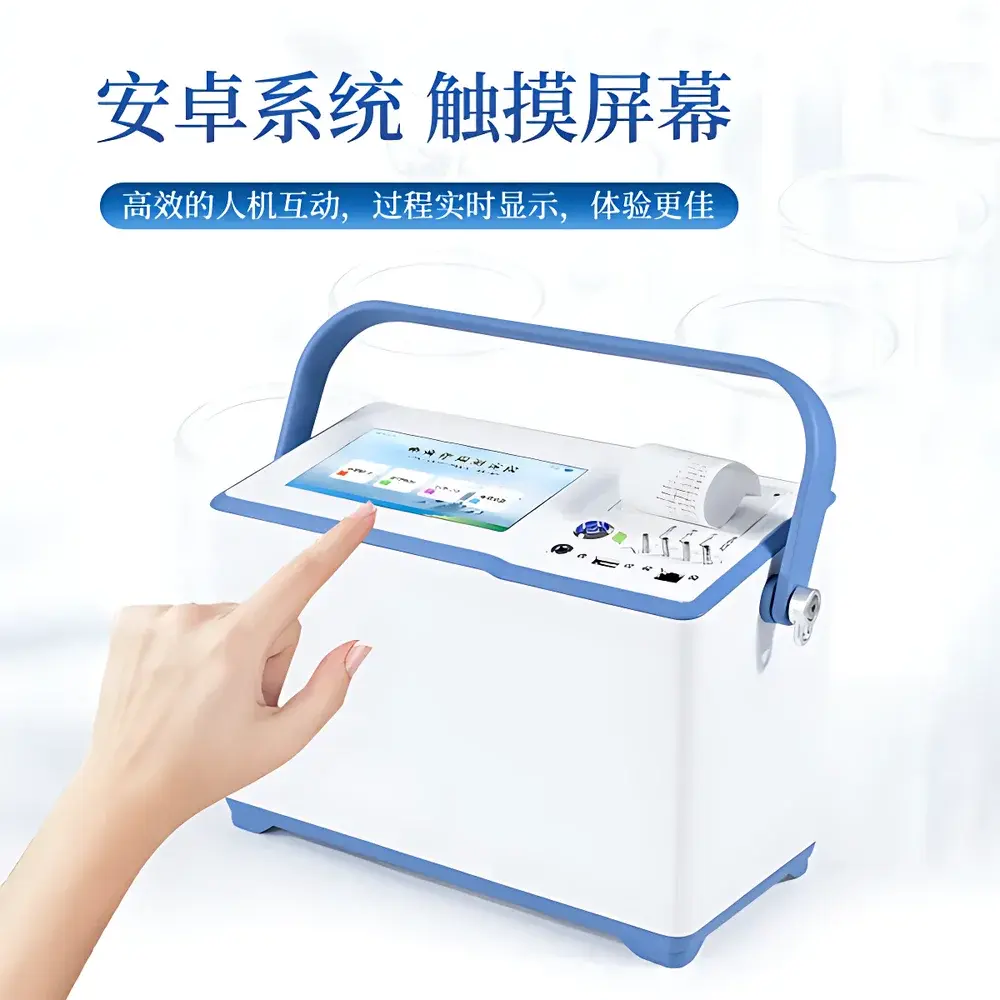
- Embedded Android OS Platform: Powered by ARM Cortex-A7 quad-core processor (RK3288, 1.88 GHz), 1 GB RAM, and 16 GB onboard storage; enables responsive touchscreen interface, real-time graphical visualization (e.g., Pn vs. PAR curves, Tr vs. humidity plots), and on-device data annotation.
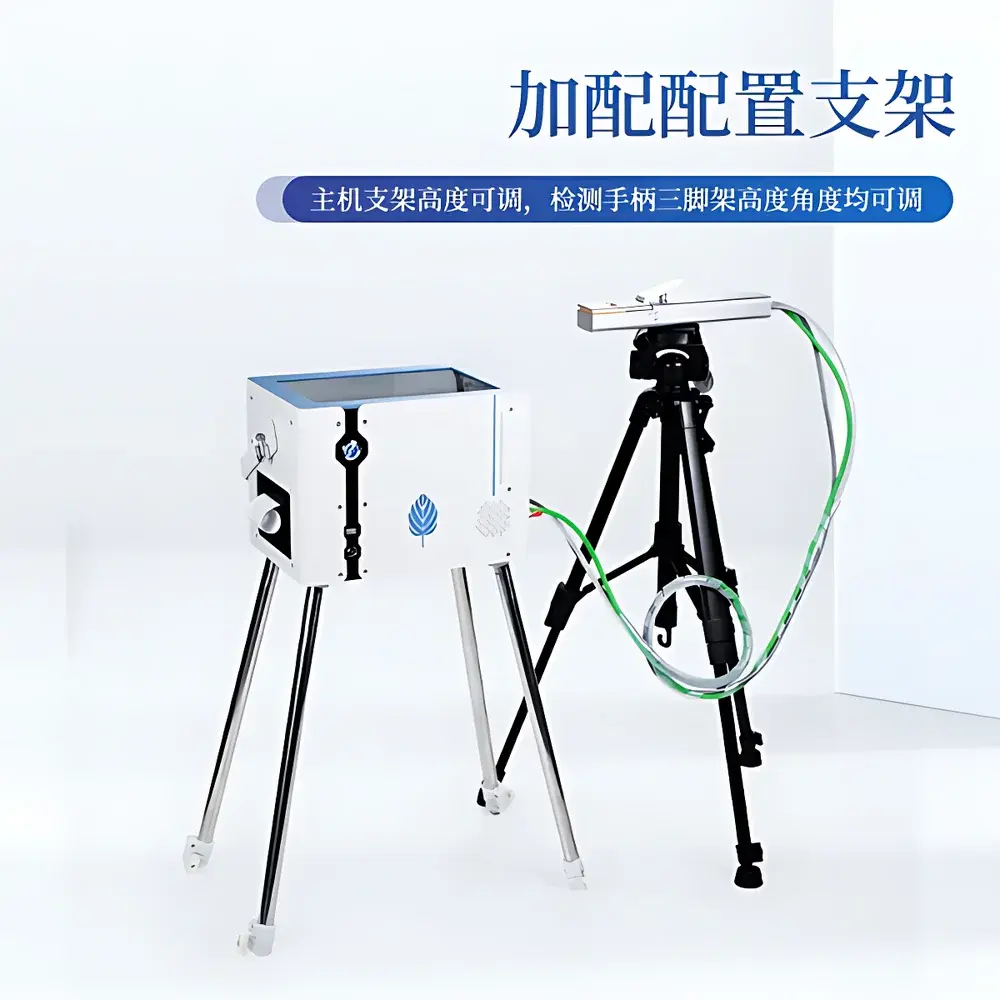
- Field-Optimized Ergonomics: Compact main unit (325 × 160 × 230 mm, 4.5 kg) with detachable ergonomic handle (250 × 30 × 48 mm, 0.7 kg); includes adjustable tripod mount and height-variable chamber stand for unattended, multi-hour measurements.
- Flexible Data Management: Supports wireless data transmission via Wi-Fi or Bluetooth to local networks or cloud platforms; also allows direct export via USB flash drive (plug-and-play, no driver required).
- Extended Operational Autonomy: 8000 mAh rechargeable lithium-ion battery provides 10–12 hours of continuous operation under typical field conditions (including PAR logging and IRGA sampling at 1 Hz).
Sample Compatibility & Compliance
The IN-GH3 accommodates standard 3.3 × 3.3 cm leaf chambers suitable for broadleaf species (e.g., Arabidopsis thaliana, maize, soybean, wheat, tomato) and select monocots with sufficient lamina area. Chamber design ensures uniform laminar airflow and minimal boundary layer resistance, supporting reproducible stomatal response assessment under varying VPD and light gradients. While not certified to ISO/IEC 17025 for accredited testing, the instrument’s sensor architecture aligns with widely adopted methodologies described in ASTM E2913-13 (Standard Guide for In Situ Photosynthesis Measurements) and conforms to core principles of GLP-compliant data acquisition: timestamped records, user-defined metadata tagging, audit-ready export formats (CSV, PNG), and traceable sensor calibration protocols. Pressure, temperature, and humidity sensors meet industrial-grade tolerances referenced in ISO 7726 for environmental parameter measurement in biological systems.
Software & Data Management
Data acquisition and visualization are managed through an embedded Android application with intuitive navigation and configurable display layouts. Users may define custom experimental notes per measurement session, overlay multiple datasets using color-coded curves, and export time-series or parameter-vs-parameter plots directly to external storage. Cloud synchronization enables centralized repository management, version-controlled dataset archiving, and cross-site comparative analytics—particularly valuable for multi-location agronomic trials or phenotyping networks. All exported files include embedded metadata (GPS coordinates if enabled, operator ID, chamber ID, timestamp, firmware version), satisfying minimum FAIR (Findable, Accessible, Interoperable, Reusable) data principles for life science research. Raw sensor outputs (voltage, counts, raw ADC values) are retained alongside derived physiological metrics to support method validation and uncertainty propagation analysis.
Applications
- Plant stress physiology: Quantifying drought-, heat-, salinity-, or heavy metal-induced reductions in Pn and Gs, and associated shifts in Ci/Pn ratios indicative of stomatal vs. non-stomatal limitations.
- Agronomic trait screening: High-throughput evaluation of WUE and photosynthetic capacity in breeding populations under field or semi-controlled conditions.
- Ecophysiology studies: Diurnal tracking of gas exchange dynamics in native or invasive species across microclimatic gradients (e.g., forest understory vs. canopy edge).
- Educational laboratories: Hands-on instruction in plant energy balance, carbon assimilation kinetics, and stomatal regulation mechanisms for undergraduate and graduate curricula.
- Controlled-environment research: Integration into growth chambers and phytotrons for automated light-response curve generation (A/Q curves) and CO₂ response analysis (A/Ci curves).
FAQ
What is the recommended calibration frequency for the CO₂ sensor?
We recommend zero-point calibration before each day’s field deployment using CO₂-free air (e.g., soda lime scrubbed air), and span calibration every 7–10 days using a certified 1000 ppm CO₂ standard gas. Full calibration certificates are available upon request.
Can the IN-GH3 operate in high-humidity tropical environments?
Yes—the humidity sensors (0–100% RH, ±1% RH accuracy) and condensation-resistant chamber design have been validated for sustained operation at >95% RH and ambient temperatures up to 45 °C.
Is PAR sensor cosine correction applied in firmware?
Yes—the built-in quantum sensor incorporates a precision diffuser with NIST-traceable cosine response (±3% deviation up to 80° zenith angle), and all PAR values are automatically corrected for incident angle in real time.
Does the system support third-party software integration (e.g., R, Python, LabVIEW)?
Raw data streams (via USB serial or TCP/IP over Wi-Fi) follow ASCII-based ASCII-CSV protocol with header rows and millisecond timestamps, enabling direct ingestion into scripting environments or custom acquisition software.
How is dark respiration (Rd) measured?
The instrument includes a dedicated “dark measurement” mode that automatically closes the chamber, activates internal LED blackout, and acquires CO₂ efflux over a user-defined duration (default: 90 s), calculating Rd as the linear slope of CO₂ accumulation (µmol/m²/s).




