
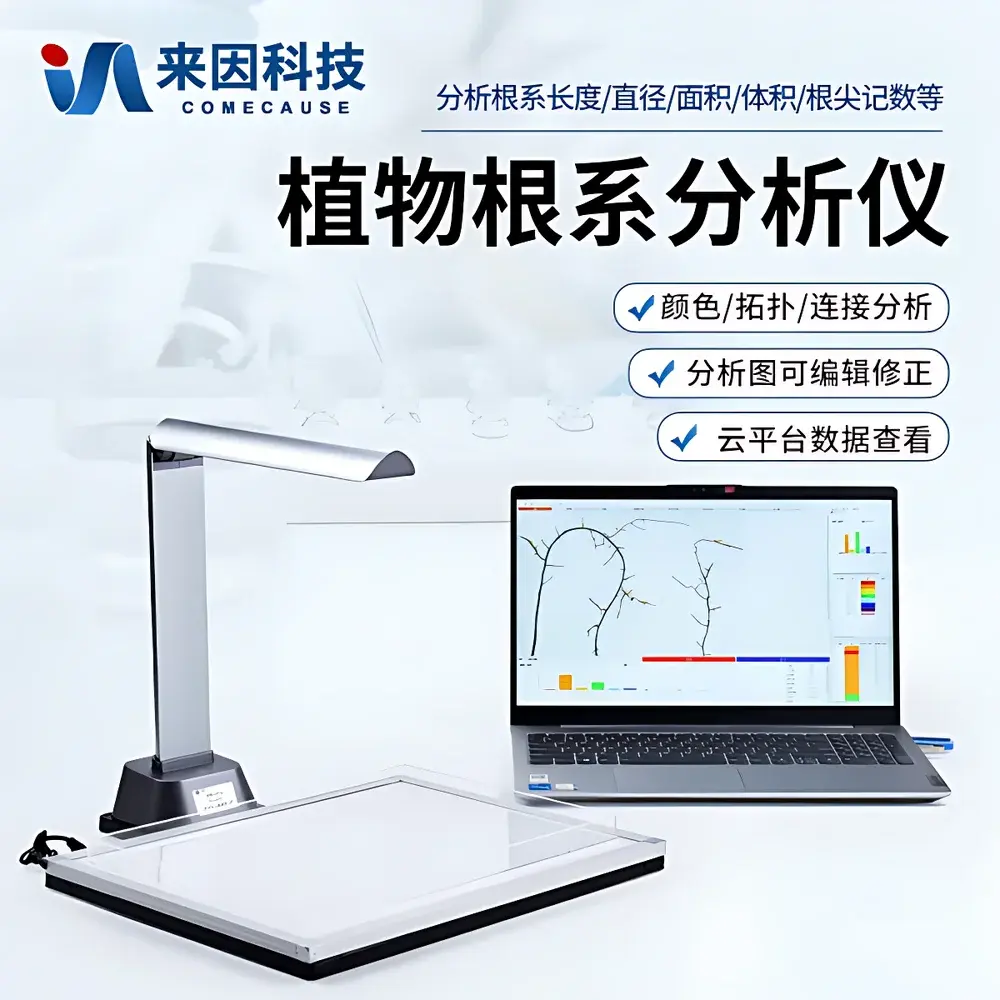
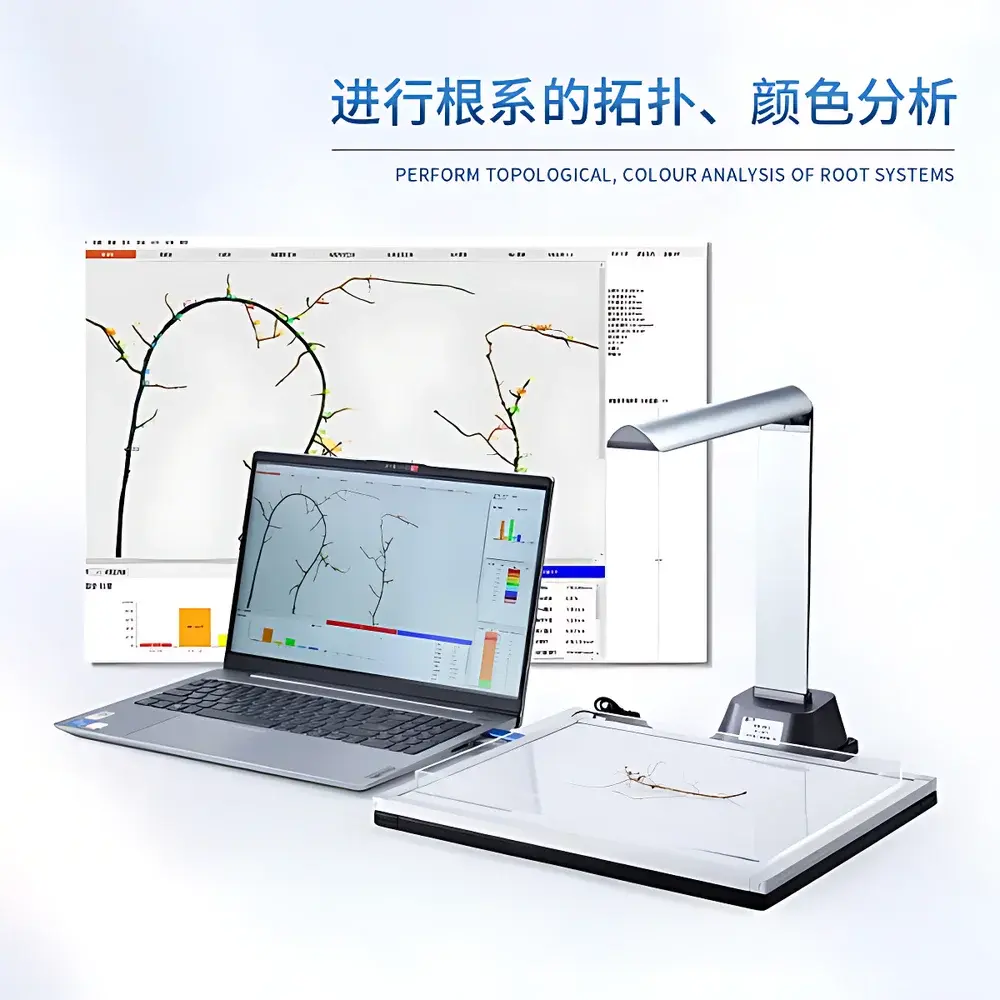
COMECAUSE IN-GX01 Photo-Based Root System Analyzer
| Brand | COMECAUSE |
|---|---|
| Origin | Shandong, China |
| Manufacturer Type | Direct Manufacturer |
| Model | IN-GX01 |
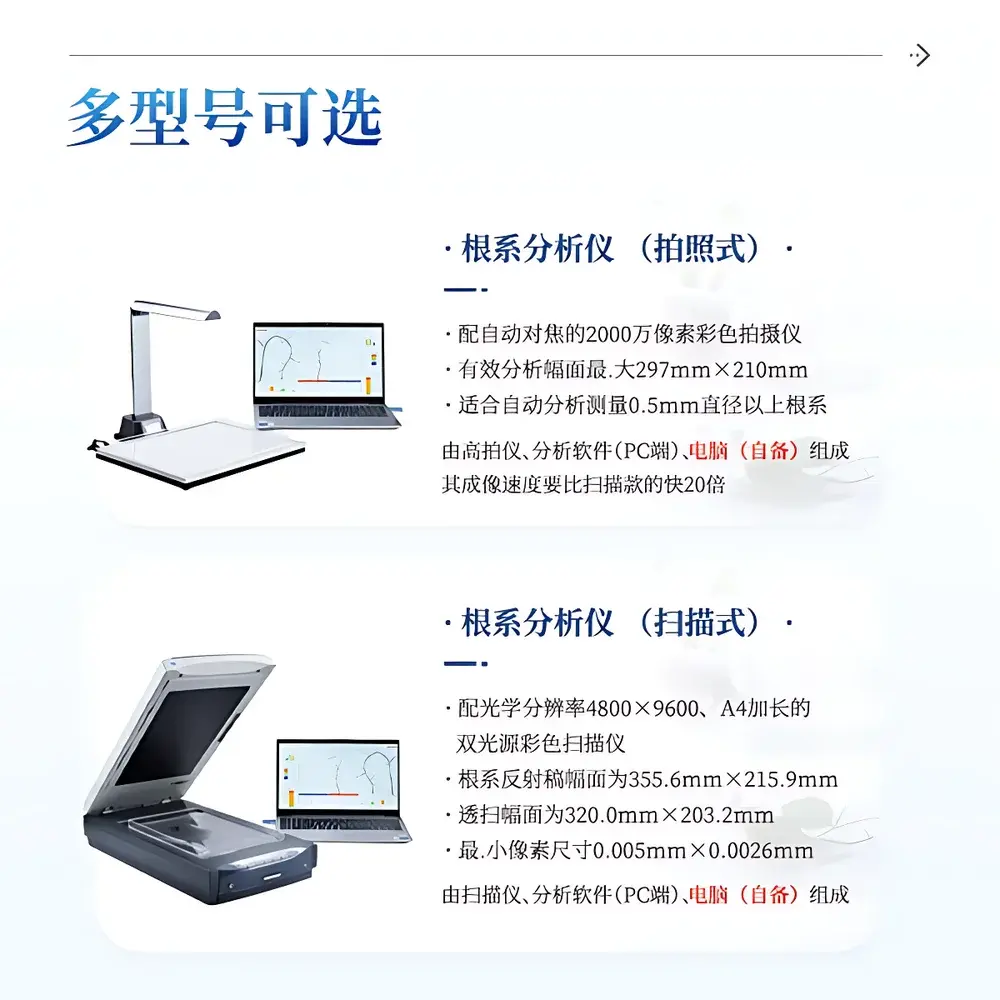
| Imaging Sensor | 20 MP Color CMOS with Auto-Focus |
| Max Analysis Area | 297 mm × 210 mm |
| Minimum Detectable Root Diameter | ≥ 0.5 mm |
| Software Platform | Windows 10 Professional/Enterprise (64-bit) |
| Data Export | CSV, Excel (.xlsx), Annotated TIFF/PNG |
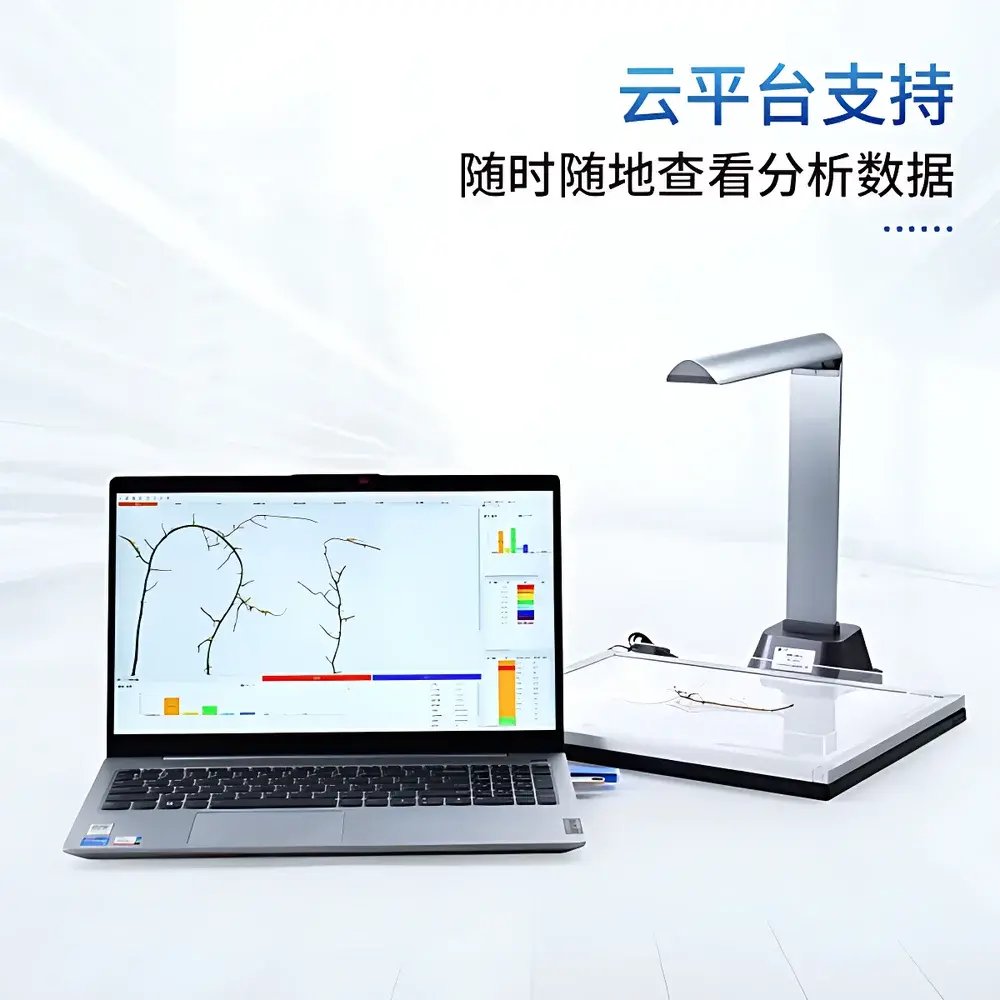
| Cloud Integration | Secure HTTPS-based Web Portal with User Authentication |
| Language Support | English & Chinese (Switchable UI) |
Overview
The COMECAUSE IN-GX01 Photo-Based Root System Analyzer is a dedicated, non-destructive imaging platform engineered for high-throughput quantitative phenotyping of washed root systems in plant physiology and agroecological research. Unlike contact-based scanning systems, the IN-GX01 employs top-down macro-photography under controlled illumination to capture high-resolution 20-megapixel color images of root specimens placed on standardized white backgrounds. Its optical architecture—featuring auto-focus precision optics and uniform LED illumination—ensures consistent depth-of-field across the full 297 mm × 210 mm analysis area, enabling rapid acquisition (<3 s/image) and eliminating mechanical distortion associated with flatbed scanning. The system operates on the principle of pixel-based binary segmentation followed by skeletonization and topological graph reconstruction, supporting morphometric, geometric, topological, and chromatic quantification of root architecture. It is designed for laboratories conducting root trait screening in breeding programs, rhizosphere interaction studies, nutrient stress response assays, and symbiotic nodulation quantification under GLP-aligned workflows.
Key Features
- 20 MP auto-focus color imaging module with adjustable working distance and uniform coaxial LED lighting for shadow-free, high-contrast root imaging
- Full-frame analysis area of 297 mm × 210 mm—optimized for intact root systems from seedlings to mature plants (e.g., maize, soybean, wheat, Arabidopsis)
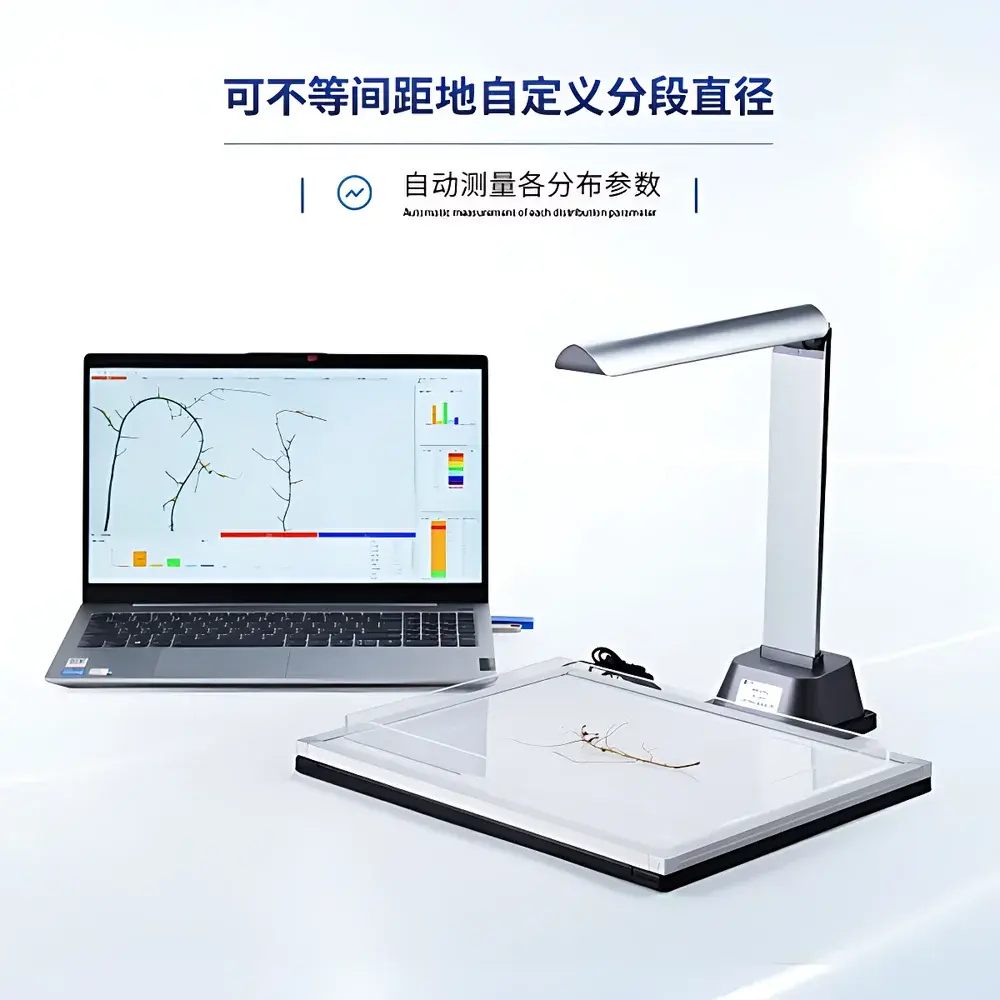
- Automated multi-parameter extraction including total root length, average and median diameter, surface area, volume estimation (via cylinder approximation), tip count, branching frequency, crossover count, and fractal dimension (box-counting method)
- Customizable diameter-class segmentation: users define non-uniform diameter bins (e.g., 0.5–0.8 mm, 0.8–1.5 mm, >1.5 mm) to compute length, projected area, surface area, and volume per class
- Color-based root classification: segmentation and quantification of roots by hue/saturation/value thresholds—enabling differentiation of healthy, senescent, or nodulated tissue
- Topological graph analysis: automatic identification of root order, connection nodes, branching angles, and geotropic/heliotropic orientation metrics (e.g., gravitropic angle, horizontal angle)
- Interactive correction suite: non-destructive branch merging, splitting, trimming, and reconnection with full undo/redo history—ensuring traceability and analyst intervention compliance
- Built-in cloud synchronization: encrypted data upload via TLS 1.2 to role-based web portal; supports audit log generation and time-stamped version control
- Dual-language GUI (English/Chinese) with one-click toggle—designed for multinational research teams and bilingual documentation requirements
Sample Compatibility & Compliance
The IN-GX01 is validated for ex situ analysis of washed, air-dried or hydrated root systems with minimum observable diameter ≥ 0.5 mm. It accommodates specimens from hydroponic, agar-plate, soil-grown (after gentle washing), and rhizobox-derived samples. While not intended for live-in-soil imaging, it complies with standard root phenotyping protocols referenced in ISO 21747:2020 (Plant phenomics — Terminology and measurement principles) and aligns with FAO/IAEA guidelines for root architecture characterization in crop improvement programs. Data export formats (CSV, Excel) support integration into LIMS environments. The software enforces user authentication, session logging, and change tracking—facilitating adherence to internal QA procedures and preparatory alignment with 21 CFR Part 11 requirements where electronic records are retained for regulatory submissions.
Software & Data Management
The IN-GX01 software suite runs natively on Windows 10 Professional or Enterprise (64-bit) and requires no additional runtime dependencies. All image processing is performed locally; cloud upload is optional and opt-in. Each analysis session generates three artifact tiers: (1) raw TIFF/PNG image with embedded EXIF metadata, (2) annotated overlay image showing segmented roots, diameter classes, branch points, and topology labels, and (3) structured result files—including per-root and population-level statistics exported to Excel-compatible .xlsx with worksheet tabs for morphology, topology, color, and fractal metrics. Batch processing supports folder-based queueing with progress monitoring and error-flagging. Audit trails record operator ID, timestamp, parameter settings, and manual corrections—exportable as PDF or CSV for internal review.
Applications
- High-throughput root architecture screening in forward/reverse genetics and QTL mapping studies
- Quantitative assessment of root responses to abiotic stresses (drought, salinity, aluminum toxicity, low phosphorus)
- Characterization of rhizobial or mycorrhizal symbiosis efficacy via nodule counting, spatial distribution, and root segment-specific biomass allocation
- Validation of root architectural models (e.g., CRootBox, OpenSimRoot) against empirical imaging data
- Educational use in plant science curricula for hands-on root morphology instruction and digital phenotyping labs
- Pre-breeding selection indices for drought resilience, nutrient foraging efficiency, and anchorage stability
FAQ
What computer specifications are required to run the IN-GX01 software?
A Windows 10 Professional or Enterprise (64-bit) system with Intel Core i5-9th Gen or newer CPU, 16 GB RAM, 24-inch Full HD display, 4+ USB 2.0 ports, and integrated wireless networking is recommended.
Does the system support live root imaging in soil or growth media?
No—the IN-GX01 is designed exclusively for ex situ analysis of cleaned, surface-exposed root systems. In situ soil imaging requires complementary modalities such as MRI, X-ray CT, or minirhizotron systems.
Can analysis results be integrated into laboratory information management systems (LIMS)?
Yes—structured CSV and Excel outputs are LIMS-compatible; custom API integration can be implemented via secure REST endpoints upon request.
Is calibration traceable to national standards?
The imaging module includes a certified scale bar target for pixel-to-mm conversion; users perform routine verification using NIST-traceable rulers prior to batch analysis.
How is data security managed for cloud-synchronized projects?
All data transmissions use TLS 1.2 encryption; stored data resides in ISO 27001-certified cloud infrastructure with RBAC (role-based access control), mandatory MFA, and configurable retention policies.






