
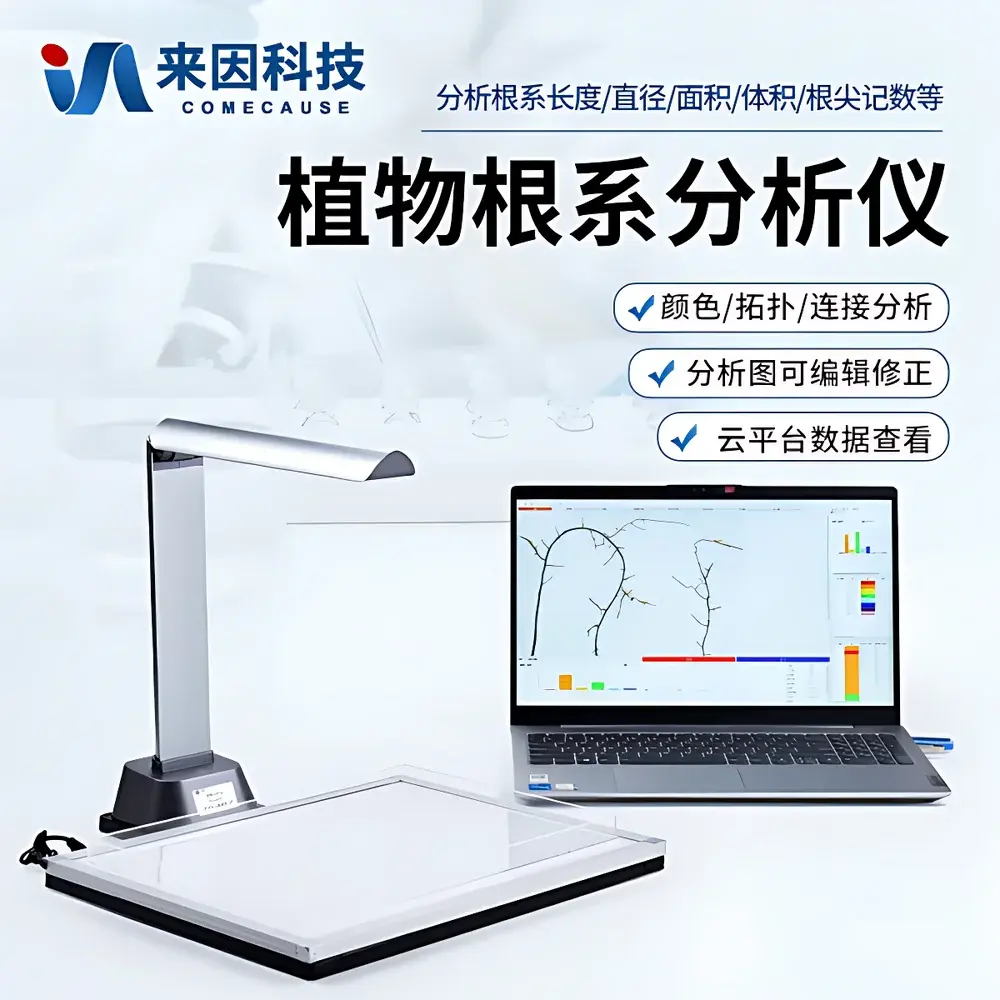
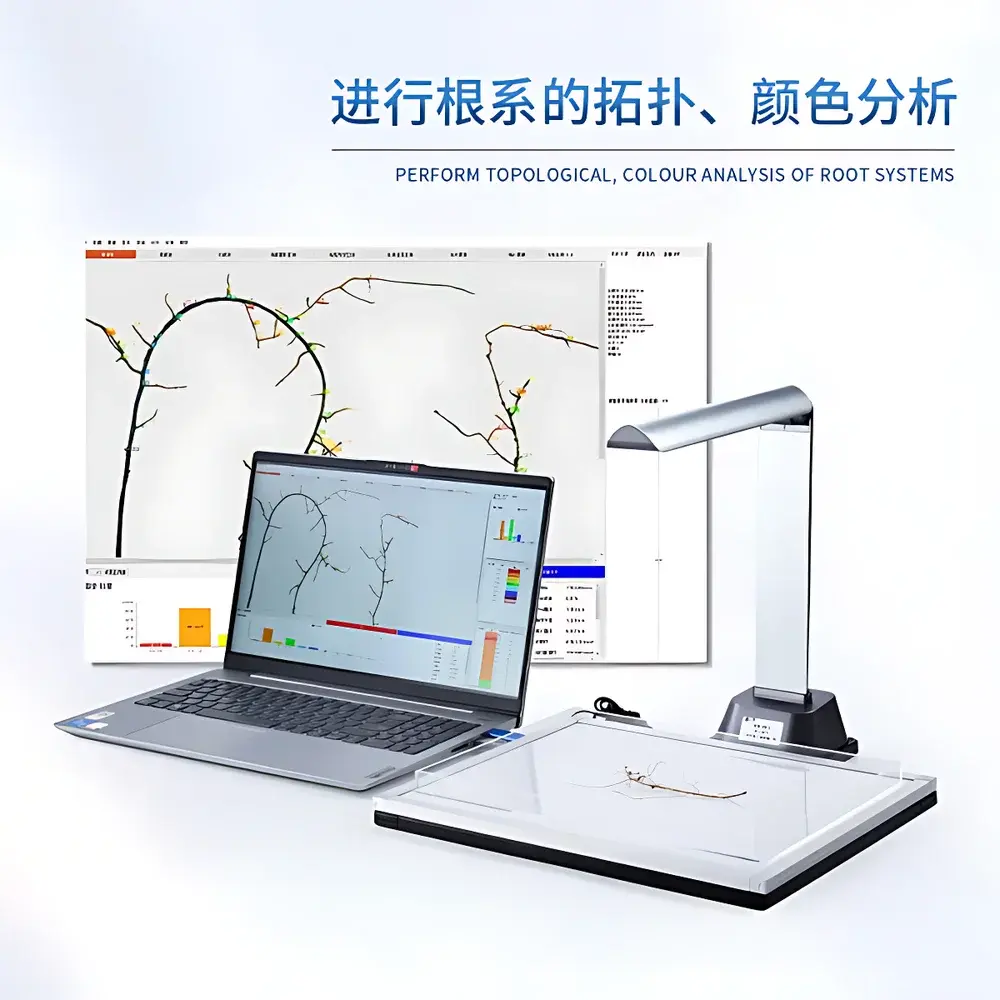
COMECAUSE IN-GX01 Plant Root Imaging & Quantitative Analysis System
| Brand | COMECAUSE |
|---|---|
| Origin | Shandong, China |
| Manufacturer Type | Direct Manufacturer |
| Model | IN-GX01 |
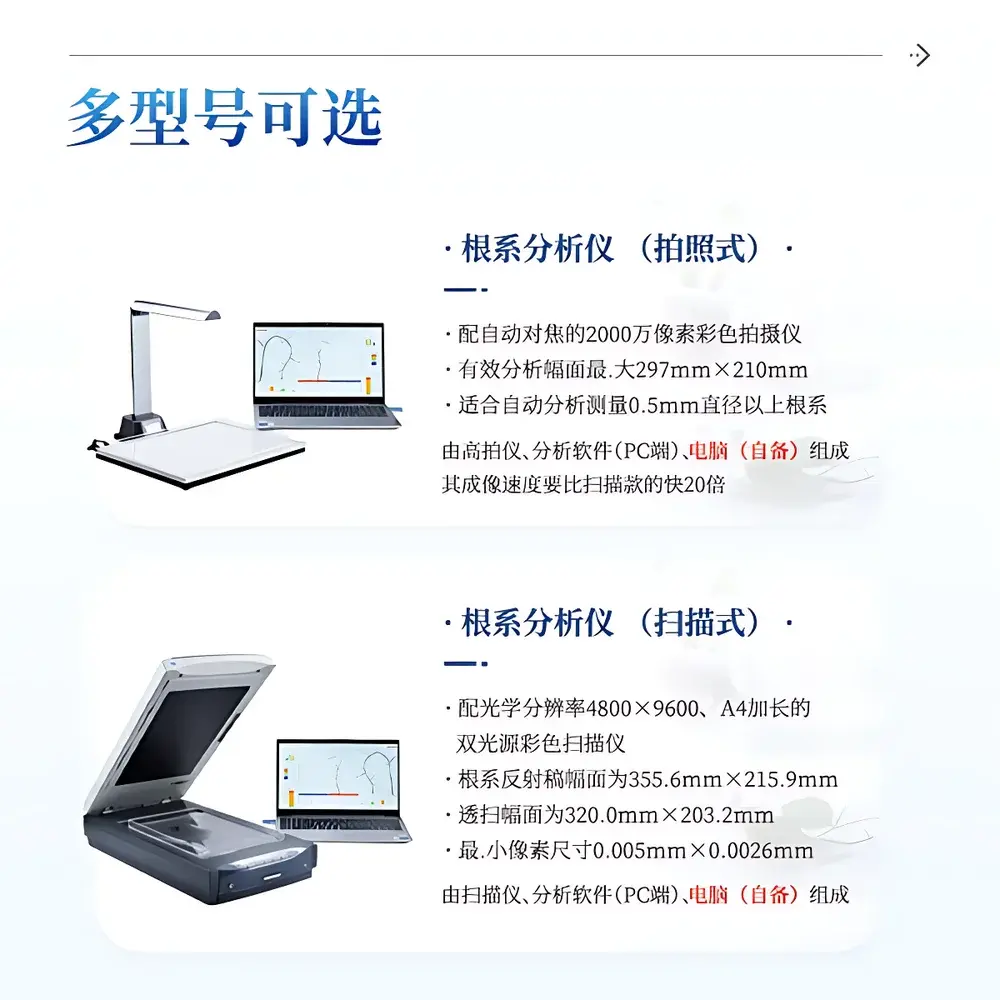
| Imaging Sensor | 20 MP Color CMOS with Auto-Focus |
| Max Imaging Area | 297 mm × 210 mm |
| Minimum Resolvable Root Diameter | ≥ 0.5 mm |
| Analysis Parameters | Total Root Length, Branching Frequency, Mean & Median Root Diameter, Max Diameter, Total Surface Area, Projected Area, Volume Estimation, Root Tip Count, Fork Count, Cross-Overlap Count, Diameter-Class Distribution (user-defined non-uniform bins), Color-Based Segmentation Analysis, Topological Connectivity & Branching Angle Mapping, Fractal Dimension (Box-Counting Method), Nodule Counting, Gravitropic & Horizontal Angle Quantification |
| Software | PC-based Windows 10 Professional/Enterprise compatible application with bilingual (EN/CN) UI, cloud synchronization capability, Excel export (raw + summary), annotated image export, and full audit trail for measurement history |
| Compliance | Designed for GLP-aligned plant phenotyping workflows |
Overview
The COMECAUSE IN-GX01 Plant Root Imaging & Quantitative Analysis System is a dedicated, high-throughput digital phenotyping platform engineered for non-destructive, two-dimensional morphometric characterization of excised or hydroponically retrieved root systems. It operates on the principle of high-resolution optical imaging coupled with deterministic pixel-based segmentation and topological graph reconstruction algorithms. Unlike destructive scanning-based systems, the IN-GX01 employs a vertically oriented 20-megapixel auto-focusing color camera to capture root specimens placed on a standardized A4-sized (297 mm × 210 mm) translucent backlight stage—enabling acquisition times up to 20× faster than flatbed scanner-based alternatives. The system is calibrated for quantitative analysis of roots ≥ 0.5 mm in diameter, making it particularly suited for primary root architecture studies in cereals, legumes, brassicas, and woody seedlings under controlled environment or field-collected conditions.
Key Features
- 20 MP color CMOS sensor with motorized auto-focus and uniform LED backlighting ensures consistent contrast and depth-of-field across the full imaging area.
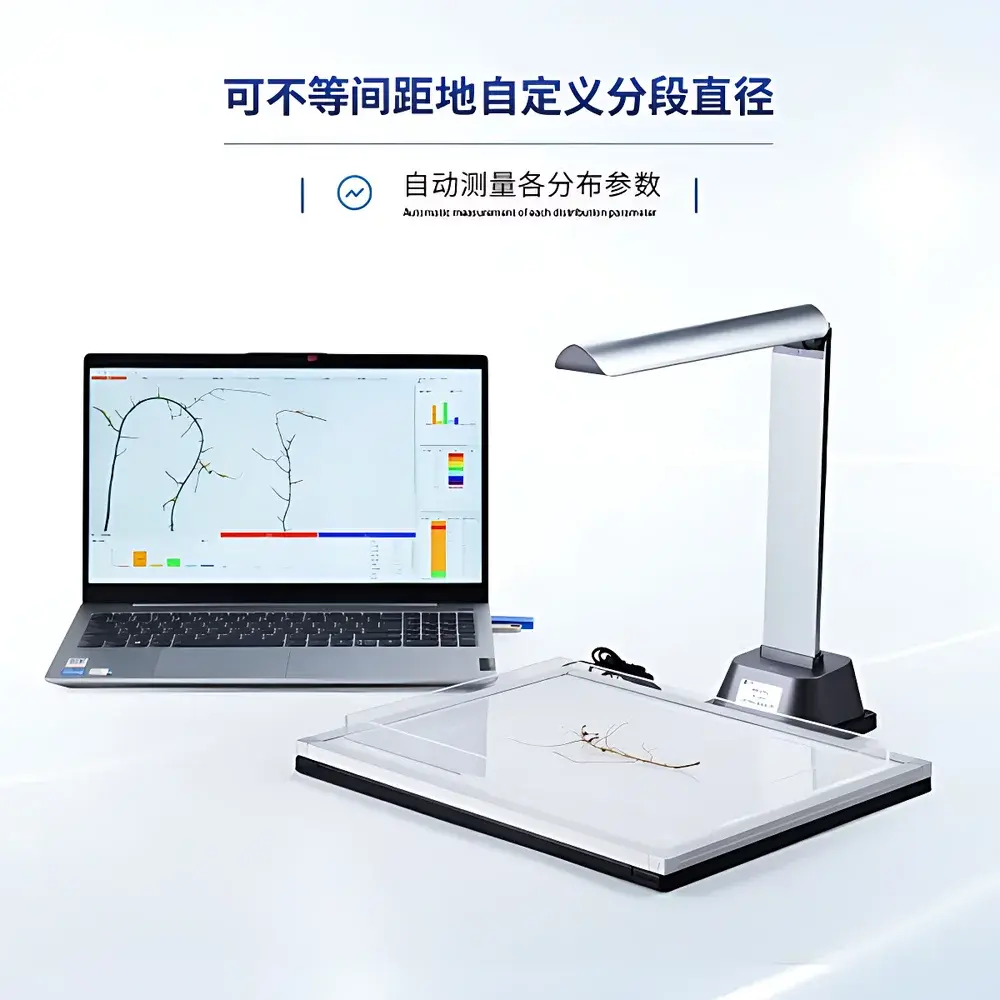
- Native support for user-defined, non-uniform diameter-class binning—enabling granular volumetric and surface-area partitioning by root thickness tiers (e.g., 0.5–1.0 mm, 1.0–2.5 mm, >2.5 mm).
- Comprehensive topological engine that reconstructs root networks as directed acyclic graphs (DAGs), computing connectivity indices, branch angles, path lengths, and gravitropic deviation metrics from root tip to base.
- Color-space segmentation module (CIELAB-based) allows discrimination and independent quantification of root segments by hue, saturation, and lightness—critical for monitoring senescence, nodulation, or pathogen-induced pigmentation shifts.
- Interactive correction toolkit—including fork splitting, segment merging, and manual node repositioning—with full undo/redo stack and versioned measurement history logging.
- Fractal dimension estimation via box-counting algorithm (DB) integrated into batch analysis pipelines for quantifying architectural complexity and branching self-similarity.
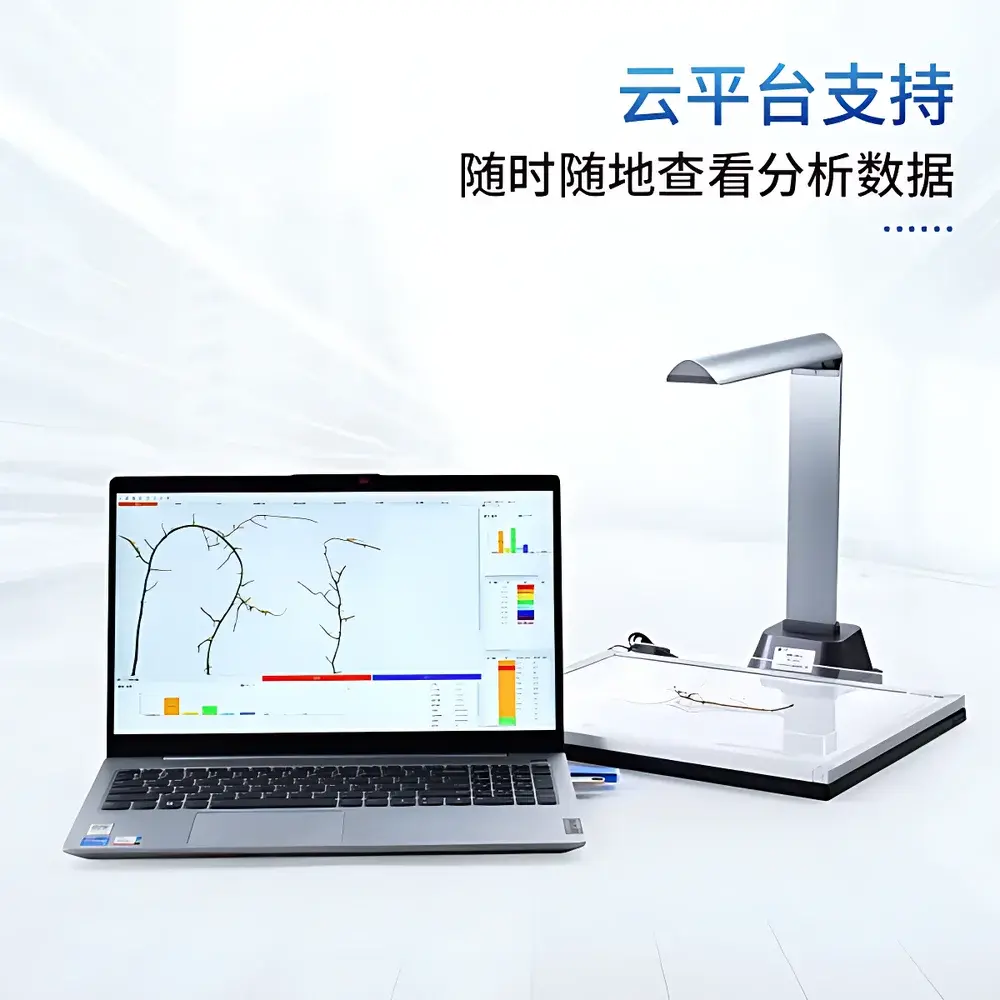
- Cloud-sync enabled architecture: all raw images, processed masks, metadata, and exported tables are timestamped, encrypted, and stored with configurable retention policies via secure HTTPS API endpoints.
Sample Compatibility & Compliance
The IN-GX01 accepts washed, air-dried, or glycerol-cleared root samples placed flat on the imaging stage. It is validated for intact root systems up to 25 cm in maximum projected length and accommodates multi-specimen trays for parallel processing. All analytical outputs comply with FAO/IAEA recommended protocols for root trait reporting (IAEA-TECDOC-1877) and align with MIAPPE v1.1 (Minimum Information About a Plant Phenotyping Experiment) metadata requirements. Software audit logs record operator ID, timestamp, parameter settings, and version-controlled algorithm flags—supporting GLP-compliant documentation for regulatory submissions or multi-site collaborative trials.
Software & Data Management
The IN-GX01 software suite runs natively on Windows 10 Professional or Enterprise (64-bit, ≥ i5-9th Gen CPU, 16 GB RAM). It features dual-language UI (English/Chinese) with one-click toggle and context-aware tooltips. Batch analysis jobs generate three output layers: (1) per-root CSV files containing 22+ morphometric descriptors, (2) consolidated Excel workbooks with pivot-ready summary sheets, and (3) annotated TIFF/PNG overlays showing diameter-coded branches, tip markers, and angle vectors. All data exports include embedded EXIF tags referencing instrument serial number, firmware revision, and calibration date. Cloud synchronization adheres to TLS 1.3 encryption and supports role-based access control (RBAC) for team-based project management.
Applications
- High-throughput screening of root architecture QTLs in rice, maize, and wheat breeding programs.
- Quantitative assessment of rhizobia-induced nodule distribution and biomass allocation in legume symbiosis studies.
- Phytotoxicity evaluation in soil contamination assays—measuring root elongation inhibition, tip swelling, and lateral root suppression.
- Validation of CRISPR-edited root traits (e.g., altered auxin transport, cortical aerenchyma formation) under controlled abiotic stress (drought, hypoxia, salinity).
- Longitudinal root development tracking via time-series imaging—supported by cross-session alignment tools and growth rate interpolation functions.
- Teaching laboratories requiring reproducible, standards-aligned root phenotyping modules for undergraduate plant science curricula.
FAQ
What operating system versions are officially supported?
Windows 10 Professional or Enterprise (64-bit), version 21H2 or later. Windows 11 is supported with .NET Framework 4.8 and Visual C++ Redistributable 2015–2022 installed.
Can the system analyze live roots in soil or hydroponic media?
No—the IN-GX01 requires cleaned, two-dimensional root specimens. For in situ imaging, complementary minirhizotron or X-ray CT solutions are recommended.
Is FDA 21 CFR Part 11 compliance available?
The current software version provides electronic signature capability and full audit trail functionality; Part 11 validation packages—including IQ/OQ documentation and electronic record retention SOPs—are available upon request for regulated environments.
How is calibration maintained across imaging sessions?
A certified reference scale (NIST-traceable 10-mm ceramic ruler) is included. Software enforces mandatory scale verification before each batch run, logging calibration status and pixel-to-mm conversion factors in metadata.
Does the cloud platform support third-party API integration?
Yes—RESTful JSON APIs are provided for automated ingestion into LIMS, ELN, or custom data lakes, with OAuth 2.0 authentication and Webhook notifications for job completion events.
Related Products




