
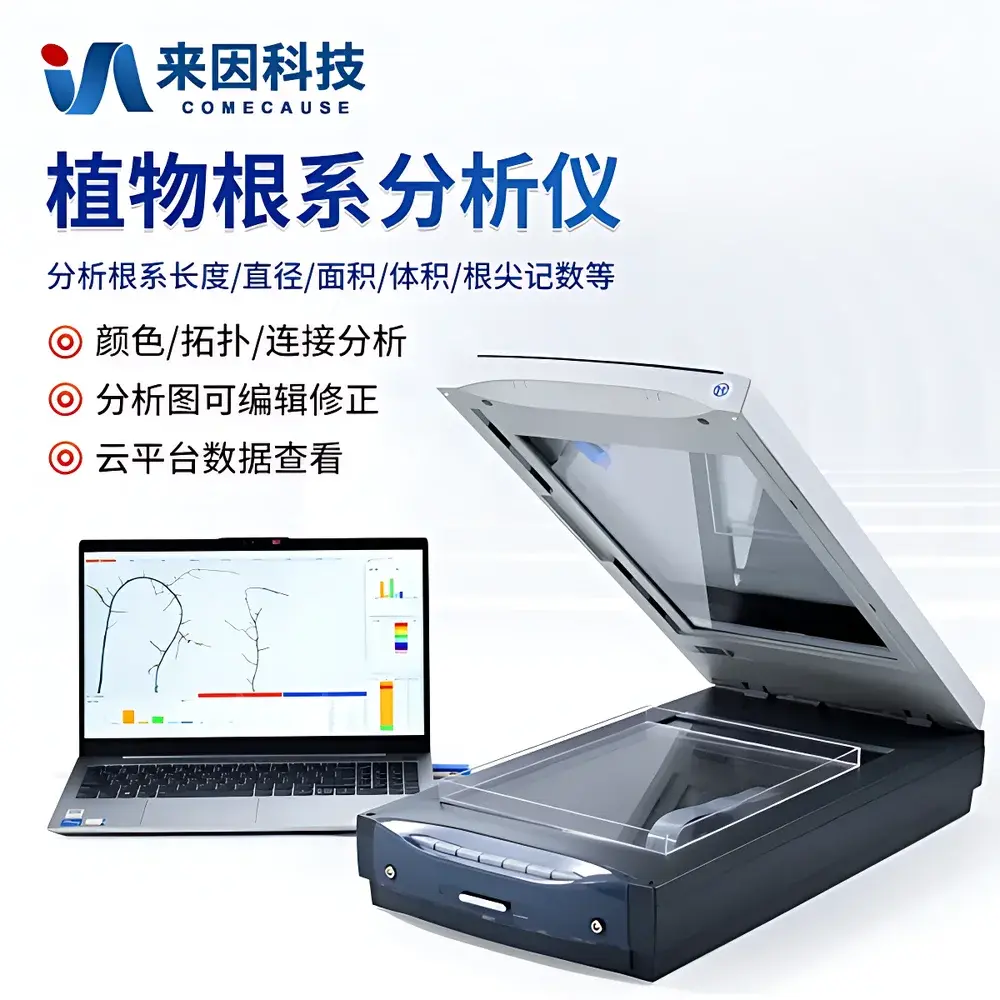
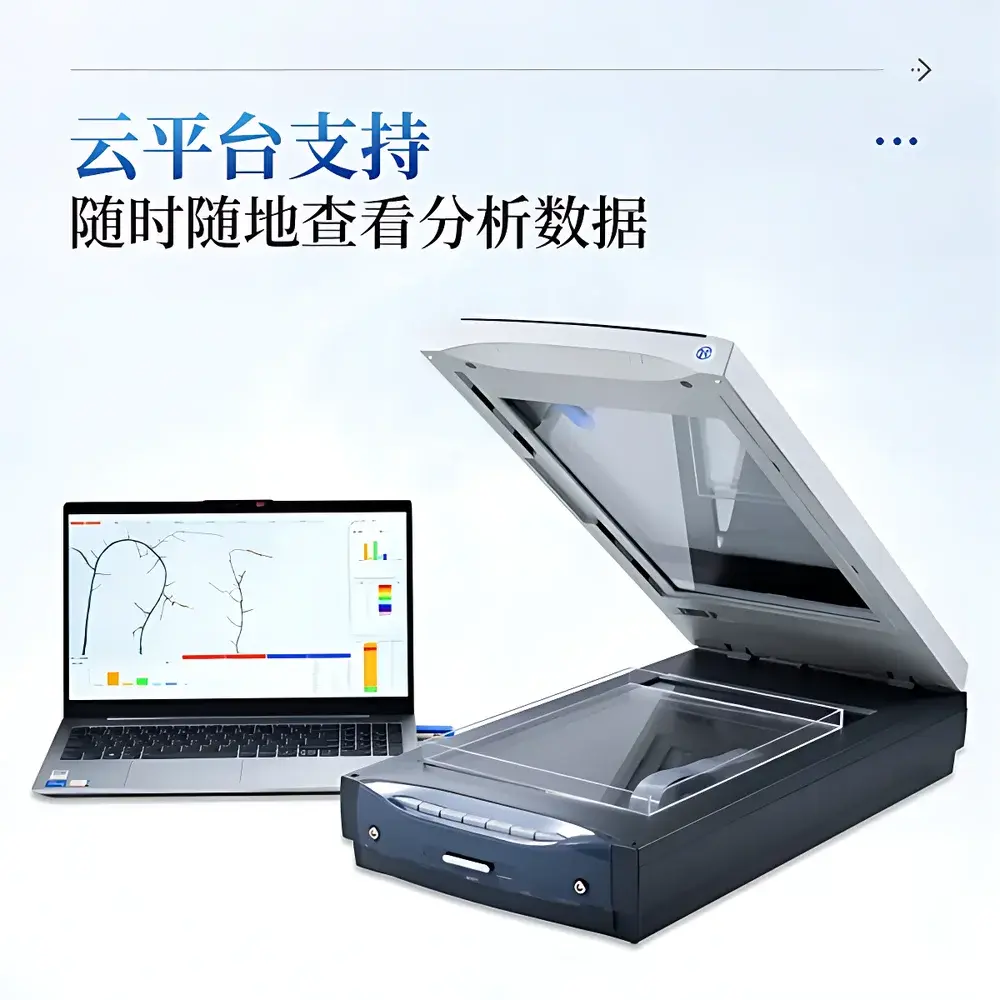
COMECAUSE IN-GX02 Automated Plant Root Image Analysis System
| Brand | COMECAUSE |
|---|---|
| Origin | Shandong, China |
| Manufacturer Type | Direct Manufacturer |
| Model | IN-GX02 |
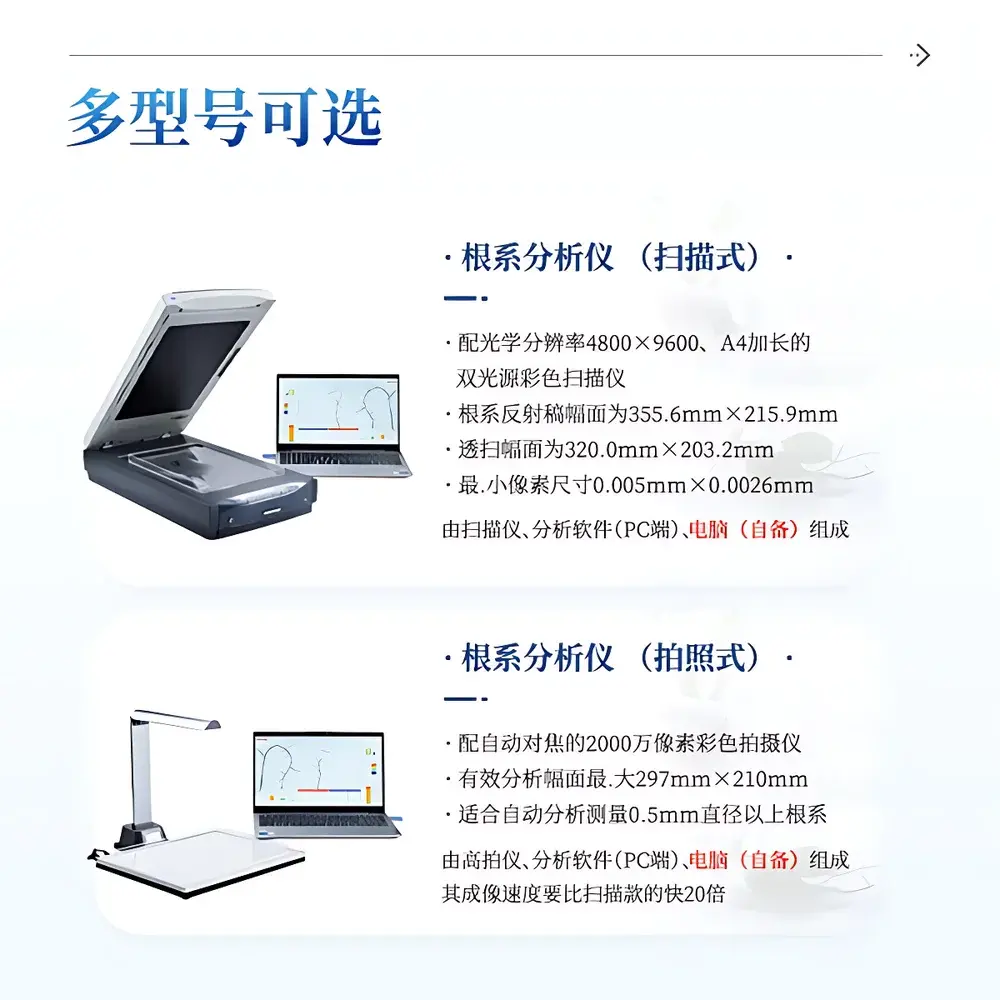
| Optical Resolution | 4800 × 9600 dpi (A4+ extended) |
| Scan Area (Reflective) | 355.6 mm × 215.9 mm |
| Scan Area (Transmissive) | 320.0 mm × 203.2 mm |
| Minimum Pixel Size | 0.005 mm × 0.0026 mm |
| Color Depth | 48-bit |
| Interface | USB 2.0 |
| Light Source | Dual Cold Cathode Fluorescent Lamps (CCFL) |
| Software | Proprietary root morphology analysis suite with hardware-encrypted dongle, TIFF/JPEG import, fractal dimension calculation (box-counting), topology mapping, diameter-class segmentation, color-based root classification, and cloud-sync capability |
Overview
The COMECAUSE IN-GX02 Automated Plant Root Image Analysis System is a high-precision, laboratory-grade digital phenotyping platform engineered for quantitative root architectural analysis. It operates on the principle of high-fidelity optical scanning combined with deterministic image segmentation and morphometric computation—bypassing statistical approximation in favor of pixel-accurate geometric reconstruction. Unlike manual tracing or low-resolution imaging methods, the IN-GX02 employs a dual-illumination, A4+ extended flatbed scanner with 4800 × 9600 dpi optical resolution and sub-5 µm minimum pixel dimensions to capture both reflective and transmissive root images under uniform, shadow-free lighting conditions. This ensures consistent contrast and edge fidelity across heterogeneous root samples—including fine lateral roots (<0.1 mm), root hairs, nodules, and adventitious structures—enabling reproducible measurement of morphological traits critical to plant adaptation, resource acquisition, and stress resilience.
Key Features
- Dual-source CCFL illumination system with built-in calibration zones to eliminate vignetting, glare, and uneven brightness—essential for accurate grayscale and color-based root differentiation.
- High-transparency, dimensionally stable root imaging trays (3 included) optimized for water-immersed or gel-embedded specimens; compatible with rhizobox, hydroponic, and agar-based growth systems.
- Proprietary analysis software with hardware-encrypted USB dongle support; processes TIFF and JPEG inputs without compression artifacts.
- Non-statistical, geometry-driven quantification engine: computes total root length, surface area, volume, tip count, branching frequency, intersection density, and fractal dimension via box-counting algorithm—all traceable to pixel-level coordinates.
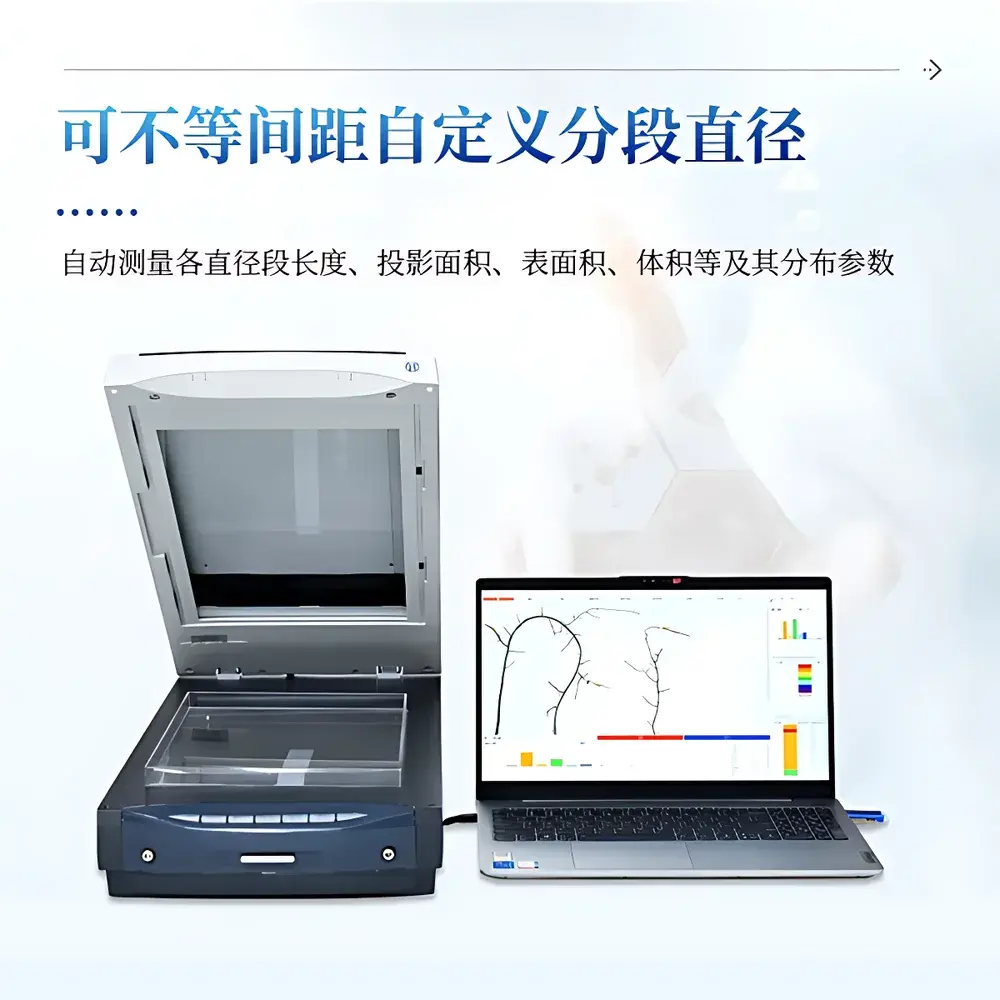
- Multi-scale diameter classification: supports user-defined, non-uniform binning intervals (e.g., 0–0.2 mm, 0.2–0.5 mm, >0.5 mm) with automatic parameter extraction per class—including length, projected area, surface area, volume, and spatial distribution metrics.
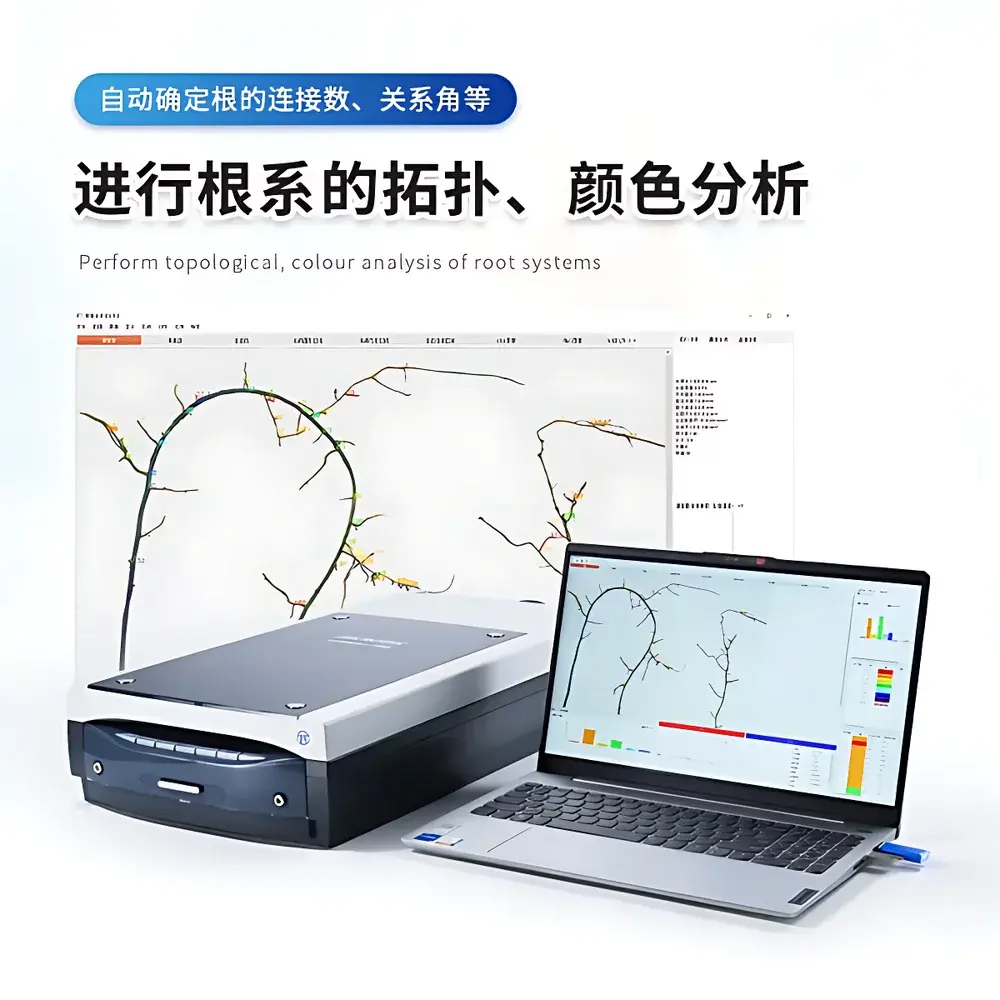
- Topology-aware root graph generation: identifies parent-child relationships, branch angles, geotropic deviation (root angle relative to gravity vector), and hierarchical order (Strahler or Shreve indexing).
- Color-channel analysis module: discriminates living vs. senesced tissue, nodule presence, fungal colonization, or dye-labeled segments based on RGB/HSL thresholds—quantifying morphometric parameters per spectral class.
- Batch processing mode with auto-correction tools: enables iterative refinement of segmented root masks and export of annotated overlays in PNG/SVG format.
- Cloud-integrated data management: encrypted synchronization of raw scans, processed results, metadata (genotype, treatment, timepoint), and Excel-ready reports via secure HTTPS endpoint.
Sample Compatibility & Compliance
The IN-GX02 accommodates excised root systems following standard washing protocols (e.g., hydrosieving, flotation, or mesh-rinsing), as well as intact roots from transparent growth media including agar plates, gellan gum slabs, and rhizotron assemblies. Its transmissive scanning mode supports semi-transparent substrates up to 5 mm thickness. The system complies with common methodological standards in root phenotyping, including those referenced in ASTM D7219 (standard guide for root architecture characterization), ISO 21527-2 (microbiological examination of soils—enumeration of culturable fungi), and FAO/IAEA guidelines for root-trait standardization in crop improvement programs. While not certified for GMP/GLP environments out-of-the-box, its audit-trail-enabled software (with timestamped operator log, version-controlled analysis scripts, and immutable result exports) meets baseline requirements for data integrity under FDA 21 CFR Part 11 when deployed with institutional IT governance controls.
Software & Data Management
The embedded analysis suite runs natively on Windows 10 Professional or Enterprise (64-bit), requiring no third-party runtime dependencies. All computations occur locally; cloud upload is optional and configurable per project. Each analysis session generates a structured metadata file (.json) containing instrument settings, calibration status, user ID, and processing pipeline version. Export formats include CSV (for statistical packages), Excel (.xlsx) with pivot-ready worksheets, and annotated image overlays with scale bars and region-of-interest labels. Raw scans are stored losslessly in TIFF format with embedded EXIF tags (scanner model, DPI, exposure time). The software supports bilingual UI (English/Chinese) with one-click language switching—ideal for international research consortia. Optional API access (RESTful endpoints) allows integration with LIMS or breeding database platforms such as BreedBase or GRIN-Global.
Applications
- Crop Breeding & Genomics: High-throughput root phenotyping for QTL mapping and genomic selection; validation of CRISPR-edited root architecture alleles in maize, rice, and wheat under controlled drought or nutrient-gradient assays.
- Soil–Plant Interactions: Quantifying root proliferation in nutrient-rich patches, mechanical impedance responses, and root–microbe interface dynamics (e.g., rhizobia nodule volume fraction, mycorrhizal colonization index).
- Ecohydrology & Restoration Ecology: Evaluating deep-rooting capacity of native species for slope stabilization, comparing root depth distribution across soil horizons in degraded vs. rehabilitated sites.
- Carbon Cycle Modeling: Deriving root turnover proxies (tip density, fine-root biomass allocation) to parameterize terrestrial biosphere models (e.g., CLM, ORCHIDEE) and improve soil carbon stock projections.
- Phenomics Infrastructure: Integration into automated greenhouse or field-based phenotyping pipelines via robotic sample handling interfaces and standardized output schemas (MIAPPE-compliant metadata).
FAQ
What root preparation methods are recommended prior to scanning?
Roots should be gently rinsed free of soil particles using deionized water and placed flat on the imaging tray without overlapping. For fragile specimens, embedding in low-melt agarose (0.5–1%) is advised to maintain spatial integrity during scanning.
Can the system analyze roots growing in opaque soil?
No—the IN-GX02 requires ex situ, two-dimensional imaging of cleaned or transparently grown roots. In situ soil-root imaging requires complementary modalities such as minirhizotrons or X-ray CT.
Is the software validated against manual measurements or reference standards?
Yes—validation studies conducted by independent academic labs report mean absolute error <1.8% for total root length and <2.3% for tip count versus expert manual tracing (n = 120 samples across 8 species), with inter-operator CV <1.9%.
Does the system support time-series root growth tracking?
It does not perform real-time imaging, but supports longitudinal analysis when paired with sequential harvests from rhizoboxes or split-root systems—metadata tagging enables temporal comparison across matched genotypes and treatments.
What computing resources are required beyond the base configuration?
For batch analysis of >500 images/session, we recommend ≥32 GB RAM and SSD storage; GPU acceleration is not utilized, ensuring compatibility with legacy lab workstations.
Related Products



