
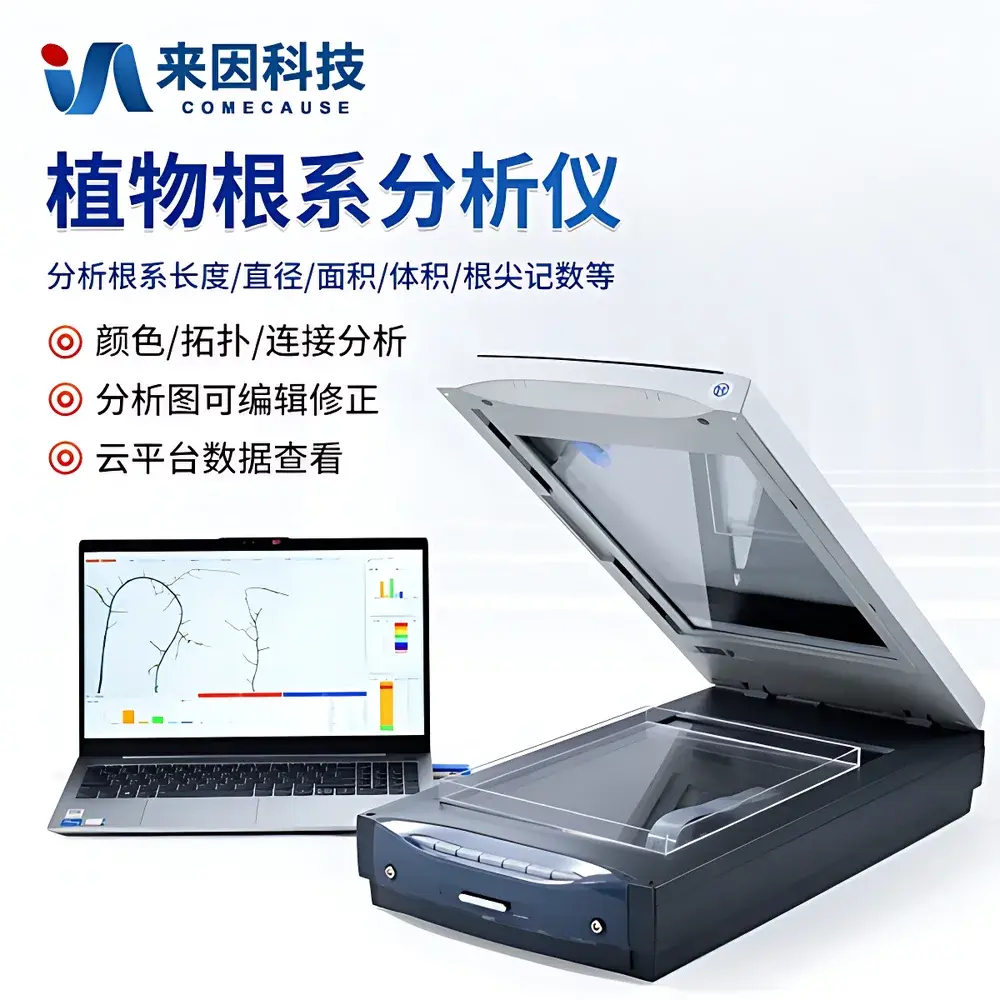
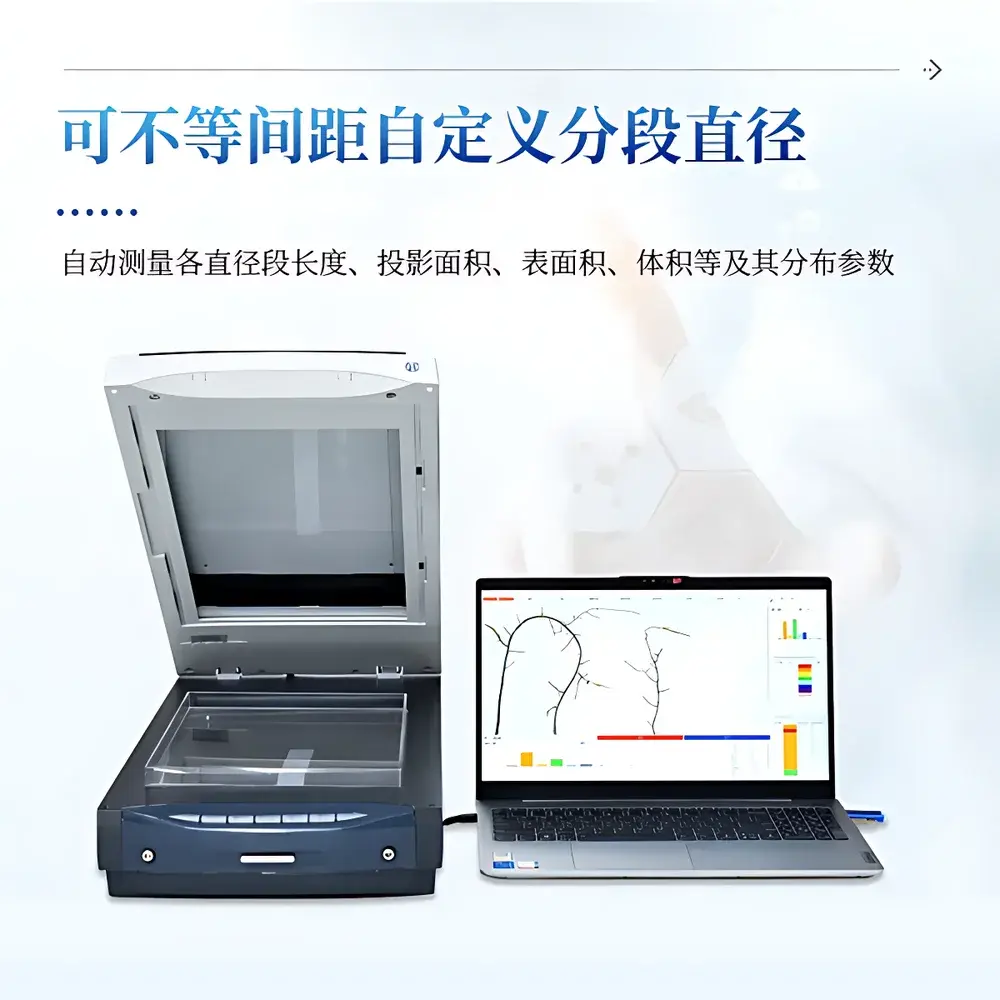
COMECAUSE IN.GX02 Plant Root System Analyzer
| Brand | COMECAUSE |
|---|---|
| Origin | Shandong, China |
| Manufacturer Type | Direct Manufacturer |
| Model | IN.GX02 |
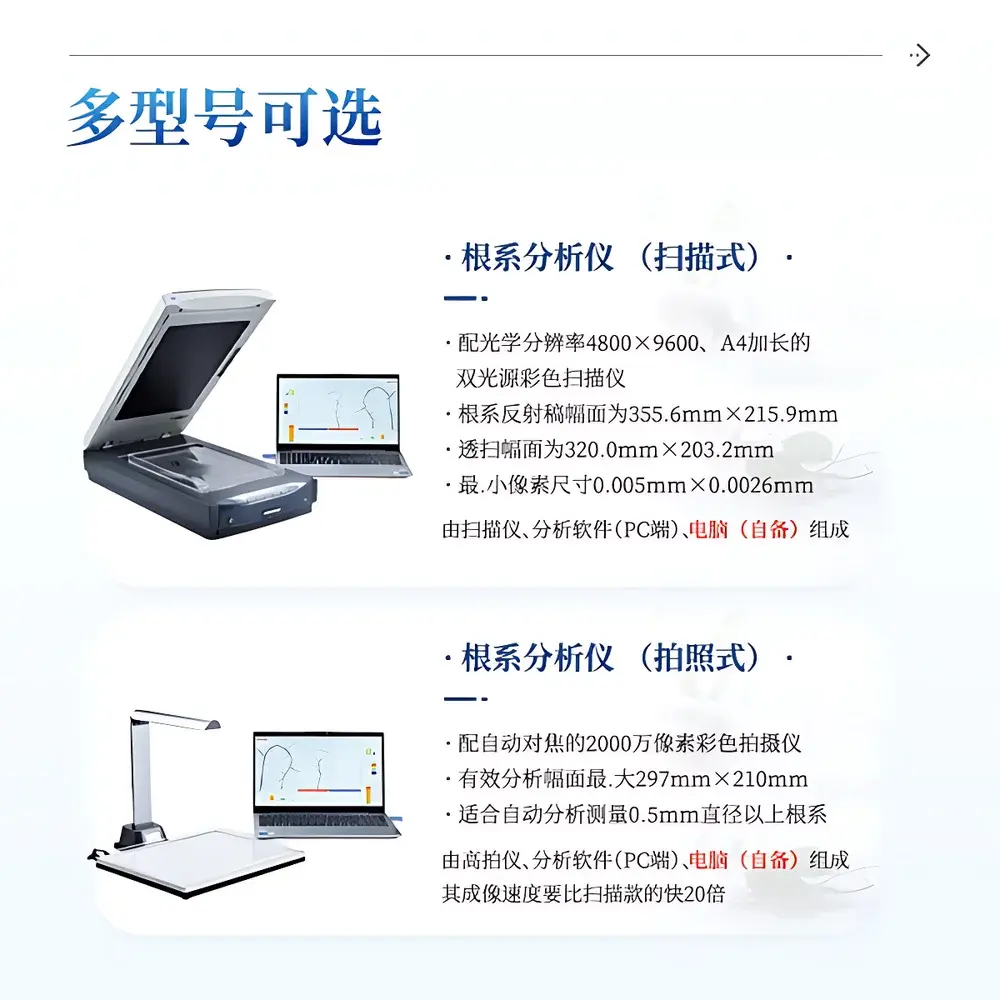
| Optical Resolution | 4800 × 9600 dpi (A4+ extended) |
| Scan Area (Reflective) | 355.6 mm × 215.9 mm |
| Scan Area (Transmissive) | 320.0 mm × 203.2 mm |
| Minimum Pixel Size | 0.005 mm × 0.0026 mm |
| Interface | USB 2.0 |
| Color Depth | 48-bit |
| Light Source | Dual Cold Cathode Fluorescent Lamp (CCFL) |
| Supported Image Formats | TIFF, JPEG |
| Software | Proprietary root phenotyping suite with hardware dongle authentication |
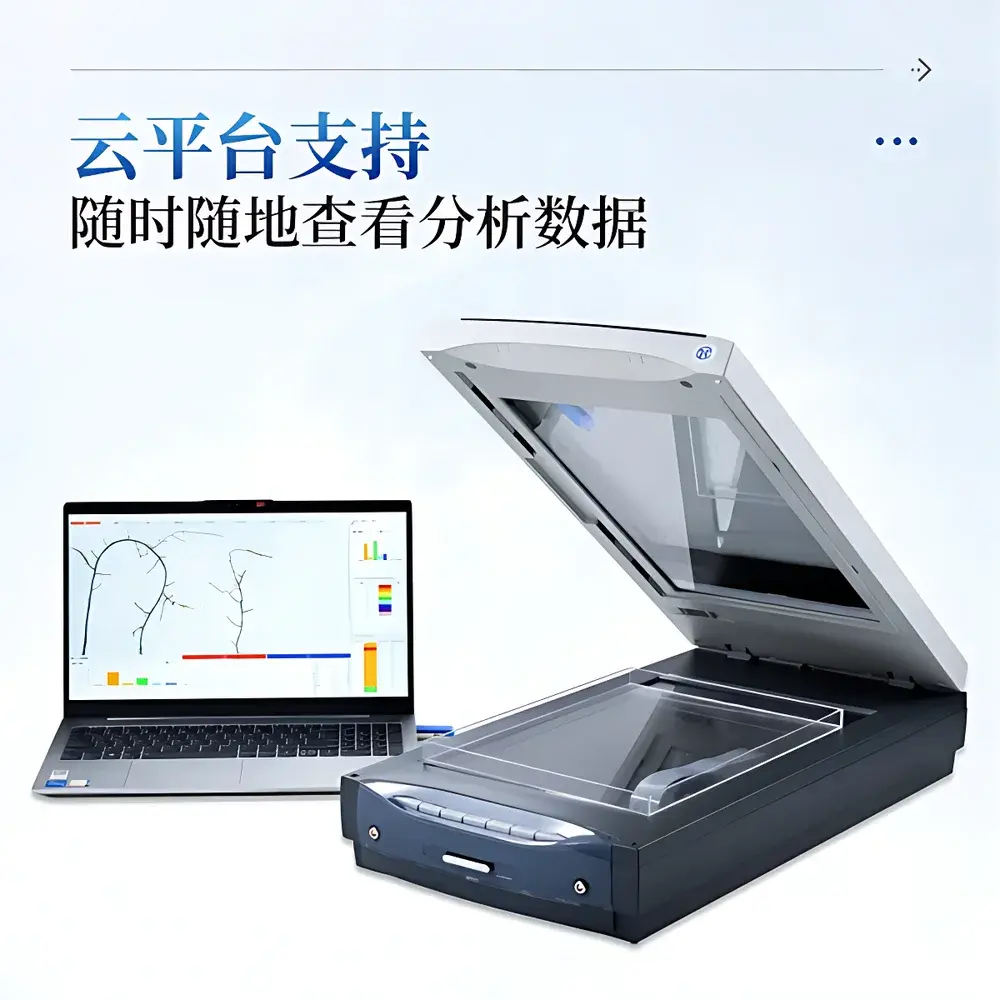
| Cloud Integration | Yes (secure HTTPS-based data sync) |
| Language Support | English & Chinese (switchable) |
Overview
The COMECAUSE IN.GX02 Plant Root System Analyzer is a dedicated high-resolution imaging and morphometric analysis platform engineered for quantitative root phenotyping in controlled-environment and field-based plant science research. It operates on the principle of high-fidelity optical scanning combined with deterministic image segmentation and topological reconstruction algorithms—distinct from statistical or machine-learning-based inference approaches. The system captures root architecture from washed root samples or rhizobox-grown specimens using a dual-illumination, A4+ extended flatbed scanner equipped with calibrated CCFL light sources positioned both beneath and above the transparent root tray. This symmetrical illumination geometry eliminates shadowing, specular glare, and intensity gradients—critical for reproducible thresholding and sub-pixel edge detection across heterogeneous root geometries (e.g., fine laterals vs. thick taproots, mucilage-coated vs. air-dried surfaces). All measurements—including length, diameter distribution, volume estimation, branching topology, fractal dimension, and gravitropic angle—are derived directly from pixel-level geometric modeling without stochastic interpolation or probabilistic classification. The analyzer supports both static snapshot analysis and longitudinal time-series tracking when integrated with standardized rhizobox protocols.
Key Features
- Dual-source, color-calibrated CCFL illumination system with built-in optical reference zones for daily photometric validation
- A4+ extended scanning surface (355.6 mm × 215.9 mm reflective; 320.0 mm × 203.2 mm transmissive) optimized for intact root systems up to 30 cm in length
- Optical resolution of 4800 × 9600 dpi (0.005 mm × 0.0026 mm minimum pixel size), enabling reliable detection of root segments down to 25 µm in diameter
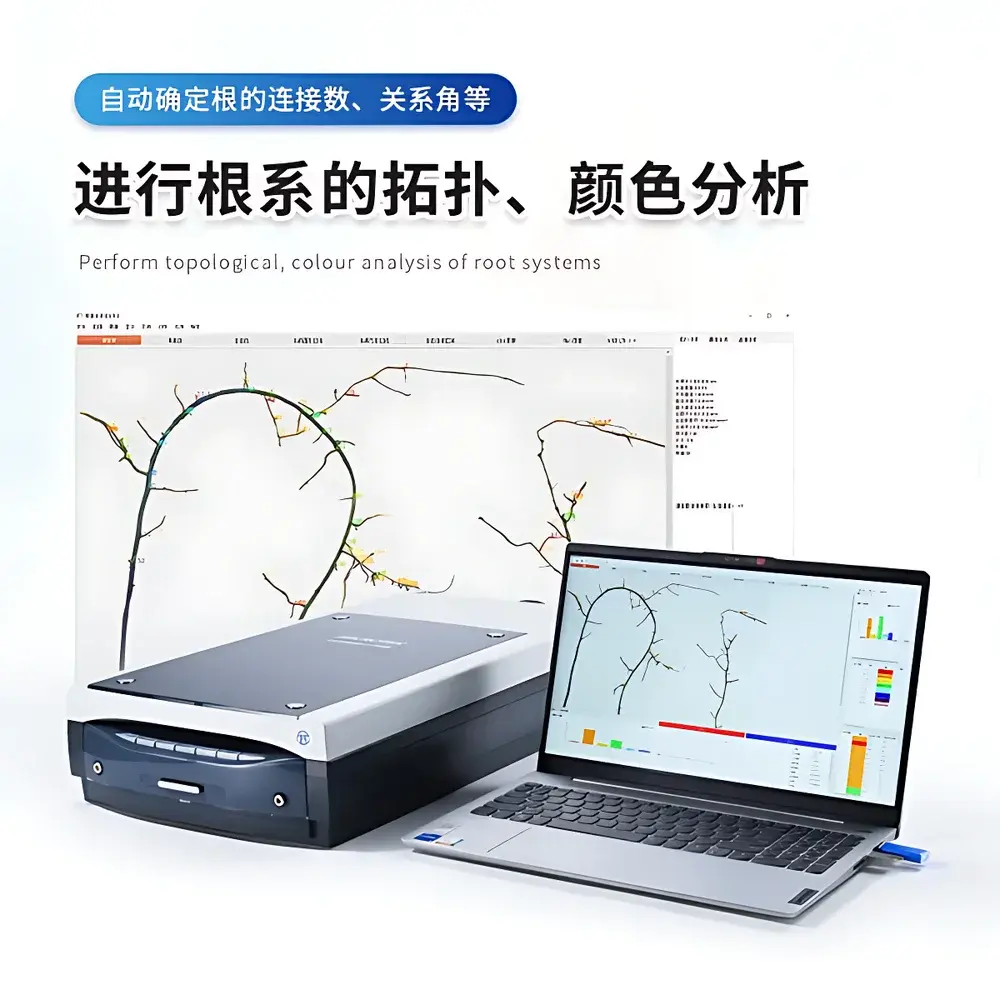
- Proprietary morphometric engine performing non-statistical, topology-aware quantification—including branch order mapping, connection matrix generation, and root-order-specific parameter extraction
- Fractal dimension calculation via box-counting algorithm compliant with ISO 13528:2015 guidelines for dimensional analysis of biological structures
- Gravitropic and azimuthal angle measurement with ±0.5° angular resolution, supporting auxin transport and tropism studies
- Color-based segmentation module for differential analysis of root zones (e.g., meristematic, elongation, maturation regions) using CIELAB color space conversion
- Cloud-synced project management with TLS 1.2–encrypted data upload, version-controlled analysis logs, and audit-ready metadata tagging (ISO/IEC 27001-aligned)
Sample Compatibility & Compliance
The IN.GX02 accommodates excised root systems (post-washing, water-immersed or glycerol-mounted), rhizobox-grown specimens imaged through transparent acrylic panels, and hydroponically cultivated roots scanned in shallow-water trays. It complies with standard sample preparation workflows defined in ASTM D7928-17 (soil-root separation) and supports GLP-compliant documentation through timestamped, user-annotated scan sessions. The software enforces traceability via embedded digital signatures for each analysis step, satisfying FDA 21 CFR Part 11 requirements for electronic records in regulated agricultural biotechnology applications. All exported datasets include FAIR (Findable, Accessible, Interoperable, Reusable) metadata headers compatible with MIAPPE v1.1 standards for plant phenotyping data exchange.
Software & Data Management
The bundled analysis suite runs natively on Windows 10 Professional (64-bit) and requires no internet dependency for core computation. License enforcement uses a USB hardware dongle implementing AES-256 encryption. Analysis outputs include: (i) annotated TIFF overlays with color-coded diameter classes and branch hierarchy markers; (ii) Excel-compatible CSV files containing 22 primary morphometric parameters plus user-defined segmented metrics; (iii) interactive HTML reports with embedded SVG visualizations of root topology graphs and radial distribution histograms; (iv) cloud-stored project archives with role-based access control (RBAC) and automatic backup scheduling. Raw scans and processed results are stored in separate directories with SHA-256 checksums to ensure data integrity across transfers.
Applications
This system serves peer-reviewed research domains including crop drought-resistance phenotyping (e.g., maize crown root architecture under water deficit), symbiotic nodulation quantification (Rhizobium infection site volumetric ratio), root-foraging plasticity in nutrient heterogeneity experiments, allelopathic root exudate zone mapping, and CRISPR-edited root trait validation. It is routinely deployed in national crop improvement programs aligned with CGIAR’s Excellence in Breeding Platform and supports submission-ready data packages for journals such as Plant Physiology, Journal of Experimental Botany, and Frontiers in Plant Science.
FAQ
Does the system require staining or contrast agents to visualize roots?
No—optimal contrast is achieved through dual-source illumination and high dynamic range scanning; chemical staining is optional and only used for specific histochemical assays.
Can the software distinguish overlapping root segments in dense clusters?
Yes—the topology engine applies skeleton pruning, branch reconnection heuristics, and cross-sectional area weighting to resolve occlusions without manual intervention.
Is batch processing supported for multi-sample time-series experiments?
Yes—fully automated pipeline mode processes unattended queues of TIFF/JPEG files, applies uniform calibration profiles, and generates consolidated summary statistics per treatment group.
What level of technical support is provided for method validation?
COMECAUSE supplies SOP templates compliant with OECD Test Guideline 208 (Root Elongation) and offers remote calibration assistance with NIST-traceable grayscale targets.
Are software updates included post-purchase?
Yes—two years of free major version upgrades and security patches are included; extended maintenance contracts are available.



