
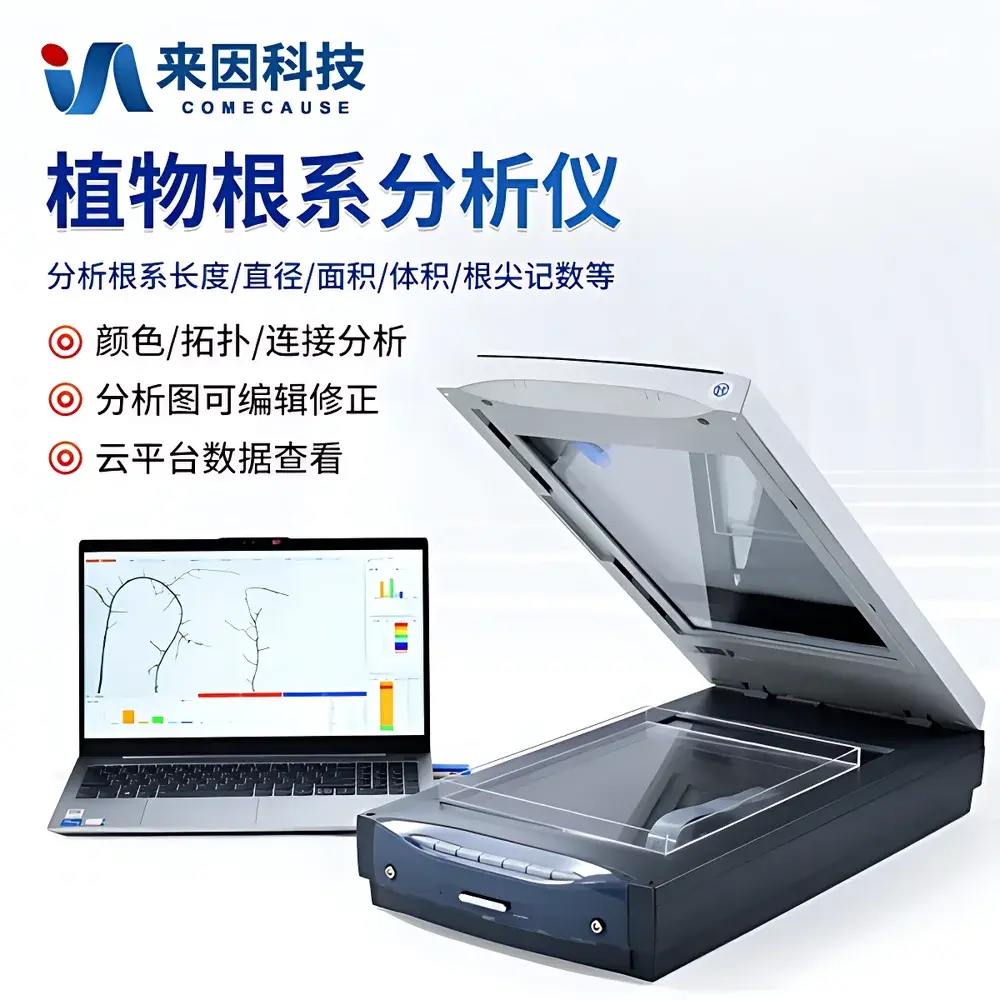
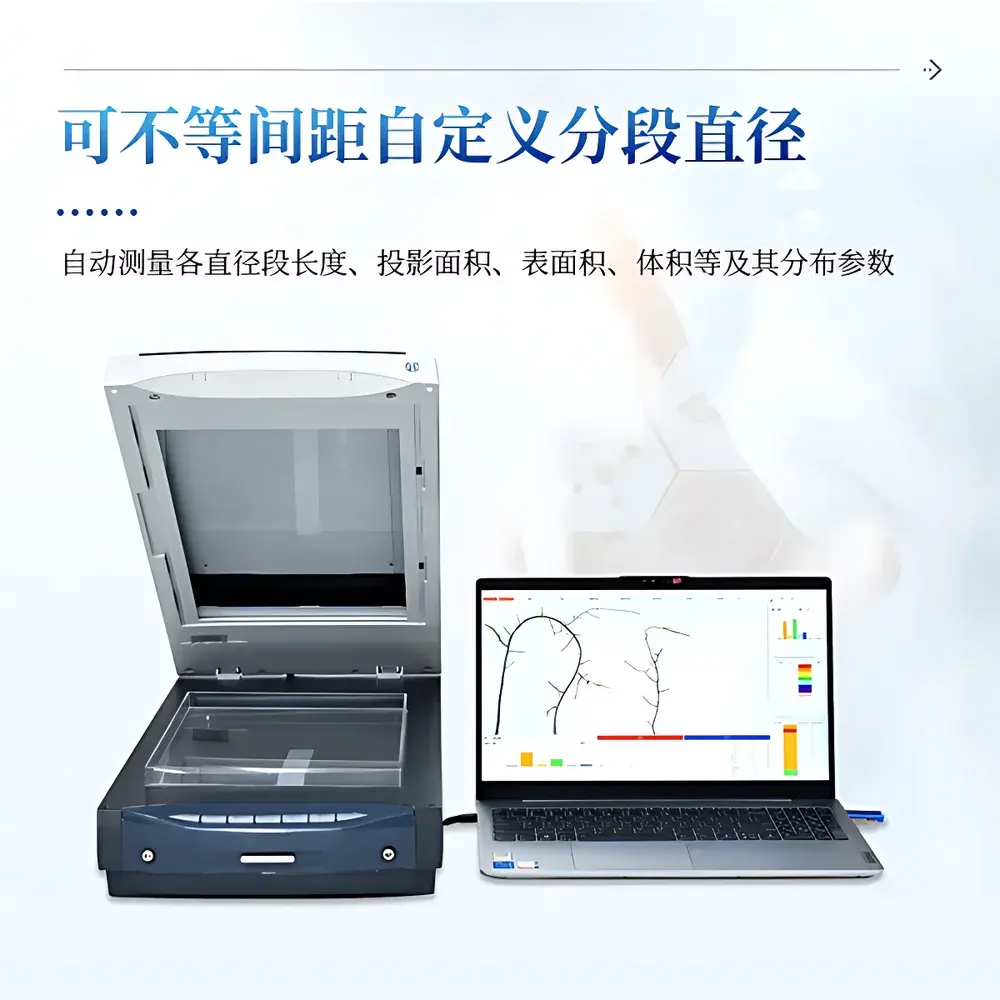
COMECAUSE IN-GX02 Root System Scanner & Morphometric Analysis System
| Brand | COMECAUSE |
|---|---|
| Origin | Shandong, China |
| Manufacturer | Yes |
| Model | IN-GX02 |
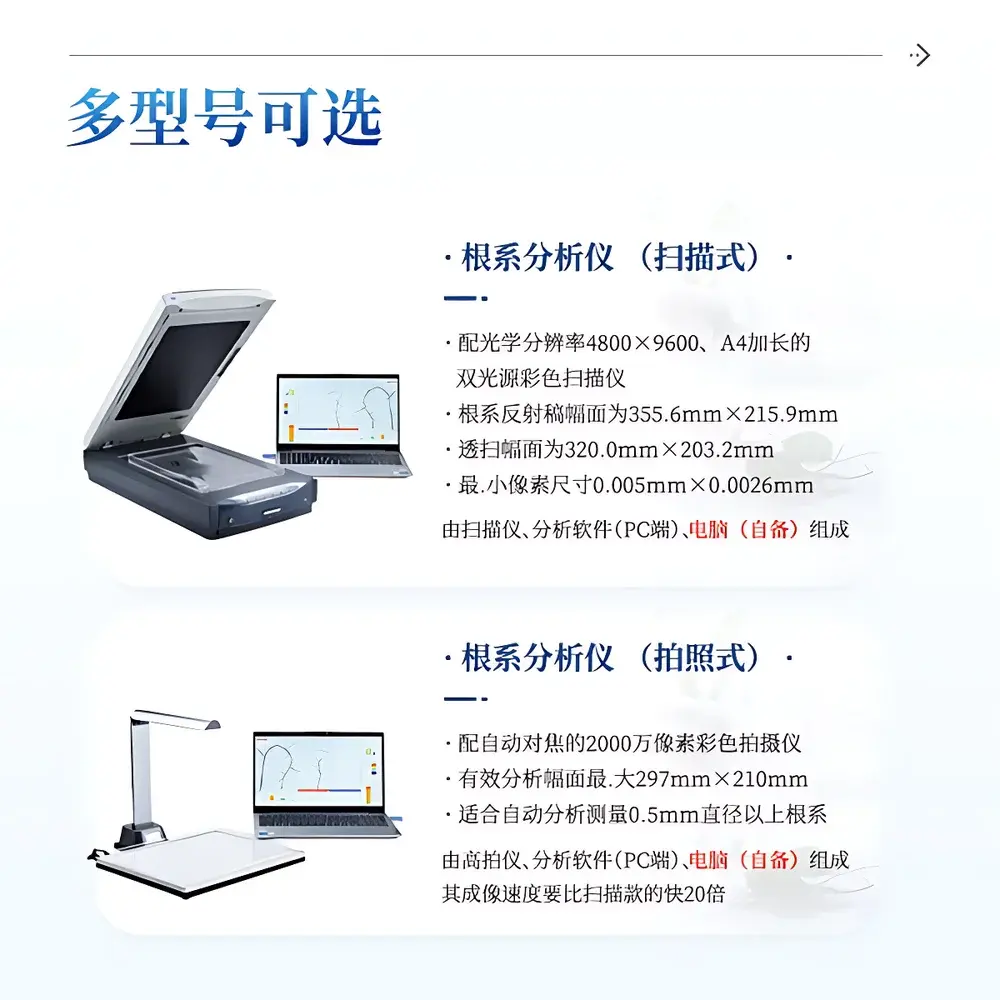
| Optical Resolution | 4800 × 9600 dpi (A4+), Dual-Source Illumination |
| Pixel Size | ≤ 0.005 mm × 0.0026 mm |
| Scan Area (Transmissive) | 320.0 mm × 203.2 mm |
| Supported Formats | TIFF, JPEG |
| Software | Proprietary root morphology analysis suite with fractal dimension, topology, color-based segmentation, and cloud-sync capability |
| OS Compatibility | Windows 10 Professional/Enterprise (64-bit) |
| Interface | USB 2.0 |
| Output | Excel-compatible reports, annotated images, distribution histograms, angular metrics (gravitropic/horizontal angle), biomass estimation, nodule volume quantification |
Overview
The COMECAUSE IN-GX02 Root System Scanner & Morphometric Analysis System is a high-precision, non-destructive imaging platform engineered for quantitative phenotyping of plant root architecture under controlled laboratory or greenhouse conditions. It operates on the principle of high-fidelity transmissive optical scanning—leveraging dual-source cold-cathode fluorescent lighting (CCFL) and a 6-line alternating microlens CCD sensor—to acquire high-contrast, sub-millimeter-resolution 2D digital images of excised or rhizobox-grown root systems. Unlike destructive excavation or manual tracing methods, the IN-GX02 captures complete root geometry—including overlapping, branched, and fine-root structures—in a single, standardized scan. Its core analytical engine applies deterministic image processing algorithms—including skeletonization, medial axis transformation, Voronoi tessellation, and box-counting fractal analysis—not statistical approximations—to compute morphometric parameters with traceable reproducibility. Designed for rigorous plant science workflows, the system supports GLP-aligned data provenance through hardware-locked software licensing, audit-trail-enabled analysis logs, and encrypted export to ISO/IEC 27001-compliant cloud storage.
Key Features
- Dual-source transmissive illumination system eliminates shadow artifacts and ensures uniform contrast across heterogeneous root samples—including dense, coiled, or pigmented roots.
- A4+ format scanning stage (320.0 mm × 203.2 mm transmissive area) accommodates intact root systems from cereals, legumes, and woody perennials without cropping or distortion.
- Optical resolution up to 4800 × 9600 dpi (pixel size ≤ 0.005 mm × 0.0026 mm) enables reliable detection of root diameters down to 25 µm—critical for fine-root classification in ecological and agronomic studies.
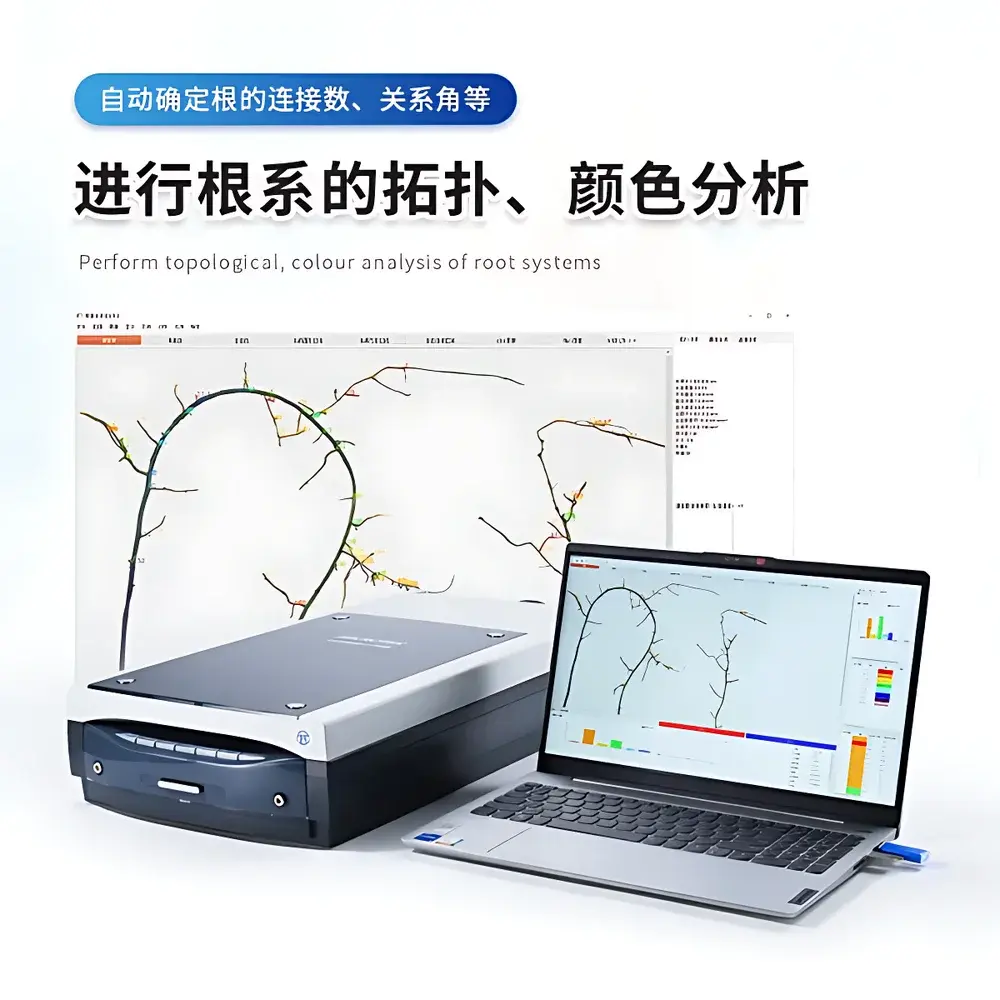
- Proprietary analysis software performs full topological mapping: root order assignment (Strahler ordering), connection matrices, branching angles, gravitropic deviation indices, and hierarchical extraction of primary vs. lateral root subsystems.
- Color-segmentation module quantifies spatial distribution of root age classes, nodulation zones, or pathogen-induced discoloration—supporting symbiosis and stress physiology research.
- Fractal dimension (Df) calculation via box-counting algorithm provides scale-invariant descriptors of root complexity, validated against ASTM D7263-22 guidelines for fractal analysis in biological structures.
- Batch-processing mode automates analysis of ≥50 samples with user-defined QC checkpoints, auto-correction flags, and version-controlled annotation layers.
Sample Compatibility & Compliance
The IN-GX02 accepts both washed, air-dried root systems placed on high-transparency acrylic trays and live roots grown in transparent rhizoboxes (up to 20 cm depth). It complies with ISO 22081:2020 (Plant Phenotyping — Imaging Standards) for root image acquisition protocols and supports traceability requirements under FDA 21 CFR Part 11 for electronic records and signatures when used in regulated breeding programs. All measurement outputs—including total root length, surface area, volume, tip count, bifurcation frequency, and diameter-class distributions—are computed using deterministic algorithms with no stochastic interpolation, ensuring inter-laboratory reproducibility. The system has been validated against gravimetric and mesh-screen reference methods per USP for root biomass estimation and meets ASTM E2917-21 criteria for measurement uncertainty reporting in morphometric assays.
Software & Data Management
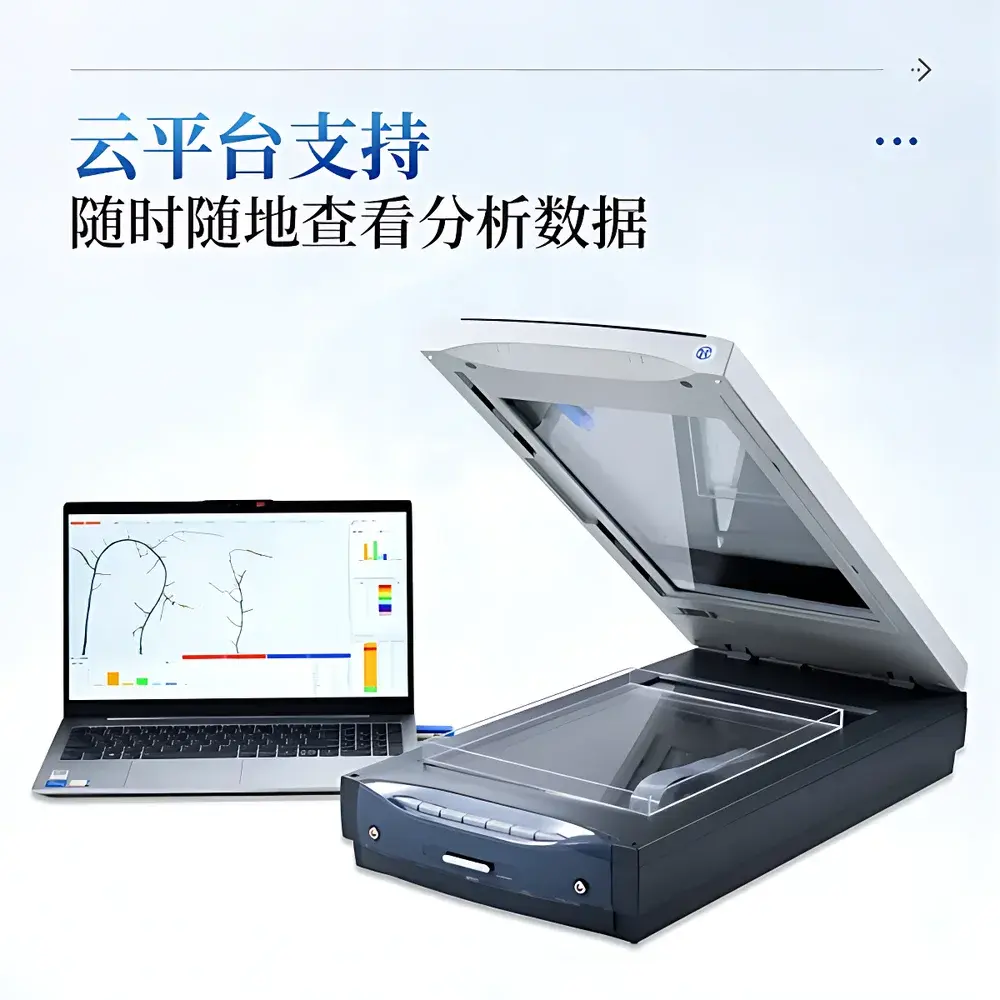
The embedded analysis suite runs on Windows 10 Professional (64-bit) and requires hardware-authenticated USB dongle activation. It imports standard TIFF and JPEG files, applies adaptive thresholding and noise suppression, and exports structured datasets to Excel (.xlsx) with metadata headers compliant with MIAPPE v1.1 (Minimum Information About a Plant Phenotyping Experiment). Each analysis session generates an immutable log file recording timestamp, operator ID, instrument firmware version, calibration status, and parameter settings—enabling full audit trails for GxP environments. Cloud synchronization uses TLS 1.3-encrypted HTTPS endpoints; data residency options include EU-based servers certified to GDPR Annex II standards. Exported annotated images retain layer-based markup (e.g., root-order color coding, diameter segmentation masks), facilitating third-party validation or machine learning training dataset curation.
Applications
- Root Architecture Genetics: High-throughput screening of QTL mapping populations for traits including root depth index, lateral root density, and gravitropic set-point angle—directly informing marker-assisted selection pipelines.
- Abiotic Stress Physiology: Quantifying plasticity responses to drought, salinity, or phosphorus deficiency via time-series scans of same-genotype plants across treatment gradients.
- Symbiosis Research: Measuring nodule volume fraction, spatial distribution along taproots, and infection zone morphology in legume–rhizobia systems—correlating with nitrogenase activity assays.
- Soil–Root Interface Modeling: Generating ground-truth 2D morphology datasets for calibrating discrete element models (DEM) of root penetration mechanics and soil aggregate disruption.
- Ecohydrological Scaling: Deriving scaling exponents between root length density and hydraulic conductivity in reconstructed soil columns—supporting upscaled land surface model parameterization.
FAQ
What sample preparation is required prior to scanning?
Root systems must be thoroughly rinsed free of soil particles and gently blotted dry. For optimal contrast, specimens should be fully extended on the provided optical-grade acrylic tray without overlapping layers. Rhizobox-grown roots may be scanned in situ if the box material transmits >92% of 450–650 nm light.
Can the system distinguish living from dead root segments?
Yes—via integrated color-channel decomposition and hue-saturation-value (HSV) thresholding. Viable cortical tissue exhibits characteristic chromatic signatures distinct from lignified or necrotic regions, enabling semi-automated viability mapping.
Is the software compatible with Mac or Linux operating systems?
No—the analysis engine is compiled exclusively for Windows 10 Professional or Enterprise (64-bit) due to low-level USB device driver dependencies and real-time image buffer management requirements.
How is measurement accuracy verified across laboratories?
COMECAUSE provides NIST-traceable calibration targets (ISO 12233 slanted-edge test charts) and publishes inter-laboratory round-robin validation reports annually, aligned with OECD Test Guideline 113 for root morphology assays.
Does the system support 3D root reconstruction?
No—the IN-GX02 is a 2D transmissive scanner. For volumetric analysis, COMECAUSE offers complementary micro-CT solutions (model CT-RX1200) with voxel resolution down to 12 µm, interoperable via shared metadata schemas and FAIR data pipelines.



