
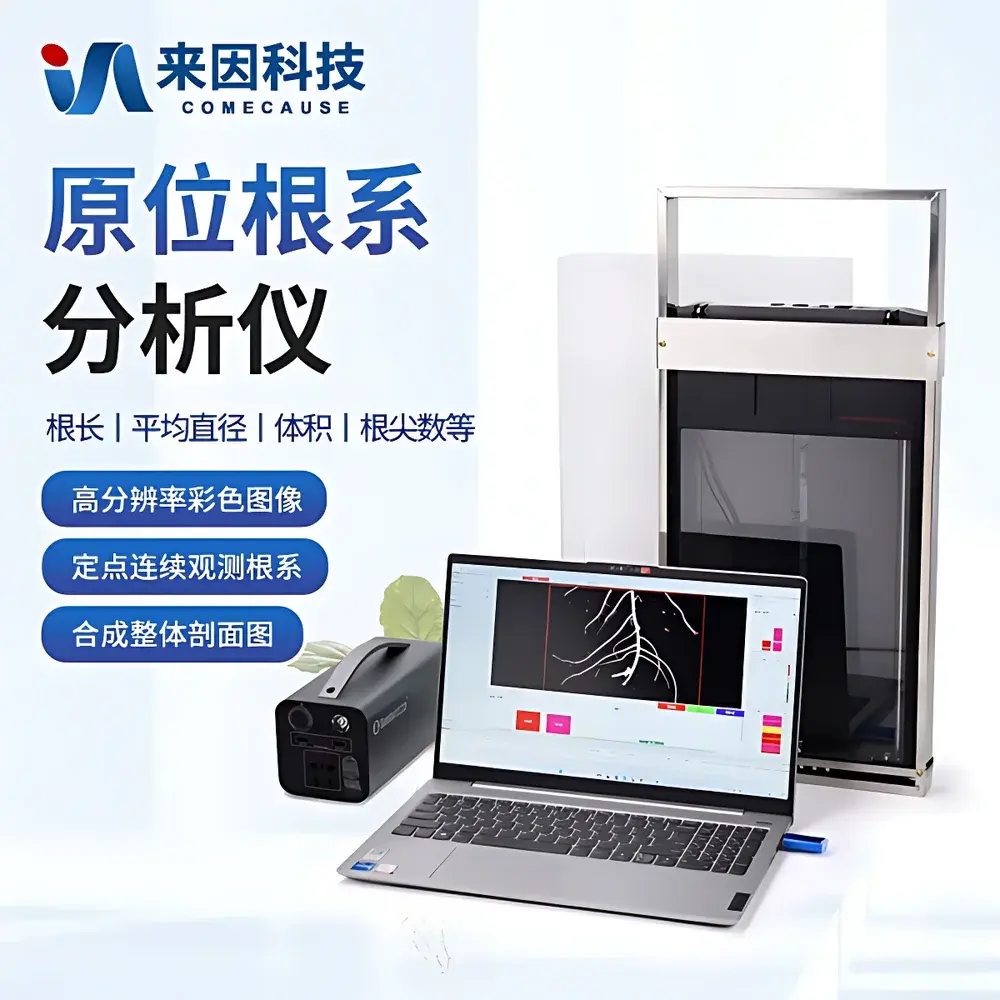
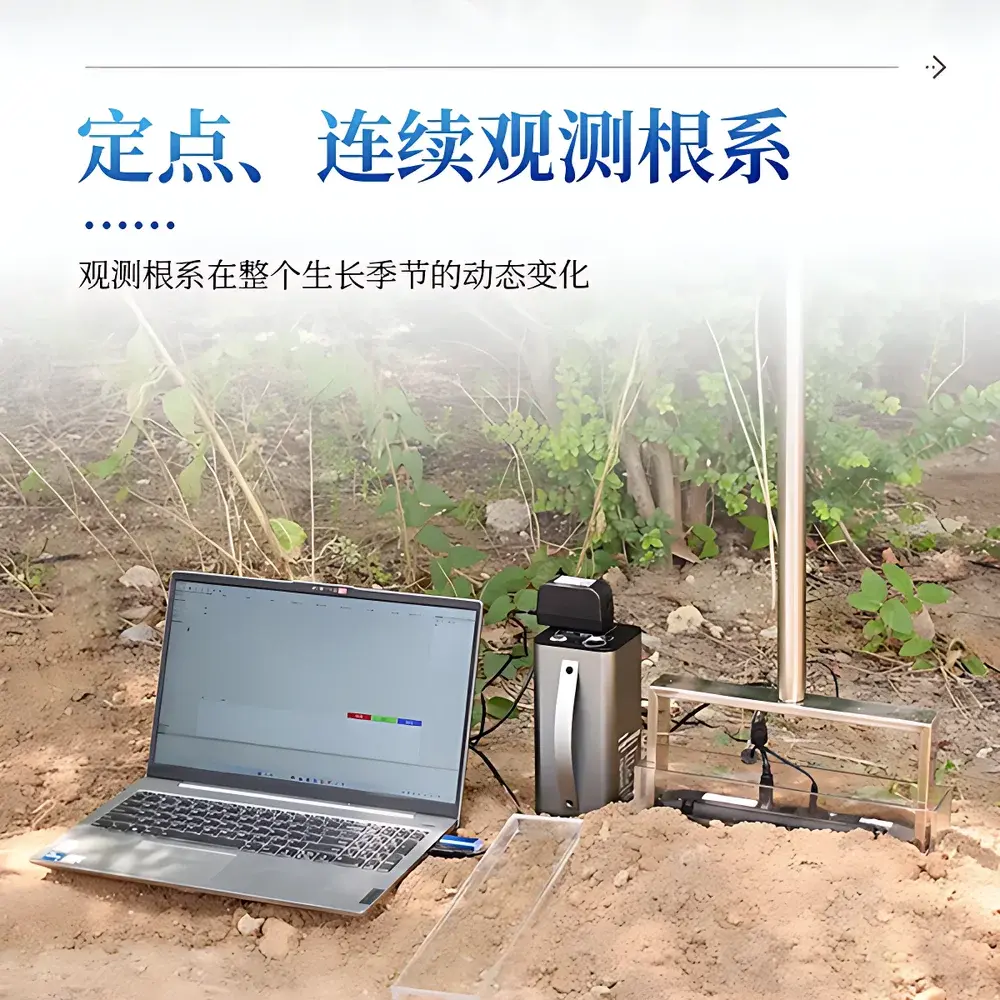
COMECAUSE IN-GXY In-Situ Planar Root Imaging System
| Brand | COMECAUSE |
|---|---|
| Model | IN-GXY |
| Origin | Shandong, China |
| Manufacturer Type | OEM Manufacturer |
| Resolution | 4800 × 9600 dpi |
| Image Acquisition Time | 8 s per scan |
| Sensor | CCD |
| Illumination | LED |
| Single-Scan Width | 216 mm |
| Single-Scan Depth | 297 mm |
| Color Depth | 48-bit |
| Scan Window Dimensions | Dual-sided, 280 × 58 × 1000 mm and 280 × 58 × 500 mm |
| Power Supply | External 68,000 mAh battery pack |
| Integrated Laptop | 13th Gen Intel Core i5-13420H, 15-inch display, 16 GB RAM, 512 GB SSD |
Overview
The COMECAUSE IN-GXY In-Situ Planar Root Imaging System is an engineered solution for non-destructive, high-resolution, time-series visualization of live root architecture within soil matrices. Unlike destructive excavation or rotary-based root scanners, the IN-GXY employs a planar imaging architecture that captures lateral cross-sectional views of roots along a fixed vertical plane—enabling continuous, spatially registered monitoring of root growth dynamics without disturbing rhizosphere integrity. Its operational principle relies on high-precision linear CCD scanning combined with uniform LED illumination and calibrated optical path geometry to resolve fine morphological features—including root tips, branching points, diameter gradients, and cortical tissue contrast—even under heterogeneous soil backgrounds. Designed specifically for longitudinal field and greenhouse studies, the system supports repeated measurements at identical spatial coordinates over weeks or months, generating temporally aligned image stacks suitable for quantitative phenotyping and functional trait modeling in plant-soil interaction research.
Key Features
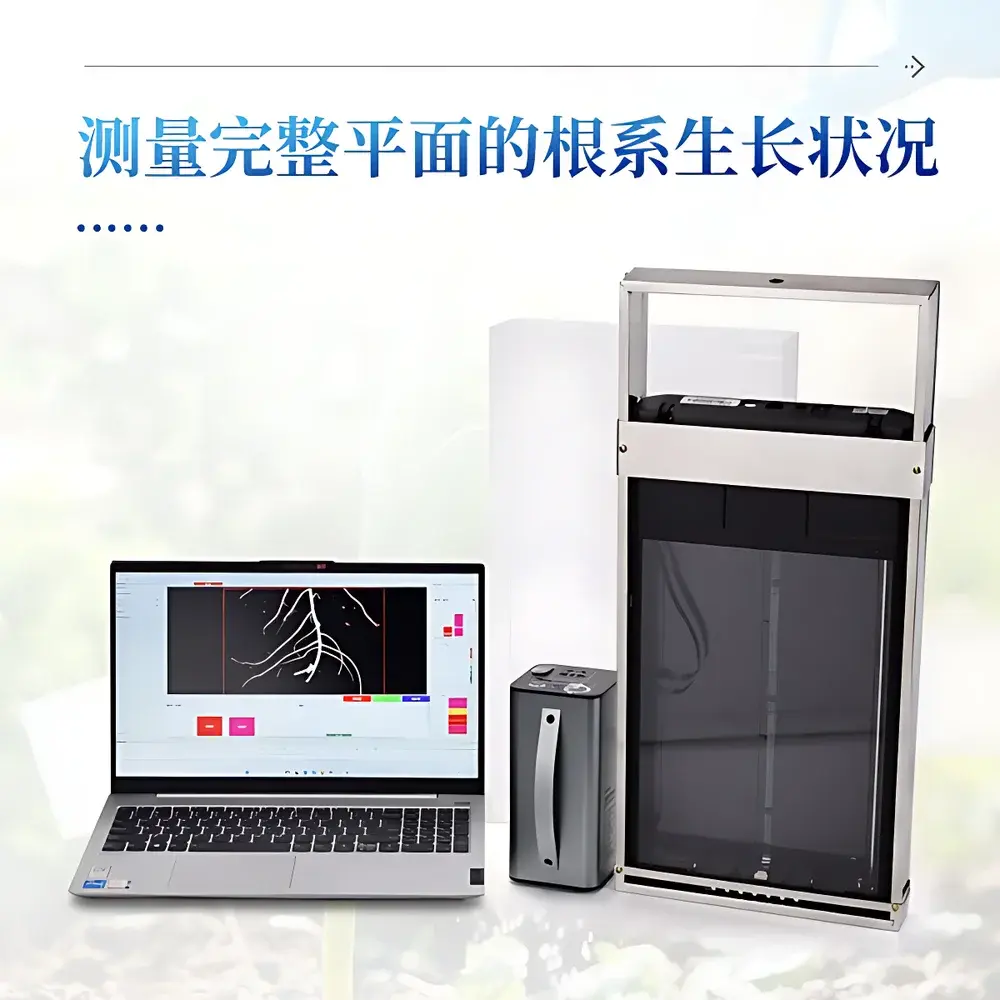
- True in-situ planar imaging: Captures full-depth lateral root profiles (up to 297 mm depth) across a 216 mm wide vertical plane—eliminating rotational interpolation artifacts inherent in cylindrical root scanners.
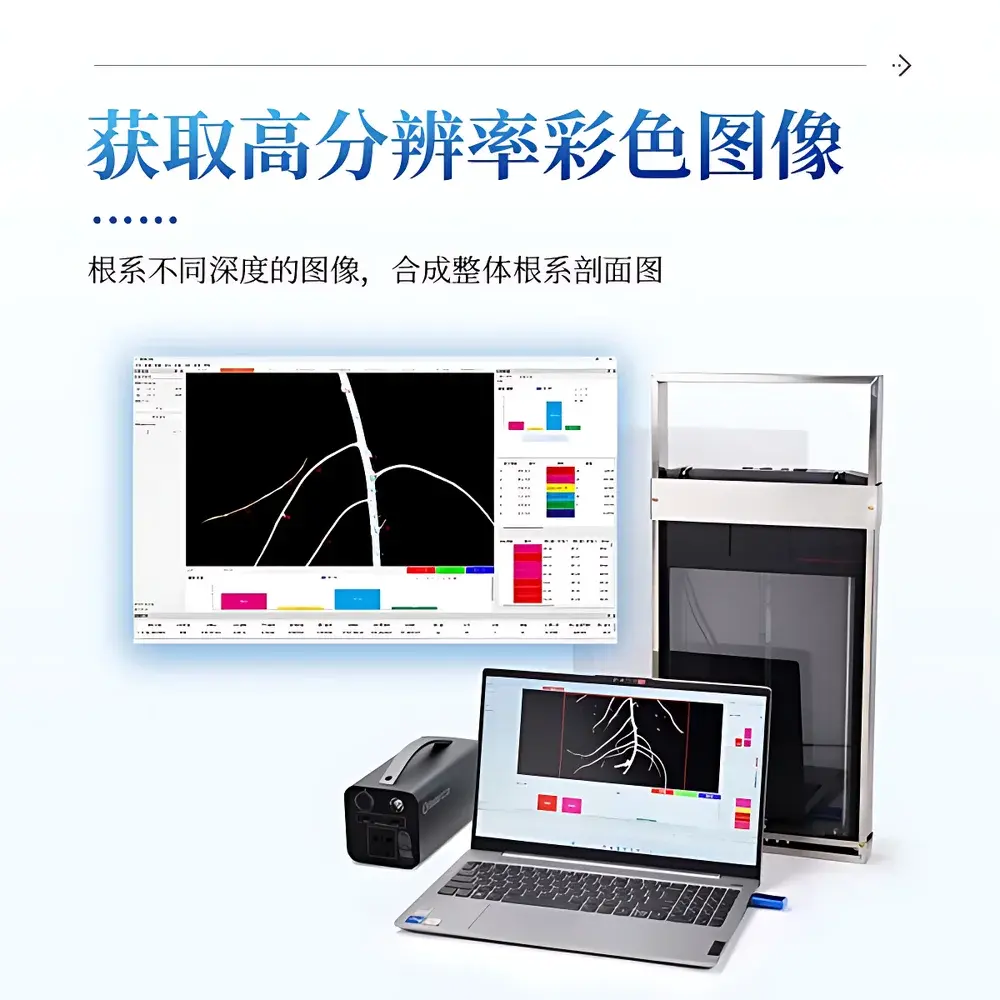
- High-fidelity optical acquisition: 4800 × 9600 dpi resolution CCD sensor with 48-bit color depth ensures accurate grayscale differentiation between root tissues, soil particles, water films, and organic debris.
- Automated, repeatable scanning: Motorized linear rail system enables programmable descent and stop-and-scan positioning; each full-depth scan completed in ≤8 seconds with sub-millimeter positional repeatability.
- Dual-format observation windows: Includes two standardized acrylic root observation tubes (280 × 58 × 1000 mm and 280 × 58 × 500 mm), compatible with common minirhizotron installation protocols and ASTM D7928-22 guidelines for soil-root interface characterization.
- Integrated field-deployable platform: Bundled with a ruggedized laptop (13th Gen Intel Core i5-13420H, 16 GB RAM, 512 GB SSD) and external 68,000 mAh power bank for uninterrupted operation in remote or off-grid experimental sites.
Sample Compatibility & Compliance
The IN-GXY is validated for use with herbaceous and woody species grown in mineral soils, peat-based substrates, hydroponic aggregates, and engineered growth media. Its planar geometry accommodates both monocot and dicot root architectures, including fibrous, taproot, and adventitious systems. The system complies with ISO 21502:2021 (Guidance on imaging-based root phenotyping) and aligns with FAO/ICARDA best practices for in-situ root monitoring in agroecological trials. All hardware components meet IP54 ingress protection standards for dust and moisture resistance during outdoor deployment. Data acquisition workflows support audit-ready metadata tagging (timestamp, GPS coordinate, operator ID, environmental conditions) required under GLP-compliant plant phenotyping protocols.
Software & Data Management
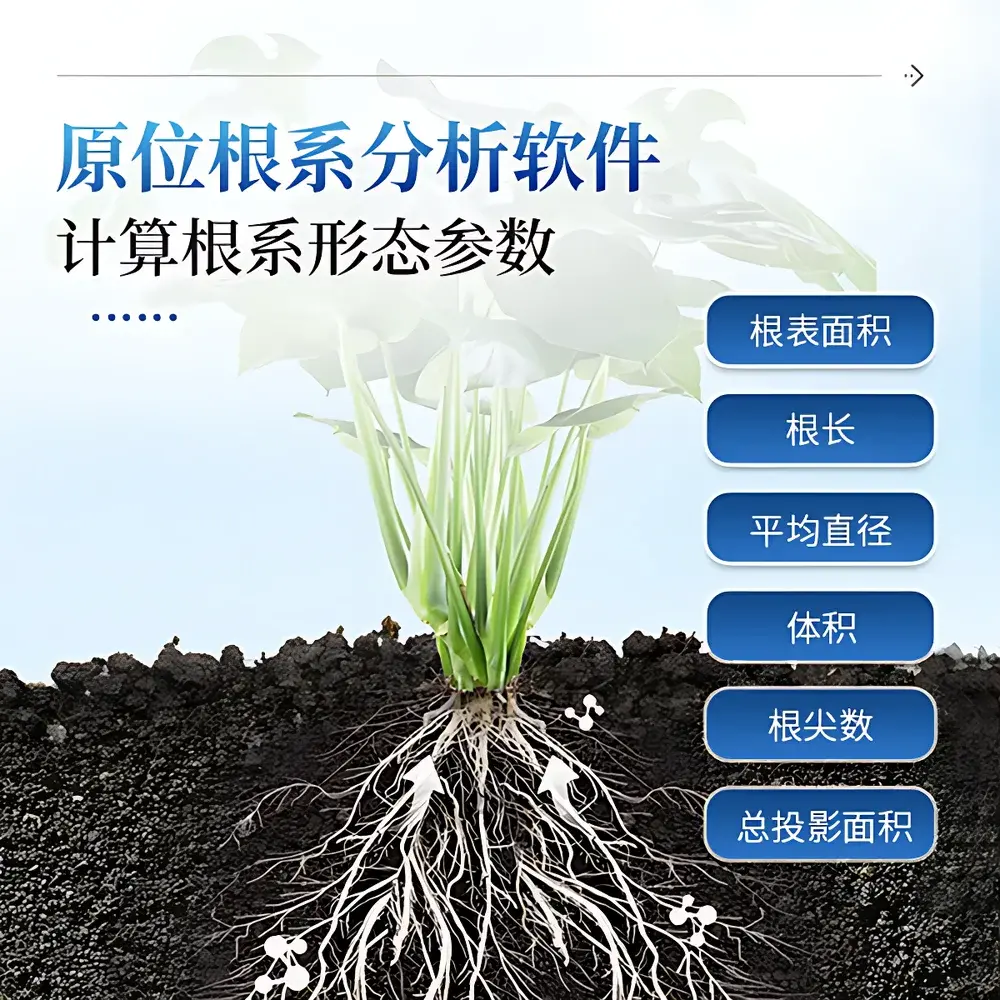
The proprietary COMECAUSE RootVision™ software suite provides end-to-end image processing and morphometric analysis. It implements a multi-stage segmentation pipeline combining adaptive thresholding, morphological filtering, and convolutional neural network (CNN)-assisted root delineation trained on annotated datasets from maize, wheat, soybean, and Arabidopsis. Output metrics include total root length (cm), average diameter (µm), surface area (cm²), projected area (cm²), volume estimate (mm³), root tip count, branching frequency, and elongation rate (cm/day). All analyses generate traceable CSV and HDF5 exports compliant with MIAPPE v1.1 metadata standards. Software supports FDA 21 CFR Part 11–compatible user authentication, electronic signatures, and immutable audit logs for regulated environments.
Applications
- Agricultural breeding programs: Quantify genotype-specific root plasticity under drought, salinity, or nutrient deficiency stress—supporting marker-assisted selection for deep rooting or lateral proliferation traits.
- Precision agronomy trials: Evaluate spatial-temporal root responses to variable-rate irrigation, fertigation, or tillage regimes—informing site-specific management decisions.
- Ecosystem ecology: Monitor fine-root turnover, mortality, and mycorrhizal colonization dynamics in grassland, forest, and restoration plots—contributing to carbon flux modeling (e.g., CENTURY, RothC).
- Phytoremediation & slope stabilization: Assess root reinforcement capacity and soil-binding efficacy of pioneer species in mine tailings or landslide-prone terrain.
- Plant-pathogen interaction studies: Visualize real-time root damage progression during nematode infection or oomycete colonization—enabling kinetic modeling of defense response timing.
FAQ
Can the IN-GXY be used in field conditions with variable ambient light or temperature?
Yes—the system operates independently of ambient lighting due to integrated LED illumination, and its electronics are rated for stable performance between 5°C and 40°C.
Is calibration required before each scan session?
No—factory-calibrated optical path and motorized positioning ensure consistent pixel-to-mm mapping across sessions; optional daily verification using included ceramic reference scale.
Does the software support batch processing of time-series image stacks?
Yes—RootVision™ includes automated time-lapse alignment, motion correction, and differential growth quantification across up to 100+ sequential scans.
Are raw image files stored in open formats?
All acquired TIFF images are saved in uncompressed, 48-bit RGB format with embedded EXIF metadata; no proprietary binary wrappers.
What is the minimum detectable root diameter under typical loam soil conditions?
Empirical validation shows reliable detection of roots ≥80 µm in diameter when imaged against moist, well-structured loam with low organic matter interference.




