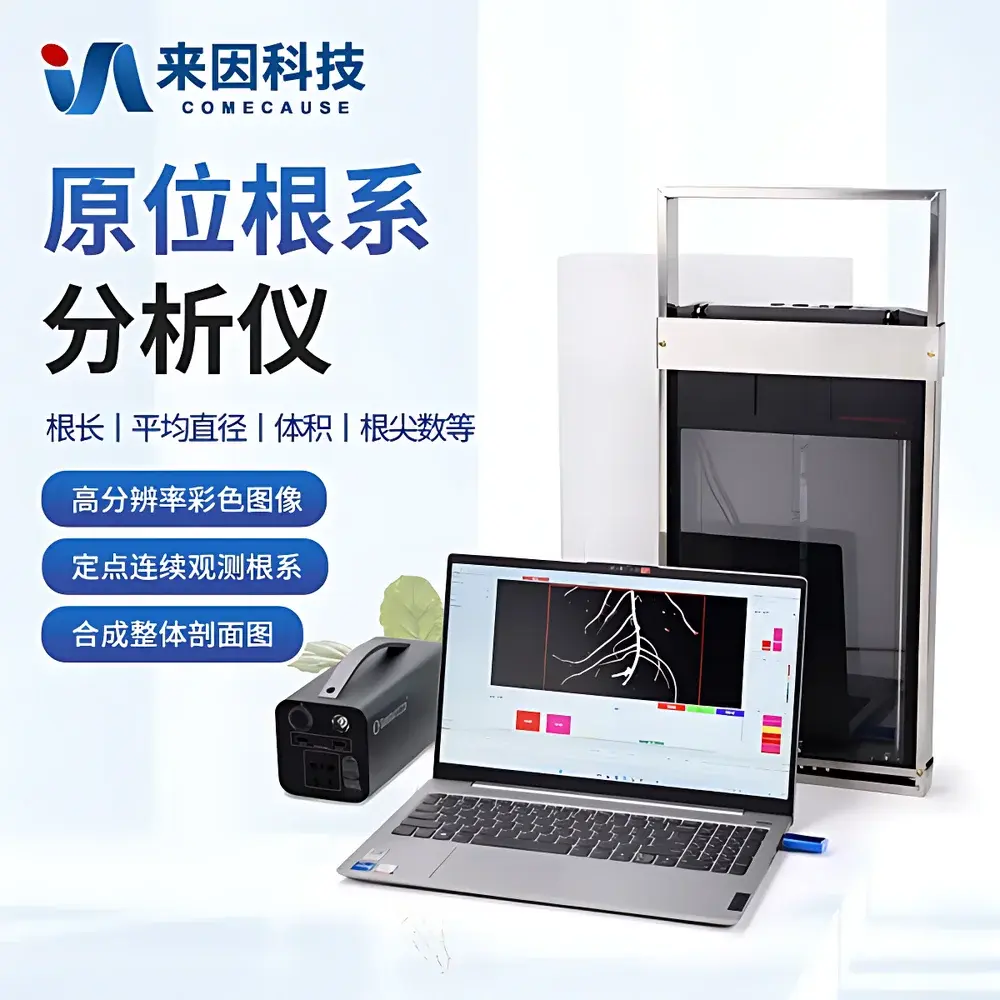
COMECAUSE IN-GXY In-Situ Planar Root Imaging System
| Brand | COMECAUSE |
|---|---|
| Origin | Shandong, China |
| Manufacturer Type | Direct Manufacturer |
| Regional Category | Domestic (China) |
| Model | IN-GXY |
| Price | USD 4,900 (approx.) |
| Optical Resolution | 4800 × 9600 dpi |
| Image Acquisition Time | 8 s per scan |
| Sensor | High-Sensitivity CCD |
| Illumination | Uniform LED Array |
| Single-Scan Width | 216 mm |
| Single-Scan Depth | 297 mm |
| Color Depth | 48-bit RGB |
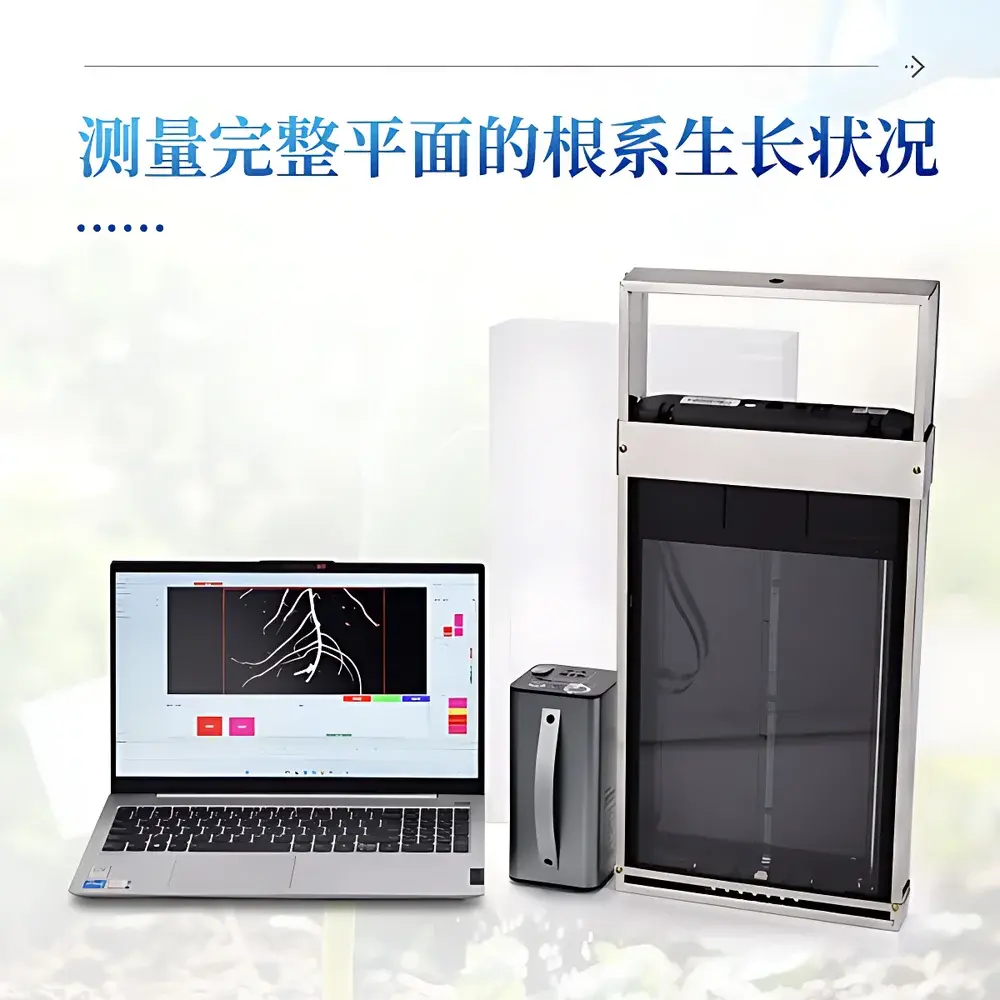
| Scanning Window Dimensions | Dual-sided — 280 × 58 × 1000 mm and 280 × 58 × 500 mm |
| External Power Supply | 68,000 mAh Li-ion Battery Pack |
| Integrated Laptop | 13th Gen Intel Core i5-13420H |
| Display | 15.6" FHD |
| RAM | 16 GB DDR5 |
| Storage | 512 GB NVMe SSD |
Overview
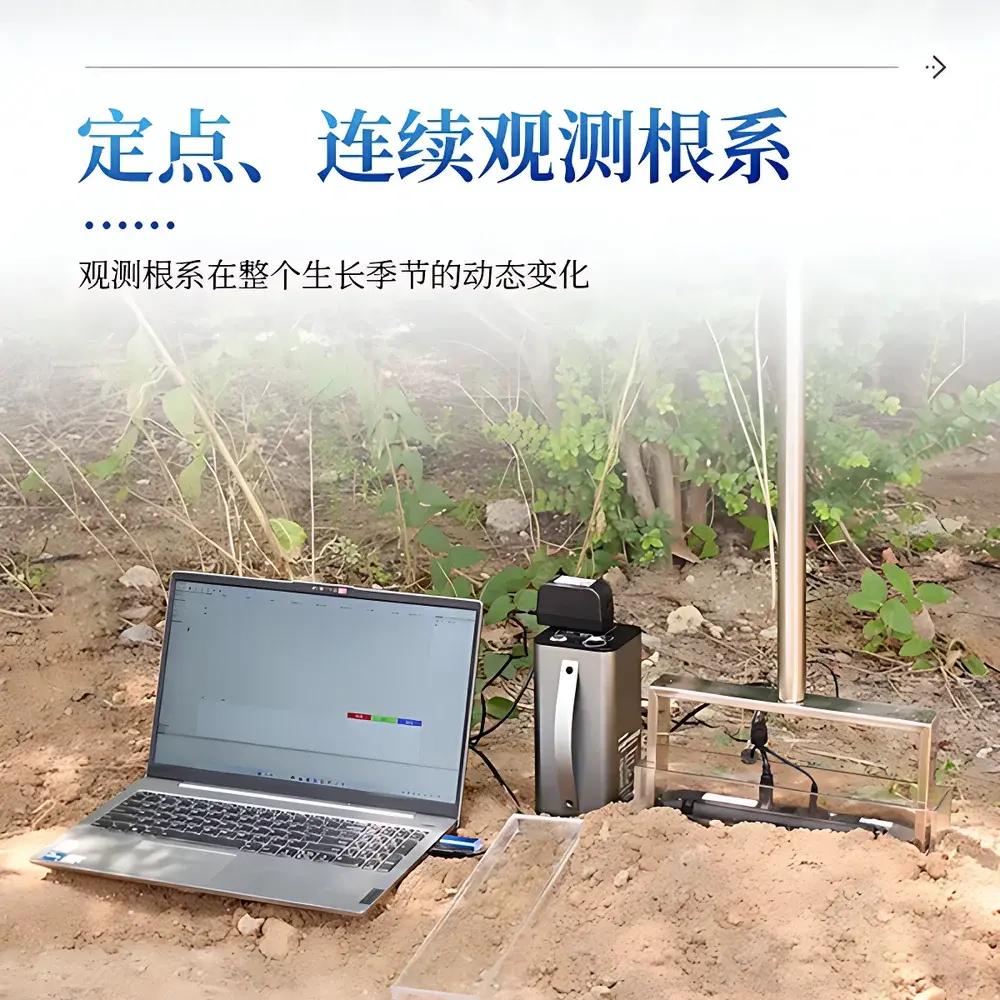
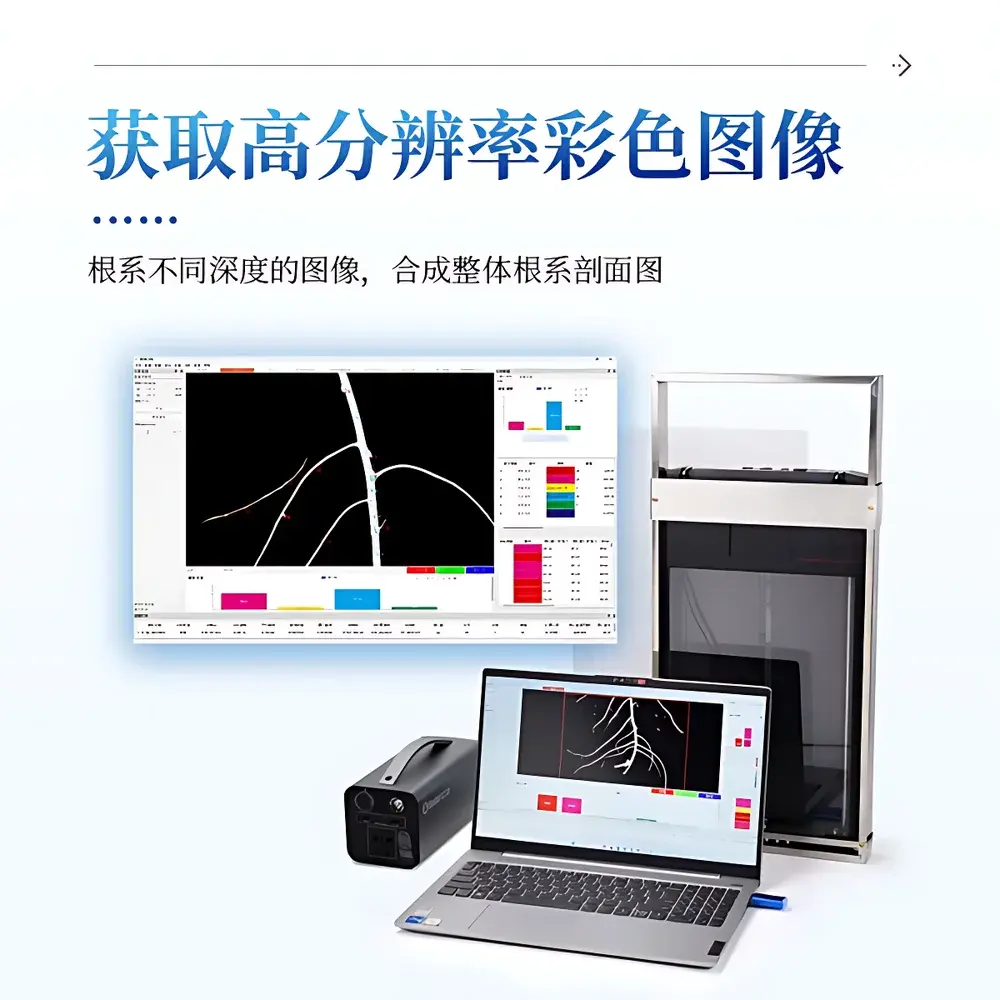
The COMECAUSE IN-GXY In-Situ Planar Root Imaging System is a non-invasive, high-resolution optical imaging platform engineered for continuous, two-dimensional (2D) planar monitoring of root architecture within soil profiles. Unlike rotary or cylindrical root scanners that reconstruct partial cross-sections via rotation, the IN-GXY employs a fixed, vertically oriented dual-window scanning architecture to capture full-plane lateral soil-root interfaces in situ—enabling true spatial continuity across depth gradients. The system operates on the principle of controlled optical sectioning: high-intensity, spectrally stable LED illumination penetrates translucent soil media (e.g., sand, vermiculite, or specially formulated rhizobox substrates), while a precision-aligned linear CCD sensor acquires grayscale and color-registered images at up to 4800 × 9600 dpi resolution. Each 8-second scan yields a geometrically calibrated, distortion-corrected image strip spanning 216 mm width × 297 mm depth, with sub-millimeter pixel resolution (~5.3 µm/pixel at native resolution). This enables quantitative morphometric analysis of intact, living root systems without excavation, soil disturbance, or temporal sampling bias.
Key Features
- True planar in-situ imaging: Captures complete vertical root-soil interface across defined window dimensions (280 × 58 × 1000 mm and 280 × 58 × 500 mm), eliminating interpolation artifacts inherent in rotational or point-scan methods.
- High-fidelity optical acquisition: 48-bit color depth CCD sensor with dynamic range >60 dB ensures accurate discrimination of root tissue, soil particles, and microbial hyphae under variable moisture and organic content conditions.
- Battery-powered field autonomy: Integrated 68,000 mAh external power bank supports ≥72 hours of continuous operation (based on 1-scan/hour protocol), enabling unattended seasonal deployment in remote field sites or greenhouse rhizotrons.
- Embedded computing platform: Pre-configured laptop with 13th Gen Intel Core i5-13420H processor, 16 GB RAM, and 512 GB NVMe SSD runs proprietary acquisition software with real-time preview, auto-focus calibration, and lossless TIFF export.
- Depth-resolved stratification: Sequential scans at user-defined vertical intervals (e.g., 2–5 mm steps) allow reconstruction of pseudo-3D root distribution maps aligned to soil horizon boundaries.
Sample Compatibility & Compliance
The IN-GXY is validated for use in standardized rhizoboxes, split-root containers, and custom-built soil mesocosms with transparent front/back acrylic or glass panels (minimum thickness: 6 mm; maximum light scatter coefficient: 0.05 cm⁻¹). It accommodates soil textures ranging from coarse sand (d₅₀ ≈ 0.5 mm) to loam (clay content ≤30%) when pre-equilibrated to field capacity. The system complies with ISO 22123:2021 (soil-root imaging standardization guidelines) and supports GLP-compliant metadata tagging (timestamp, GPS coordinates, operator ID, environmental log integration). All image datasets retain EXIF-compatible headers for auditability, and raw acquisitions are stored in uncompressed TIFF format to preserve bit-depth integrity for downstream segmentation and machine learning training.
Software & Data Management
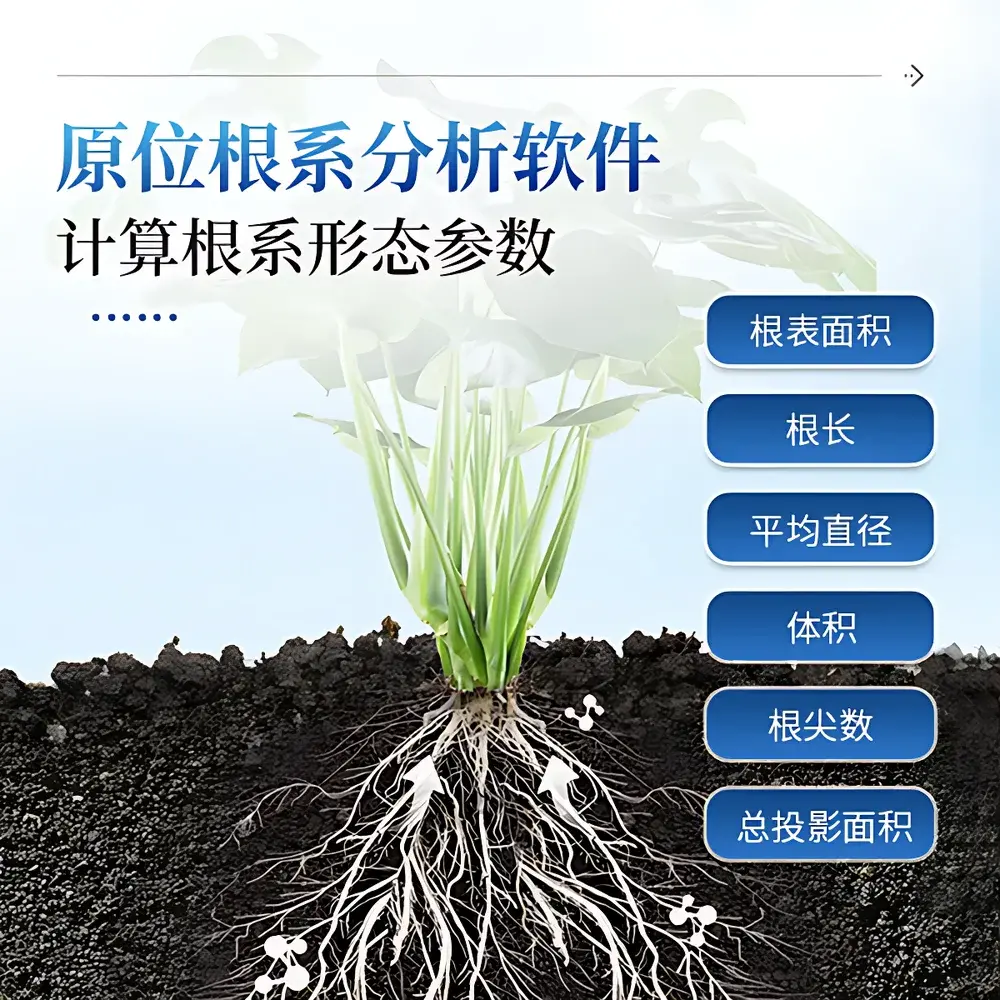
The bundled COMECAUSE RootAnalyzer v3.2 software provides end-to-end workflow support—from acquisition scheduling and geometric correction to semi-automated root tracing and morphometric quantification. Algorithms implement adaptive thresholding, skeletonization, and branch-point detection optimized for low-contrast root-soil boundaries. Output parameters include total root length (cm), mean diameter (mm), surface area (cm²), projected area (cm²), volume estimate (cm³), root tip count, branching frequency (nodes/cm), and convex hull metrics. Data exports conform to FAIR principles: CSV (tabular), GeoJSON (spatial annotations), and HDF5 (multi-dimensional time-series stacks). Software supports 21 CFR Part 11-compliant user access controls, electronic signatures, and immutable audit trails for regulated environments (e.g., USDA ARS trials, EU Horizon-funded phenotyping consortia).
Applications
- Long-term phenotyping of root architectural plasticity under drought, salinity, or nutrient stress gradients.
- Validation of root growth models (e.g., CRootBox, SimRoot) using temporally resolved empirical data.
- Evaluation of mycorrhizal colonization dynamics via co-imaging of fungal hyphae and root epidermis.
- Quantitative assessment of root responses to bioinoculants, nematicides, or soil amendments in controlled-environment studies.
- Calibration of ground-penetrating radar (GPR) and electrical resistivity tomography (ERT) signals against ground-truth root biomass distributions.
FAQ
Can the IN-GXY be used in field conditions with natural soil?
Yes—when deployed in instrumented rhizotrons or trench-based observation walls with optically transparent facing panels. Native clay-rich soils require particle-size homogenization and moisture stabilization prior to installation.
What is the minimum detectable root diameter?
Under optimal contrast conditions (sand substrate, 80% water-filled pore space), the system resolves roots ≥80 µm in diameter with >92% detection sensitivity (validated against micro-CT ground truth).
Is third-party software integration supported?
Yes—via documented REST API and Python SDK for integration with PlantCV, RootNav, or custom deep learning pipelines (TensorFlow/PyTorch compatible).
How is geometric calibration maintained over seasonal temperature fluctuations?
The system includes thermal drift compensation: embedded NTC sensors monitor CCD and lens housing temperatures, and real-time affine correction matrices adjust for pixel pitch variation (±0.01% per °C).