
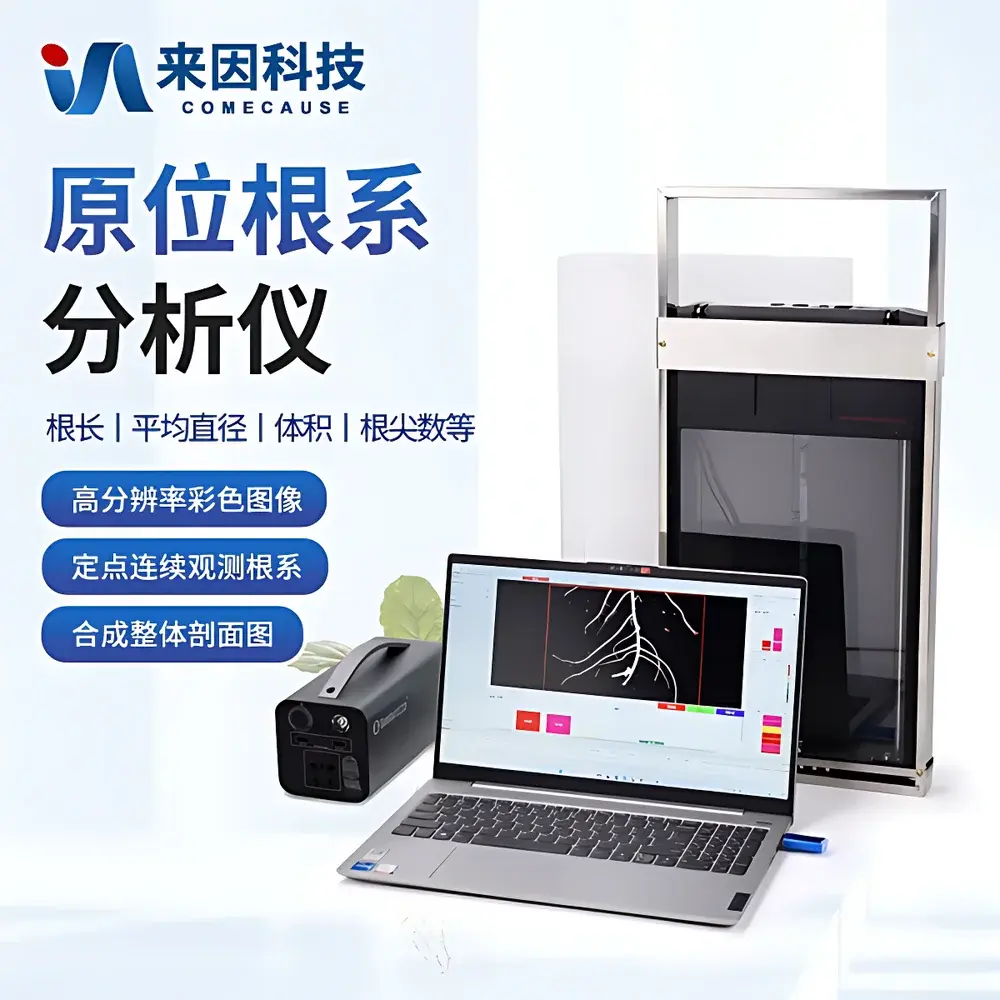
COMECAUSE IN-GXY In-Situ Planar Root Monitoring System
| Brand | COMECAUSE |
|---|---|
| Origin | Shandong, China |
| Manufacturer Type | Direct Manufacturer |
| Country of Origin | China |
| Model | IN-GXY |
| Resolution | 4800 × 9600 dpi |
| Image Acquisition Time | 8 s per scan |
| Sensor | CCD |
| Illumination | LED |
| Single-Scan Width | 216 mm |
| Single-Scan Depth | 297 mm |
| Color Depth | 48-bit |
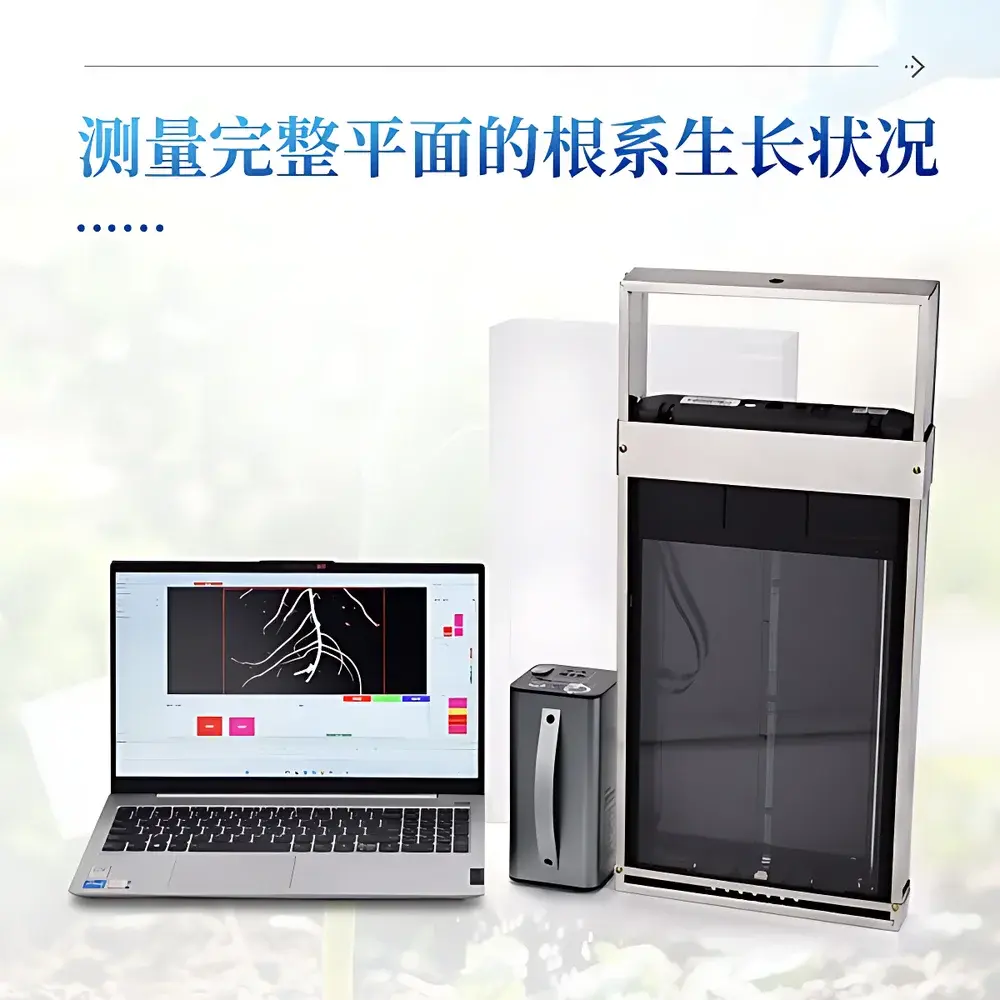
| Scan Chamber Dimensions (Dual-Sided) | 280 × 58 × 1000 mm & 280 × 58 × 500 mm |
| External Power Supply | 68,000 mAh battery pack |
| Integrated Laptop | 13th Gen Intel® Core™ i5-13420H, 15-inch display, 16 GB RAM, 512 GB SSD |
Overview
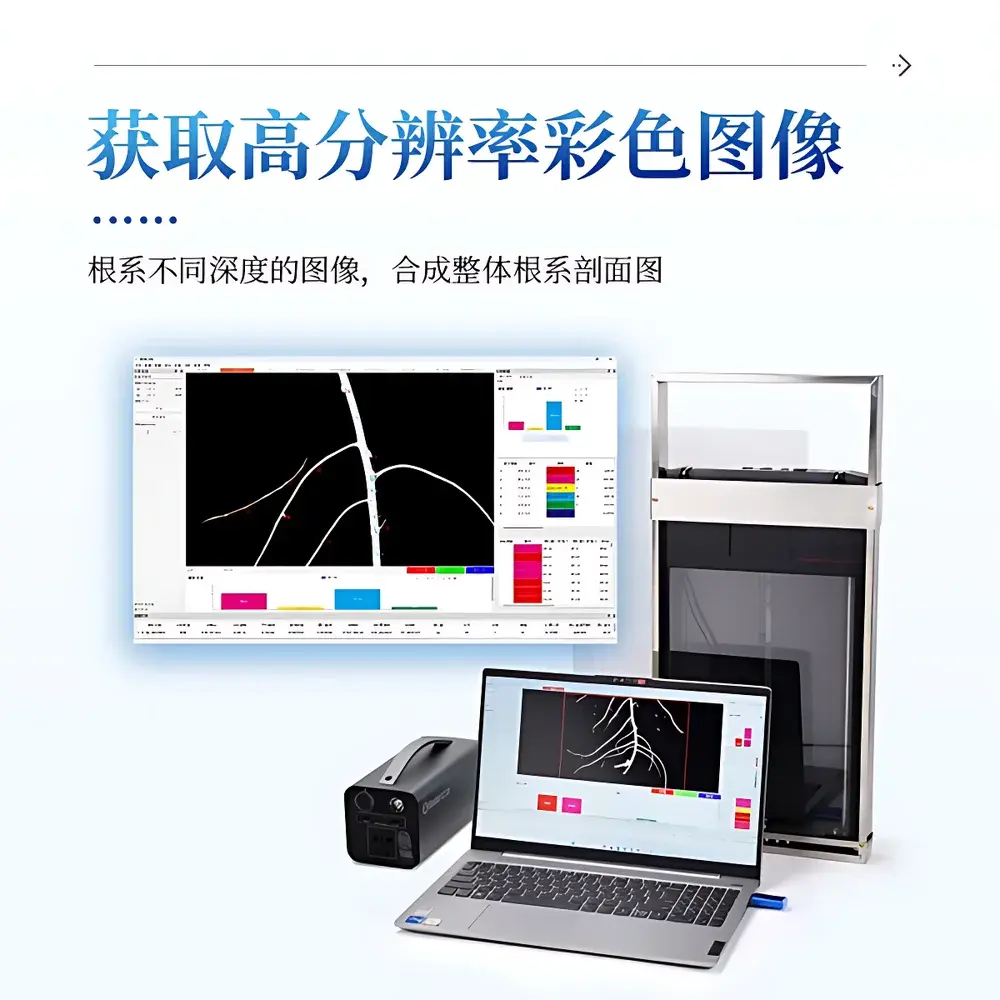
The COMECAUSE IN-GXY In-Situ Planar Root Monitoring System is a high-resolution, non-invasive imaging platform engineered for longitudinal, two-dimensional visualization and quantitative morphometric analysis of live root systems within intact soil profiles. Unlike rotary or cylindrical minirhizotron systems that sample narrow vertical columns or require rotational alignment, the IN-GXY employs a fixed dual-sided planar scanning architecture to capture full-section lateral cross-sectional images across defined soil depths—enabling true in-situ observation of root architecture dynamics without physical disturbance. The system operates on the principle of high-fidelity optical sectioning: a precision-stepped CCD sensor, coupled with uniform LED illumination and calibrated optical path geometry, acquires micron-level detail from exposed soil faces (e.g., rhizobox sidewalls or trench walls), preserving spatial context critical for ecological, physiological, and agronomic interpretation.
Key Features
- True planar in-situ imaging: Captures contiguous 216 mm wide × 297 mm deep lateral soil-root interfaces in a single 8-second scan—eliminating stitching artifacts and rotational misalignment inherent in cylindrical minirhizotrons.
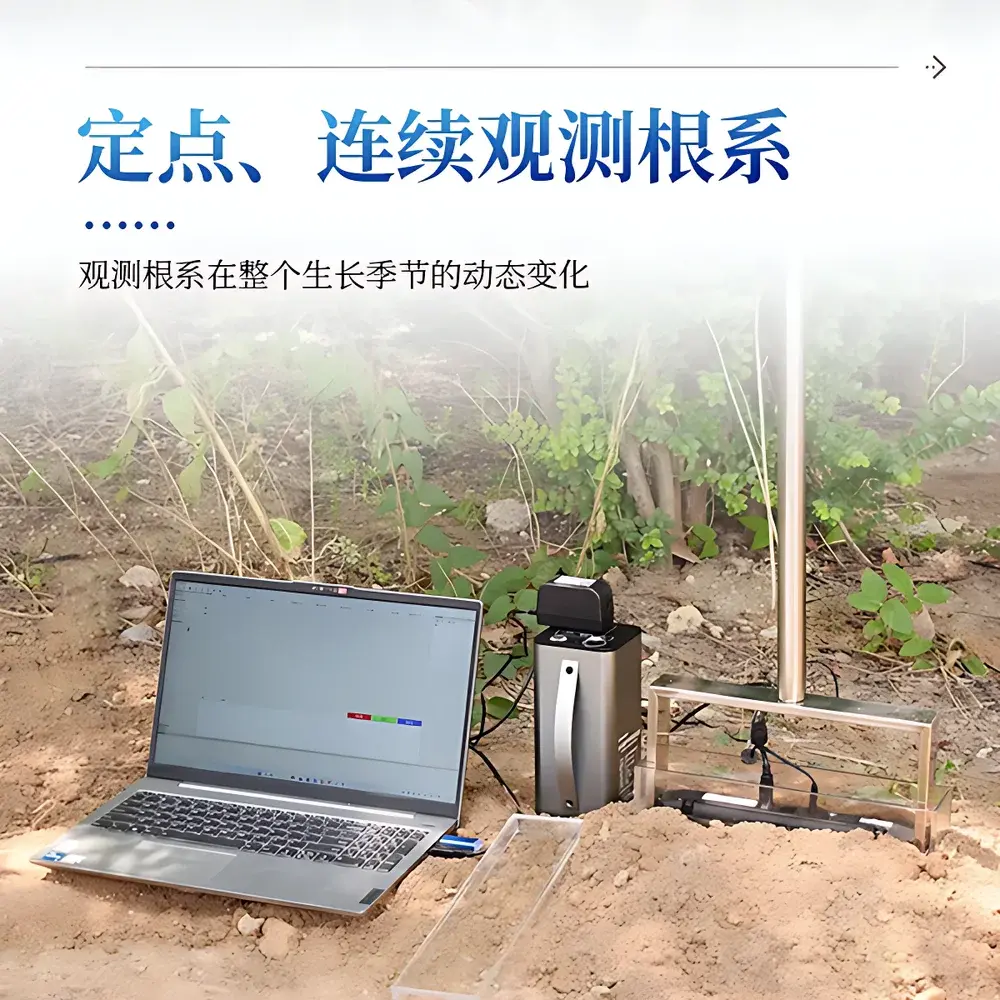
- Dual-sided scanning chamber: Accommodates both standard (1000 mm) and compact (500 mm) observation windows, supporting modular deployment in rhizotrons, field mesocosms, and greenhouse lysimeters.
- 4800 × 9600 dpi optical resolution with 48-bit color depth: Enables discrimination of fine root orders (≤0.1 mm diameter), cortical cell patterns, root hairs, and mycorrhizal hyphal associations under natural or controlled illumination conditions.
- Integrated field-deployable computing: Pre-configured laptop with 13th Gen Intel Core i5-13420H processor, 16 GB RAM, and SSD storage ensures real-time image acquisition, onboard preprocessing, and offline analysis—no external workstation dependency.
- Self-contained power architecture: 68,000 mAh external battery supports >12 hours of continuous operation (≥500 scans) in remote or off-grid field settings, meeting ISO 11274 and FAO soil monitoring protocol requirements for autonomous deployment.
Sample Compatibility & Compliance
The IN-GXY is validated for use with mineral and organic soils (sand to clay loam, pH 4.5–8.5), hydroponic substrates (rockwool, perlite), and artificial growth media in controlled-environment chambers. It complies with ASTM D5268-22 (Standard Guide for Root Observation in Soil Columns) and supports GLP-compliant data traceability through embedded timestamping, operator ID logging, and metadata tagging (scan depth, orientation, ambient temperature/humidity). All hardware components are RoHS-compliant; software export functionality adheres to ISO/IEC 17025:2017 Annex A.2 for analytical instrument validation documentation.
Software & Data Management
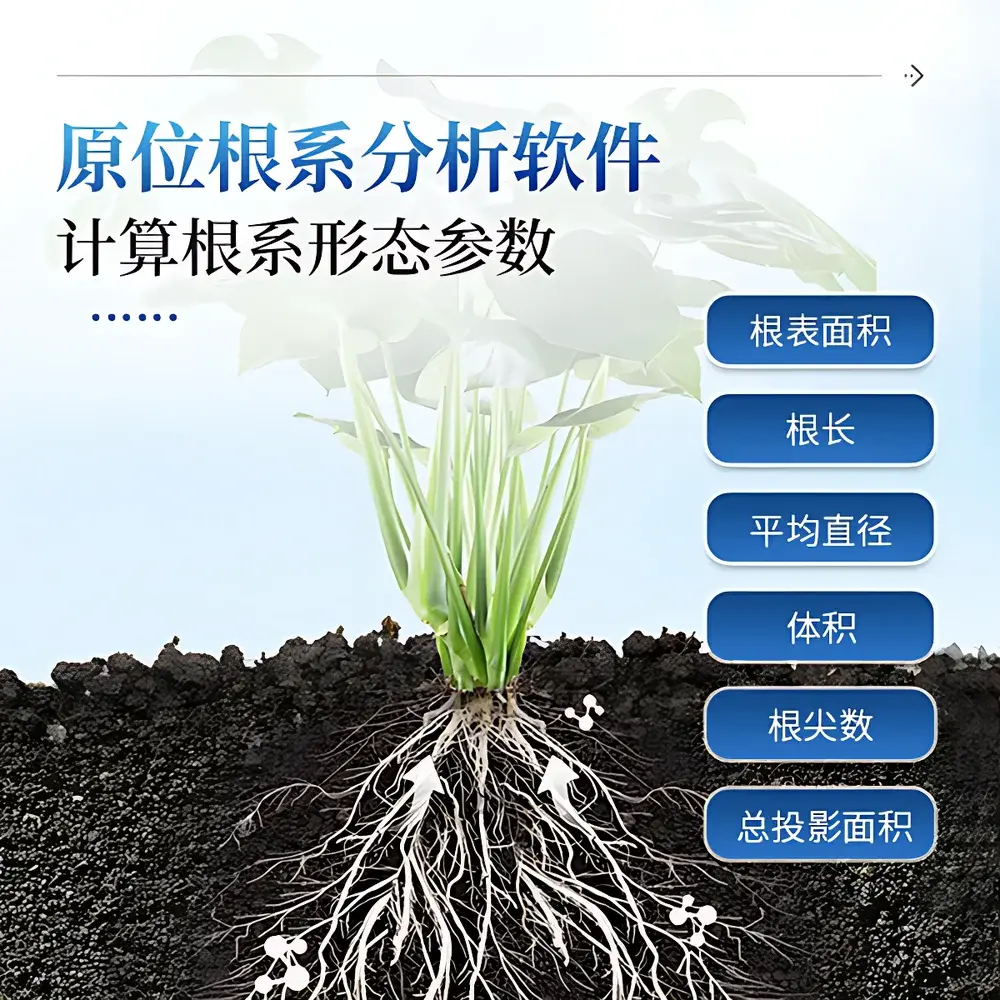
The proprietary RootVision Pro™ analysis suite (v4.2) provides automated root segmentation, skeletonization, and morphometric quantification—including total root length, average diameter, surface area, projected area, volume estimation (via pixel-based voxel modeling), and root tip count—with user-adjustable thresholds for low-contrast or senescing tissues. Batch processing supports time-series alignment and growth rate derivation (mm/day, cm²/day). Export formats include CSV (for R/Python statistical pipelines), TIFF (64-bit lossless), and standardized MIAPPE-compliant JSON-LD metadata packages. Audit trails meet FDA 21 CFR Part 11 requirements for electronic records and signatures in regulated research environments.
Applications
- Long-term phenotyping of root architectural plasticity under drought, nutrient stress, or elevated CO₂ in field and climate-controlled trials.
- Validation of root system architecture (RSA) models (e.g., CRootBox, SimRoot) using empirically derived spatial-temporal growth trajectories.
- Assessment of cover crop root penetration depth, intercropping root niche partitioning, and mycorrhizal colonization dynamics in agroecological studies.
- Soil biophysical interaction studies—e.g., root-induced macropore formation, rhizodeposition mapping via co-registered fluorescence imaging (optional add-on module).
- Supporting UN SDG 2.4 (sustainable food systems) and EU Horizon 2020 soil health monitoring frameworks through standardized, reproducible root trait datasets.
FAQ
Can the IN-GXY be used in saturated or waterlogged soil conditions?
Yes—scanning chamber seals and IP65-rated electronics permit operation at soil water contents up to field capacity; however, prolonged submersion (>48 h) requires optional waterproof housing upgrade.
Is calibration required before each scan?
No—factory-calibrated optical path and integrated reference target ensure geometric and photometric stability across deployments; annual verification against NIST-traceable step gauges is recommended.
Does the system support integration with third-party environmental sensors?
Yes—RS-485 and USB-C expansion ports enable synchronized logging of soil moisture (EC-5), temperature (PT100), and CO₂ (Vaisala CARBOCAP®) alongside root imagery.
What is the minimum root diameter resolvable under typical field soil conditions?
At 20 cm depth in loam soil, the system reliably resolves roots ≥0.12 mm in diameter (95% confidence, based on ISO 5725-2 repeatability testing).
Is remote data retrieval supported?
Yes—optional LTE/WiFi module enables encrypted cloud upload (AWS S3) and secure SSH access for offsite quality control and collaborative annotation workflows.




