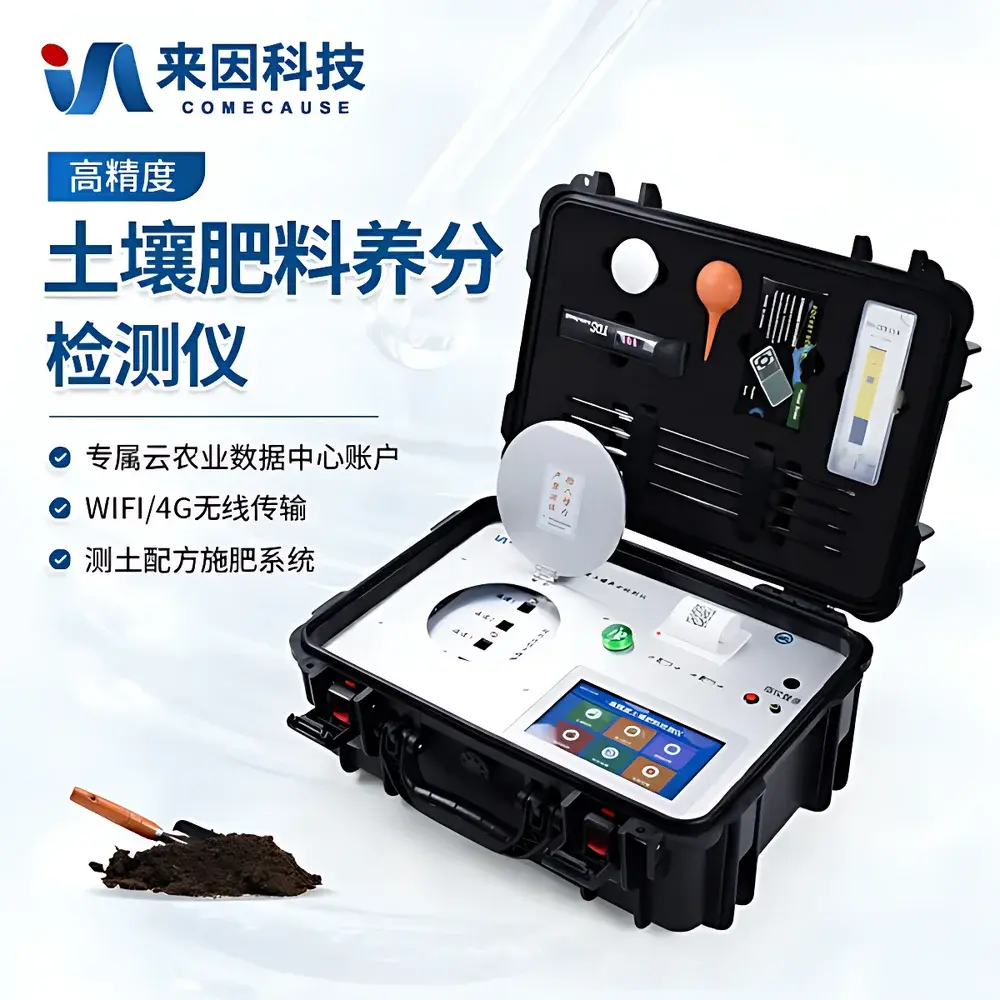
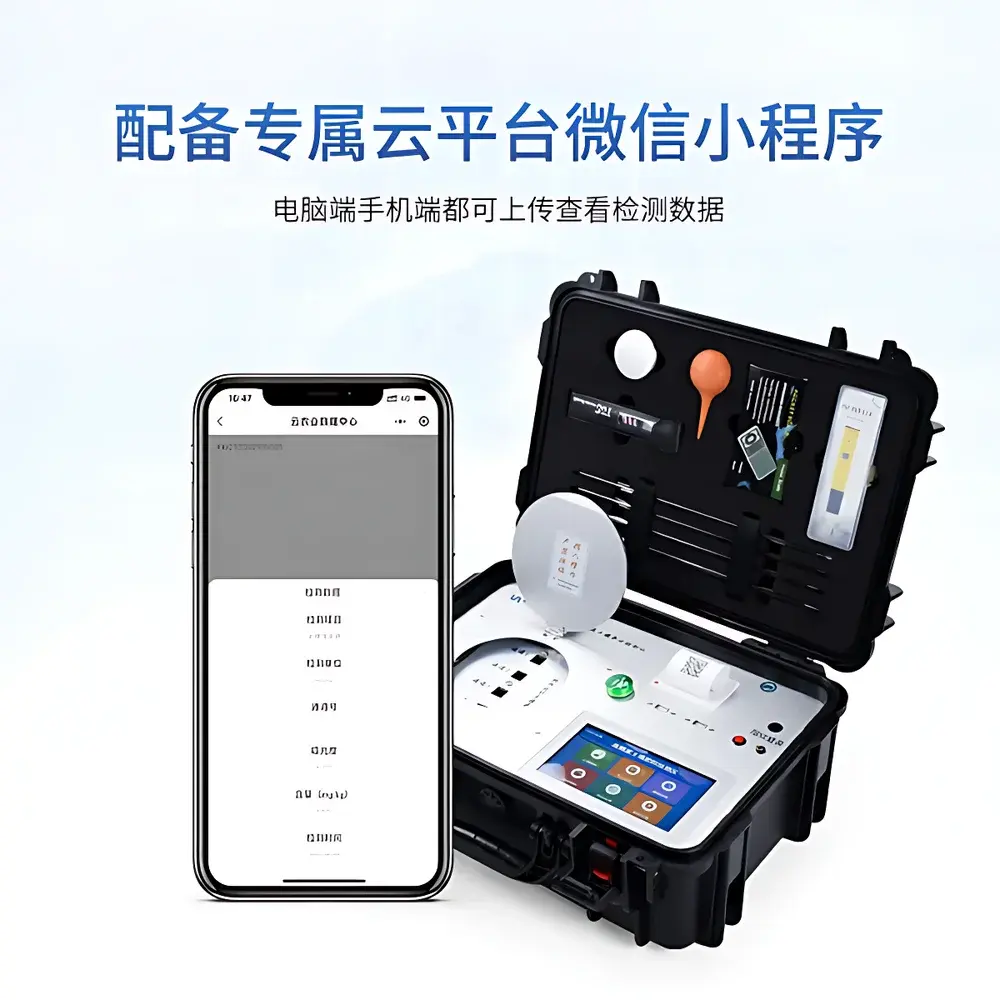
COMECAUSE IN-HT200 Portable Soil Nutrient Analyzer
| Brand | COMECAUSE |
|---|---|
| Origin | Shandong, China |
| Manufacturer Type | Direct Manufacturer |
| Model | IN-HT200 |
| Instrument Type | Portable |
| Detection Principle | Colorimetric Chemical Assay |
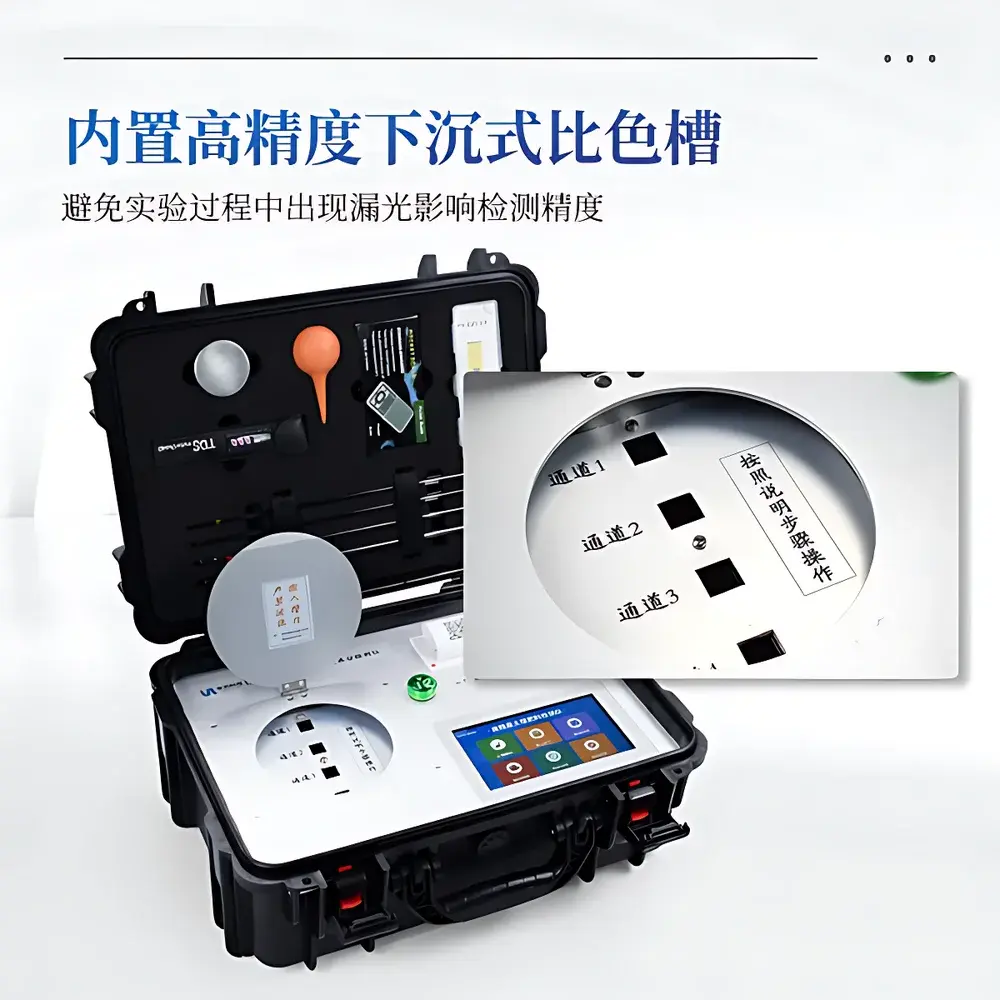
| Detection Channels | 4 Fixed-Position Optical Channels |
| Test Parameters | Nitrogen (N), Phosphorus (P), Potassium (K), Organic Matter, pH, Electrical Conductivity (EC), Moisture Content |
| Measurement Range | 0.001–9999 (unitless absorbance-derived scale) |
| Repeatability | ≤0.03% (as CV, measured with potassium dichromate standard) |
Overview
The COMECAUSE IN-HT200 Portable Soil Nutrient Analyzer is an integrated field-deployable instrument engineered for rapid, on-site quantification of essential macro- and micronutrients in soil, fertilizers, plant tissues, and aqueous extracts. It operates on standardized colorimetric chemical assay principles—specifically, spectrophotometric detection of chromogenic reaction products formed between analyte-specific reagents and target nutrients (e.g., indophenol blue for ammonium-N, molybdenum blue for phosphate, sodium nitroprusside for potassium). Unlike optical sensors or ion-selective electrodes, the IN-HT200 relies on validated wet-chemistry protocols aligned with widely accepted agronomic reference methods—including ISO 11261 (soil total N), ISO 13878 (soil organic C), AOAC 975.03 (fertilizer P), and USDA-NRCS Field Handbook procedures for extractable K and NO₃⁻. Its four-channel fixed-optical architecture eliminates mechanical movement-related drift, ensuring long-term photometric stability under variable environmental conditions typical of field deployment.
Key Features
- Four independent, wavelength-specific LED light sources (680 ± 2 nm red, 420 ± 2 nm blue, 510 ± 2 nm green, 590 ± 4 nm orange) with >100,000-hour lifetime and spectral repeatability <±0.5 nm.
- Integrated 4-channel solid-state cuvette module housed within a light-tight,下沉式 (sunken) sealed chamber featuring a 15.7 cm diameter opaque cover to eliminate ambient light interference during measurement.
- Android 5.1 operating system powered by quad-core CPU (≥1.8 GHz) and 16 GB internal storage; supports multi-user access with dual authentication (PIN + fingerprint).
- 7.0-inch high-resolution LCD display (1024 × 600 pixels) with adjustable backlight for daylight-readable operation in outdoor environments.
- Onboard GPS geotagging and real-time timestamping (synchronized via Wi-Fi) ensure full traceability per GLP-compliant data capture requirements.
- Internal rechargeable 4800 mAh Li-ion battery enabling ≥10 hours of continuous operation; AC/DC dual-power support with voltage monitoring and auto-save power-fail protection.
- Embedded procedural guidance—including step-by-step on-screen instructions, instructional video library, and built-in calibration routines—reducing operator dependency and minimizing human error.
- IP65-rated ruggedized PVC housing with ergonomic carry case optimized for mobile agricultural surveys and remote sampling campaigns.
Sample Compatibility & Compliance
The IN-HT200 accommodates liquid-phase samples derived from standardized extractions: CaCl₂ or Mehlich-3 for available P/K, KCl for NH₄⁺/NO₃⁻, and dichromate digestion for organic matter estimation (Tiurin method). It accepts both clear and turbid aqueous extracts (e.g., suspended soil filtrates), with algorithmic compensation for particulate scattering effects. All test protocols conform to national agricultural standards (NY/T 1121 series, China) and align with international frameworks including ISO 14238 (soil fertility assessment), ASTM D512 (chloride), and USP (moisture content). The instrument meets electromagnetic compatibility (EMC) Class B requirements per IEC 61326-1 and carries IP65 ingress protection certification for dust/water resistance. Data integrity complies with ALCOA+ principles (Attributable, Legible, Contemporaneous, Original, Accurate, Complete, Consistent, Enduring, Available), supporting audit readiness for GMP-aligned agronomic trials.
Software & Data Management
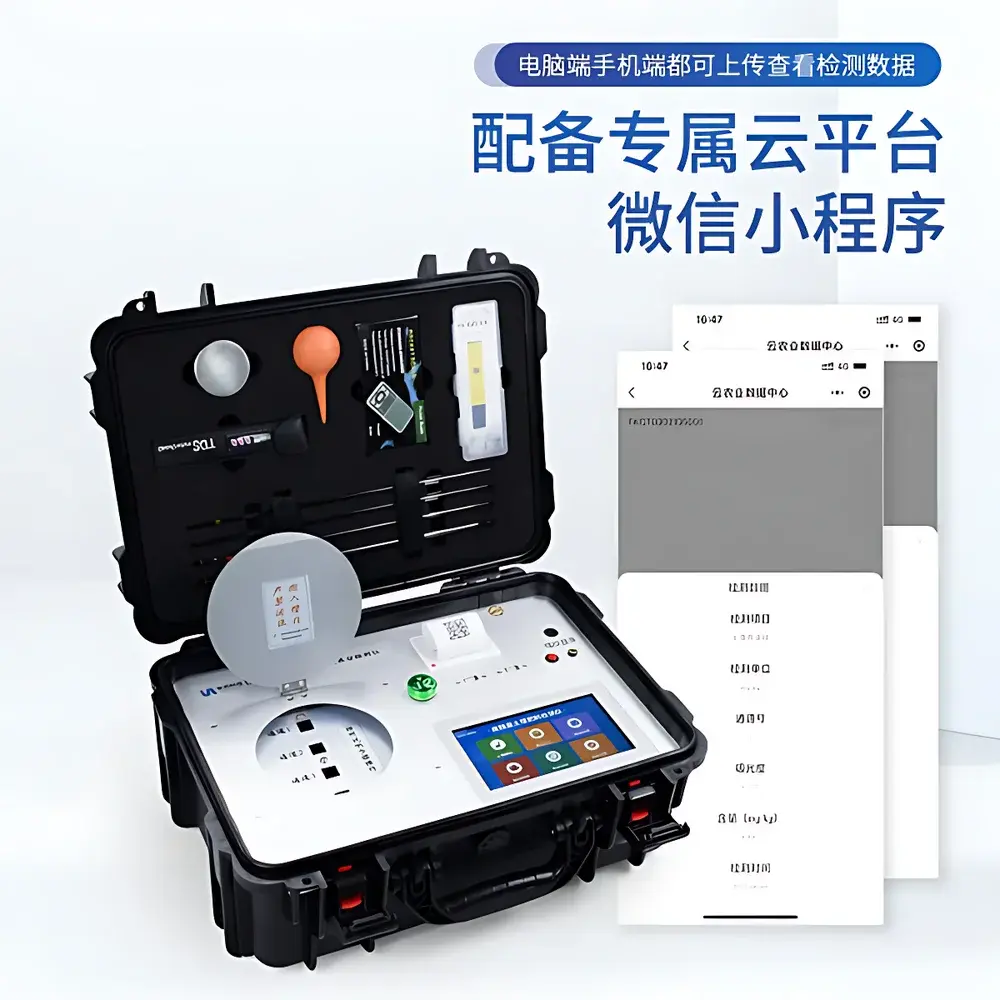
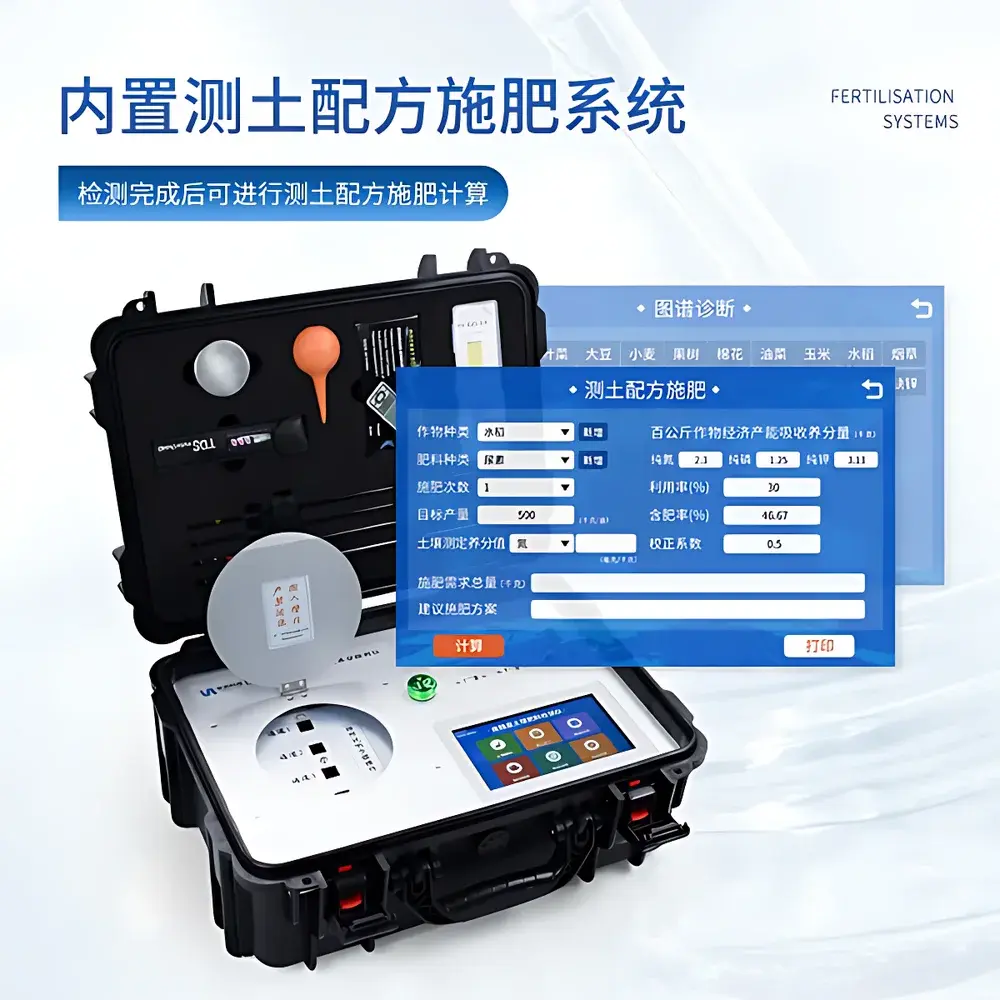
Data acquisition, processing, and reporting are managed through proprietary firmware with cloud synchronization capability. Each measurement record includes sample ID, GPS coordinates, timestamp, channel-specific absorbance values, calculated nutrient concentrations (mg/kg or %), and QR-coded metadata. Wi-Fi-enabled uploads transmit encrypted datasets directly to a dedicated cloud-based Agricultural Data Hub—accessible via web dashboard or WeChat mini-program. The platform supports Excel-exportable tabular reports, cross-user permission tiers, and version-controlled historical archives. Integrated Soil Testing & Fertilizer Recommendation Engine applies crop-specific nutrient uptake coefficients (preloaded for >100 economic species) and regional yield targets to generate printable, traceable fertilizer prescriptions compliant with national balanced-fertilization guidelines.
Applications
The IN-HT200 serves as a primary tool in precision agriculture workflows—including pre-plant soil mapping, in-season nutrient status monitoring, fertilizer efficacy evaluation, compost maturity assessment, and irrigation water quality screening. It supports regulatory compliance testing for organic certification programs (e.g., NOP, EU Organic Regulation), extension service outreach, university field research, and smallholder advisory systems. Its portability and rapid turnaround (<20 min for NPK triad, <50 min for full fertilizer panel) enable high-density spatial sampling across heterogeneous fields, facilitating variable-rate application (VRA) planning and digital soil fertility zoning.
FAQ
What extraction methods are compatible with the IN-HT200?
Standardized protocols include ammonium acetate for exchangeable K, Olsen for available P, and 2 M KCl for NH₄⁺/NO₃⁻—all referenced in the onboard method library.
Does the instrument require daily recalibration?
No. Built-in self-calibration routines execute automatically at startup and between sample batches; no manual zeroing or standardization is required under normal operating conditions.
Can it measure heavy metals or pesticide residues?
No. The IN-HT200 is designed exclusively for macro/micronutrient analysis via colorimetry; heavy metal quantification requires AAS or ICP-OES instrumentation.
Is raw absorbance data exportable for third-party statistical analysis?
Yes. Full absorbance spectra per channel and processed concentration values can be exported via USB in CSV format, preserving all metadata tags.
How is data security ensured during cloud transmission?
All communications use TLS 1.2 encryption; user accounts enforce role-based access control (RBAC), and audit logs track every login, edit, and export event.