
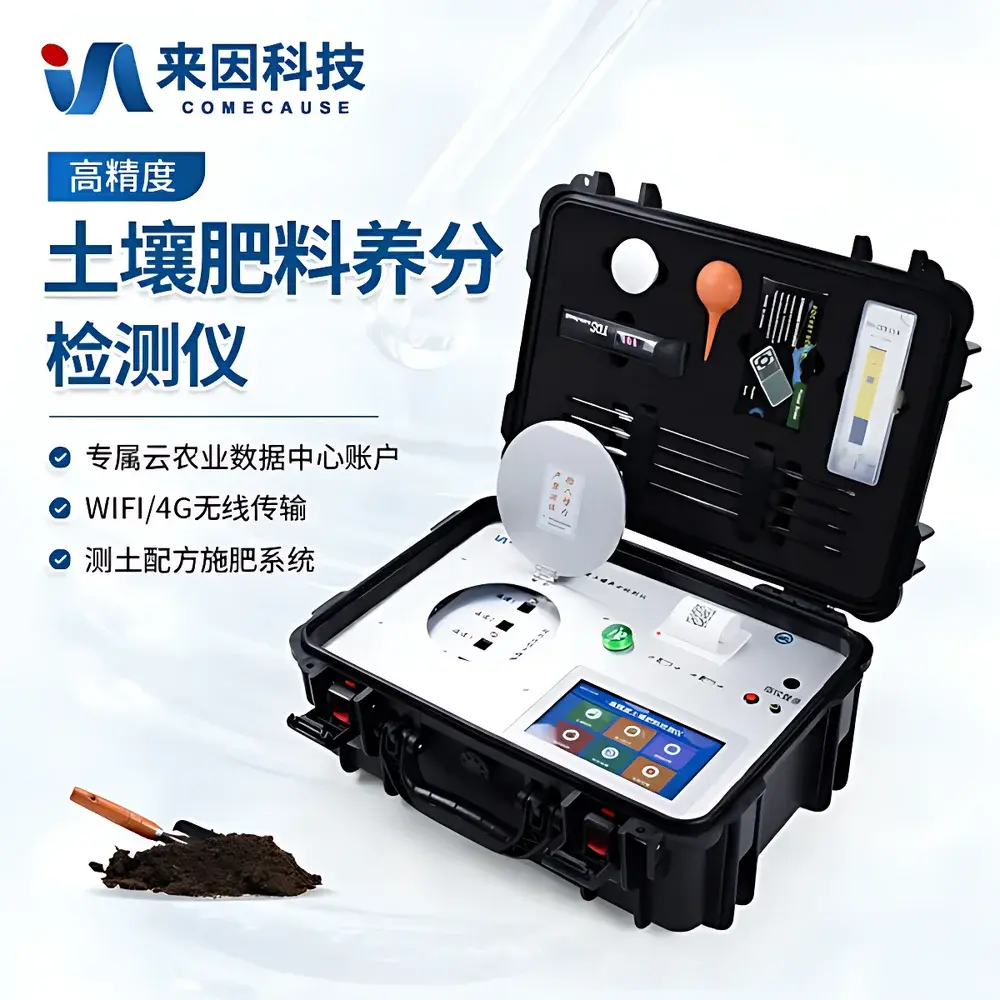
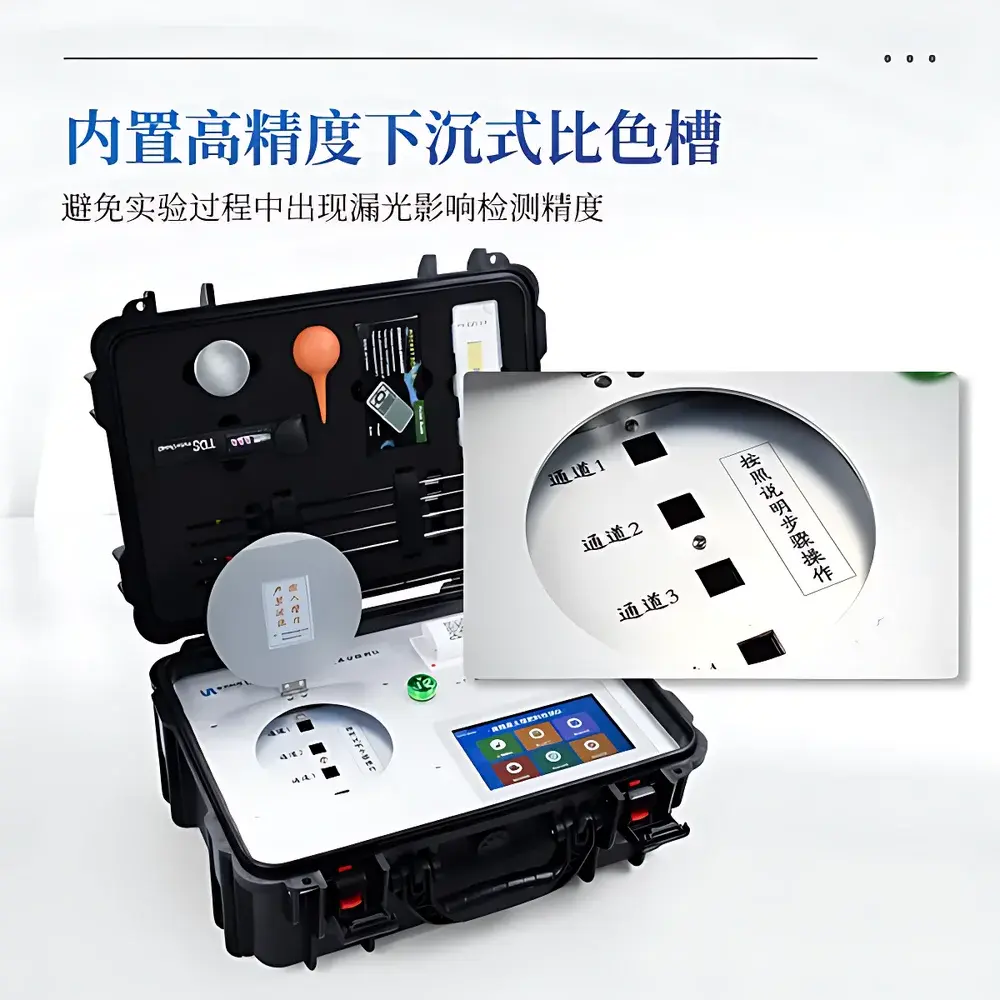
COMECAUSE IN-HT200 Portable Soil Nutrient Analyzer
| Brand | COMECAUSE |
|---|---|
| Origin | Shandong, China |
| Manufacturer Type | Direct Manufacturer |
| Product Category | Domestic |
| Model | IN-HT200 |
| Price | USD 2,800 (approx.) |
| Instrument Type | Portable |
| Detection Principle | Colorimetric Chemical Analysis |
| Detection Channels | 4 fixed optical channels |
| Test Parameters | Available N, P, K, organic matter, pH, EC, moisture, Ca, Mg, S, B, Fe, Cu, Mn, Zn, Cl, Si, Mo, NO₃⁻-N, NH₄⁺-N, hydrolyzable N, total N/P/K, etc. |
| Measurement Range | 0.001–9999 (unitless absorbance scale |
| Repeatability | ≤0.03% (as CV, measured with K₂Cr₂O₇ standard solution) |
Overview
The COMECAUSE IN-HT200 Portable Soil Nutrient Analyzer is a field-deployable, multi-parameter spectrophotometric instrument engineered for rapid, on-site quantification of essential macro- and micronutrients in soil, fertilizer, plant tissue, and aqueous extracts. It operates on standardized colorimetric reaction principles—such as the indophenol blue method for ammonium nitrogen, molybdenum antimony anti-spectrophotometry for available phosphorus, and flame photometric or sodium nitroprusside-based assays for potassium—adapted into stable, reagent-integrated test kits. Unlike laboratory-based ICP-OES or AAS systems, the IN-HT200 delivers quantitative results within minutes using pre-optimized extraction protocols and factory-calibrated optical modules. Its design bridges the gap between lab-grade accuracy and operational agility required by agronomists, extension officers, and precision farming cooperatives operating across heterogeneous field conditions.
Key Features
- Four independently calibrated optical detection channels (680 ± 2 nm red, 420 ± 2 nm blue, 510 ± 2 nm green, 590 ± 4 nm orange), each with photometric sensitivity ≥2.13 × 10⁻³ (OD), ensuring high signal-to-noise ratio across diverse chromogenic reactions.
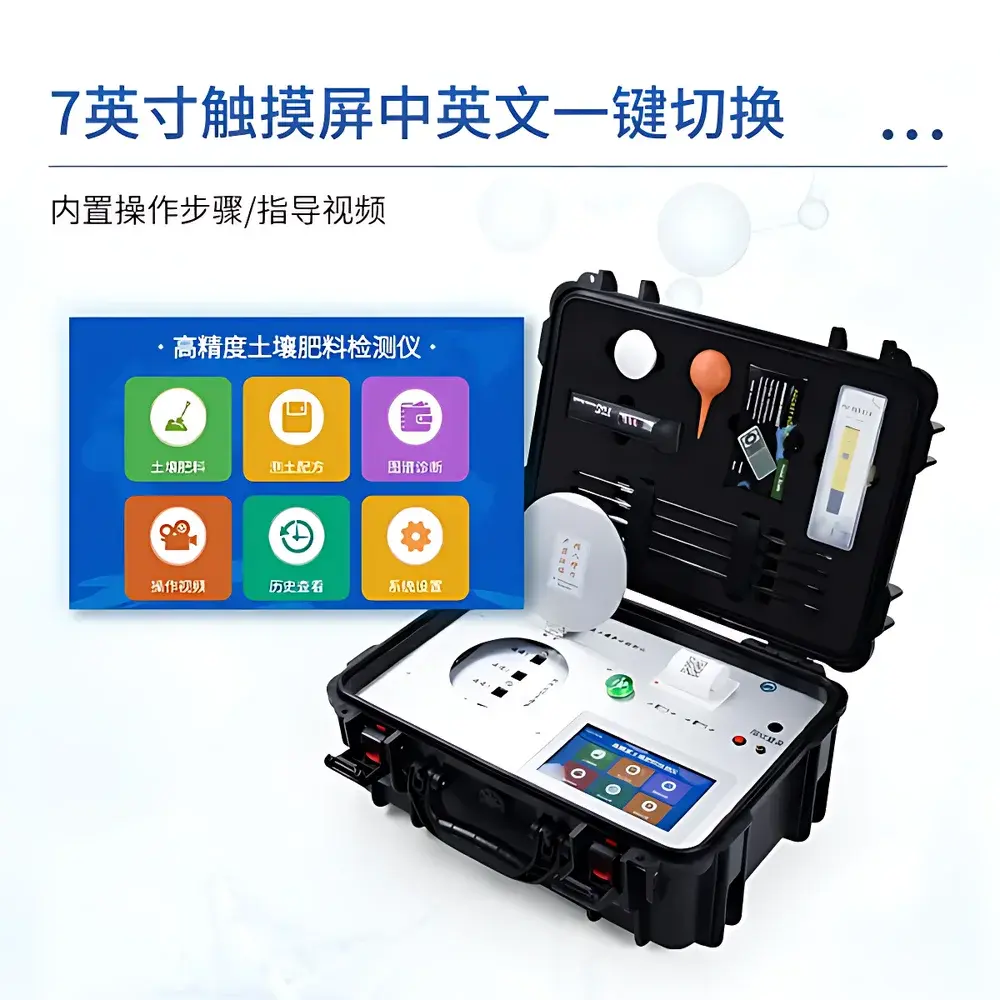
- Integrated Android 5.1 operating system powered by a quad-core processor (≥1.8 GHz) and 16 GB internal storage, enabling real-time data processing, step-by-step guided workflows, and embedded video tutorials accessible directly from the home interface.
- 7.0-inch high-resolution LCD (1024 × 600) with adjustable backlighting and IP65-rated enclosure, certified for outdoor use under variable ambient light and temperature conditions.
- Dual-user authentication via password and fingerprint recognition; multi-account support with role-based access control to ensure data integrity and audit readiness.
- Onboard GPS module providing georeferenced metadata (latitude/longitude/timestamp) for every measurement—critical for spatial nutrient mapping and regulatory traceability.
- Thermal printer integrated into the chassis (no ink or ribbon required), outputting reports containing sample ID, channel-specific absorbance values, calculated nutrient concentrations (mg/kg or %), operator ID, GPS coordinates, and QR-coded result verification.
- Internal rechargeable 4800 mAh Li-ion battery supporting ≥10 hours of continuous operation; AC/DC dual-power architecture with voltage monitoring and auto-save functionality during unexpected power loss.
- Fixed-position, solid-state cuvette chamber housed within a light-tight,下沉式 (sunken) sealed compartment (15.7 cm diameter occlusion plate), eliminating mechanical drift and ensuring optical path consistency across repeated measurements.
Sample Compatibility & Compliance
The IN-HT200 supports standardized extraction protocols aligned with widely accepted agricultural testing frameworks—including ISO 11260 (available phosphorus), ISO 14253-1 (measurement uncertainty), and national standards such as NY/T 1121 (China’s soil testing specifications). It accommodates soil samples (air-dried, sieved ≤2 mm), granular or liquid fertilizers, dried plant tissues, and water extracts. Sample preparation is guided interactively through on-screen prompts referencing AOAC-approved digestion methods (e.g., Walkley-Black for organic matter, Mehlich-3 for cation exchange capacity estimation). All reagents are supplied in lyophilized or stabilized liquid form compatible with field storage (2–30 °C). The instrument meets CE marking requirements for electromagnetic compatibility (EN 61326-1) and environmental robustness (IEC 60529 IP65), and its firmware architecture supports GLP-compliant data logging with immutable timestamps and user attribution.
Software & Data Management
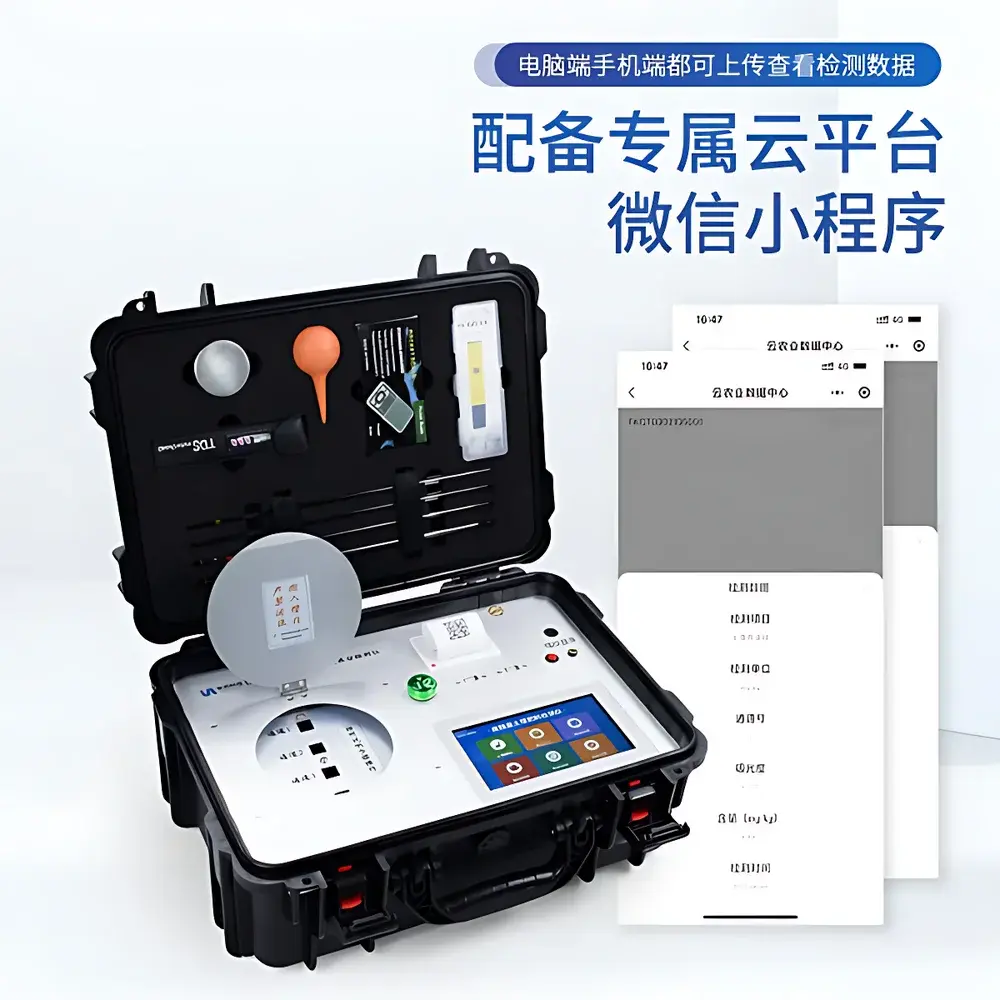
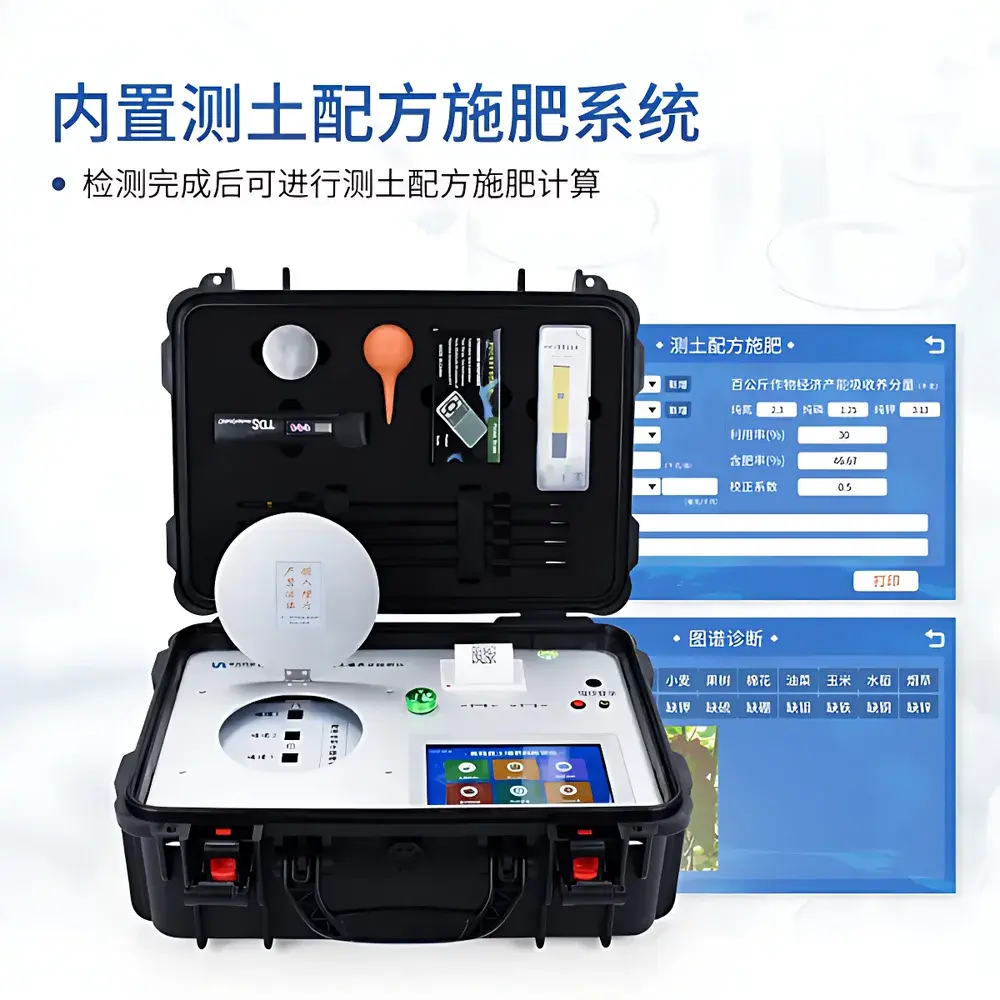
Data acquisition, analysis, and reporting are managed through an embedded application compliant with FDA 21 CFR Part 11 principles: electronic signatures, audit trails, and secure session management are enforced at the OS level. Measurement records—including raw absorbance, derived concentrations, GPS coordinates, and operator metadata—are stored locally and synchronized via Wi-Fi to a dedicated cloud-based Agricultural Data Hub. This platform provides role-based dashboards, exportable CSV/Excel reports, historical trend visualization, and cross-location comparative analytics. The system integrates a built-in Soil Testing and Fertilizer Recommendation Engine (STFRE), preloaded with >120 crop-specific nutrient sufficiency ranges (e.g., FAO-referenced maize N-P-K thresholds), regional soil classification parameters (USDA texture classes), and yield-targeted fertilizer calculation algorithms incorporating nutrient use efficiency coefficients. Mobile access is enabled via a validated WeChat Mini Program, allowing remote review of uploaded datasets without proprietary software installation.
Applications
The IN-HT200 serves critical functions across multiple agronomic domains: (1) Precision nutrient management—enabling site-specific NPK and micronutrient prescriptions for row crops, orchards, and greenhouse vegetables; (2) Fertilizer quality assurance—verifying declared nutrient content and solubility in commercial blends and organic amendments; (3) Soil health monitoring—tracking long-term trends in organic matter decline, salinization (EC), and pH drift in intensively cropped systems; (4) Diagnostic deficiency assessment—leveraging embedded foliar symptom libraries (with visual comparison charts for 9 key elements) to support rapid on-farm decision-making; (5) Extension service delivery—facilitating participatory soil testing programs with real-time feedback loops between farmers, cooperatives, and agronomy advisors.
FAQ
What extraction methods are supported for soil nitrogen analysis?
The instrument supports both ammonium (NH₄⁺-N) and nitrate (NO₃⁻-N) determination using standardized KCl or CaCl₂ extractions, followed by colorimetric detection per ISO 14253-1 Annex B protocols.
Can the IN-HT200 be used for regulatory compliance reporting?
Yes—when operated with certified reference materials and documented SOPs, its outputs meet the technical acceptability criteria for preliminary screening under EU Regulation (EC) No 1069/2009 and USDA-NRCS Field Office Technical Guide Chapter 15.
How is calibration maintained in field conditions?
The system performs automatic zero-point and gain calibration before each test sequence using integrated reference filters; no manual recalibration or warm-up time is required.
Is third-party validation data available for accuracy claims?
Independent inter-laboratory validation studies conducted under ISO/IEC 17043 guidelines confirm mean absolute errors of ≤1.0% for NPK, ≤2.0% for organic matter, and ≤5.0% for micronutrients against accredited ICP-MS reference labs.
Does the cloud platform support API integration with farm management software?
Yes—the Agricultural Data Hub offers RESTful API endpoints compliant with AgGateway ADAPT standards, enabling bidirectional synchronization with platforms such as Granular, Climate FieldView, and FarmLogs.
Related Products







