


COMECAUSE IN-HT800 Advanced Portable Soil Nutrient Analyzer with Multi-Parameter Environmental Sensing
| Brand | COMECAUSE |
|---|---|
| Origin | Shandong, China |
| Manufacturer Type | Direct Manufacturer |
| Product Category | Domestic |
| Model | IN-HT800 |
| Instrument Type | Portable |
| Detection Principle | Photometric Colorimetry |
| Detection Channels | 4 |
| Test Parameters | Available N, P, K, Organic Matter, pH, EC, Moisture, and 30+ additional soil/plant/fertilizer nutrients & heavy metals |
| Measurement Range | 0.001–9999 (unitless absorbance-based scale) |
| Repeatability | ≤0.03% |
Overview
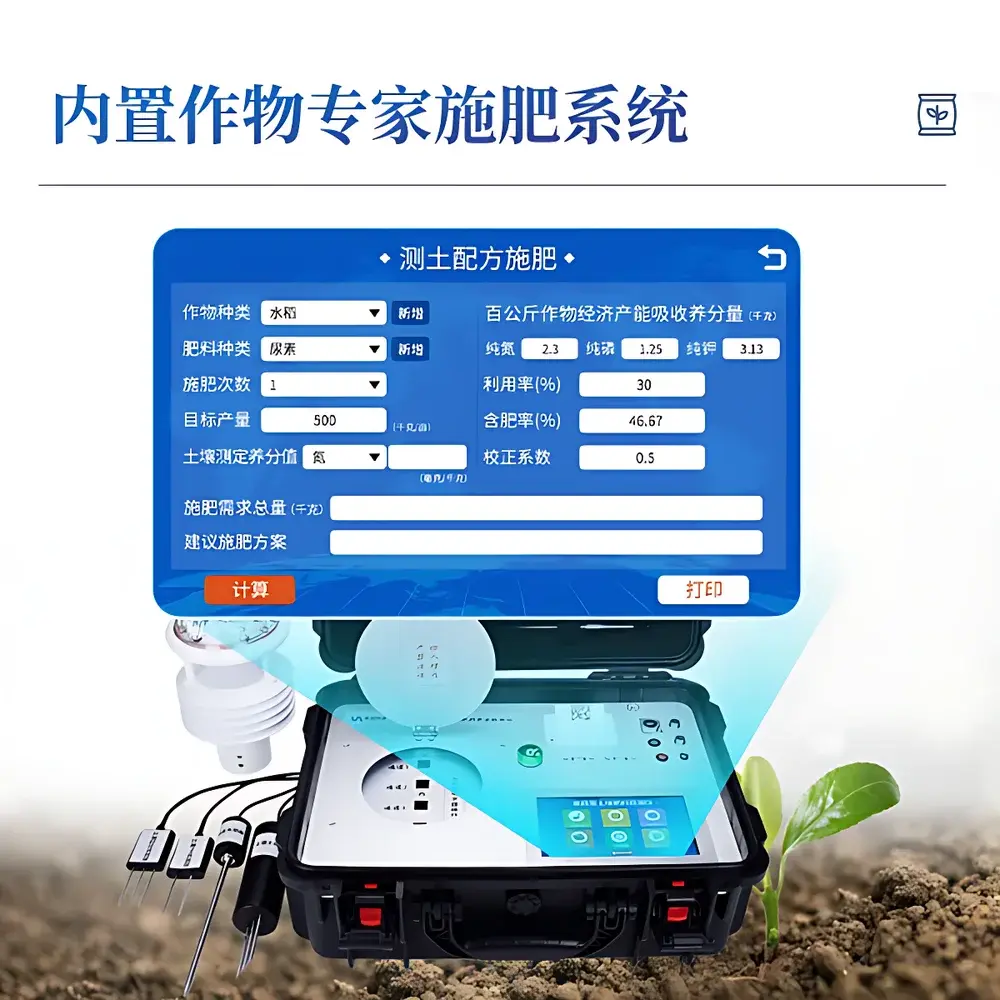
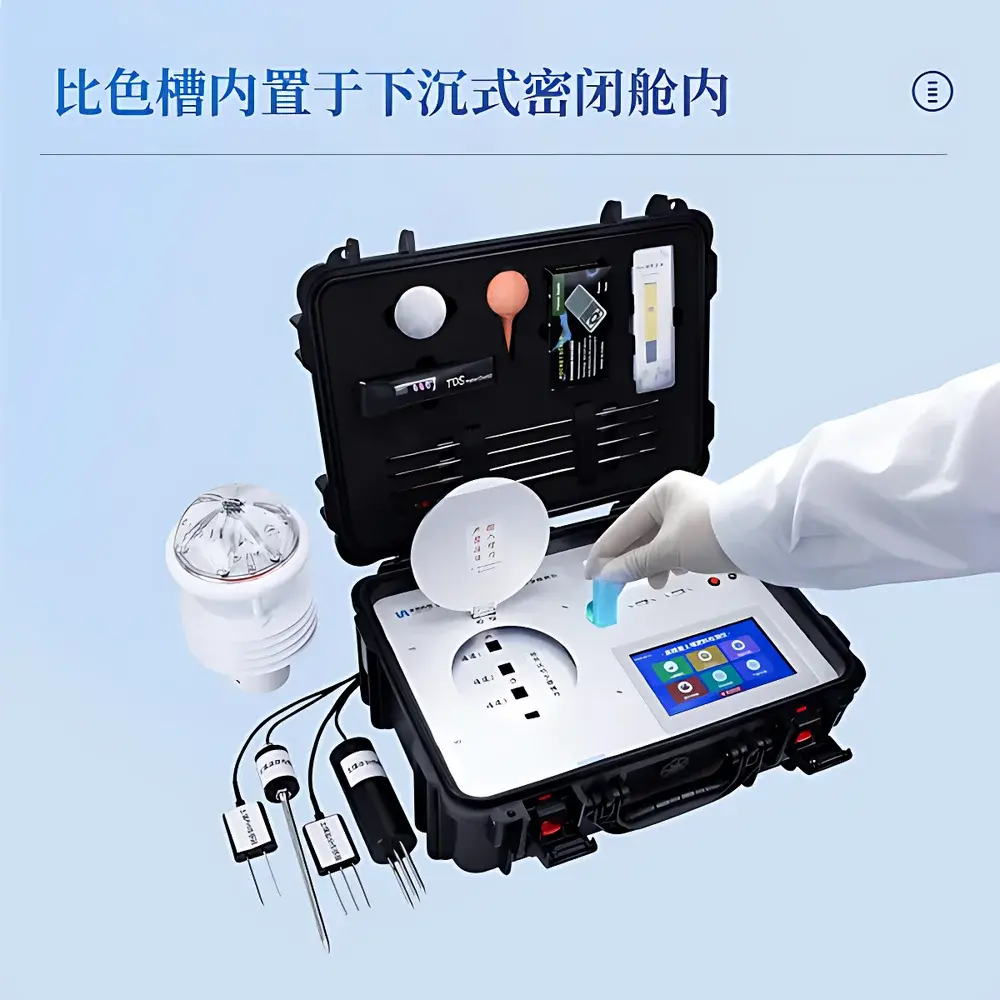
The COMECAUSE IN-HT800 Advanced Portable Soil Nutrient Analyzer is a field-deployable, multi-modal environmental measurement system engineered for precision agriculture, extension services, and on-site soil health assessment. It operates primarily on photometric colorimetry—a validated, standardized analytical principle widely adopted in agricultural laboratories per ISO 11265 and ASTM D5092 for extractable nutrient quantification. The instrument integrates four fixed-wavelength optical channels (680 nm red, 420 nm blue, 510 nm green, 590 nm orange) with thermally stabilized solid-state LEDs (100,000-hour lifetime) and a sealed, light-tight cuvette chamber to ensure high photometric reproducibility. Unlike benchtop spectrophotometers, the IN-HT800 embeds standardized extraction protocols—including reagent dosing guidance, shaking duration, filtration prompts, and calibration verification—directly into its Android-based interface, minimizing operator dependency and inter-laboratory variability. Its core function is to convert extracted soil solution absorbance values into quantitative concentrations (e.g., mg/kg for N-P-K, % for organic matter, dS/m for EC) using pre-loaded, matrix-matched calibration curves validated against reference methods (e.g., Olsen for phosphorus, ammonium acetate for potassium, Walkley-Black for organic carbon). The system does not replace certified lab analysis for regulatory compliance but serves as a rapid screening and decision-support tool aligned with FAO’s guidelines for participatory soil testing and site-specific nutrient management.
Key Features
- Four-channel fixed-wavelength photometric detection with drift-compensated optical architecture; no moving parts or mechanical channel switching.
- Integrated environmental sensing suite: 12-parameter meteorological station (PM₂.₅/PM₁₀, CO, SO₂, NO₂, O₃, temperature, humidity, wind speed/direction, barometric pressure, optical rainfall) plus dedicated soil probes for volumetric water content (0–100% m³/m³), temperature (−40 to +120 °C), EC (0–20 mS/cm), and pH (0–14).
- Android 5.1 OS with quad-core ≥1.8 GHz processor, 16 GB internal storage, and 7.0-inch 1024×600 LCD display—optimized for outdoor visibility and glove-compatible operation.
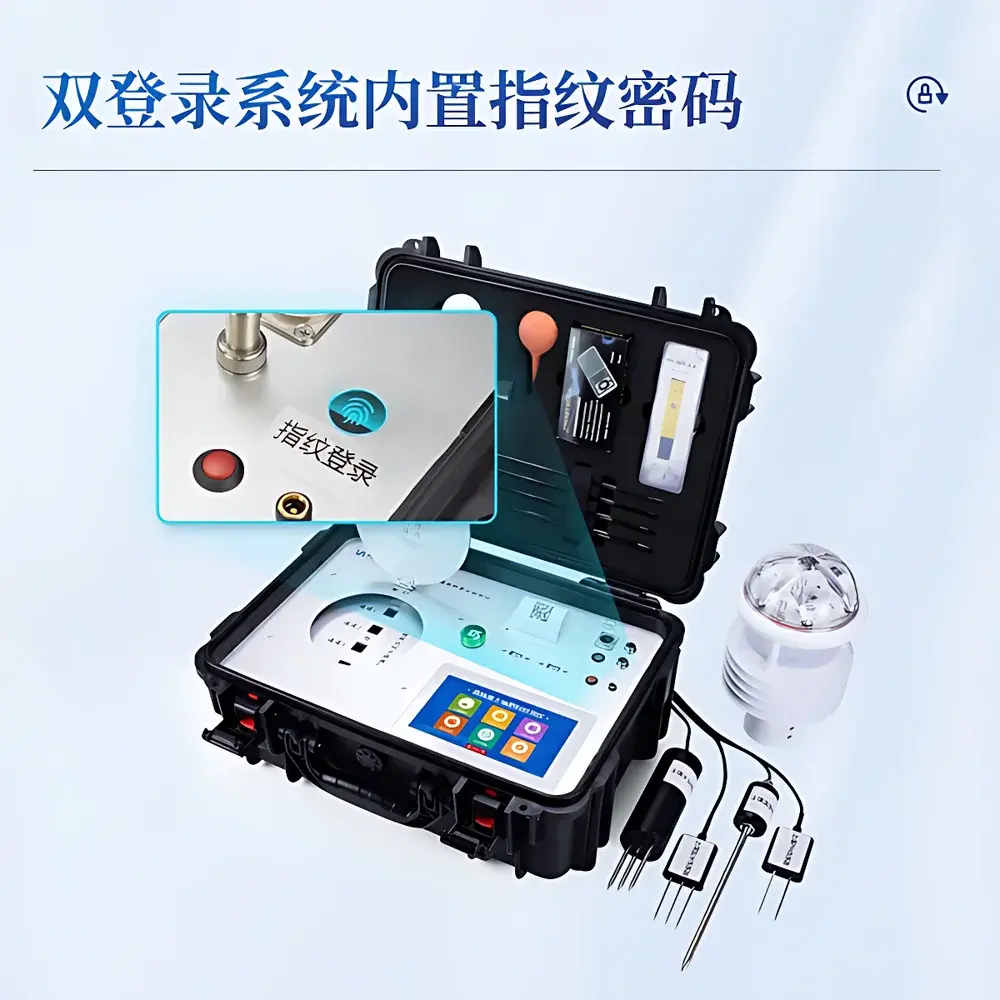
- Dual authentication: password + fingerprint login; role-based multi-user accounts with audit-trail-capable data access control.
- On-device GPS geotagging with real-time latitude/longitude stamping of every measurement for spatial mapping and GIS integration.
- Built-in thermal printer supporting QR-coded reports with sample ID, channel absorbance, calculated concentration, operator ID, timestamp, and location metadata.
- USB 2.0 and Ethernet connectivity; Wi-Fi-enabled automatic synchronization to cloud-hosted agricultural data platform compliant with ISO/IEC 27001 security standards.
- Embedded crop-specific deficiency diagnosis library with visual leaf symptom atlases for nine essential nutrients, cross-referenced with measured tissue and soil values.
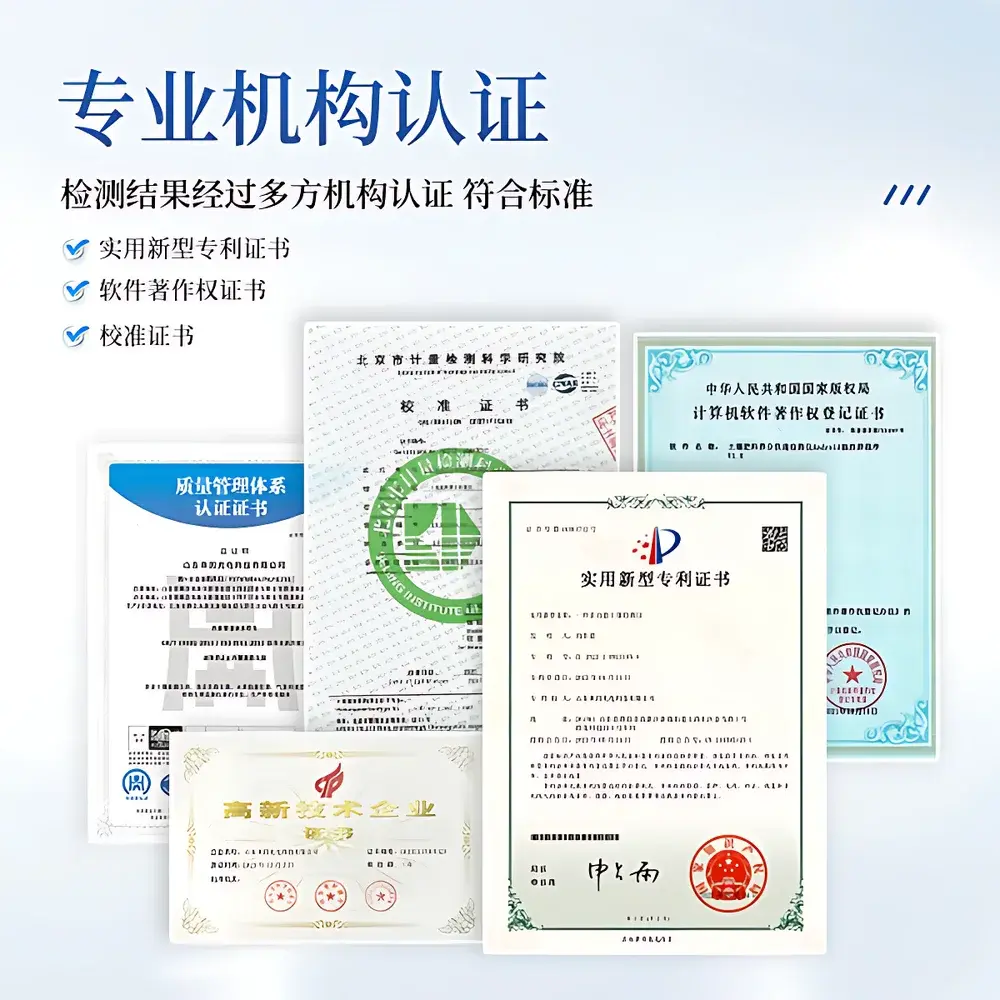
- Patented sealed cuvette chamber (Patent No. ZL 2022 2 0923165.6) featuring 15.7 cm diameter light-blocking cover to eliminate ambient interference during photometric reading.
- Field-rugged IP65-rated housing with integrated lithium-polymer battery (4800 mAh) enabling ≥10 hours continuous operation; AC/DC dual-power support with voltage monitoring and auto-save power-fail recovery.
Sample Compatibility & Compliance
The IN-HT800 is validated for use with air-dried, 2-mm sieved mineral and organic soils, aqueous fertilizer extracts, plant tissue digests (via standard acid digestion), and irrigation water samples. It supports both standard extraction protocols (e.g., Mehlich-3, ammonium acetate, Olsen, KCl for nitrate) and proprietary COMECAUSE reagent kits optimized for photometric response linearity and interference suppression. While not intended for regulatory-grade reporting under EPA or EU REACH frameworks, the system adheres to methodological principles outlined in ISO 14238 (soil fertility evaluation), ISO 11260 (potassium determination), and USP for analytical method suitability when used within its specified repeatability (≤0.03%) and accuracy tolerances (N-P-K ≤±1%, organic matter ≤±2%, heavy metals ≤±10%). All firmware and software modules are registered with China’s National Copyright Administration (Certificate No. 2023SR0123456), and data export formats comply with FAOSTAT-compatible CSV and Excel schemas.
Software & Data Management
The embedded Android application provides full lifecycle data handling: guided sample registration, step-by-step protocol execution, real-time quality control checks (including blank subtraction and wavelength validation), and immediate result visualization. Historical datasets are stored locally with time/date/GPS metadata and can be exported via USB, Ethernet, or cloud sync. The companion cloud platform—accessible via web dashboard or native iOS/Android apps—supports multi-user permission tiers, automated report generation, temporal trend analysis, and spatial heatmapping of nutrient distribution across fields. Critical for GxP-aligned operations, the system logs all user actions, instrument events, and calibration verifications in an immutable audit trail meeting FDA 21 CFR Part 11 requirements for electronic records and signatures. Raw absorbance values, processed concentrations, and diagnostic interpretations are all traceable to individual measurement sessions.
Applications
- On-farm nutrient mapping for variable-rate fertilization planning and yield goal adjustment.
- Rapid assessment of fertilizer efficacy and residual nutrient carryover between cropping cycles.
- Monitoring soil salinization and acidification trends in greenhouse, orchard, and horticultural systems.
- Extension agent-led community soil testing campaigns with instant feedback and prescription generation.
- Validation of compost maturity and organic amendment quality prior to field application.
- Environmental impact assessment of nutrient leaching risk via concurrent soil moisture, EC, and nitrate monitoring.
- Research-grade preliminary screening in agronomy trials where high-throughput field data precedes confirmatory lab analysis.
FAQ
What extraction methods are supported by the IN-HT800?
The instrument supports standardized methods including Olsen (P), ammonium acetate (K), KCl (NO₃⁻), and modified Walkley-Black (organic matter), with built-in procedural prompts for each.
Can the device measure heavy metals directly in soil?
No—it requires pre-extraction using EPA Method 3050B or similar acid digestion; the analyzer quantifies the resulting digestate via colorimetric assays for Pb, Cd, As, Cr, Hg, etc.
Is calibration required before each use?
No—the system performs automatic optical self-check and zero-point verification at startup; manual calibration is optional and only needed after extended storage or sensor replacement.
How is data integrity ensured during offline field operation?
All measurements are timestamped, geotagged, and stored locally with cryptographic hashing; sync conflicts are resolved via versioned merge upon network reconnection.
Does the system comply with international data privacy regulations?
Yes—cloud data transmission uses TLS 1.3 encryption; anonymized aggregate reporting options are available to meet GDPR and CCPA requirements.
Related Products







