
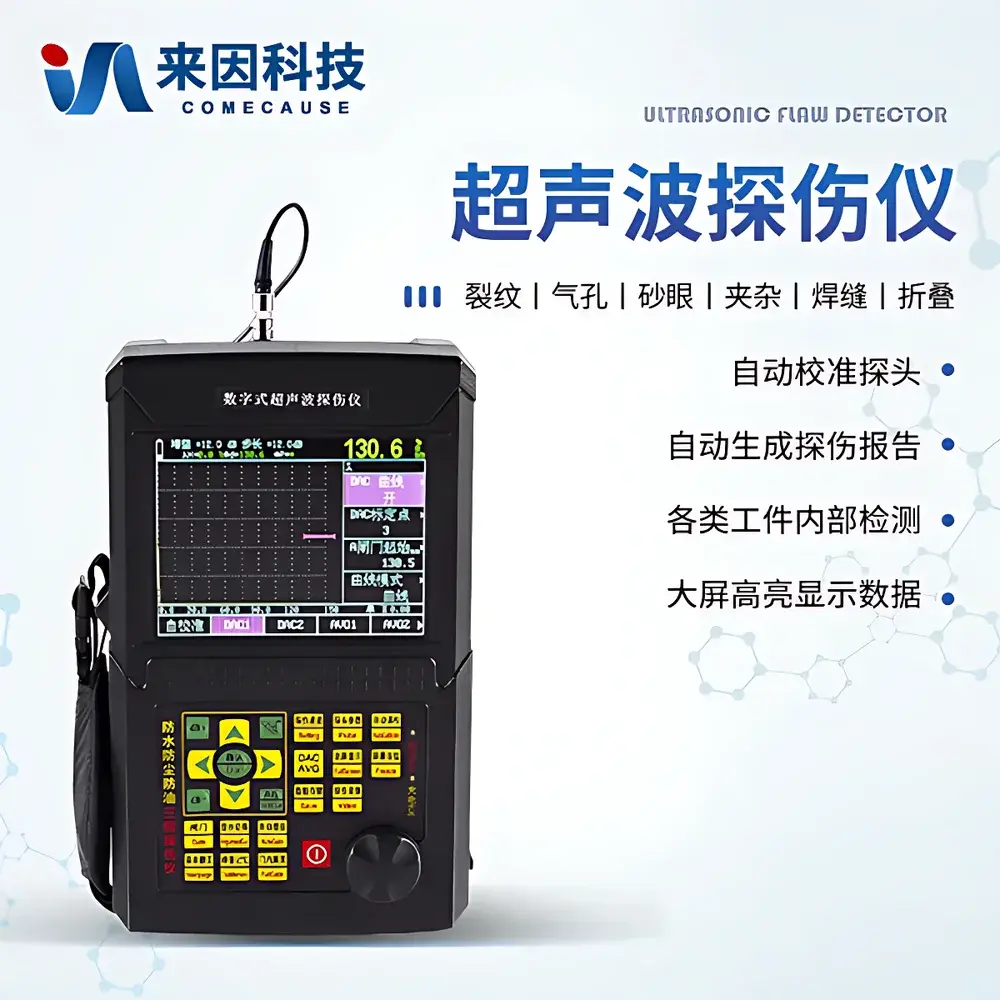
COMECAUSE IN-CTS3 Digital Ultrasonic Flaw Detector
| Brand | COMECAUSE |
|---|---|
| Origin | Shandong, China |
| Manufacturer Type | OEM Manufacturer |
| Country of Origin | China |
| Model | IN-CTS3 |
| Instrument Type | Digital Ultrasonic Flaw Detector |
| Inspection Method | Pulse-Echo & Through-Transmission |
| Waveform Mode | Continuous Wave (CW) and Pulsed Wave (PW) |
| Application Sectors | Aerospace, Power Generation, Petrochemical, Pressure Vessel, Rail Transit, Automotive, Structural Steel |
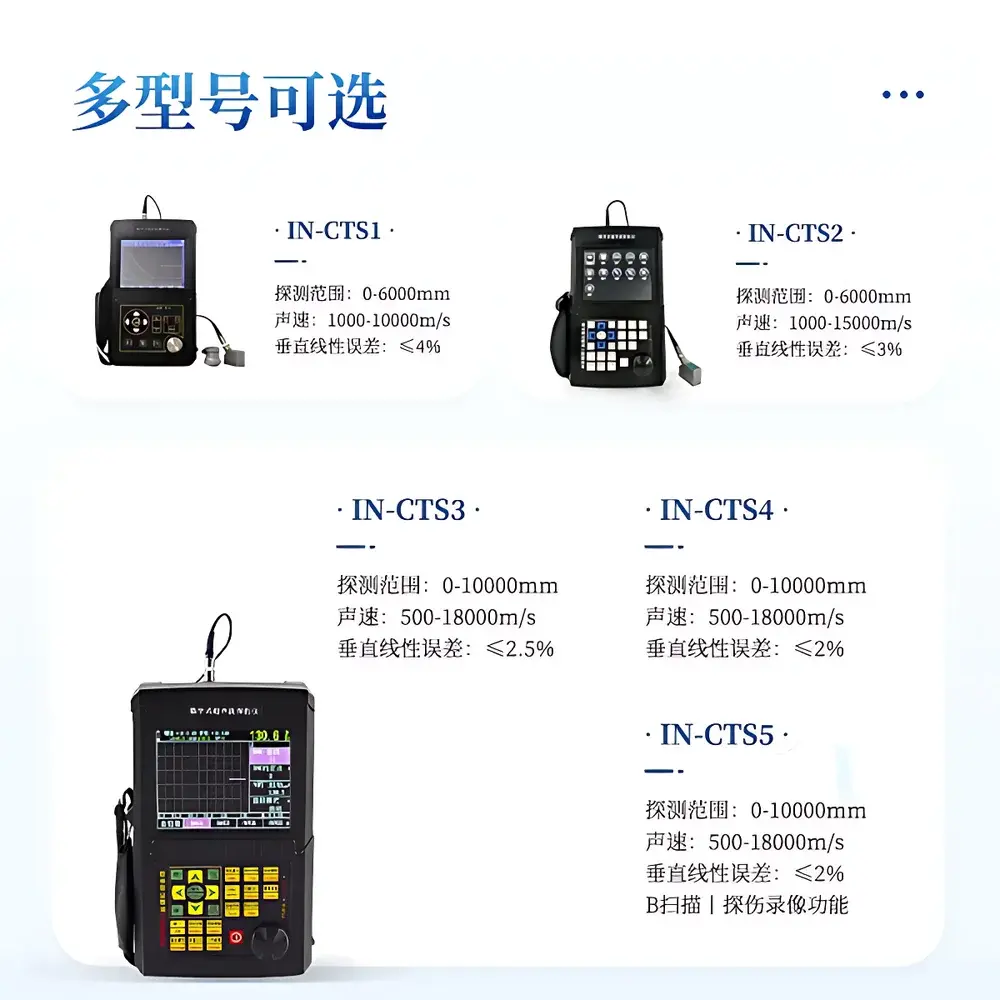
| Scan Range | 0–10000 mm |
| Gain Adjustment | 0–110 dB |
| Vertical Linearity Error | ≤2.5% |
| Horizontal Linearity Error | ≤0.1% |
| Dynamic Range | ≥32 dB |
| Resolution | ≥40 dB |
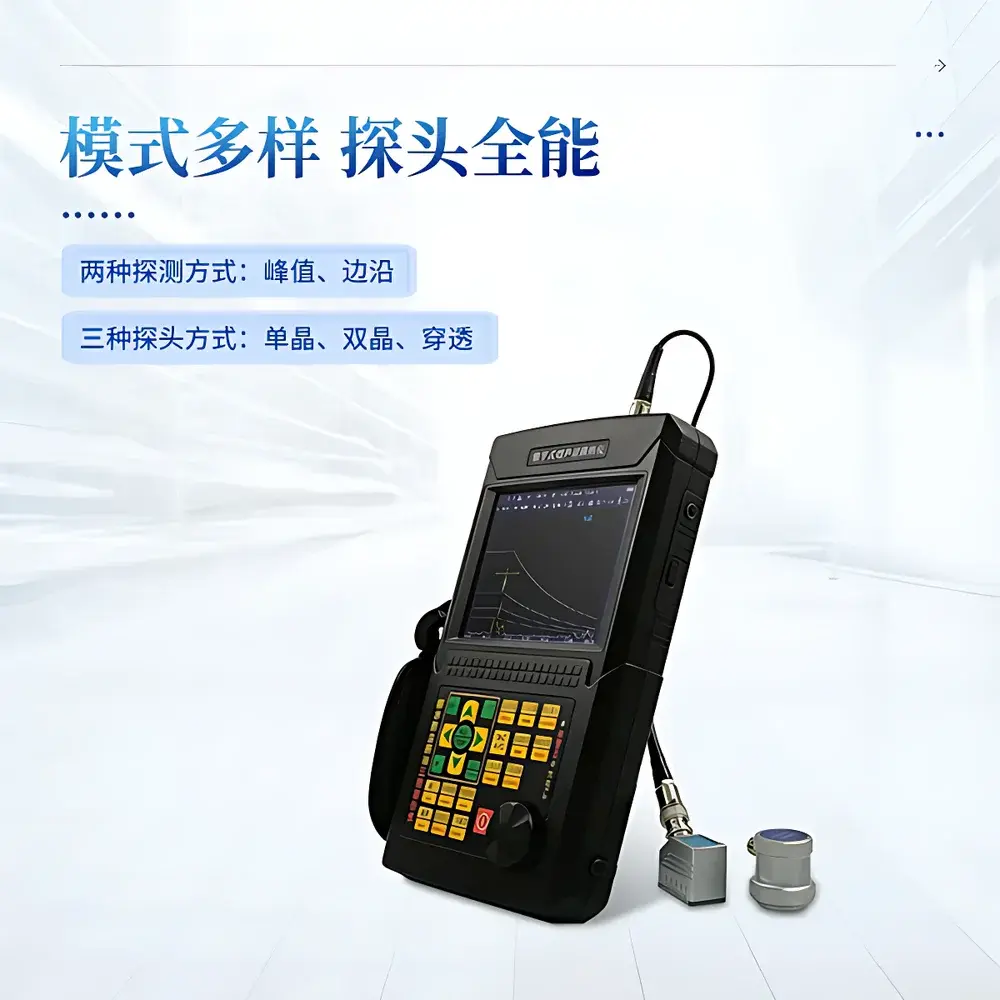
| Probe Types Supported | Single-Crystal & Dual-Crystal |
| Frequency Range | 0.5–20 MHz |
| Sensitivity Margin | ≥60 dB (200 mm depth, Ø2 mm flat-bottom hole) |
| Material Sound Velocity Range | 1000–9999 m/s |
| Echo Suppression | 0–80% |
| Operating Temperature | −27°C to +70°C |
| Dimensions | 240 × 160 × 40 mm |
| Weight | 1.3 kg |
| A-scan Storage Capacity | 980 frames |
| Channel Memory | 16 user-configurable inspection channels |
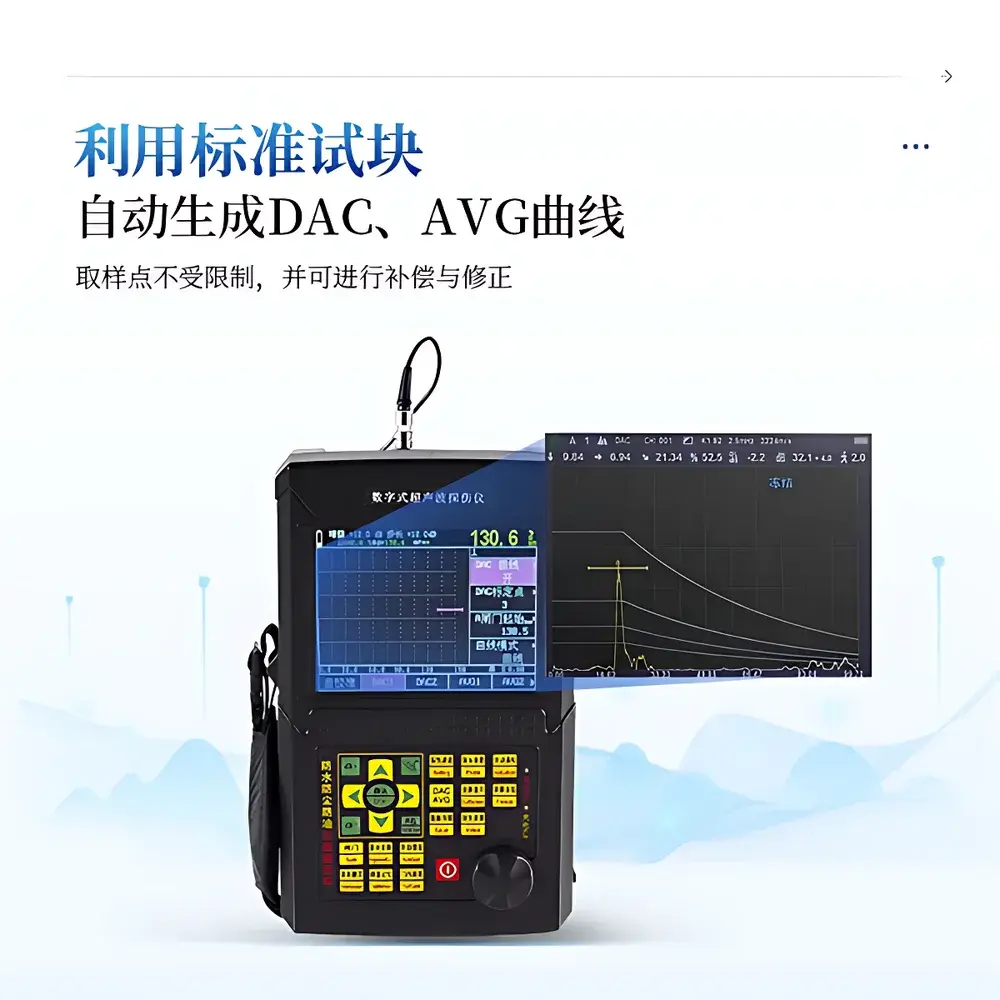
| DAC/AVG Curve Generation | Automatic (via standard test blocks) |
| Weld Diagram Modes | I-, V-, U-, and X-type schematic overlays |
| Defect Sizing | Equivalent reflector diameter (φ) calculation |
| Data Interface | USB 2.0 for PC connectivity and report export |
| Display | High-brightness TFT LCD, sunlight-readable |
Overview
The COMECAUSE IN-CTS3 Digital Ultrasonic Flaw Detector is a portable, microprocessor-controlled NDT instrument engineered for high-fidelity pulse-echo and through-transmission ultrasonic testing in industrial field and workshop environments. It operates on the principle of time-of-flight diffraction (TOFD) and amplitude-based flaw detection, utilizing broadband pulsed ultrasound (0.5–20 MHz) to interrogate material integrity across steel, aluminum, titanium, composites, and weldments. Designed for compliance with ISO 16810, ASTM E317, and EN 12668-1 standards, the IN-CTS3 delivers repeatable, traceable measurements critical for structural health monitoring in safety-critical sectors—including aerospace airframe inspections, ASME Section V-compliant pressure vessel assessments, and rail axle ultrasonic screening per EN 1369 and EN 15085.
Key Features
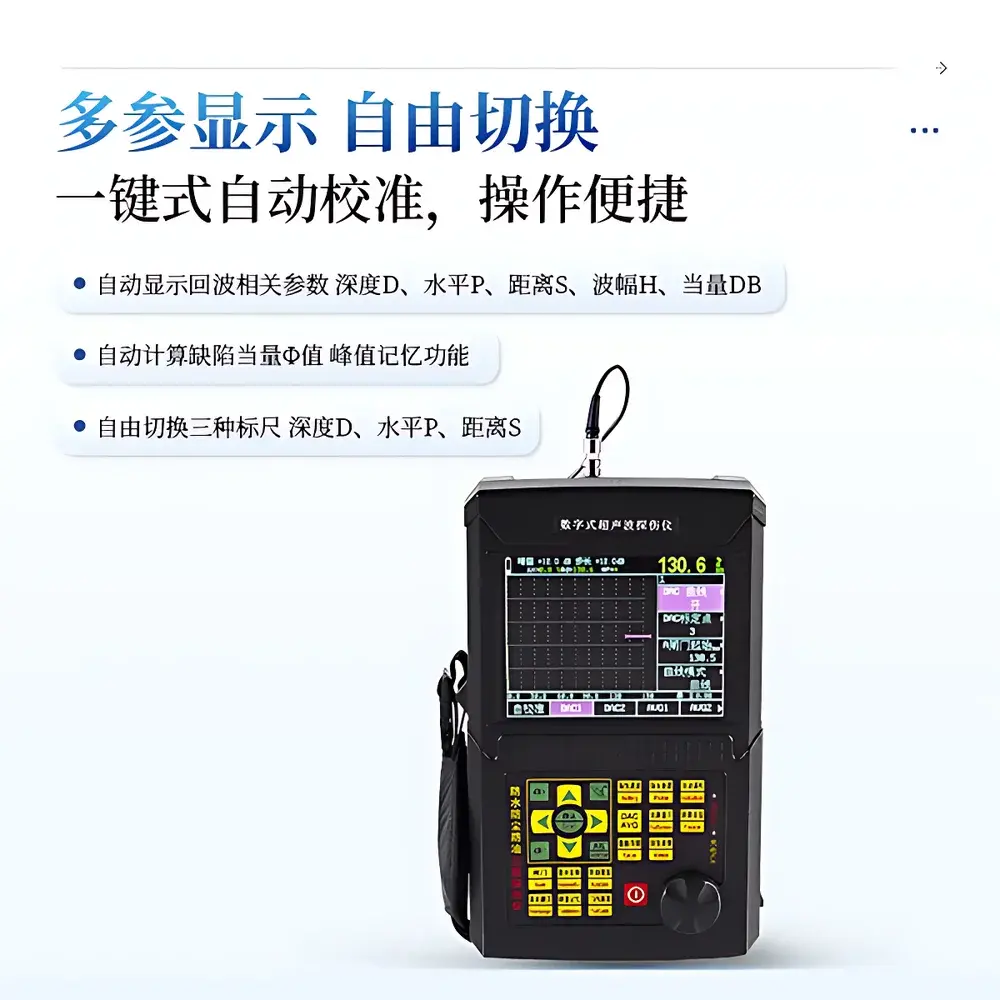
- Real-time A-scan acquisition with 10-bit analog-to-digital conversion and 160 MHz sampling rate—enabling precise echo timing resolution and improved signal fidelity.
- Automatic probe calibration using dual-curve reference methods (e.g., two-point or multi-point velocity/gain calibration), eliminating manual delay compensation calculations.
- Onboard DAC (Distance-Amplitude Correction) and AVG (Area-Velocity-Gain) curve generation from standard reference blocks (e.g., IIW, GS, or custom geometry), supporting both ASME and EN-coded evaluation criteria.
- Sixteen independent inspection channels—each configurable with unique gain, gate settings, velocity, and reference sensitivity—facilitating rapid setup for multi-standard workflows (e.g., AWS D1.1, API RP 2X, or MIL-STD-2154).
- Four weld geometry overlays (I-, V-, U-, and X-joint schematics) with dynamic gate positioning, enabling intuitive interpretation of reflector location relative to weld root, cap, or heat-affected zone (HAZ).
- Defect quantification module calculating equivalent reflector size (φ-value) via distance-amplitude interpolation or amplitude comparison against reference reflectors.
- High-contrast, 5.7-inch sunlight-readable TFT display (640 × 480 pixels) with adjustable brightness and five selectable color palettes—optimized for use in outdoor, low-light, or confined-space conditions (e.g., boiler interiors or aircraft hangars).
- Integrated echo suppression with visual LED alert and audible tone—preventing false rejection due to clutter while maintaining linear amplification integrity.
- Peak memory and envelope detection algorithms for rapid identification of maximum amplitude echoes across complex waveforms, including backwall interference or multiple interface reflections.
Sample Compatibility & Compliance
The IN-CTS3 supports single-crystal (straight-beam and angle-beam) and dual-crystal (transmit-receive separation) probes with standard BNC connectors, accommodating common NDT transducer configurations used in thickness gauging, corrosion mapping, and volumetric flaw detection. Its sound velocity range (1000–9999 m/s) enables accurate calibration across metallic alloys, plastics, and fiber-reinforced polymers. The instrument conforms to electromagnetic compatibility (EMC) requirements per IEC 61326-1 and carries CE marking for industrial use. For regulated environments, audit trails, user access control, and electronic signature support are available via optional firmware upgrade aligned with FDA 21 CFR Part 11 and EU Annex 11 data integrity guidelines.
Software & Data Management
Data exchange is enabled via USB 2.0 interface to Windows-based PCs running COMECAUSE PCLink software—supporting full waveform export (binary or CSV), automated report generation (PDF/DOCX), and batch analysis of stored A-scans. All inspection records include metadata: date/time stamp, operator ID, probe serial number, gate parameters, DAC curve coefficients, and environmental conditions. Up to 980 A-scan frames may be retained onboard; archived data retains full traceability for QA/QC review, third-party audits, or regulatory submissions under ISO 9001, AS9100, or EN 10204 3.1 certification frameworks.
Applications
The IN-CTS3 is routinely deployed in: (1) aerospace component screening—detection of subsurface porosity in turbine disks and fatigue cracks in landing gear; (2) power plant maintenance—corrosion mapping of boiler tubes and weld inspection of steam piping per ASME B31.1; (3) petrochemical infrastructure—evaluation of girth welds in API 5L pipelines and stress-corrosion cracking in storage tanks; (4) rail vehicle manufacturing—ultrasonic verification of wheelset integrity per UIC 812-2; and (5) heavy machinery fabrication—flaw assessment in forged crankshafts and cast engine blocks where geometric complexity demands flexible gating and variable velocity modeling.
FAQ
What standards does the IN-CTS3 comply with for aerospace NDT?
It meets the functional and performance requirements of EN 1369, EN 15085-3, and NAS 410 Level 2/3 personnel qualification frameworks when operated by certified inspectors.
Can the IN-CTS3 perform TOFD inspections?
Yes—the instrument supports TOFD mode via external dual-probe synchronization (optional hardware trigger module required) and includes dedicated TOFD image reconstruction and sizing tools.
Is PC software included for report generation?
Yes—COMECAUSE PCLink is supplied with each unit and supports customizable templates compliant with client-specific NDT reporting formats.
How is data integrity ensured during field operation?
All parameter changes, gate adjustments, and calibration events are timestamped and logged internally; USB exports preserve raw waveform data without lossy compression.
Does the device support battery-powered operation in extreme temperatures?
It operates continuously for up to 15 hours on rechargeable Li-ion battery and maintains stable performance across −27°C to +70°C ambient conditions, validated per MIL-STD-810G thermal shock testing.



