
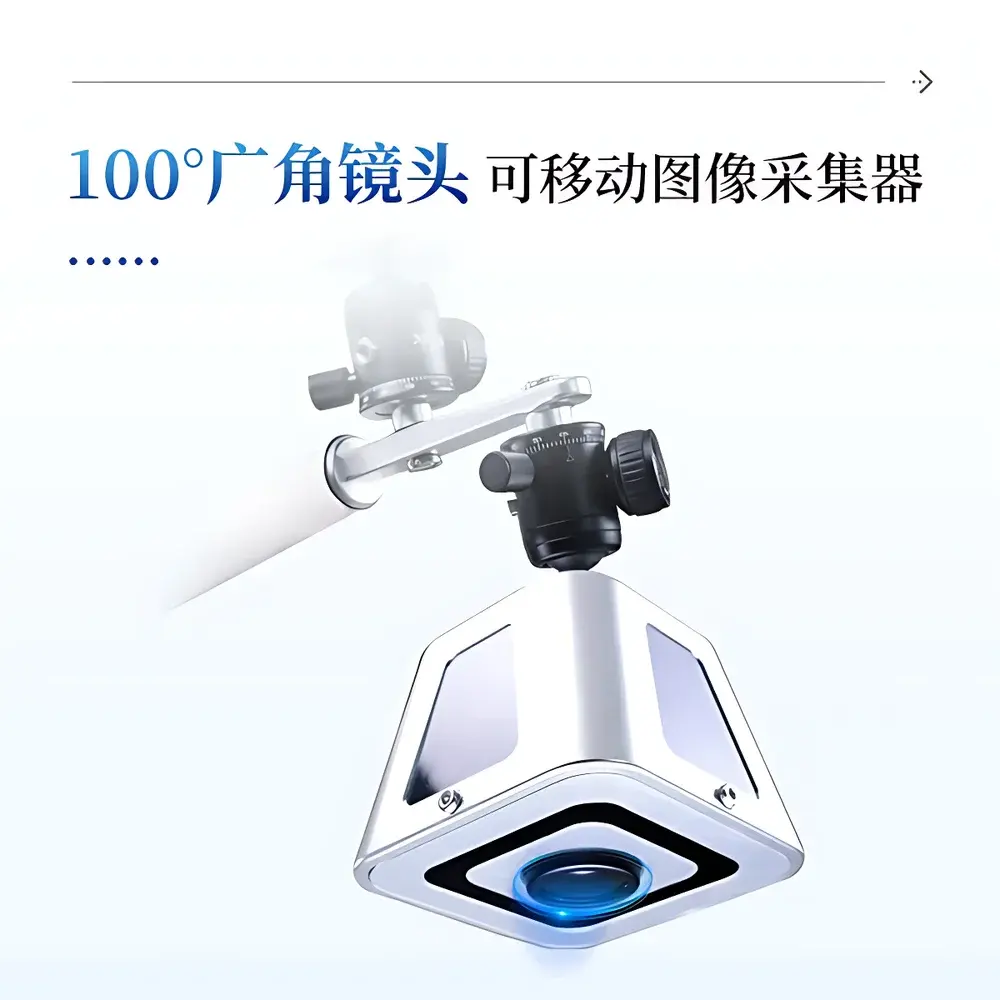
COMECAUSE IN-G200 Real-Time Plant Canopy Monitoring System
| Brand | COMECAUSE |
|---|---|
| Origin | Shandong, China |
| Manufacturer Type | Direct Manufacturer |
| Model | IN-G200 |
| Principle | Digital Image Analysis |
| Form Factor | Portable |
| Spectral Range | 400–700 nm |
| PAR Measurement Range | 0–2000 µmol·m⁻²·s⁻¹ |
| Imaging Resolution | 2592 × 1944 |
| Field of View | 100° (Zenith: 0°–75° in 10 zones |
| Azimuth | 360° in 10 zones) |
| Display | 10-inch color touchscreen |
| Onboard Storage | 20 GB |
| Data Transmission | 4G LTE |
| Power Supply | 200 W solar panel + 130 Ah gel battery (AC 220 V optional) |
| Operating Temperature | −10 °C to +55 °C |
| Deployment Radius | Up to 30 m from host unit |
| Minimum Sampling Interval | 1 hour |
| Cloud Platform | Proprietary agricultural data center with role-based access and CSV export |
Overview
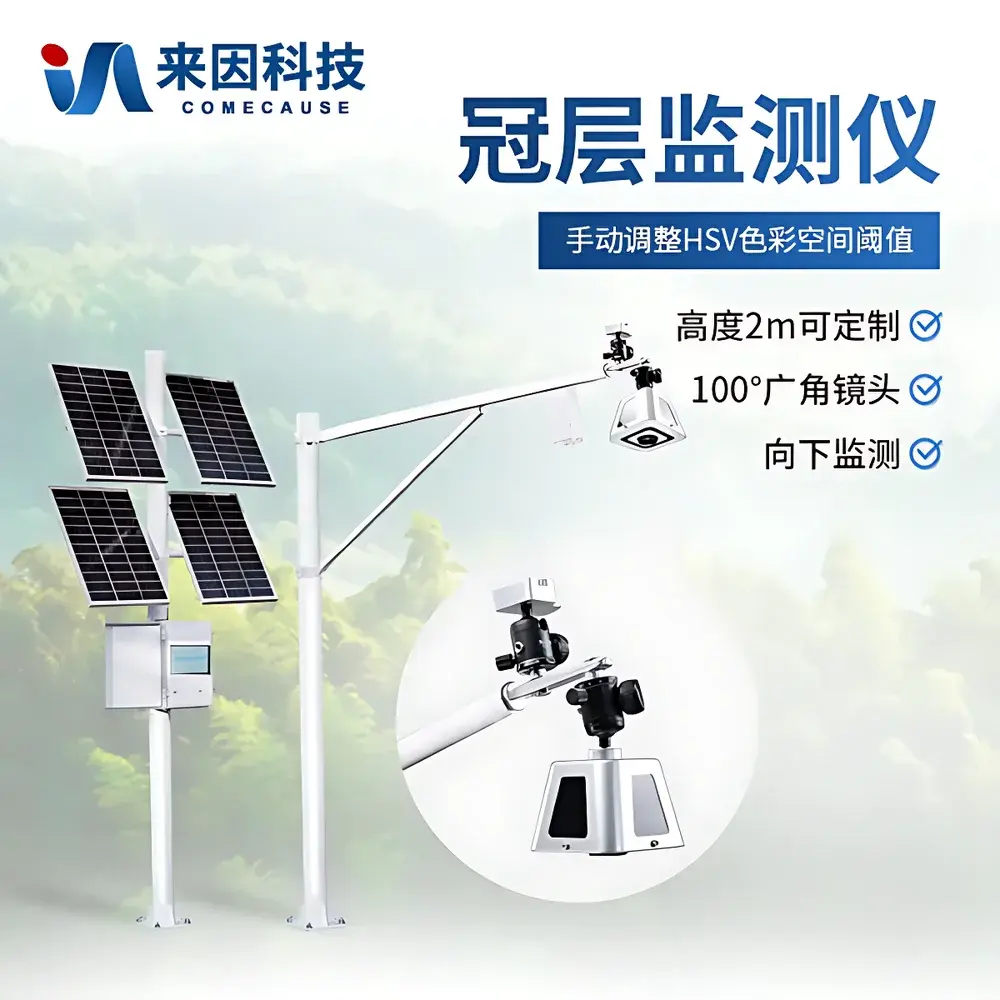
The COMECAUSE IN-G200 Real-Time Plant Canopy Monitoring System is an engineered field-deployable instrument designed for continuous, non-destructive assessment of structural and functional canopy properties in situ. It operates on the principle of digital image analysis—specifically, downward-facing hemispherical photography coupled with spectral segmentation—to quantify canopy architecture and light interception dynamics. The system captures high-resolution RGB images under natural illumination across the photosynthetically active radiation (PAR) band (400–700 nm), enabling robust estimation of geometric and radiometric parameters without requiring destructive sampling or operator-dependent interpretation. Unlike discrete manual measurements or single-point sensors, the IN-G200 delivers time-synchronized, georeferenced data streams that reflect diurnal and seasonal canopy responses to environmental drivers—including light availability, water status, and nutrient supply. Its design aligns with internationally recognized methodologies for canopy characterization, including ISO 11727:2020 (optical measurement of plant canopies) and ASTM E2938-21 (standard practice for estimating leaf area index using digital hemispherical photography). The system is intended for long-term unattended operation in open-field, orchard, greenhouse, and ecological research settings.
Key Features
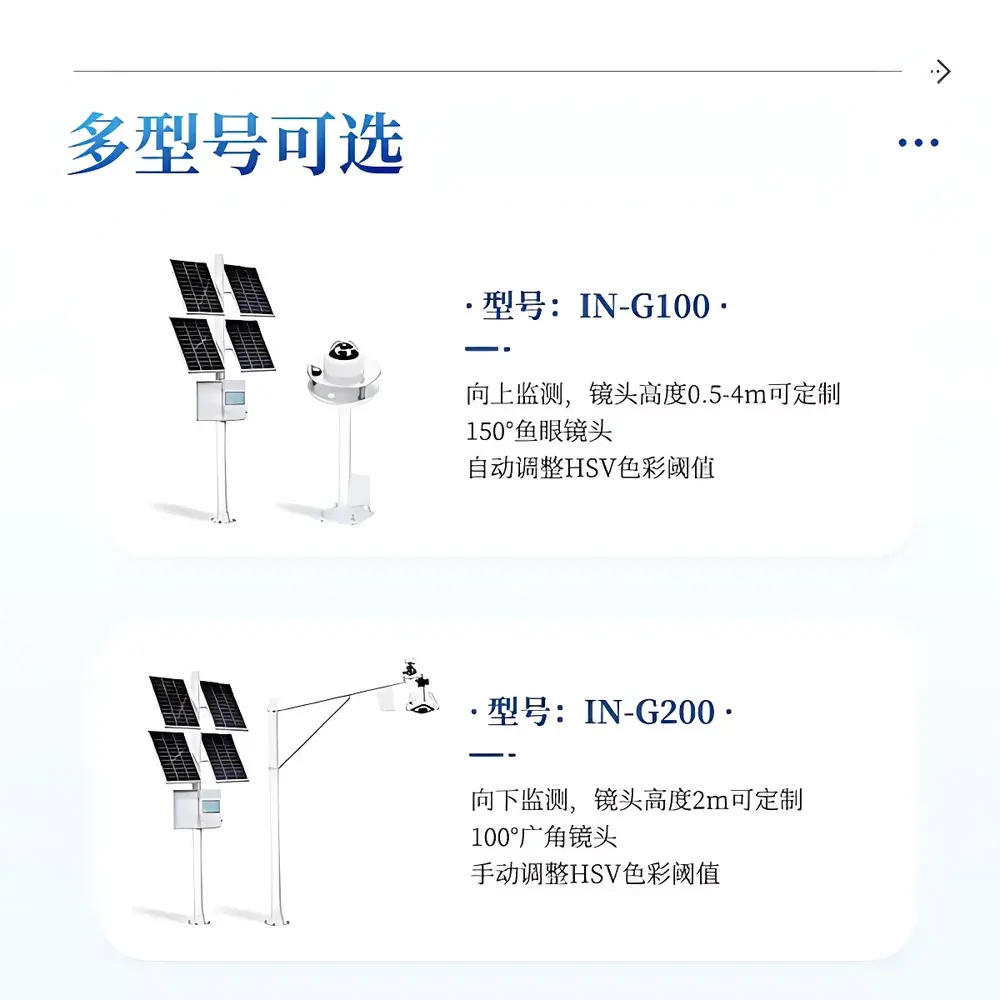
- Multi-zone hemispherical imaging: 100° wide-angle lens enables simultaneous capture of zenith angles from 0° to 75° and full 360° azimuthal coverage, segmented into ten discrete angular bins for spatially resolved gap fraction analysis.
- Integrated PAR sensing: Co-located quantum sensor calibrated to NIST-traceable standards measures incident and transmitted photosynthetically active radiation (400–700 nm) with a dynamic range of 0–2000 µmol·m⁻²·s⁻¹.
- On-device image processing: Embedded Linux-based computing module executes real-time HSV thresholding, sky/leaf segmentation, and geometric correction—eliminating dependency on post-acquisition desktop software.
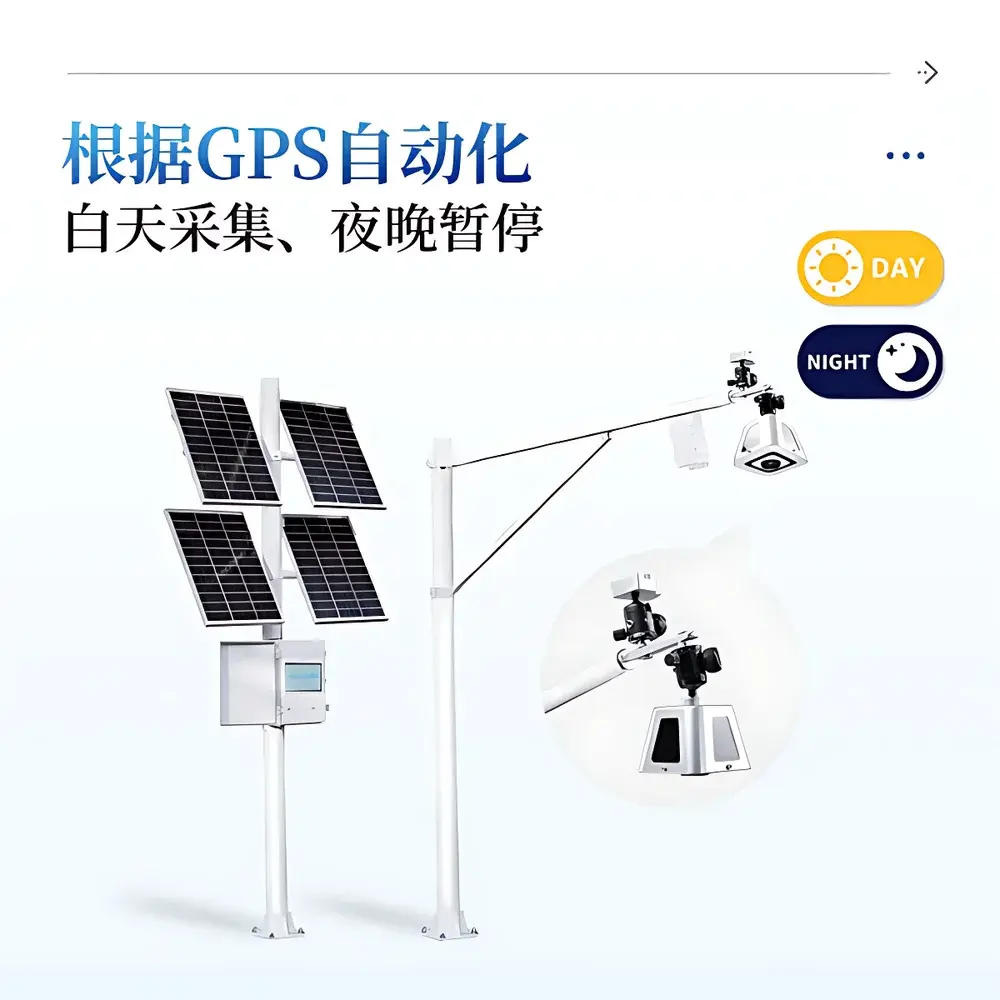
- Configurable temporal resolution: User-defined acquisition intervals from 1 hour to 72 hours; automatic daylight-triggered operation via integrated GPS and solar elevation calculation.
- Robust edge-to-cloud architecture: Local 20 GB storage retains >180 days of annotated images and derived metrics; encrypted 4G LTE transmission to a secure, ISO/IEC 27001-compliant cloud platform with audit-ready metadata logging.
- Modular power system: Dual-mode energy supply—200 W monocrystalline solar array paired with 130 Ah deep-cycle gel battery (with AC 220 V fallback)—supports continuous operation across seasons and latitudes.
Sample Compatibility & Compliance
The IN-G200 is validated for use across diverse vegetation types, including row crops (maize, soybean, cotton), small-grain cereals (wheat, barley), horticultural species (tomato, strawberry), tree canopies (apple, citrus, eucalyptus), and natural grassland or forest understory. Its optical design accommodates variable canopy heights (adjustable mounting up to 2 m standard; custom extensions available) and density ranges (LAI 0.5–8.0). All firmware and data handling protocols comply with FAO’s Good Agricultural Practices (GAP) guidelines for digital phenotyping and support GLP-aligned data integrity requirements—including immutable timestamps, user-access logs, and version-controlled algorithm modules. While not FDA 21 CFR Part 11-certified out-of-the-box, the cloud platform supports configurable electronic signature workflows and audit trail exports for regulated research environments.
Software & Data Management
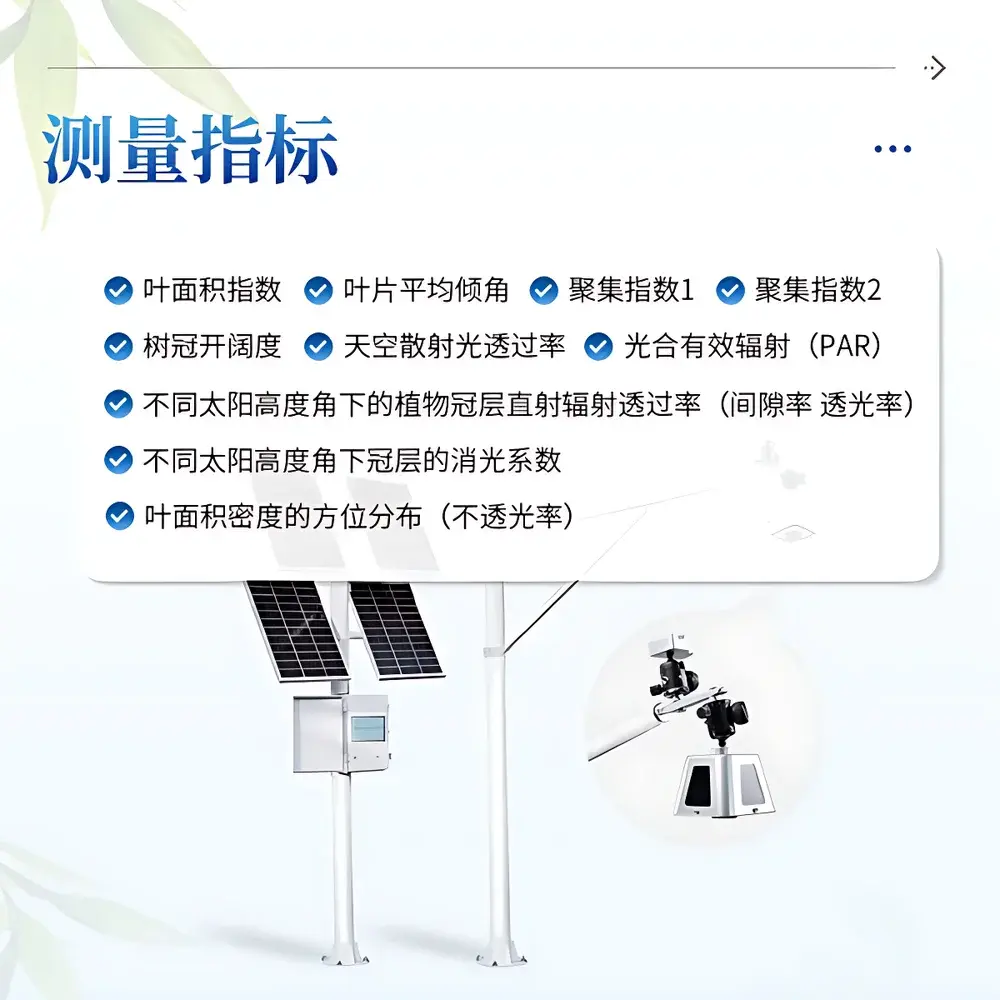
Data acquisition, preprocessing, and parameter derivation occur entirely onboard the IN-G200 host unit. The embedded interface provides real-time visualization of live imagery, PAR flux, and computed indices (e.g., gap fraction, LAI, clumping index Ω₁/Ω₂, diffuse non-interceptance). Historical datasets are browsable by date, location, or metric category, with multi-language UI (English, Simplified Chinese). Raw images and processed outputs are stored in standardized formats: JPEG2000 for imagery; NetCDF-4 for time-series metrics (CF-compliant metadata included). The cloud portal offers RESTful API access for integration with farm management information systems (FMIS), GIS platforms (QGIS, ArcGIS), or statistical modeling environments (R, Python). All data transmissions employ TLS 1.3 encryption; user roles enforce read/write permissions per field or project. Audit logs record every configuration change, data export, or calibration event—supporting traceability for scientific publication or regulatory review.
Applications
- Precision irrigation scheduling: Continuous monitoring of canopy openness and PAR transmittance enables dynamic adjustment of irrigation timing and volume based on actual canopy light interception—not calendar- or soil-moisture-only triggers.
- Nutrient status mapping: Temporal trends in canopy greenness (derived from RGB hue/saturation ratios) correlate with chlorophyll content and nitrogen status, supporting variable-rate fertilization decisions when combined with georeferenced sampling.
- Phenological stage tracking: Automated detection of key transitions—emergence, canopy closure, flowering onset, senescence—via statistically significant shifts in LAI and gap fraction time series.
- Eco-physiological research: Quantification of radiation partitioning (direct vs. diffuse) under varying solar angles informs models of carbon assimilation, stomatal conductance, and canopy energy balance.
- Climate resilience monitoring: Long-term deployment supports detection of chronic stress signatures—e.g., reduced diurnal amplitude in PAR transmittance or elevated canopy temperature gradients—indicative of drought adaptation or heat tolerance mechanisms.
FAQ
What is the minimum recommended deployment height for accurate LAI estimation?
For optimal angular sampling and minimal edge effects, the imaging unit should be mounted at 2 m above the canopy surface. Custom brackets support heights from 1.5 m to 4 m depending on crop stature.
Does the system require external calibration before each deployment?
No. The device performs automated white-balance correction during sunrise/sunset transitions and includes factory-applied spectral response coefficients for the PAR sensor. Annual verification against a reference quantum sensor is recommended.
Can the IN-G200 operate in low-light or overcast conditions?
Yes. The system captures usable imagery and PAR data under diffuse skylight; however, direct-sun geometry-dependent metrics (e.g., sunfleck frequency, beam transmittance) are flagged as “not applicable” during overcast periods.
How is data security ensured during wireless transmission?
All 4G transmissions use end-to-end AES-256 encryption; device authentication employs X.509 certificates. Cloud storage adheres to ISO/IEC 27001 controls, with optional two-factor login and IP-restricted access.
Is the software compatible with third-party modeling tools such as APSIM or DSSAT?
Yes. Time-series outputs (NetCDF-4) include CF-convention metadata and coordinate variables, enabling direct ingestion into crop simulation frameworks. API documentation and sample Python wrappers are provided upon request.



