
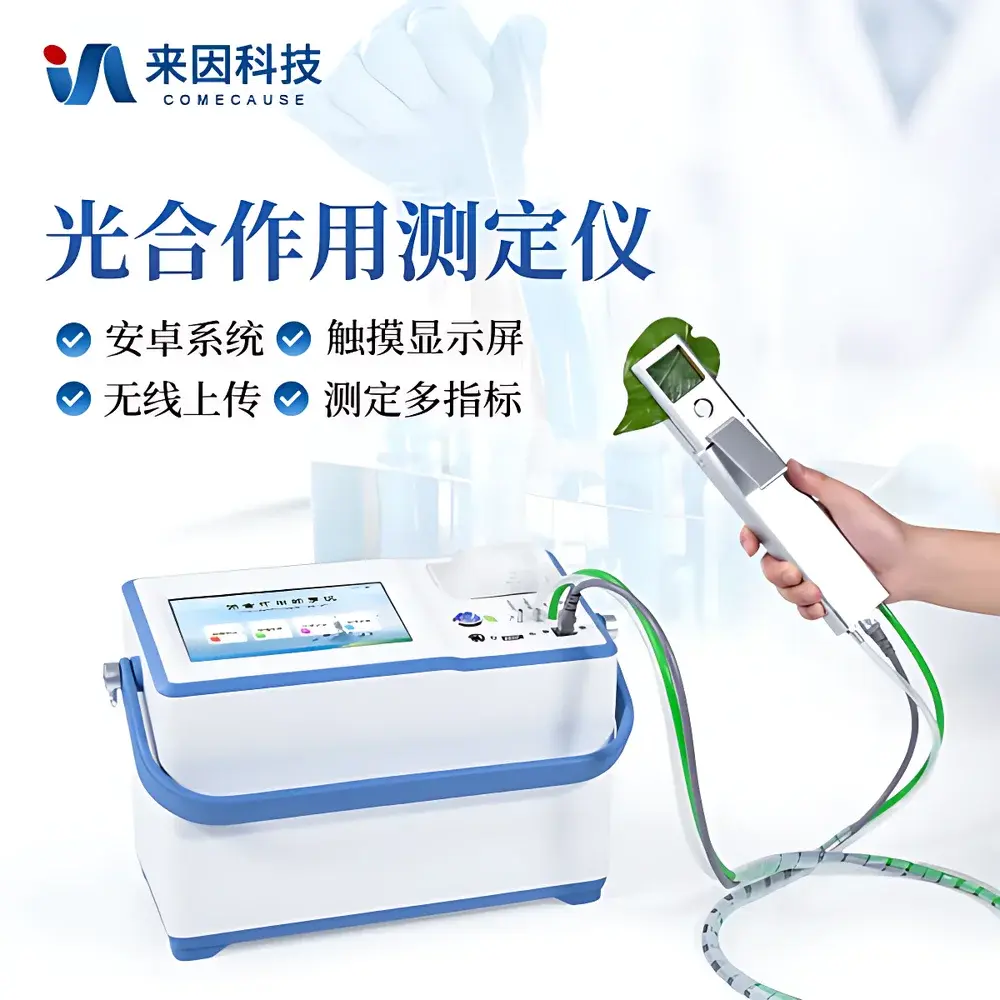
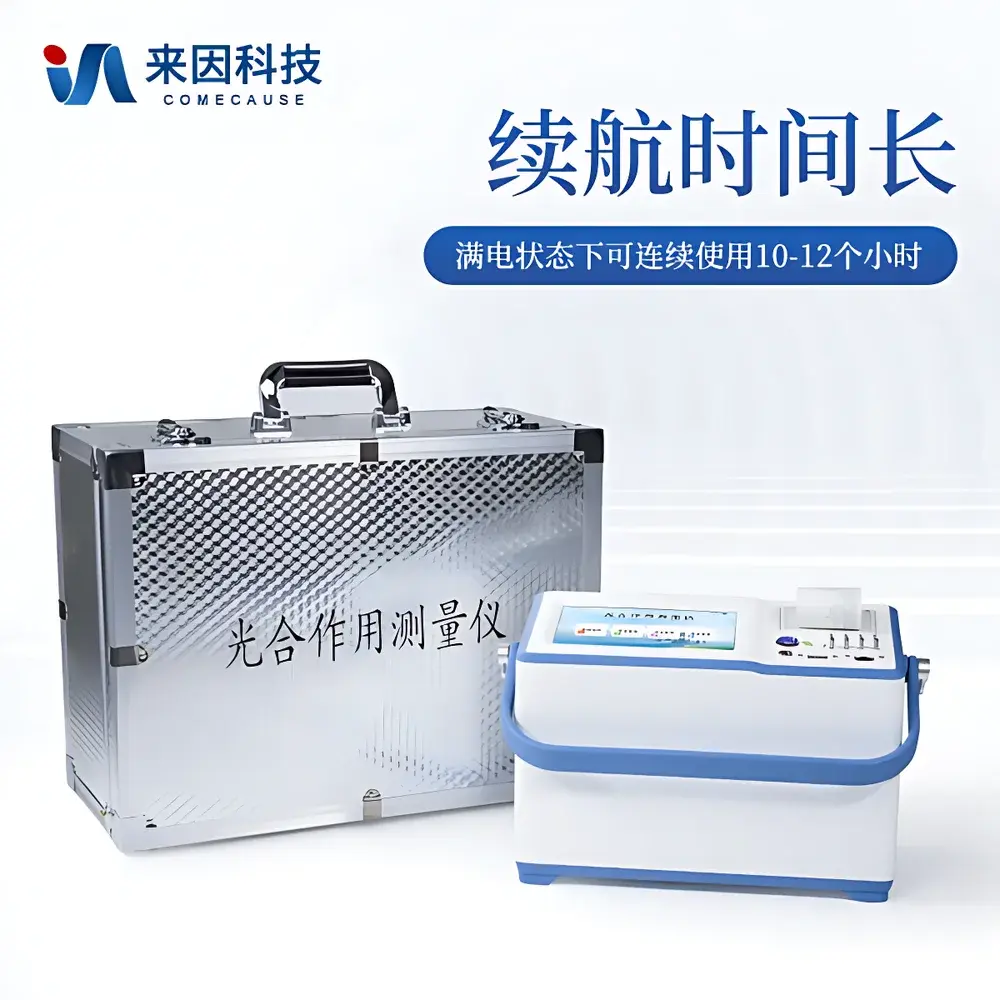
COMECAUSE IN.GH2 Portable Photosynthesis Measurement System
| Brand | COMECAUSE |
|---|---|
| Model | IN.GH2 |
| Origin | Shandong, China |
| Manufacturer Type | Direct Manufacturer |
| Measurement Range (CO₂) | 0–3000 µmol/mol (ppm) |
| CO₂ Sensor | Dual-wavelength NDIR |
| Temperature Control | Integrated Peltier-based thermal stabilization |
| Pressure Compensation | Built-in barometric sensor (30–110 kPa) |
| PAR Sensor | Calibrated silicon photodiode with cosine-corrected optical filter |
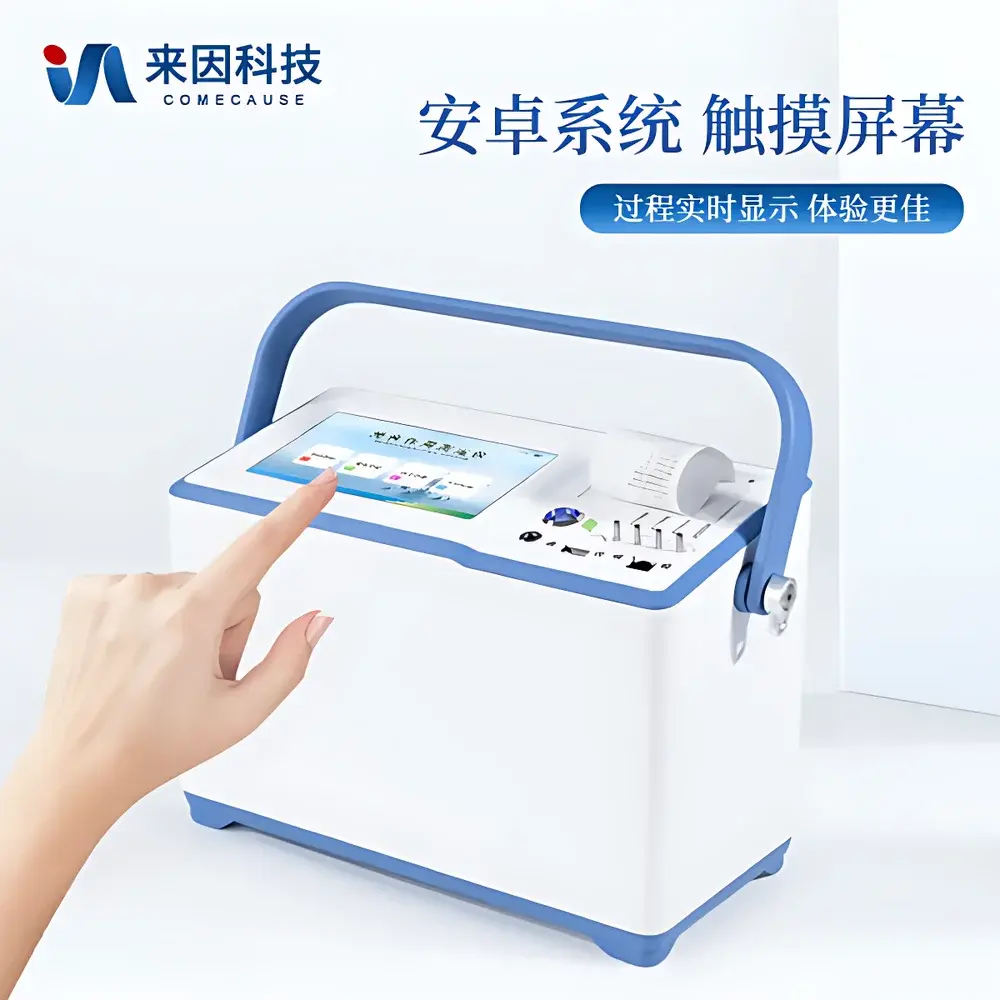
| Display | 7-inch capacitive touchscreen (Android OS) |
| Processor | ARM Cortex-A7 RK3288 (quad-core, 1.88 GHz) |
| Memory | 1 GB RAM / 16 GB ROM |
| Battery | 8000 mAh Li-ion (10–12 h field operation) |
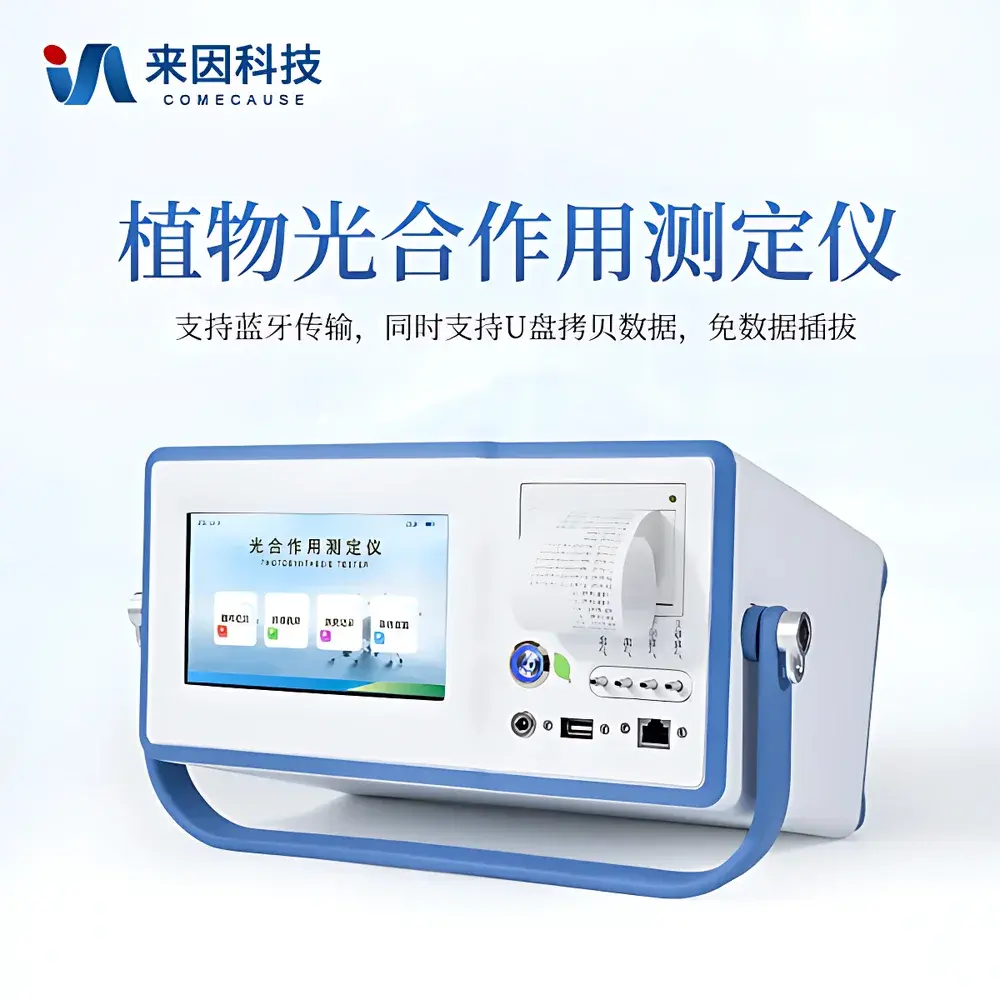
| Connectivity | Wi-Fi 802.11 b/g/n, Bluetooth 4.2, USB 2.0, USB-C charging |
| Data Export | CSV via USB flash drive (plug-and-play), wireless upload to cloud platform |
| Compliance | Designed for GLP-aligned field and lab use |
Overview
The COMECAUSE IN.GH2 Portable Photosynthesis Measurement System is a fully integrated, open-system gas exchange instrument engineered for high-fidelity, real-time quantification of leaf-level photosynthetic physiology under controlled and field conditions. Based on the principle of infrared gas analysis (IRGA) coupled with simultaneous microclimate monitoring, the system measures net CO₂ assimilation (Pn), stomatal conductance (Gs), transpiration rate (Tr), intercellular CO₂ concentration (Ci), water-use efficiency (WUE), dark respiration (Rd), and transpiration ratio (TR) — all derived from mass-balance calculations across a precisely regulated leaf chamber. Its dual-wavelength NDIR CO₂ analyzer—thermally stabilized via active Peltier control and dynamically compensated for ambient pressure and temperature—ensures long-term baseline stability and measurement reproducibility critical for longitudinal plant stress studies, cultivar screening, and climate-response modeling.
Key Features
- Real-time, multi-parameter acquisition: Simultaneously records 15 physiological and environmental variables including Pn, Gs, Tr, Ci, WUE, Rd, TR, ambient/leaf chamber CO₂, air/leaf temperature, relative humidity, atmospheric pressure, and photosynthetically active radiation (PAR, 400–700 nm).
- Thermally regulated dual-wavelength NDIR CO₂ sensor: Minimizes drift induced by ambient thermal fluctuations; achieves ≤3% full-scale error across 0–3000 µmol/mol range with 0.0005 µmol/mol resolution.
- Integrated environmental sensing suite: High-accuracy digital sensors for temperature (±0.2 °C), RH (±1% RH), pressure (±0.06 kPa), and PAR (±5 µmol·m⁻²·s⁻¹) conform to ISO 7726 and ASTM E2913 standards for environmental instrumentation.
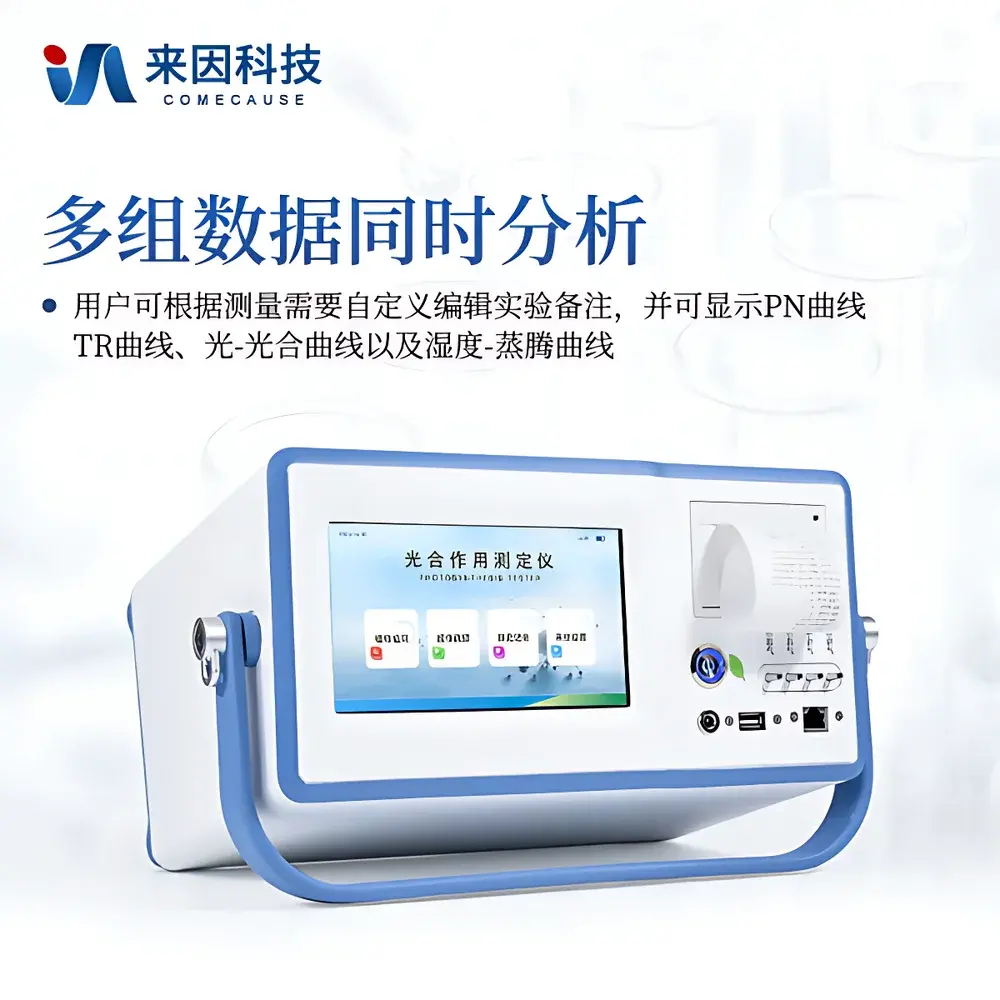
- Android-based embedded interface: 7-inch capacitive touchscreen running a dedicated application with intuitive workflow navigation, live parameter visualization, customizable experiment annotations, and interactive curve plotting (e.g., light-response, humidity-response, Pn–Ci curves).
- Field-deployable architecture: Compact main unit (325 × 160 × 230 mm) and ergonomic handheld chamber handle (250 × 30 × 48 mm); total system weight <4.7 kg; 10–12 h continuous operation on rechargeable 8000 mAh battery.
- Robust data management: Local storage (16 GB ROM), USB-C fast charging, plug-and-play USB flash export (no driver required), and optional secure Wi-Fi/Bluetooth transmission to a web-based cloud platform supporting time-series aggregation, cross-experiment comparison, and role-based access control.
Sample Compatibility & Compliance
The IN.GH2 accommodates standard rectangular leaf chambers (3.3 × 3.3 cm) suitable for broadleaf species, grasses, and herbaceous crops. Chamber gasket design ensures leak-tight sealing across diverse leaf morphologies without mechanical damage. All sensor calibrations are traceable to NIST-certified reference gases and irradiance standards. The system supports Good Laboratory Practice (GLP) workflows through automatic timestamping, operator ID tagging, calibration log retention, and immutable measurement metadata—enabling compliance with FDA 21 CFR Part 11 requirements when deployed in regulated agricultural R&D environments. It meets electromagnetic compatibility (EMC) Class B limits per EN 61326-1 and operates reliably within IP54-rated environmental protection for dust and water splashes.
Software & Data Management
Data acquisition and visualization are handled by a proprietary Android application built on a deterministic real-time kernel. Each measurement session generates timestamped CSV files containing raw sensor outputs, derived physiological indices, and environmental context. The cloud platform provides RESTful API access for integration with LIMS or statistical analysis pipelines (e.g., R, Python). Batch processing tools enable synchronized overlay of multiple Pn–PAR or A–Ci response curves with color-coded identifiers, statistical summary tables (mean ± SD), and export-ready SVG/PNG graphics. Audit trails record all user actions—including parameter edits, calibration events, and data exports—with SHA-256 hashing for integrity verification.
Applications
- Plant phenotyping: Quantifying genotypic differences in carbon gain efficiency, stomatal regulation, and drought resilience across breeding populations.
- Abiotic stress physiology: Monitoring dynamic responses to heat, cold, salinity, or water deficit via time-resolved Gs, Ci, and WUE trajectories.
- Photosynthetic biochemistry: Constructing A–Ci curves to estimate Vcmax, Jmax, and mesophyll conductance using Farquhar–von Caemmerer–Berry model fitting.
- Agricultural extension & education: Field-based demonstrations of crop physiological performance under varying light, humidity, and CO₂ regimes.
- Ecosystem research: Supporting eddy covariance validation, canopy scaling, and carbon flux modeling in agroforestry and grassland systems.
FAQ
What CO₂ measurement technology does the IN.GH2 employ?
It uses a thermally stabilized, dual-wavelength non-dispersive infrared (NDIR) analyzer with active pressure and temperature compensation.
Is the PAR sensor cosine-corrected and spectrally calibrated?
Yes—the silicon photodiode incorporates a precision optical diffuser and bandpass filter aligned to the 400–700 nm quantum response curve per ASTM E2913.
Can the system operate without cloud connectivity?
Yes—full functionality, including real-time display, local data logging, and USB export, is available offline.
Does the instrument support automated light-response curve generation?
Yes—programmable LED light source control (when paired with optional external illumination modules) enables stepwise or ramped PAR protocols with synchronized physiological recording.
What is the recommended calibration frequency for field deployments?
Zero calibration with CO₂-free air is advised before each daily session; span calibration using certified 1000 ppm CO₂ gas is recommended weekly or after transport-induced thermal shock.
Related Products




