
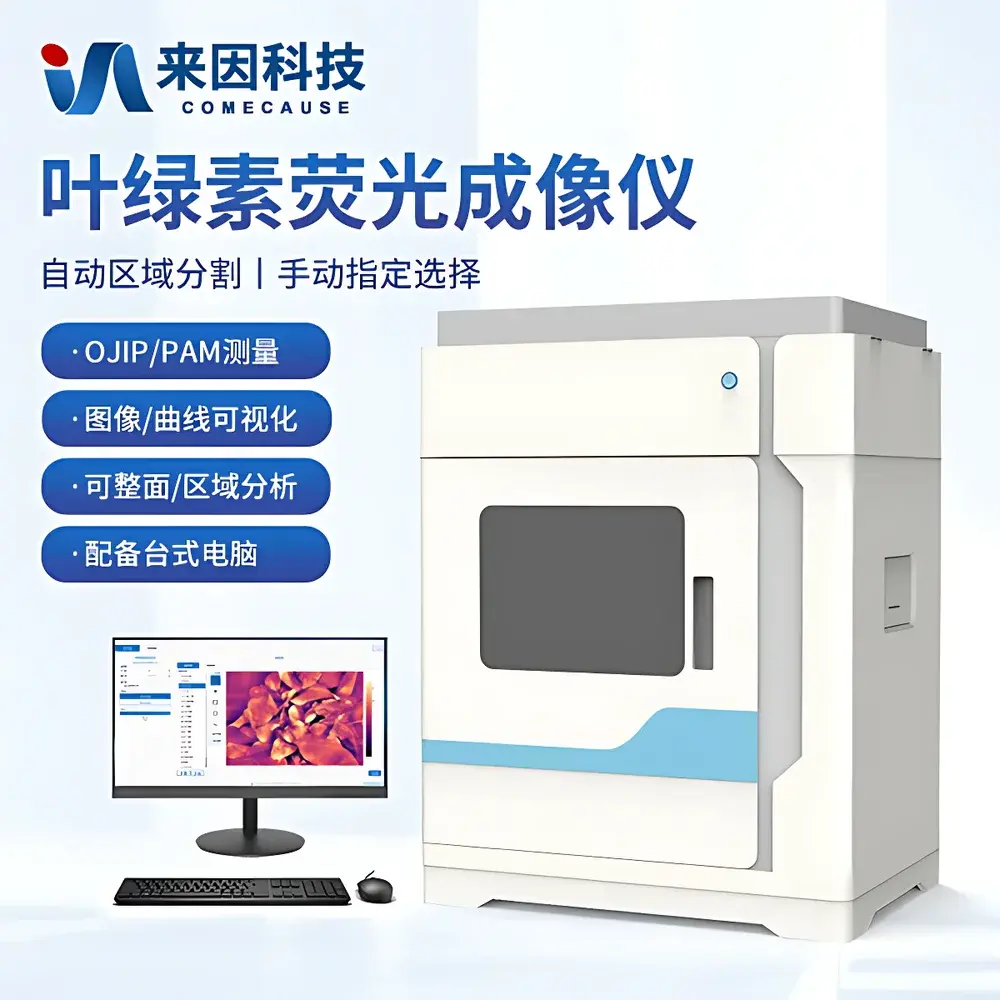
COMECAUSE IN-LeafClear Modular Chlorophyll Fluorescence Imaging System
| Brand | COMECAUSE |
|---|---|
| Origin | Shandong, China |
| Manufacturer Type | Manufacturer |
| Origin Category | Domestic |
| Model | IN-LeafClear |
| Price | USD 67,000 (FOB) |
| Camera Resolution | 1608 × 1104 |
| Pixel Size | 9 µm × 9 µm |
| Frame Rate | 100 fps |
| Bit Depth | 12-bit |
| Interface | USB 3.0 |
| Lens Focal Length | 12 mm (adjustable) |
| Max Aperture | F/2.8 (adjustable) |
| HFOV | 62.11° |
| VFOV | 44.83° |
| Max Imaging Area | 50 cm × 35 cm |
| Excitation Wavelength | 450 nm (blue LED) |
| Actinic Light | 630 nm (red LED) |
| Far-Red Light | 730 nm |
| Actinic Irradiance Range | 90–1440 µmol/(m²·s) |
| OJIP Duration | 0.1–1.0 s |
| PAM Dark Adaptation | 0–3600 s |
| Saturation Pulse Intensity | 15–100% (450 nm) |
| Fluorescence Dynamic Range | 0–4095 (12-bit) |
| SNR | >100:1 |
| Repeatability (CV) | <3% |
| Linearity (R²) | >0.999 |
| Minimum Sampling Interval | 10 ms (OJIP), 100 ms (PAM) |
| Spatial Resolution | ~0.3 mm/pixel (at 50 cm × 35 cm FOV) |
Overview
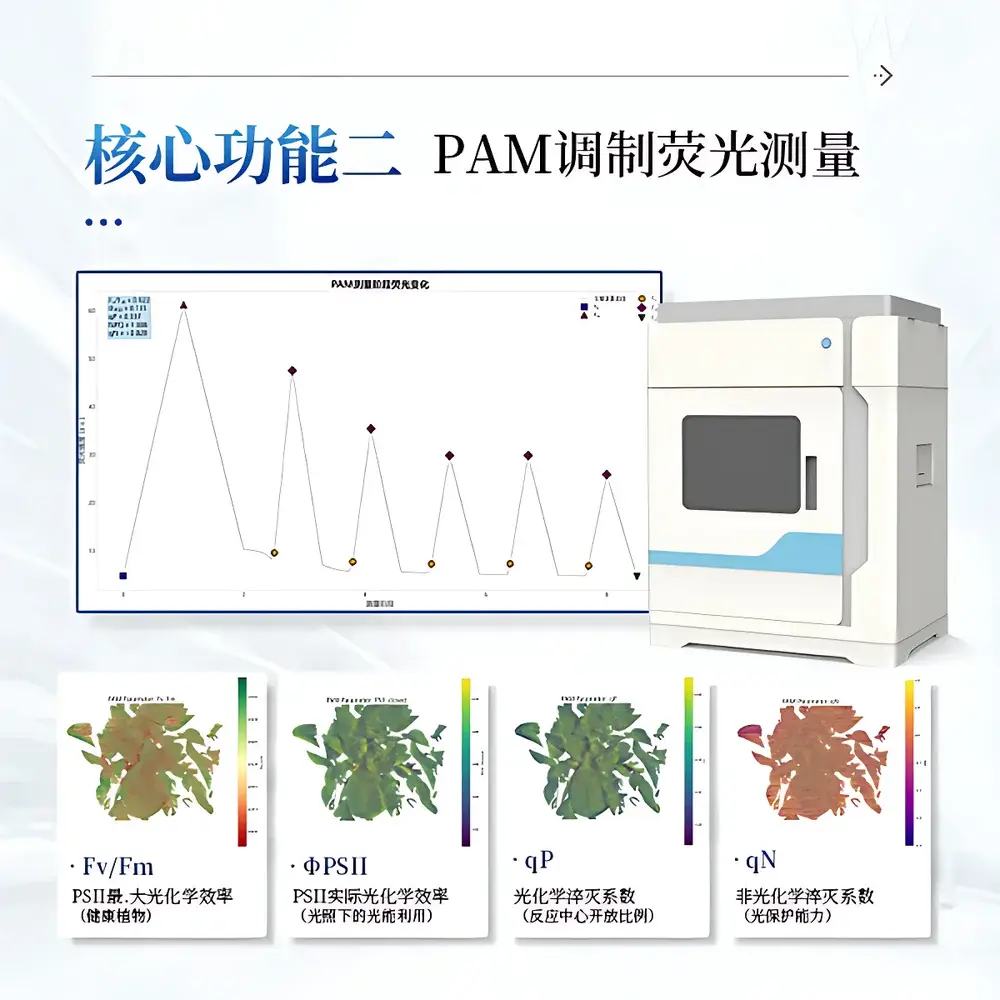
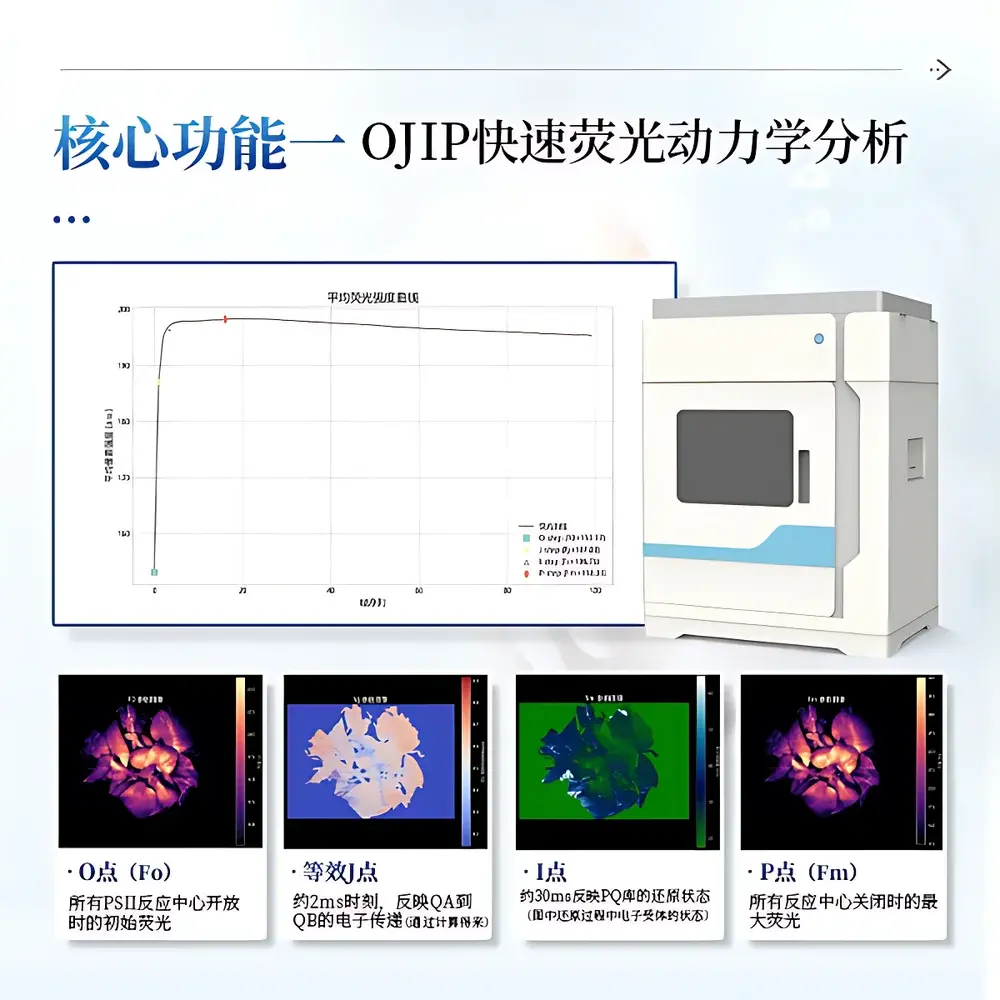
The COMECAUSE IN-LeafClear Modular Chlorophyll Fluorescence Imaging System is a research-grade instrumentation platform engineered for non-invasive, spatially resolved quantification of photosynthetic performance in intact plant tissues. It operates on the biophysical principle of chlorophyll a fluorescence induction kinetics—where variable fluorescence (Fv) arises from photochemical and non-photochemical energy dissipation pathways within Photosystem II (PSII). By combining high-sensitivity CMOS imaging with precisely controlled, spectrally defined LED excitation sources (450 nm blue, 630 nm red, and 730 nm far-red), the system captures both rapid OJIP transient kinetics and modulated PAM (Pulse-Amplitude Modulation) fluorescence responses across entire leaf surfaces. This dual-mode capability enables simultaneous assessment of PSII reaction center integrity, electron transport efficiency, photoprotective capacity (NPQ), and spatial heterogeneity of physiological status—critical for mechanistic studies in plant physiology, stress biology, and functional phenotyping.
Key Features
- Modular, Integrated Architecture: Hardware components—including camera, multi-wavelength LED array, optical enclosure, and controller—are designed for mechanical and electrical interoperability. Modules can be reconfigured for benchtop, growth chamber, or custom-built phenotyping platforms.
- Dual-Mode Fluorescence Acquisition: Supports both OJIP transient analysis (0.1–1.0 s duration, 10 ms minimum sampling interval) and standardized PAM protocols (including dark adaptation, actinic illumination, saturation pulse application, and dark recovery phases).
- High-Fidelity Imaging Specifications: 1608 × 1104 resolution CMOS sensor with 9 µm pixels, 12-bit dynamic range, >100:1 signal-to-noise ratio, and <3% coefficient of variation for repeated measurements under identical conditions.
- Precisely Tunable Optical Stimuli: Blue excitation (450 nm) up to 1440 µmol/(m²·s); red actinic light (630 nm) adjustable from 1000–30000 arbitrary units; far-red (730 nm) for QA− reoxidation; all with sub-millisecond LED response time.
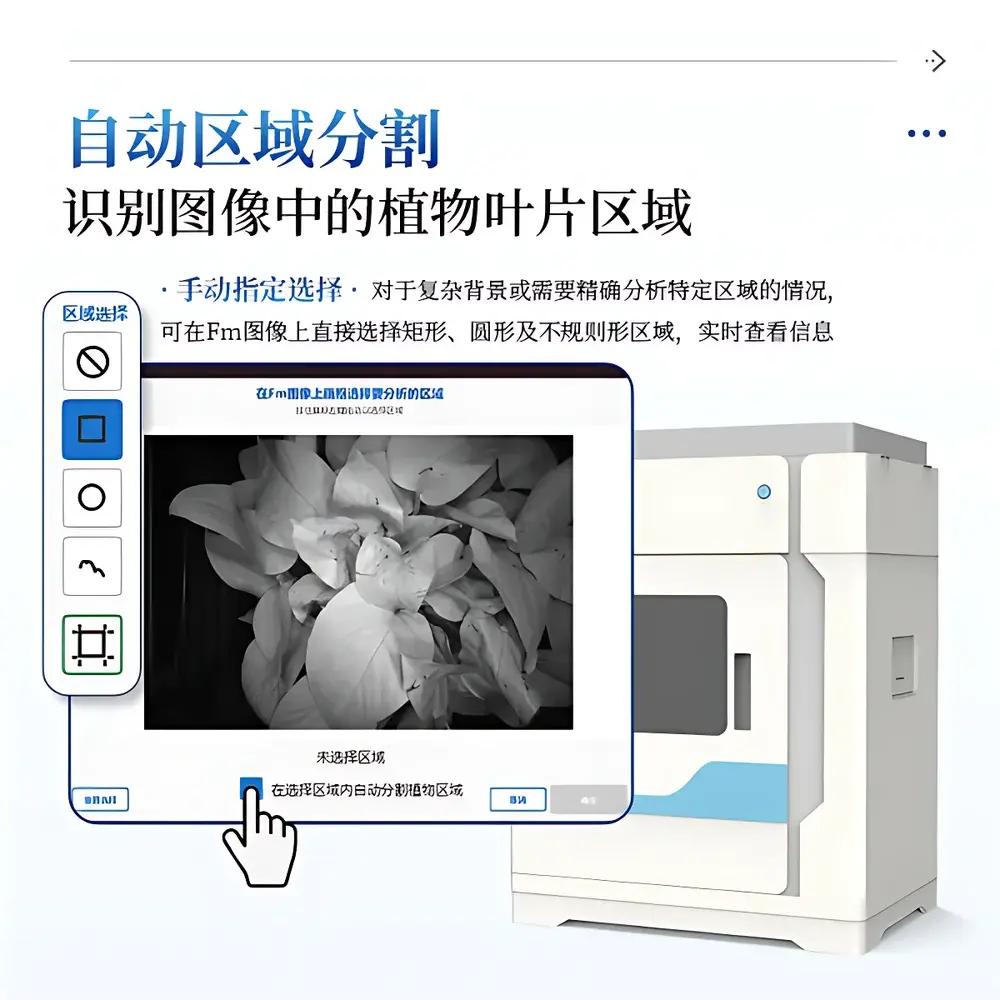
- Automated Region-of-Interest (ROI) Processing: Implements adaptive thresholding and morphological segmentation to isolate leaf tissue from background; supports manual selection of rectangular, circular, or freehand ROIs with real-time parameter extraction per region.
- Scientific Image Enhancement Pipeline: Includes Gaussian noise reduction, contrast-limited adaptive histogram equalization (CLAHE), and Jet-based pseudocolor mapping with calibrated intensity scaling and on-image color bar annotation.
Sample Compatibility & Compliance
The IN-LeafClear accommodates intact leaves, seedlings, rosettes, detached shoots, and small potted plants (up to 50 cm × 35 cm field of view at standard working distance). Its non-destructive, contactless measurement protocol ensures longitudinal monitoring without tissue damage—essential for time-series experiments and GLP-compliant studies. The system adheres to internationally recognized fluorescence measurement conventions defined by the International Society of Photosynthesis Research (ISPR) and aligns with methodological frameworks referenced in ASTM E2913-13 (Standard Guide for Fluorescence-Based Plant Stress Assessment) and ISO 10211:2021 (Plant Phenotyping — Terminology and Measurement Protocols). While not certified for clinical or regulated GMP production environments, its parameter traceability, configuration logging, and export metadata meet requirements for audit-ready data generation in academic and industrial R&D settings governed by FAIR (Findable, Accessible, Interoperable, Reusable) principles.
Software & Data Management
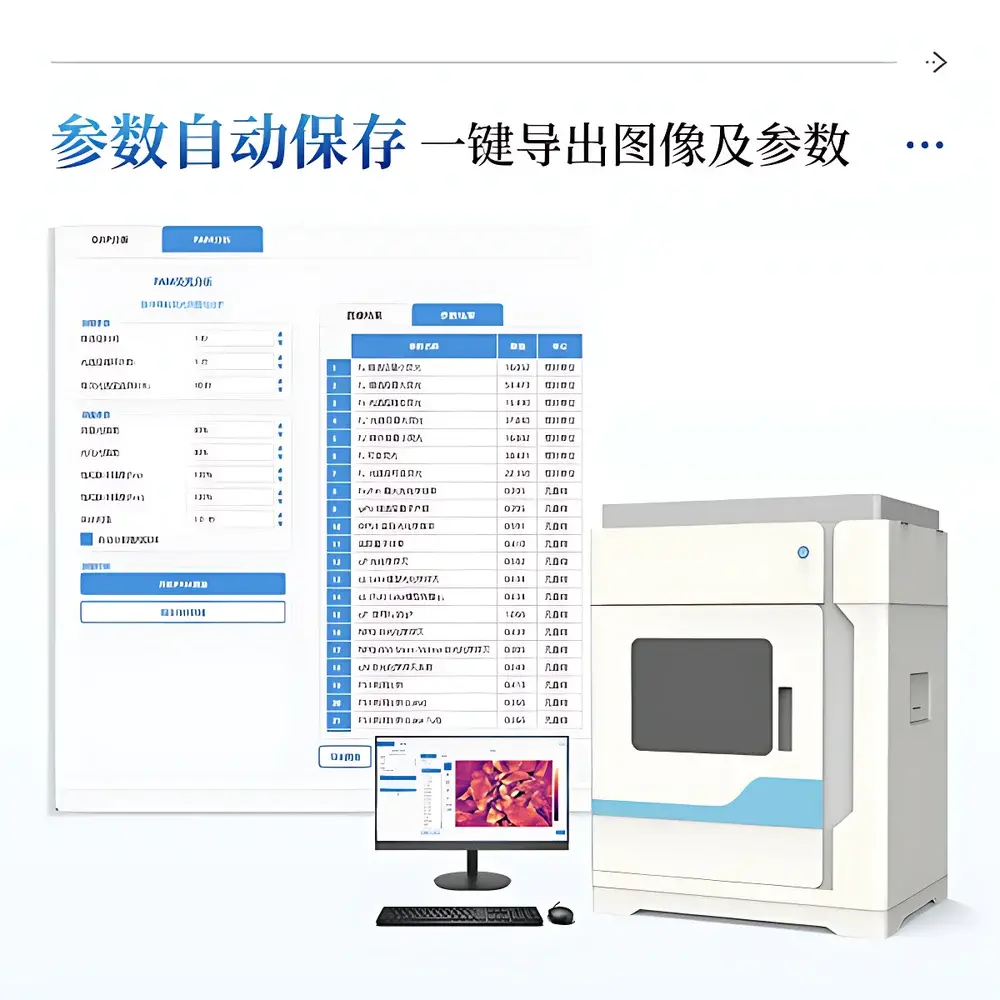
The proprietary IN-LeafClear Control & Analysis Suite provides a bilingual (English/Chinese), GUI-driven interface with intuitive workflow navigation. All acquisition parameters—including LED intensities, timing sequences, saturation pulse settings, and ROI definitions—are stored in human-readable XML configuration files with timestamped version history. Software features include: automated batch processing of multi-sample datasets; export of fluorescence images as lossless PNG (full resolution); export of quantitative parameters (Fo, Fm, Fv/Fm, ΦPSII, qP, NPQ, PIABS, Mo, Area, etc.) to CSV or XLSX with SI-compliant units; and embedded metadata (exposure time, irradiance calibration factor, lens focus position) embedded in image EXIF headers. The software supports FDA 21 CFR Part 11–compliant optional modules (audit trail logging, electronic signatures, role-based access control) upon request—designed for laboratories operating under GLP or pre-regulatory discovery workflows.
Applications
- Photosynthetic Mechanism Studies: Quantification of PSII quantum yield, electron transport rate (ETR), and energy partitioning (φPo, φEo, φDo) via JIP-test analysis; spatial mapping of reaction center density (RC/CS) and antenna size (ABS/RC).
- Abiotic Stress Physiology: Early detection and spatial characterization of drought-, heat-, cold-, salinity-, and high-light-induced photoinhibition through localized declines in Fv/Fm and altered OJIP curve shape.
- Biological Stress Diagnostics: Pre-symptomatic identification of pathogen infection foci via micro-scale reductions in ΦPSII and increased NPQ heterogeneity prior to visible lesion formation.
- High-Throughput Phenotyping: Integration into automated conveyor-based or robotic phenotyping platforms for large-scale screening of mutant libraries, breeding populations, or gene-edited lines using spatially averaged or pixel-wise fluorescence indices.
- Agronomic Optimization: Evaluation of nitrogen status, irrigation scheduling efficacy, pesticide phytotoxicity, and cultivar-specific light-use efficiency under controlled or semi-field conditions.
FAQ
What is the minimum detectable change in Fv/Fm that the IN-LeafClear can reliably resolve?
The system achieves ±0.005 absolute precision for Fv/Fm under standardized dark-adapted conditions, enabling statistically robust discrimination of ≤1% physiological differences between genotypes or treatments.
Can the system be used outdoors or in greenhouse environments with ambient light?
Ambient light must be excluded during measurement. The system includes a light-tight imaging enclosure; for greenhouse use, supplemental shading or scheduled measurements during low-irradiance periods are required to maintain signal fidelity.
Does the software support third-party integration (e.g., Python API or MATLAB interface)?
Yes—a documented RESTful API and Python SDK are available for programmatic control, raw frame acquisition, and parameter extraction, facilitating integration with custom analysis pipelines or LIMS systems.
How is calibration maintained across long-term deployments?
The system includes built-in reference tile imaging routines and LED intensity drift compensation algorithms. Users are advised to perform weekly validation using standardized fluorescence reference standards traceable to NIST SRM 2241.
Is remote operation supported for multi-user laboratory environments?
The software supports networked client-server mode, allowing centralized acquisition control from multiple operator workstations while maintaining synchronized configuration and data storage paths.



