
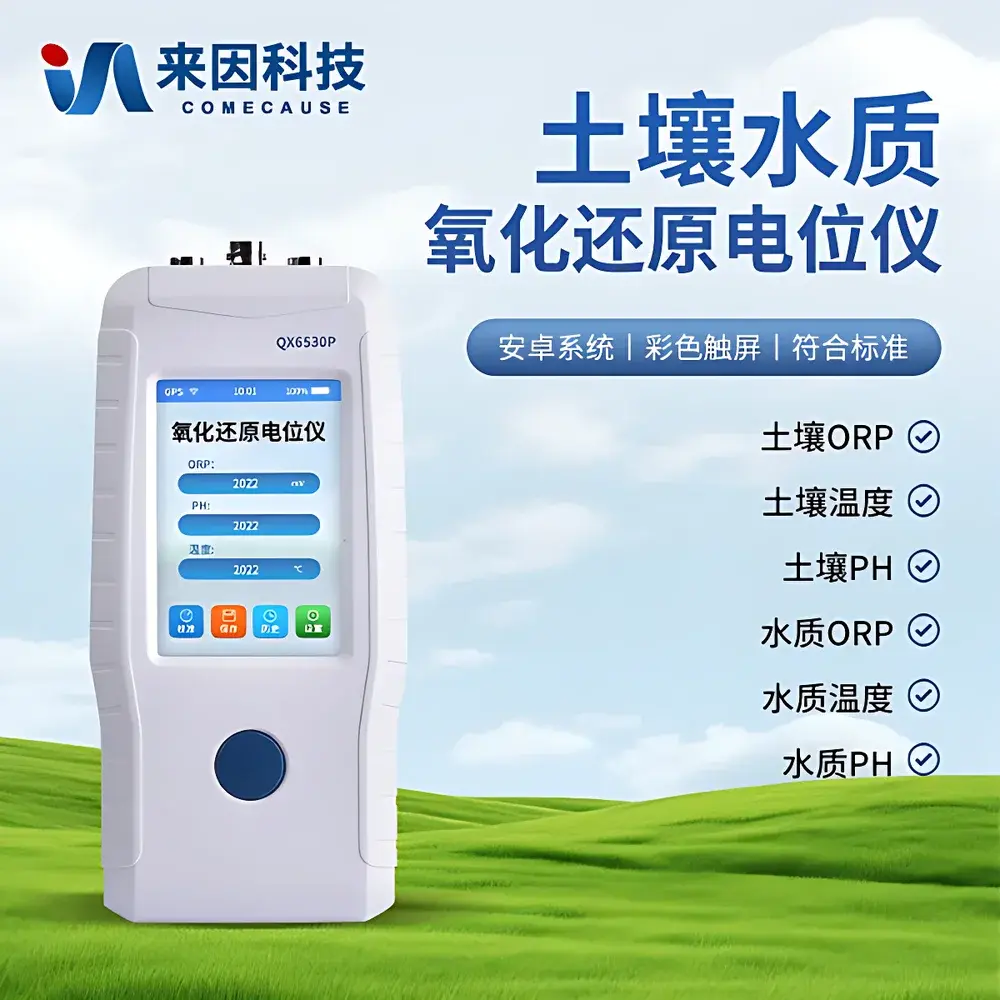
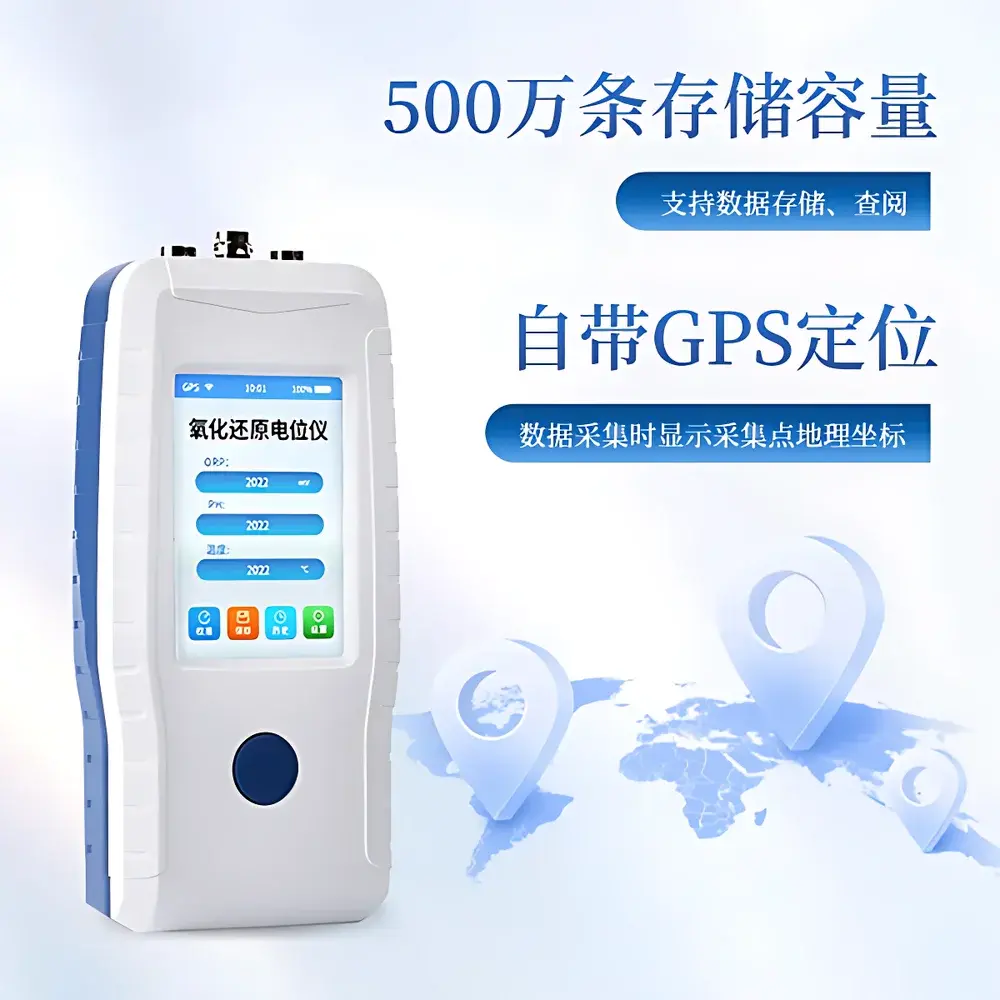
COMECAUSE IN-QX6530PS Dual-Parameter Soil & Water Oxidation-Reduction Potential (ORP) and pH Meter
| Brand | COMECAUSE |
|---|---|
| Model | IN-QX6530PS |
| Origin | Shandong, China |
| Manufacturer | COMECAUSE (OEM/ODM Producer) |
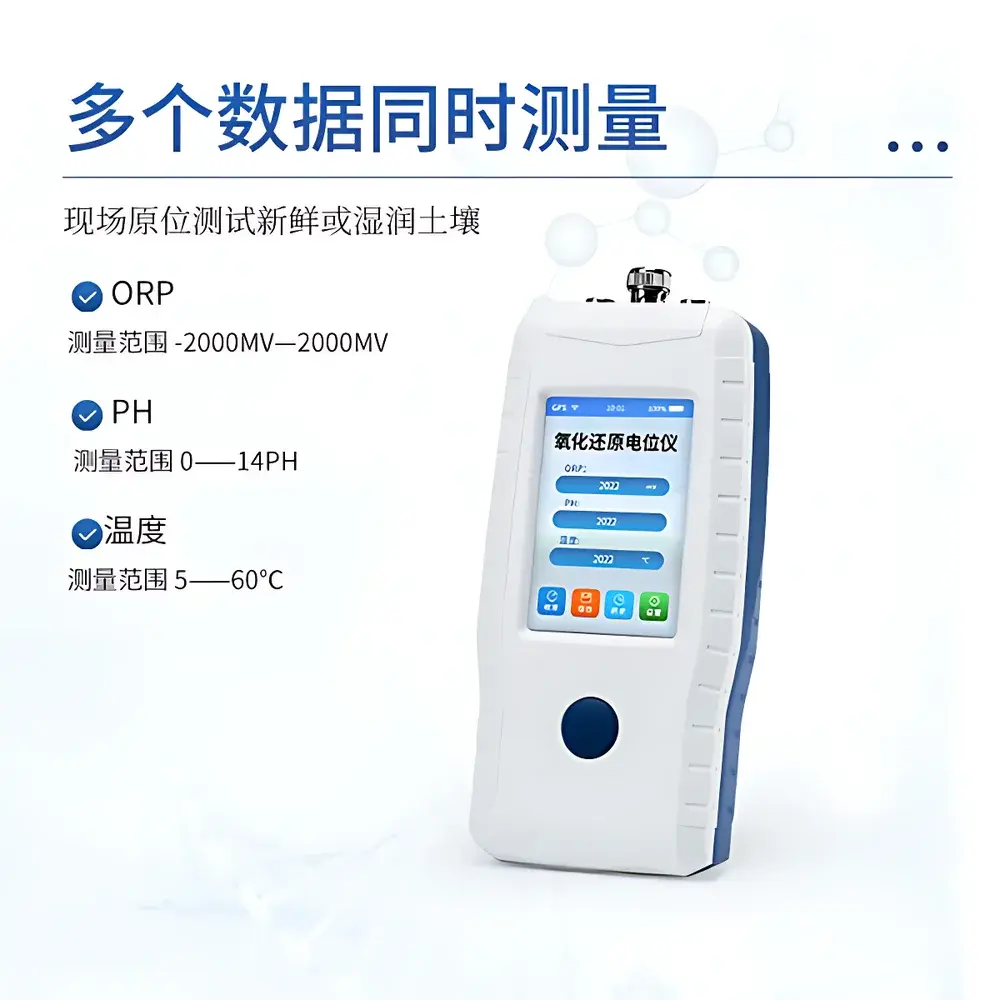
| ORP Range | −2000 to +2000 mV |
| ORP Resolution | 0.1 mV |
| ORP Accuracy | ±10 mV |
| pH Range | 0–14 |
| pH Resolution | 0.1 |
| pH Accuracy | ±0.05 |
| Temperature Range | 5–60 °C |
| Temp. Resolution | 0.1 °C |
| Temp. Accuracy | ±1 °C |
| Power Supply | DC 5 V / 2 A |
| Battery Capacity | 6000 mAh |
| IP Rating | IP65 |
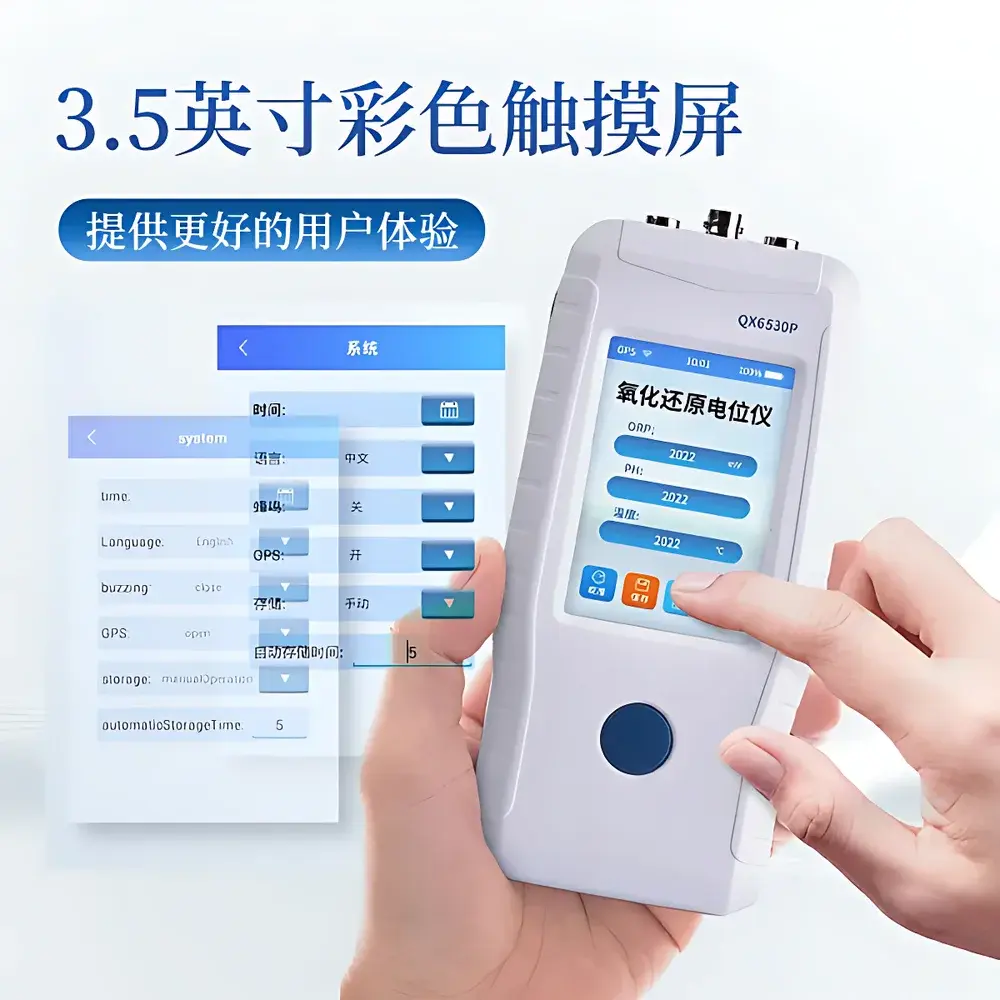
| Display | 3.5″ color capacitive touchscreen |
| Data Storage | 5 million records |
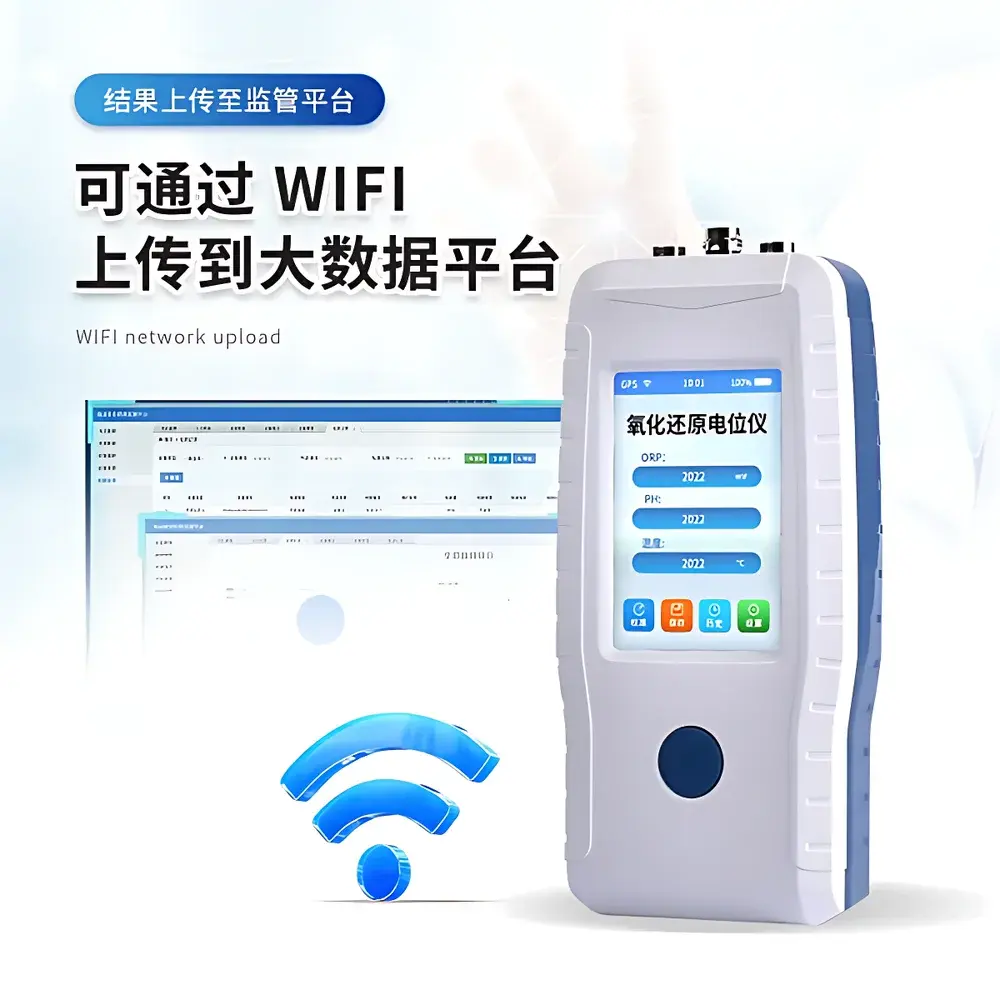
| Connectivity | Wi-Fi, USB Type-C |
| Compliance | HJ 746–2015, SL 94–1994 |
Overview
The COMECAUSE IN-QX6530PS is a field-deployable, dual-parameter electrochemical analyzer engineered for simultaneous in-situ measurement of oxidation-reduction potential (ORP/Eh), pH, and temperature in both saturated soils and aqueous environments. It operates on the fundamental principle of potentiometric equilibrium—measuring the voltage difference between a noble-metal working electrode (typically platinum or gold) and a stable reference electrode (Ag/AgCl or calomel) immersed in the sample matrix. This voltage, expressed in millivolts (mV), reflects the thermodynamic tendency of the medium to accept or donate electrons, serving as an integrative indicator of redox-active species (e.g., Fe²⁺/Fe³⁺, Mn²⁺/MnO₂, NO₃⁻/N₂, SO₄²⁻/H₂S) and microbial metabolic status. Unlike isolated chemical assays, ORP provides real-time insight into dynamic biogeochemical processes without requiring reagent addition or sample extraction. The instrument complies with Chinese environmental standard HJ 746–2015 (“Determination of Soil Redox Potential by Potentiometric Method”) and SL 94–1994 (“Determination of Oxidation-Reduction Potential in Water”), ensuring methodological consistency for regulatory reporting, ecological monitoring, and research-grade data acquisition.
Key Features
- ARM Cortex-M3 microprocessor with embedded Android OS for responsive GUI navigation and multi-threaded data handling
- Integrated 3.5-inch capacitive color touchscreen with auto-brightness adjustment and configurable sleep timer
- IP65-rated enclosure for dust resistance and protection against low-pressure water jets—suitable for outdoor field use
- Dual-mode electrode configuration: stainless-steel hollow probe with integrated Pt ORP sensor and Ag/AgCl reference junction, optimized for direct soil insertion or immersion in water
- Automatic temperature compensation (ATC) with optional manual override for precise correction across 5–60 °C range
- Real-time data logging with user-defined interval (1 min to 24 h), supporting up to 5 million timestamped records internally
- Type-C USB charging compatibility—operates with standard 5 V/2 A mobile chargers; 6000 mAh Li-ion battery enables >12 h continuous operation
- Wi-Fi module enabling secure, encrypted transmission of measurement data to cloud-based environmental management platforms or local servers
- On-device readout locking (Auto-Hold) ensures stable endpoint capture without manual interpretation or post-processing
- Export functionality: raw datasets downloadable as CSV or Excel-compatible .xlsx files via USB or wireless sync
Sample Compatibility & Compliance
The IN-QX6530PS is validated for direct measurement in non-turbulent freshwater, estuarine sediments, paddy soils, wetland peat, and remediated landfill cover layers. Its robust electrode design minimizes polarization drift during prolonged contact with organic-rich or sulfidic matrices. For soil applications, the hollow stainless-steel probe allows rapid equilibration while preventing clogging—critical for repeated profiling in clayey or root-dense horizons. In aquatic settings, measurements adhere to ASTM D3223–18 (Standard Test Method for Oxidation-Reduction Potential of Water) principles when performed under quiescent conditions. Regulatory alignment includes full traceability to HJ 746–2015 for soil Eh determination and SL 94–1994 for water ORP protocols. While not certified for GMP/GLP environments out-of-box, its audit-ready data logs—including operator ID, GPS metadata (optional), ambient temperature, and calibration timestamps—support compliance with ISO/IEC 17025 documentation requirements when deployed within validated QA workflows.
Software & Data Management
Data integrity is maintained through time-stamped, immutable records stored in flash memory with cyclic overwrite protection. Each entry includes ORP (mV), pH, temperature (°C), measurement duration, and system diagnostics (battery level, signal stability index). Wi-Fi connectivity supports TLS 1.2–secured push to RESTful APIs compatible with common environmental data platforms (e.g., EnviroDIY, HydroServer, or custom LIMS). No proprietary software is required: exported Excel files contain column headers compliant with FAIR (Findable, Accessible, Interoperable, Reusable) data principles. Firmware updates are delivered over-the-air (OTA) or via USB mass storage mode, preserving configuration profiles across versions. Audit trails record all calibration events, parameter changes, and firmware modifications—enabling retrospective verification per ISO 17025 clause 7.7 and supporting FDA 21 CFR Part 11–aligned electronic record retention where configured with digital signature modules.
Applications
- Rice paddy management: Monitoring Eh shifts during flooding/drainage cycles to optimize anaerobic-aerobic transitions, mitigate H₂S accumulation, and enhance nitrogen-use efficiency
- Wetland restoration: Mapping redox gradients across hydrologically distinct zones to identify optimal planting locations for emergent macrophytes and assess sulfate-reducing bacterial activity
- Black-odor waterbody assessment: Diagnosing hypolimnetic anoxia in urban canals and reservoirs; correlating ORP decline with DO depletion and volatile fatty acid buildup
- Heavy metal stabilization: Tracking Eh-dependent speciation of Cr(VI)/Cr(III), As(III)/As(V), and U(VI)/U(IV) in phytoremediation or permeable reactive barrier monitoring
- Soil microbiome studies: Synchronizing ORP dynamics with qPCR-based quantification of denitrifiers (narG), iron reducers (gltA), and methanogens (mcrA) in controlled mesocosms
- Wastewater process control: Verifying redox endpoints in biological denitrification tanks and electrochemical cyanide destruction units
FAQ
What electrode maintenance is required for long-term accuracy?
Rinse the Pt/Ag/AgCl probe with deionized water after each use; soak in 3 M KCl storage solution when idle for >48 h. Avoid abrasive cleaning—use soft lint-free wipes only. Inspect the reference junction monthly for crystallization; flush gently with warm distilled water if occluded.
Can the device measure ORP in highly turbid or sediment-laden water?
Yes—but ensure the probe remains fully submerged in the liquid phase, not buried in settled solids. For high-suspended-solid samples (>100 mg/L), allow 60–120 s stabilization time and verify signal drift <2 mV/min before recording.
How does automatic temperature compensation affect ORP readings?
ATC applies the Nernst equation’s theoretical slope (−0.198 mV/°C at 25 °C) to correct for thermal effects on electrode kinetics—not to convert Eh to standardized values. Raw mV output remains unaltered; compensated values are labeled “Eh (ATC)” in logs.
Is calibration traceable to international standards?
Field calibration uses Zobell’s solution (225 ± 5 mV at 25 °C) and Light’s solution (−200 ± 10 mV), both traceable to NIST SRM 1911c. Certificate of conformance provided with each electrode batch.
Does the instrument support GLP-compliant data export?
Yes—when paired with COMECAUSE’s optional Data Integrity Package (DIP), it generates PDF reports containing digital signatures, hash-verified metadata, and 21 CFR Part 11–compliant audit logs for regulated laboratories.







