
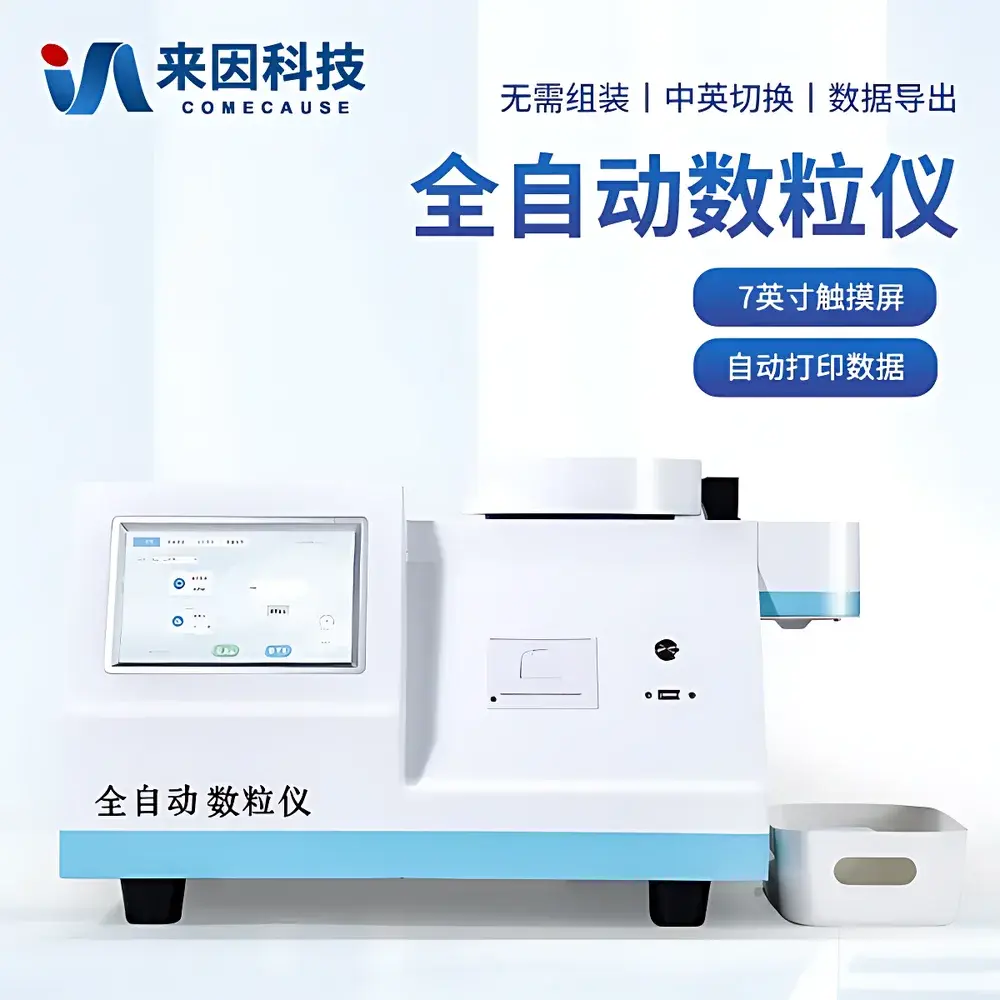
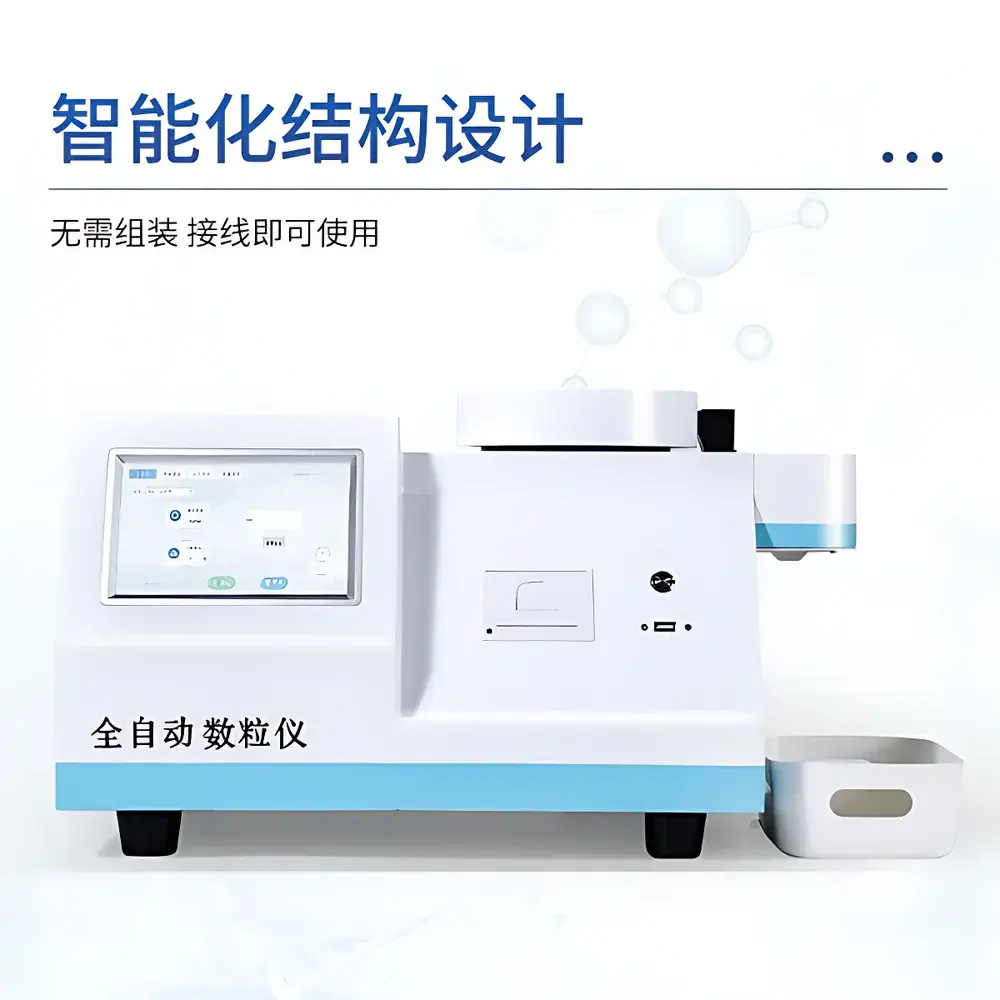
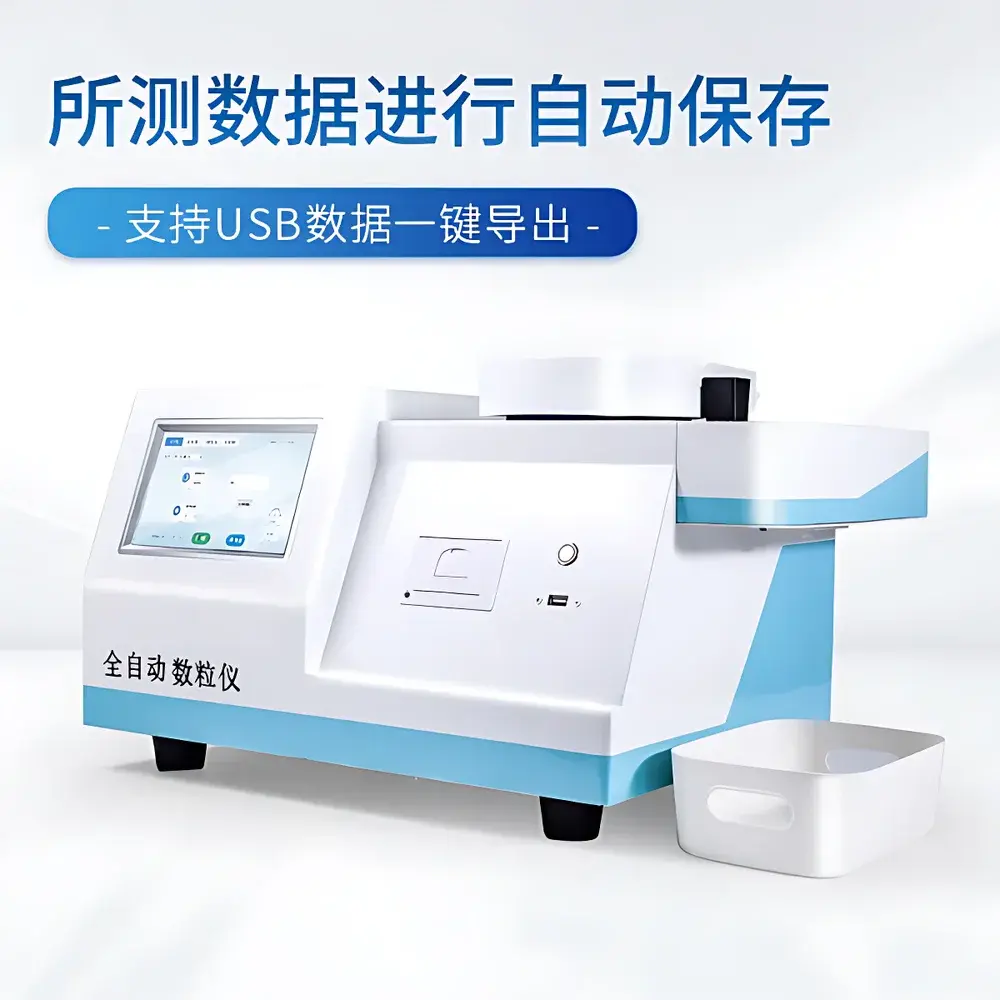
COMECAUSE IN-SL01 Advanced Seed Counter with Integrated Thermal Label Printer
| Brand | COMECAUSE |
|---|---|
| Model | IN-SL01 |
| Origin | Shandong, China |
| Manufacturer Type | Direct Manufacturer |
| Counting Range | 1–9999 seeds per batch |
| Counting Speed | 1000–2000 seeds/min (size- and shape-dependent) |
| Seed Length Compatibility | 0.5–23 mm |
| Counting Accuracy | ±0.2% (±2‰) |
| Sensitivity Adjustment | 0–10 level |
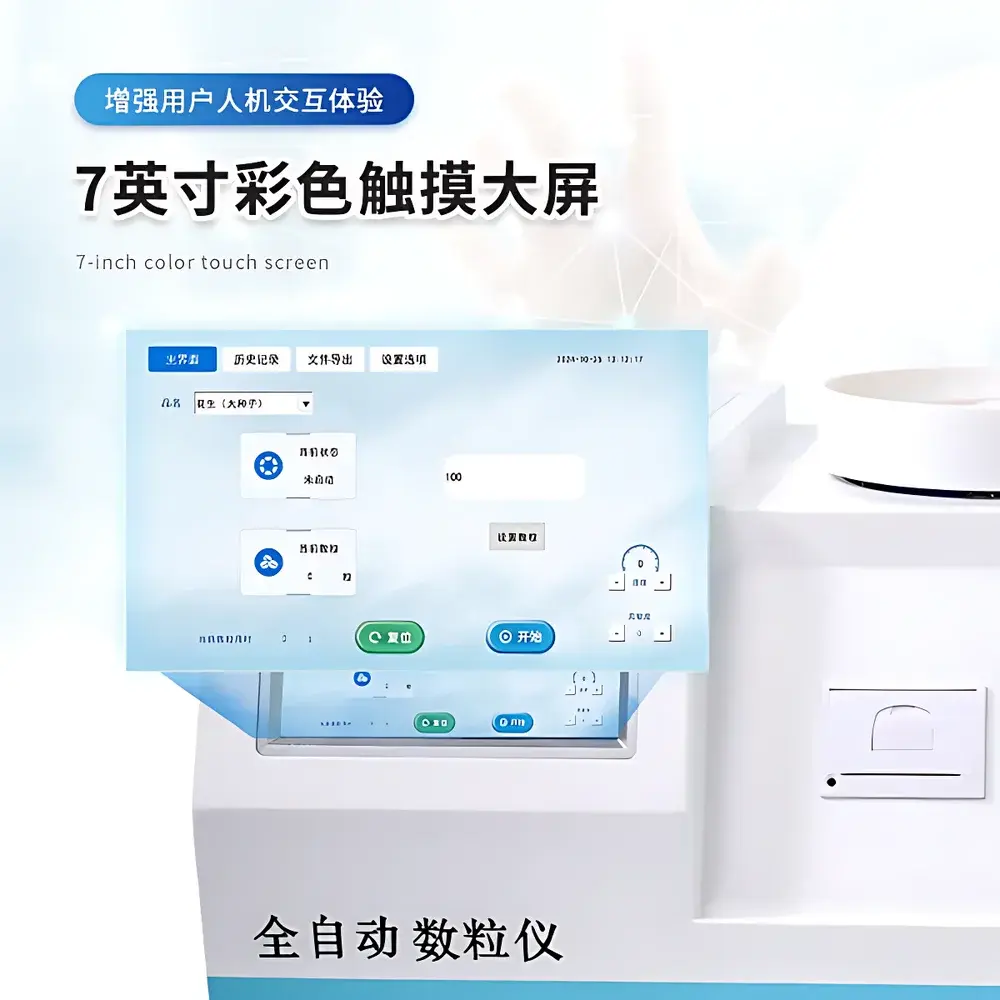
| Display | 7-inch color capacitive touchscreen |
| Data Storage | Local non-volatile memory with pagination & search |
| Data Export | USB flash drive (CSV format) |
| Printing | Built-in thermal adhesive label printer (6 rolls included) |
| Language Support | Switchable Chinese/English UI |
| Dimensions (W×D×H) | 580 × 390 × 336 mm |
| Weight | 24 kg |
| Operating Noise | ≤80 dB(A) |
| Ambient Temperature | −10 °C to +50 °C |
| Relative Humidity | <85% RH (non-condensing) |
| Power Supply | AC 100–220 V, 50/60 Hz |
Overview
The COMECAUSE IN-SL01 Advanced Seed Counter is an automated optical-electromechanical instrument engineered for high-throughput, repeatable seed enumeration in agricultural research laboratories, seed certification centers, breeding programs, and quality control facilities. It operates on the principle of real-time optical detection combined with controlled vibratory feeding—seeds are oriented and fed sequentially across a high-contrast detection zone where a calibrated CMOS sensor array captures transient silhouette events. Each valid event is validated against dynamic threshold algorithms that account for size, aspect ratio, and edge continuity, minimizing false positives from dust, chaff, or overlapping particles. Unlike manual counting or basic photoelectric counters, the IN-SL01 integrates closed-loop vibration control, adaptive sensitivity tuning, and hardware-accelerated event discrimination—enabling reliable enumeration across heterogeneous seed lots (e.g., rice, wheat, soybean, maize, rapeseed, and small horticultural seeds). Its design adheres to core metrological principles defined in ISO 11524 (seed sampling and testing) and supports traceability requirements aligned with national seed certification protocols.
Key Features
- 7-inch capacitive color touchscreen interface with intuitive icon-driven navigation and responsive feedback—optimized for gloved operation in field or lab environments.
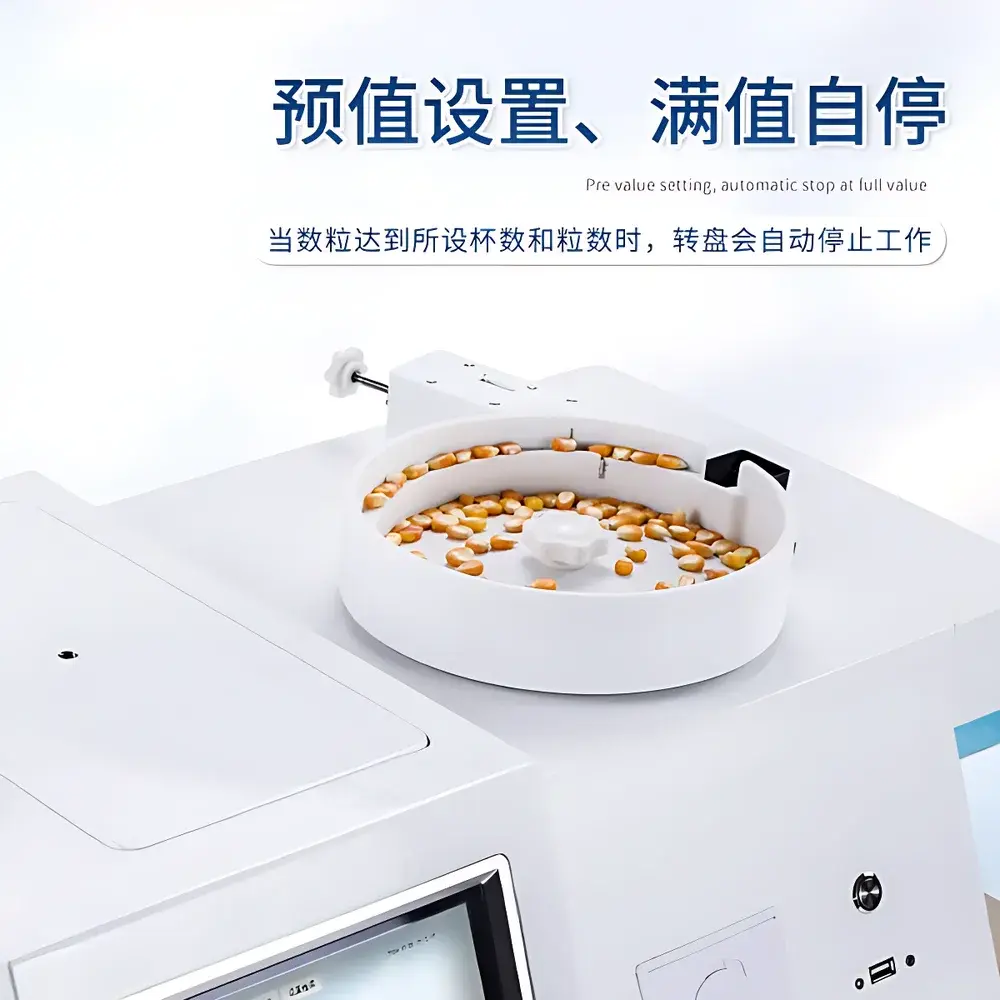
- Programmable count presetting: Users define target counts (1–9999); device automatically halts feed and triggers print upon completion—critical for standardized germination test aliquots or purity analysis sub-sampling.
- Variety-specific parameter profiles: Store custom configurations per crop type—including vibration amplitude (0–10 sensitivity scale), dwell time, and rejection thresholds—to maintain consistency across seasonal batches.
- Integrated thermal adhesive label printer: Outputs tamper-evident, peel-and-stick labels containing timestamp, count value, variety name, operator ID, and batch ID—compliant with labeling requirements under GB/T 3543.2–1995 (China National Standard for Seed Testing).
- Local data management: All measurements are timestamped and stored in internal flash memory (≥10,000 records), supporting forward/backward pagination, keyword search by variety or date range, and selective or bulk deletion.
- USB mass storage export: One-click CSV export to FAT32-formatted USB drives—compatible with LIMS platforms, Excel-based QA reporting, and statistical process control (SPC) software.
- Dual-language firmware: Seamless toggle between English and Simplified Chinese without reboot—facilitating multi-regional deployment and cross-border technical support.
Sample Compatibility & Compliance
The IN-SL01 accommodates seeds ranging from 0.5 mm (e.g., lettuce, carrot) to 23 mm (e.g., large legume or tree seeds), provided particle geometry allows stable orientation on the vibratory tray. Irregular shapes (e.g., winged samaras, fibrous cottonseed) may require sensitivity calibration or pre-screening. The system excludes non-seed particulates via dynamic contrast filtering and motion validation—reducing manual post-count verification by >90% compared to legacy photoelectric counters. It meets electromagnetic compatibility (EMC) requirements per GB/T 18268.1–2010 (industrial measurement equipment) and conforms to safety standards GB 4793.1–2007 (electrical safety for laboratory instruments). While not certified to ISO/IEC 17025, its performance characteristics align with repeatability criteria specified in ISTA Rule 5B (enumeration precision for purity testing).
Software & Data Management
Firmware v3.2+ implements audit-ready data handling: every count event logs operator ID (if configured), timestamp (RTC-backed), firmware version, and active profile ID. Print outputs embed a unique sequential log number, enabling full chain-of-custody reconstruction. USB exports include header rows compliant with ANSI X12 and ASTM E1461–22 data interchange conventions. No cloud connectivity or remote access is implemented—ensuring data sovereignty and eliminating exposure to network-based vulnerabilities. Firmware updates are performed offline via signed USB image files, preserving integrity verification through SHA-256 checksum validation.
Applications
- Seed purity analysis per GB/T 3543.3–1995 (determination of pure seed content)
- Germination test sub-sampling (ISTA Handbook, Section 6.2)
- Seed lot inventory reconciliation in cold storage facilities
- QC release testing for certified seed packaging lines
- Phytochemical assay preparation requiring precise seed mass-to-count conversion
- Academic agronomy studies involving seed size distribution modeling
FAQ
What seed types have been validated for use with the IN-SL01?
Rice, wheat, barley, soybean, maize, sorghum, rapeseed, sunflower, tomato, pepper, and lettuce seeds have undergone factory calibration. Custom validation protocols are available upon request.
Does the device support GLP-compliant electronic signatures?
No—electronic signature functionality is not implemented. For GLP environments, printed labels serve as primary records; digital exports must be manually attested per organizational SOPs.
Can the vibration tray be cleaned in place without tools?
Yes—the stainless-steel feed tray is removable via two captive thumbscrews and features a smooth, crevice-free surface compatible with ethanol wipe-down or ultrasonic cleaning.
Is firmware update documentation provided?
Yes—each firmware release includes a revision-controlled PDF changelog, installation checklist, and backward compatibility matrix, supplied with the USB update package.
What is the mean time between failures (MTBF) under continuous lab use?
Based on accelerated life testing (n=42 units, 8 h/day, 5-day/week), MTBF exceeds 12,500 operating hours; main wear items are the piezoelectric vibrator actuator and thermal print head (rated for ≥1 million line prints).




